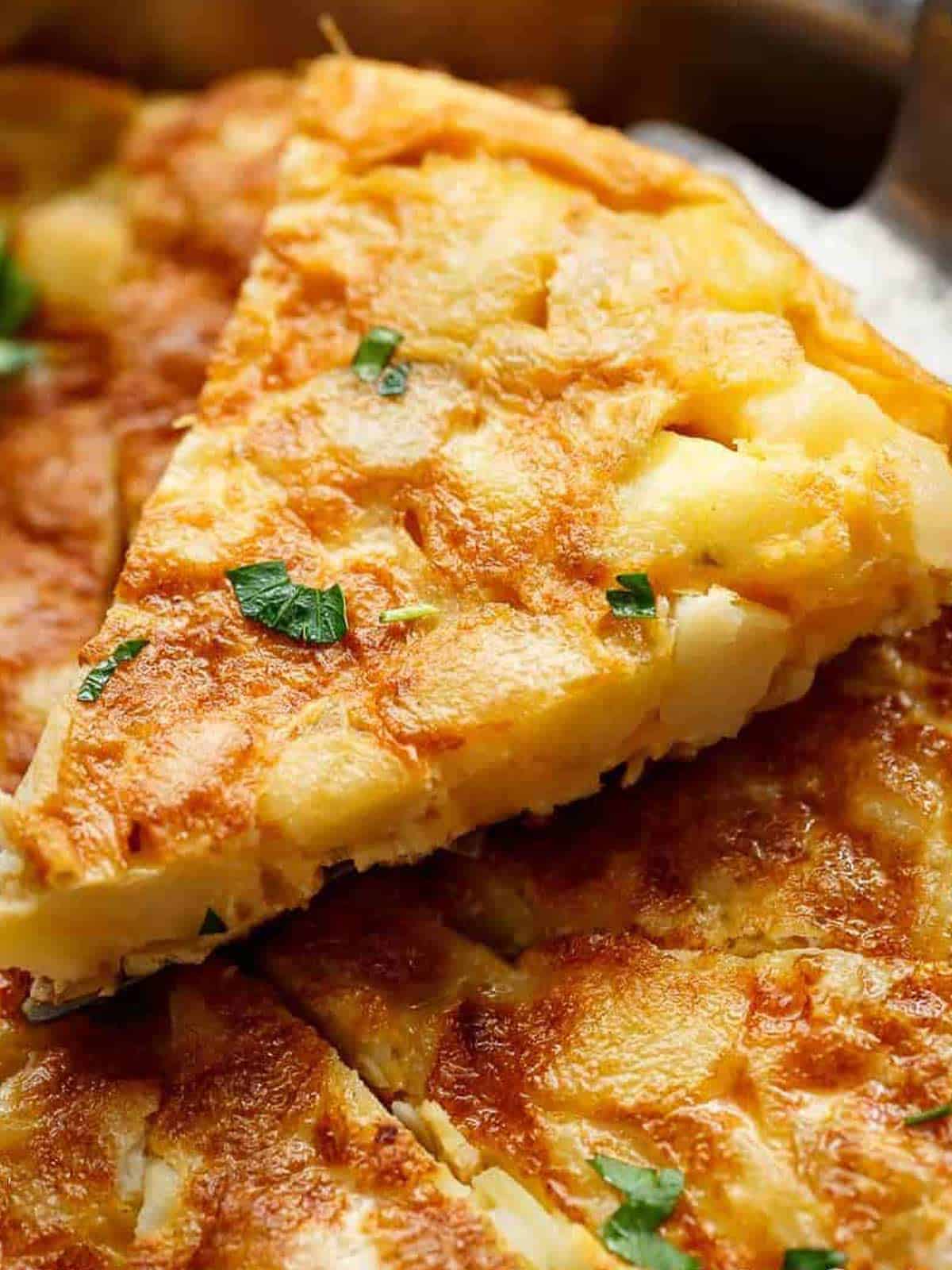
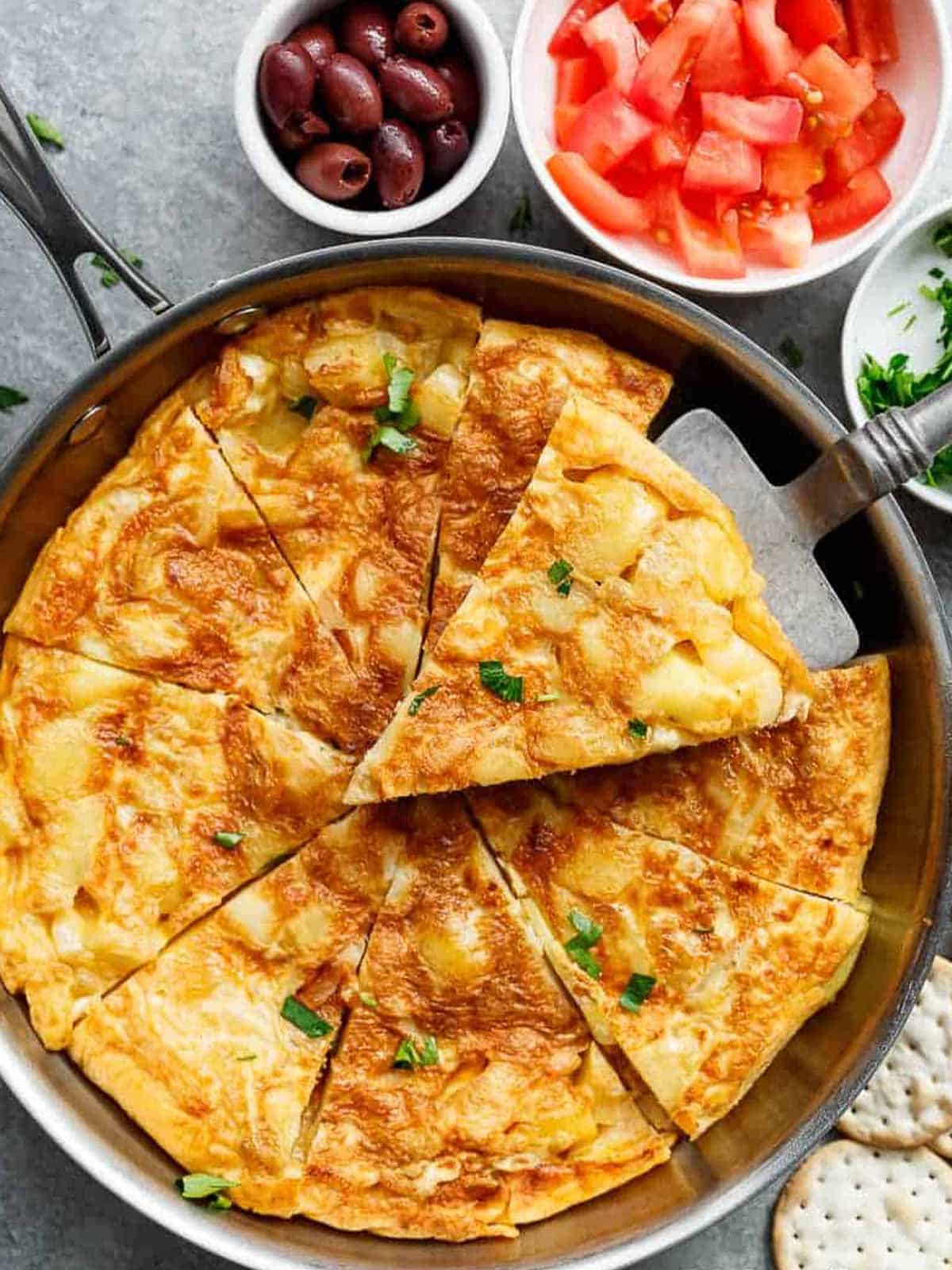
An authentic Spanish Omelette made at home with just FIVE ingredients! This super easy Spanish omelette takes only a couple of minutes to prep. It delivers an good authentic flavor that rivals any tapas bar.
We make this classic dish with potatoes, eggs, and onions. We cook them slowly in extra virgin olive oil until they become soft and set into a thick, sliceable meal. We love how simple and filling it is. It is naturally gluten-free and works for picnics, BBQs, or a tapas-style spread. We usually serve it next to a fresh tomato salad or a light avocado corn salad. This makes it a complete meal without overcomplicating things.
Why This Recipe Works
We have tested this recipe multiple ways. We adjusted the potato size, the cooking time, and the exact amount of oil. This guarantees a soft center without the omelette falling apart.
This version keeps things simple and reliable so you get the right texture every single time without overthinking it. The ingredients are basic. However, cooking the potatoes and onions slowly in olive oil builds good flavor before adding the eggs. This quick method works beautifully. You can eat it warm right out of the pan or cold the next day for breakfast.
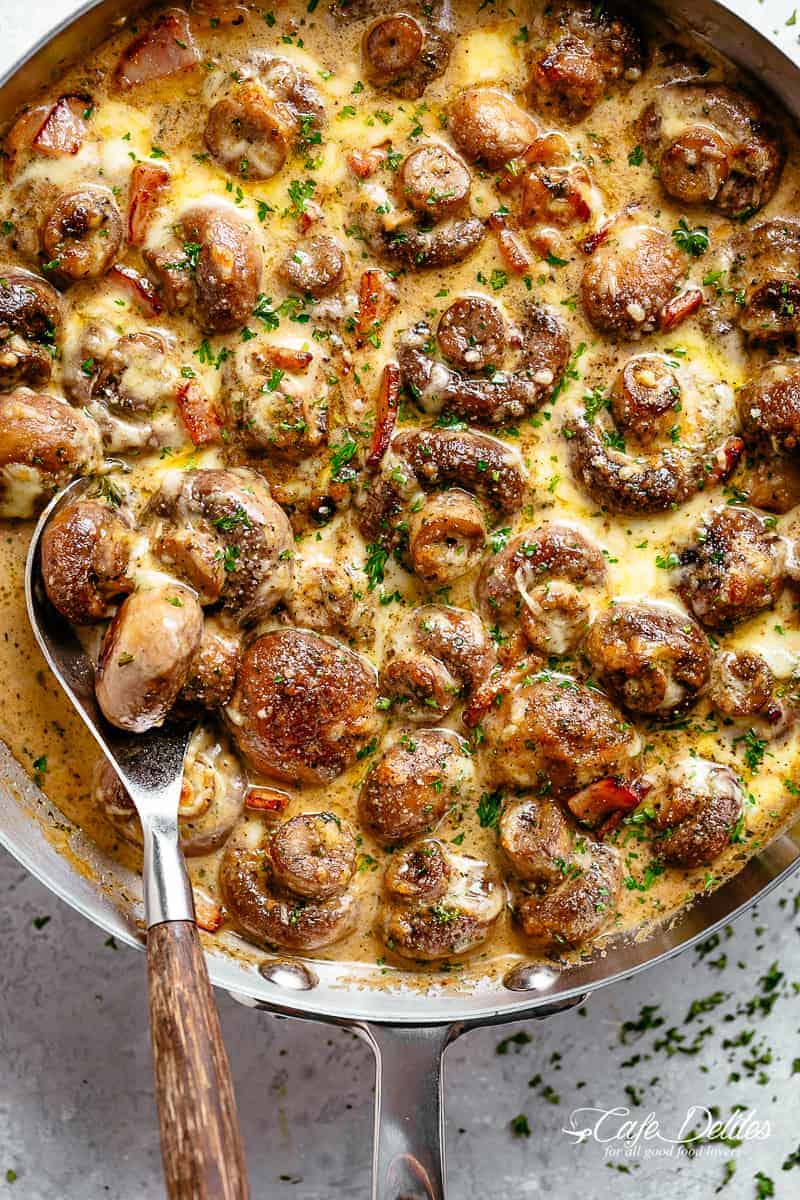
This tortilla has been in our life for as long as we can remember. It saved us from eating plain scrambled eggs again. It has also been with us through family barbecues, picnics, and even breakups. On days when we have more time, we make a cheesy bacon and egg hash. We also love doing a breakfast spread with garlic butter mushrooms.
What Is A Spanish Omelette?
A Tortilla Española is one of the most famous dishes in Spanish cuisine. People also call it a Spanish Omelette or tortilla de patatas. You might usually whip up a thin egg wrap for a quick breakfast. A real Spanish omelette is completely different. It is a thick, hearty, crustless dish that looks almost like a savory cake. It is famous for its soft center and is a staple in tapas bars all over Spain.
What makes it so different from a classic omelette is its dense structure. It is meant to be cooked gently so it becomes incredibly sliceable and filling. You will usually see it cut into thick wedges or small bite-sized cubes, and it is traditionally eaten warm or at room temperature.
Because it is so versatile, it is commonly served as part of a savory tapas spread. We also love using it as the main dish for a big weekend brunch. If we are putting together a mix of sweet and savory options for a crowd, serving a wedge of this next to some soft chocolate rolls works surprisingly well.
Ingredients
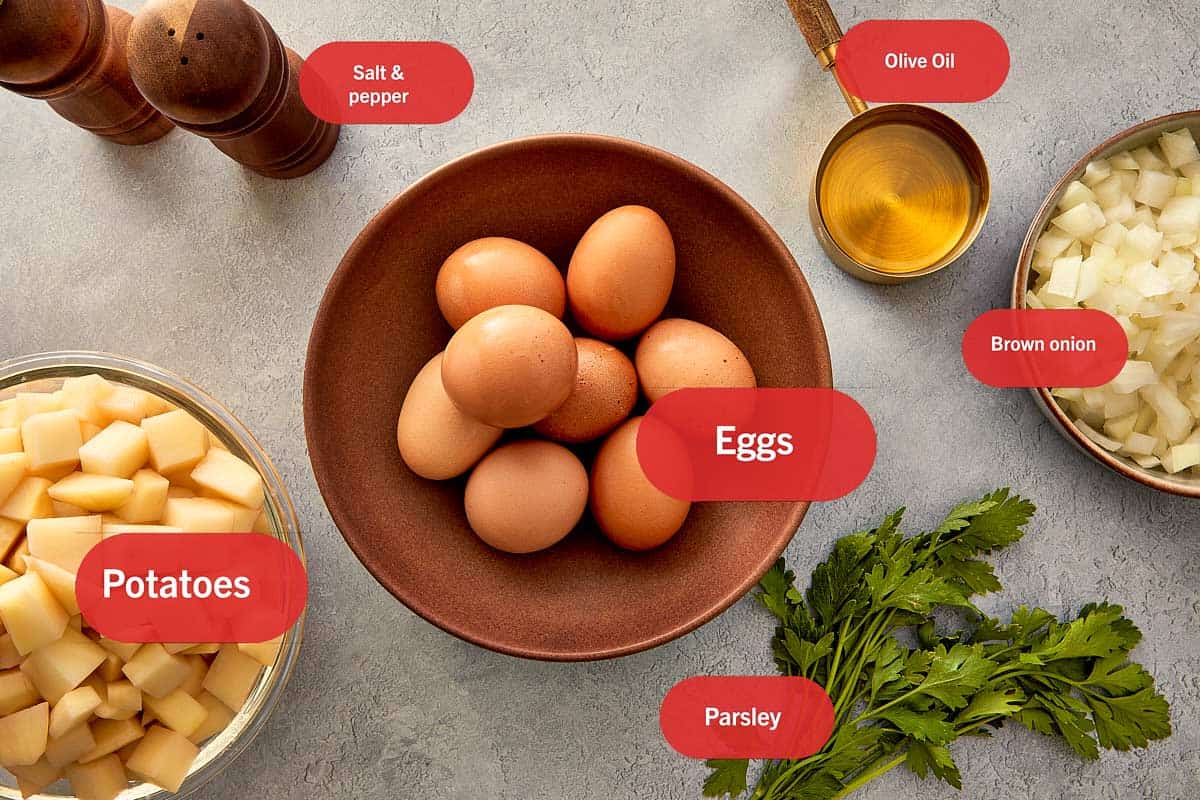
- Potatoes: We highly recommend using a waxy variety like Yukon Gold or red potatoes. We tried making this before with starchy Russet potatoes, and they break down too much in the pan, making the texture far too crumbly. Waxy potatoes keep the center soft while holding their shape beautifully.
- Eggs: You need just enough to fully coat the potatoes and hold the whole thing together. We have noticed that using too few eggs is the easiest way to end up with a dry omelette that falls apart as soon as you try to slice it.
- Onion: Some traditionalists skip the onion, but we think leaving it out is a missed opportunity for flavor. We cook it slowly alongside the potatoes so it softens completely and adds a subtle sweetness. Just take your time and do not rush the heat, because you want the onion soft, not browned.
- Olive Oil: A good quality olive oil is non-negotiable here. The goal is to gently cook the potatoes and onions in the oil until they are tender, rather than frying them on high heat.
- Salt: Please do not wait to season only the eggs at the end. We always salt the potatoes directly while they cook in the oil; otherwise, the final dish ends up tasting flat.
Note: Please see recipe card at the bottom for list of full ingredients and measurements
How Do we Make Spanish Omelette
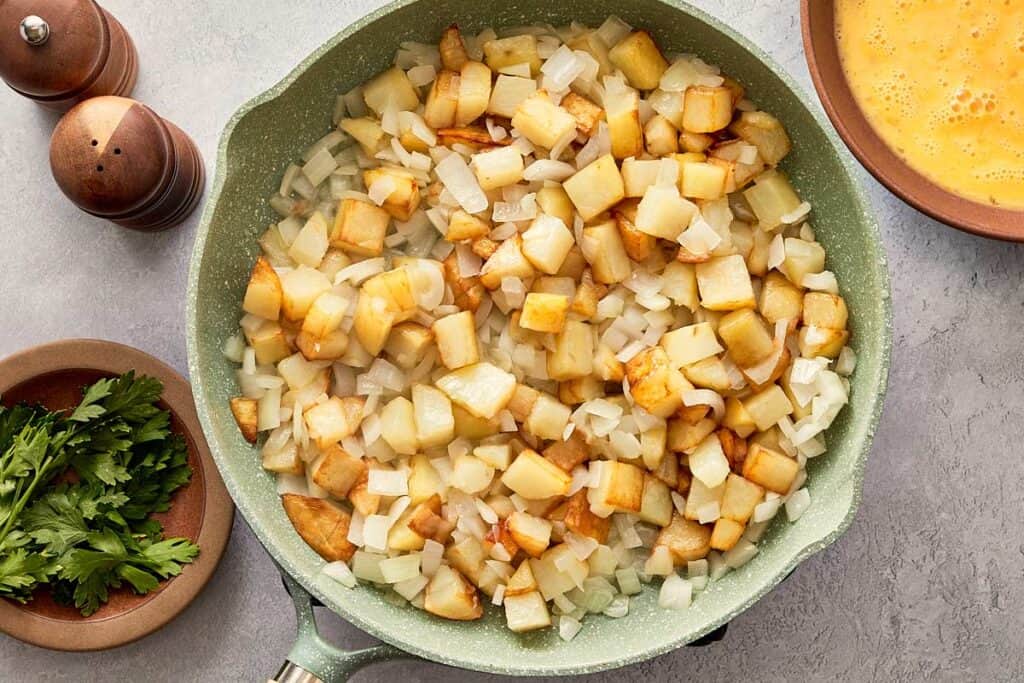
Making a great tortilla is not about complicated techniques. Having tested this endlessly since our first trip to Spain, we found it mostly comes down to controlling the heat. You want to cook the potatoes gently in the oil over moderate heat until they are tender enough to break with a spatula. If the heat is too high, they will fry and get crispy. Once the potatoes cook halfway through, add the onions so they get soft and sweet without burning.
The real secret to getting the right texture happens right before you mix in the eggs. We always make sure to:
- Drain the excess oil completely so the omelette stays light and the eggs set properly without turning greasy.
- Mix the warm potatoes and onions directly into the well-beaten, seasoned eggs so the mixture coats everything evenly.
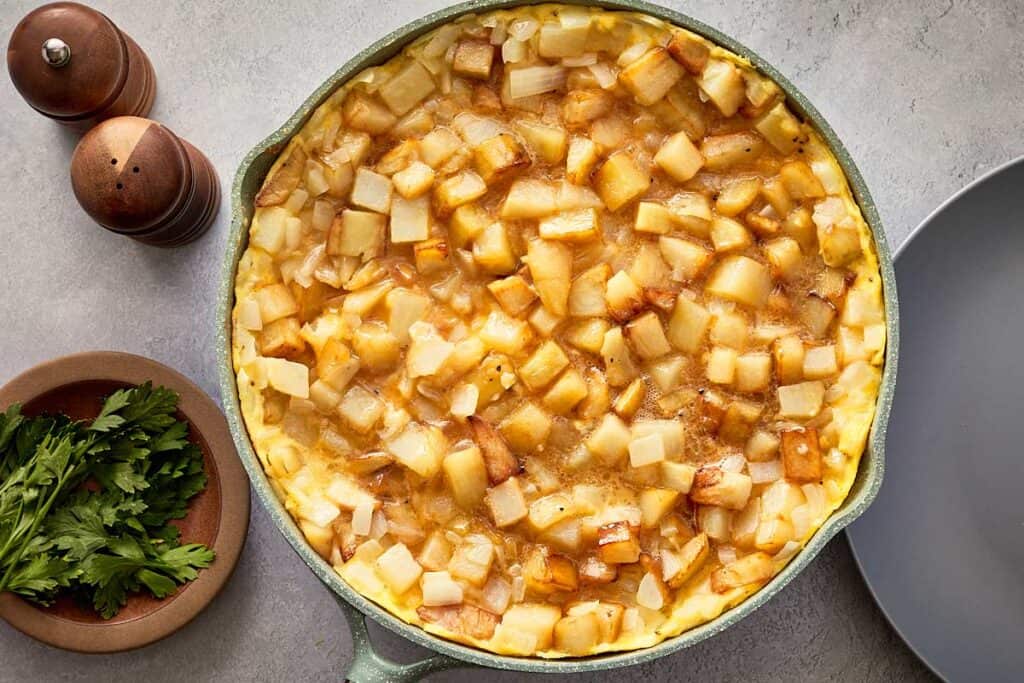
- Pour the mixture back into the pan, shift things gently at the beginning, and then leave it completely alone.
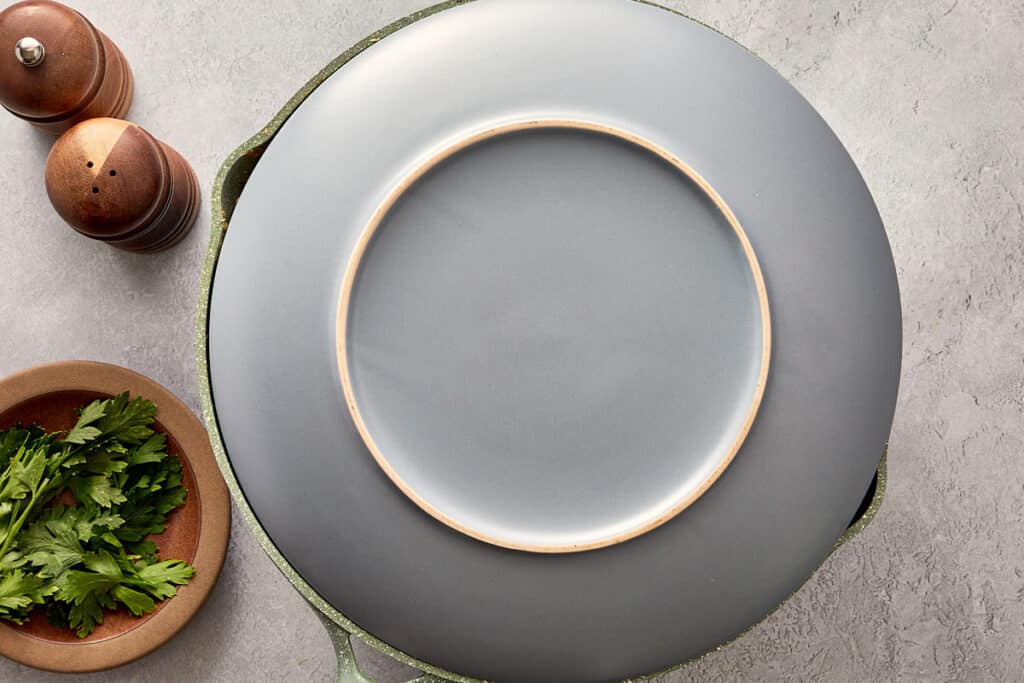
You will know it is ready to flip when the edges firm up and the center still has a slight jiggle. Place a large flat plate over the pan and flip it in one quick motion while the center is still a little soft. If you wait too long, the top will overcook and crack.
Finish cooking to your preference
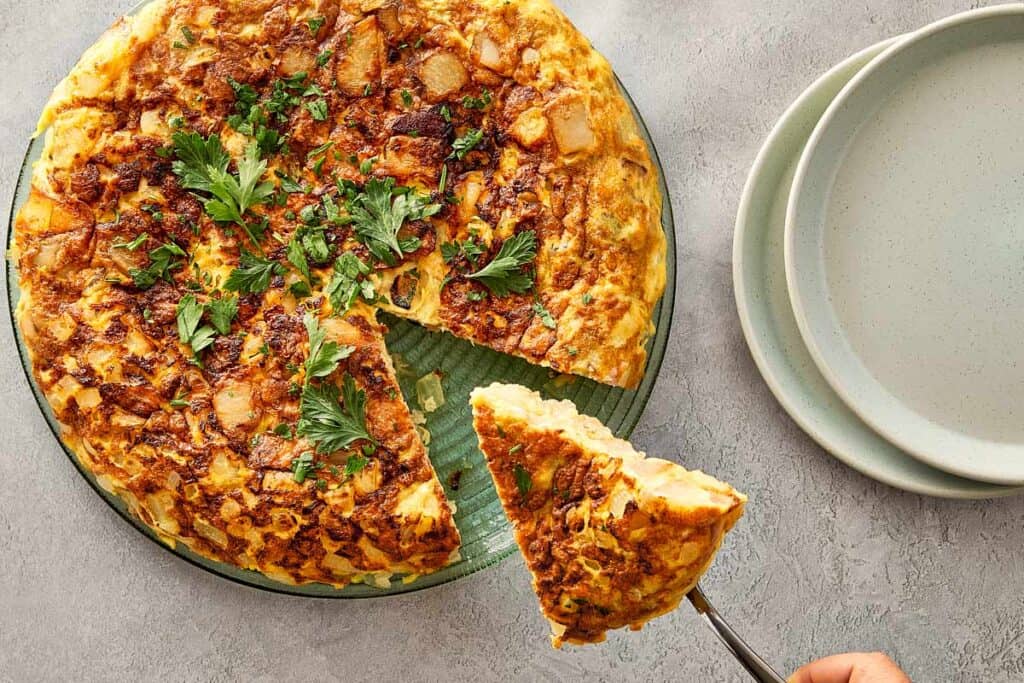
After you flip the omelette, you can leave the pan on the heat a bit longer if you want the eggs to set completely. We usually take it off the stove just as the middle sets so the inside stays tender when you cut into it. My mom always taught us that the absolute best way to eat this is with a simple squeeze of Kewpie mayo on top, and she is right.
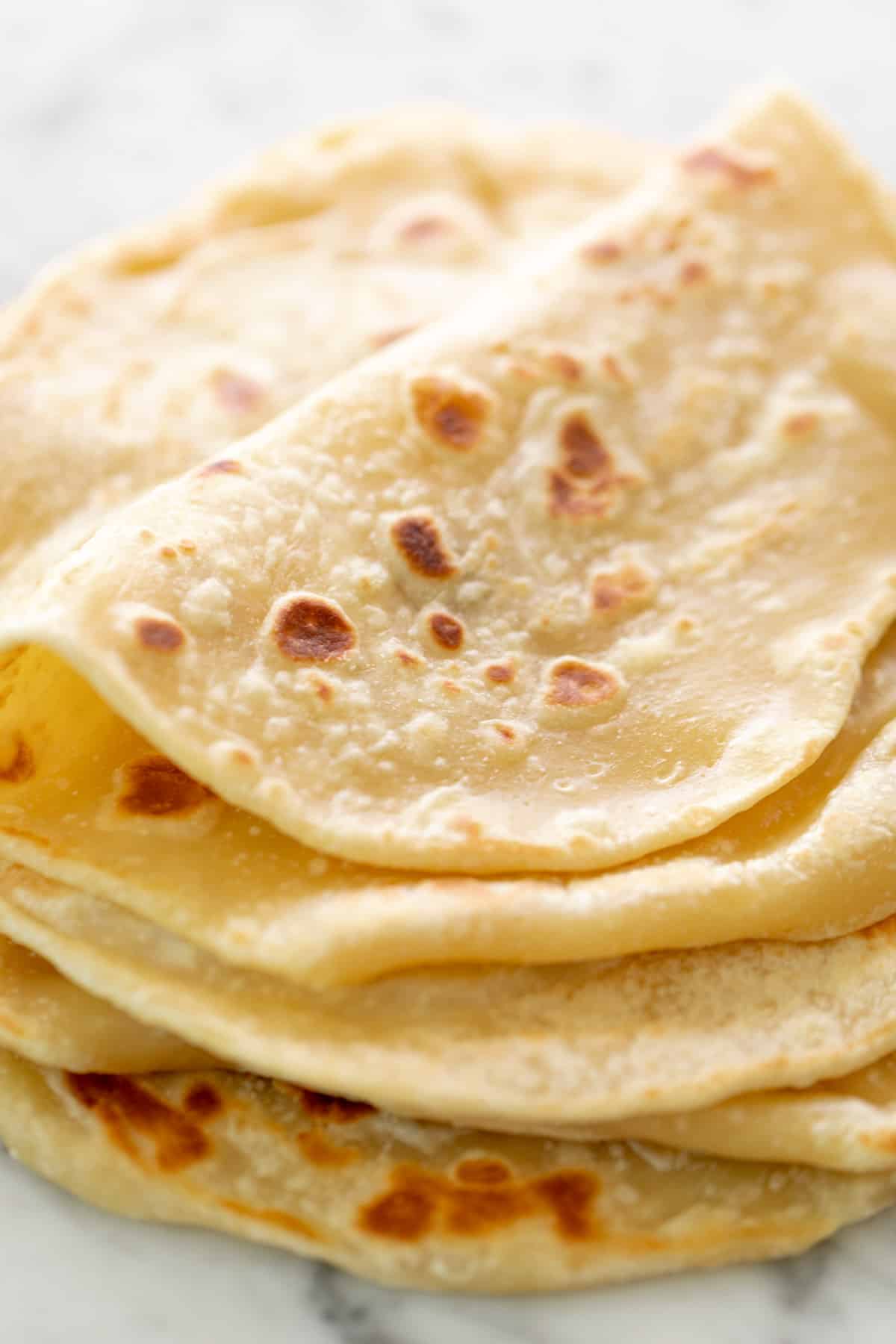
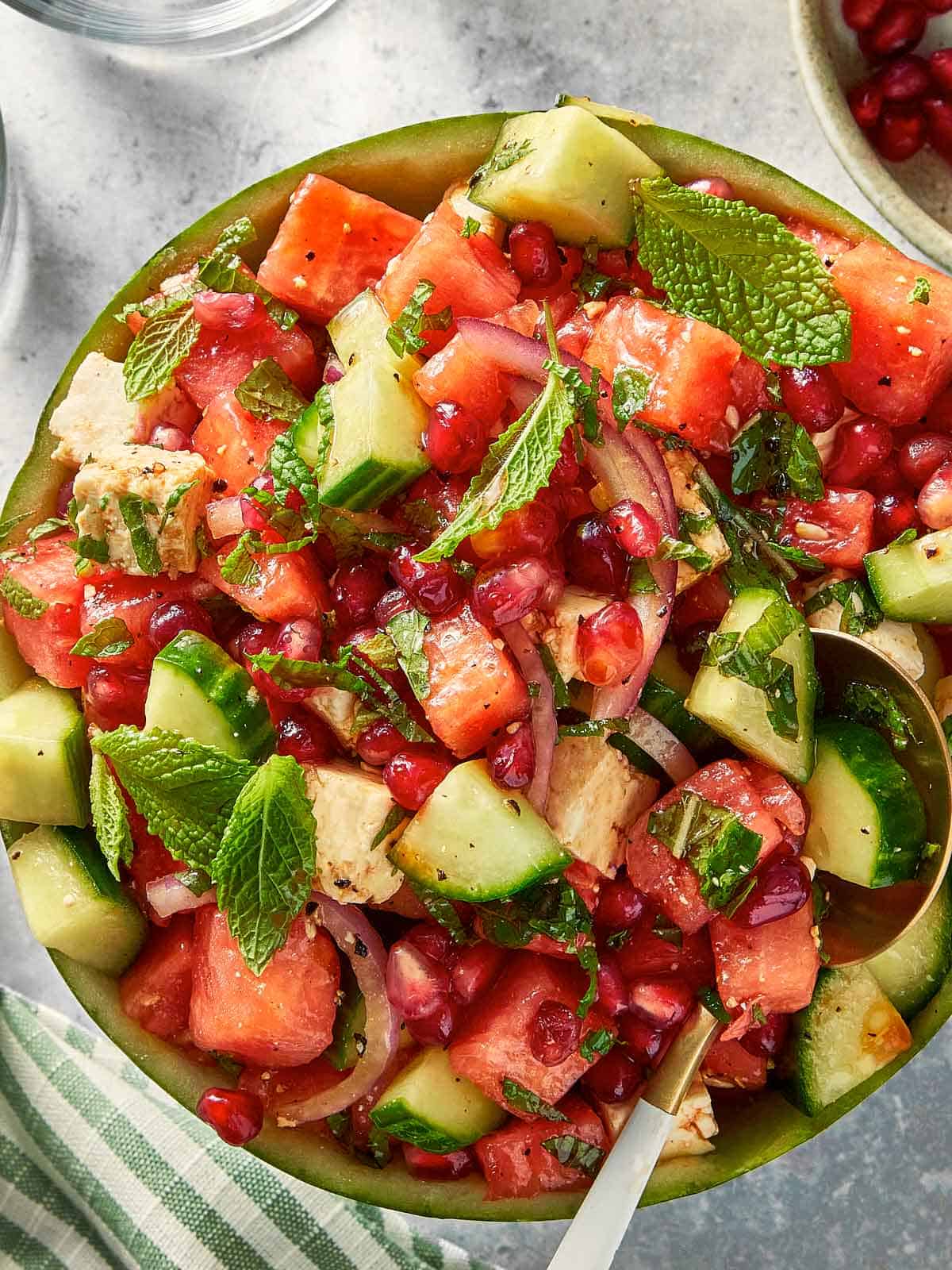
This omelette is incredibly versatile. We love serving it with a thick slice of warm crusty breador even next to a spinach and ricotta grilled sandwich if we need a filling meal. If we want a lighter plate, a fresh avocado chicken salada breakfast smoked salmon stack or some fresh avocados stuffed with tomatoes and mozzarella work well on the side.
When we are putting together a larger breakfast spread, we like to balance the table with a sweet baked overnight french toast or a tall stack of fresh blueberry pancakes. We will also add a few bite-sized cauliflower and egg muffins and finish the meal with a cold glass of whipped iced coffee.
Kitchen tip
When we make this at home, we always keep a few simple tricks in mind. The biggest secret is not rushing the potatoes. We let them gently cook in the oil over low heat until completely tender, rather than letting them fry or brown.
We also make sure we drain the excess oil before we add the eggs. Too much oil weighs the mixture down and makes it greasy. Once we mix the warm potatoes and onions into the beaten eggs, we let them sit together for a minute or two. This gives the potatoes time to absorb some of the egg, which helps the whole thing hold together.
Your pan size matters, too. We usually reach for a 9-inch or 10-inch skillet to get a thick slice with a soft center. If you use a pan that is too large, the omelette spreads out, becomes too thin, and overcooks quickly.
If flipping makes you nervous, our best advice is to use a flat plate slightly larger than your pan. Place it firmly over the top and flip the pan in one quick, confident motion. Make sure you do this while the center remains slightly soft so the top does not crack. After you turn it, gently slide the omelette back into the skillet to finish. If you prefer not to flip, you can always cook the base on the stove and finish the top under the broiler for a few minutes.
Recipe FAQ's
Why Did My Spanish Omelette Fall Apart?This usually comes down to structure. Either there weren't enough eggs to bind everything together, or the potatoes were cut too large and didn't cook evenly. It can also happen if you try to flip it when it's either too soft or already overcooked.
How Do we Know When The Omelette Is Done?The edges should be fully set, while the center still has a slight softness when pressed. It will continue to cook from residual heat after removing it from the pan, so don't wait until it feels completely firm.
Are Spanish Tortillas Different From Mexican Tortillas?Yes, even if they have the same same, a tortilla española is a ticker omelette with potatoes and eggs. A Mexican tortilla is way thiner and it's made from corn or wheat flour, classic ingredients for the base of tacos.
What Is Not Included In A Spanish Tortilla?It doesn't include ingredients like flour, milk, or fillings such as meats and vegetables. While you can add extras if you like, the classic version keeps it simple and focused on the potatoes and eggs.
What you need
- 1/2 cup olive oil
- 5 potatoes diced into 1-inch pieces (yukon gold potatoes are our favorite here!)
- 1 brown onion chopped
- 8 eggs
- 1 pinch salt to taste
- 1 pinch cracked pepper to taste
- 1 pinch parsley to garnish, optional
Method
- Heat the olive oil in a nonstick medium-sized (30cm/12-inch) pan over medium heat.
- Add the diced potatoes and cook gently, stirring occasionally, until they begin to soften.
- Continue cooking the potatoes until tender with lightly golden edges (not crispy).
- Add the chopped white onion to the pan.
- Cook the potatoes and onion together until the onion is soft and translucent.
- Drain most of the oil using a colander or by carefully removing excess oil from the pan. Return the potato and onion mixture to the pan and spread evenly. Reduce heat to low.
- Beat the eggs with salt and pepper in a bowl and pour the egg mixture over the potatoes and onions.
- Gently move the mixture with a spatula to evenly distribute the eggs and help them cook through.
- Cook until the edges are set and the center is still slightly soft.
- Place a large plate over the pan and carefully flip the tortilla onto the plate.
- Carefully flip the tortilla onto the plate.
- Slide the tortilla back into the pan to cook the other side.
- Cook until fully set and golden underneath. Flip again onto a plate and garnish with parsley if desired.
- Slice and serve.