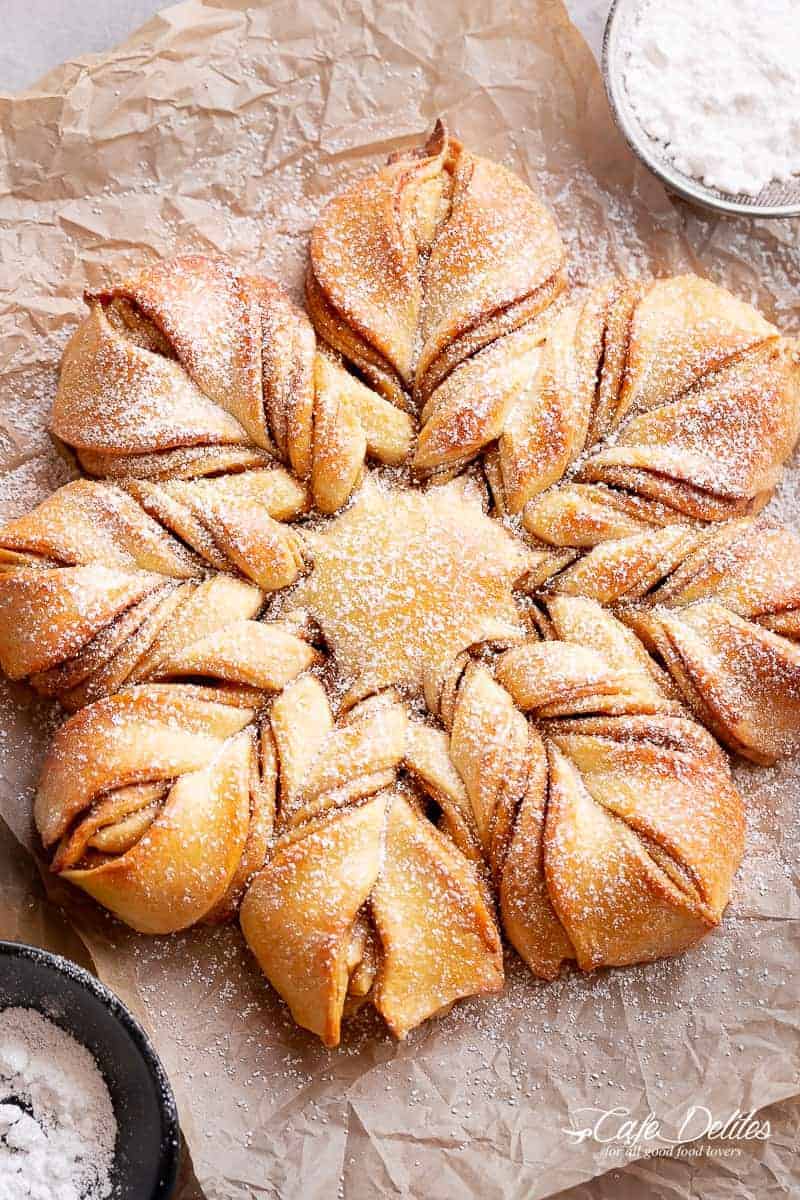
These Nutella scrolls are made with homemade dough and filled with Nutella instead of the classic cinnamon, giving them a slightly more indulgent twist. Trust us, it's like HEAVEN. Easy to cook and great to enjoy with the kids! For another chocolatey favorite French crepes filled with Nutella and fresh strawberries bring together that same creamy hazelnut flavor with a lighter, fruitier finish.
After a few tries, we found a version that keeps the Nutella flavor without feeling too heavy at the end. They're easy to make and don't require much hands-on time, since most of it goes into letting the dough rise.
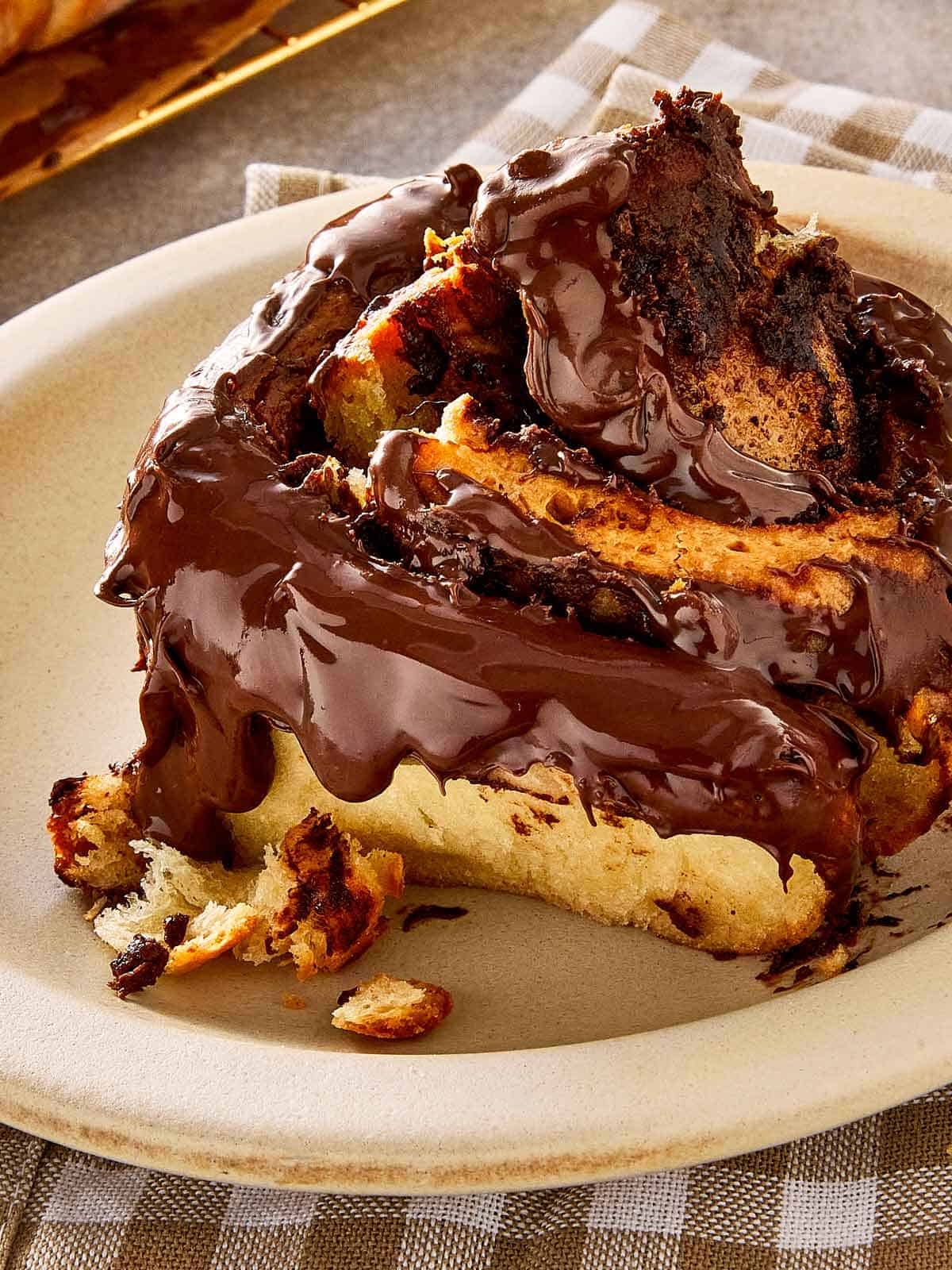
The Version we Keep Coming Back To
To be honest, we didn't get this recipe right on the first try. We saw Nutella rolls on our Instagram a few months ago when we were looking for a special treat. It reminded us of the times when we used to eat cinnamon rolls, spread nutella on them, and devour them. So we thought, we need to create a full, real version for the blog, one that's not too sweet but still has all the flavor. The first versions were way too heavy or just weren't that easy to make.
We adjusted the dough, making it from scratch instead of relying on shortcuts. It gives you more control over the texture, so the rolls stay soft without feeling dense, and they hold their shape better once they bake. It's the same reason we prefer going homemade with things like crepes or bread, where the texture makes all the difference.
Also, adjusting the Nutella so it spreads evenly without leaking out too much. That made a big difference in how the rolls bake and how the layers stay defined.
Ingredients
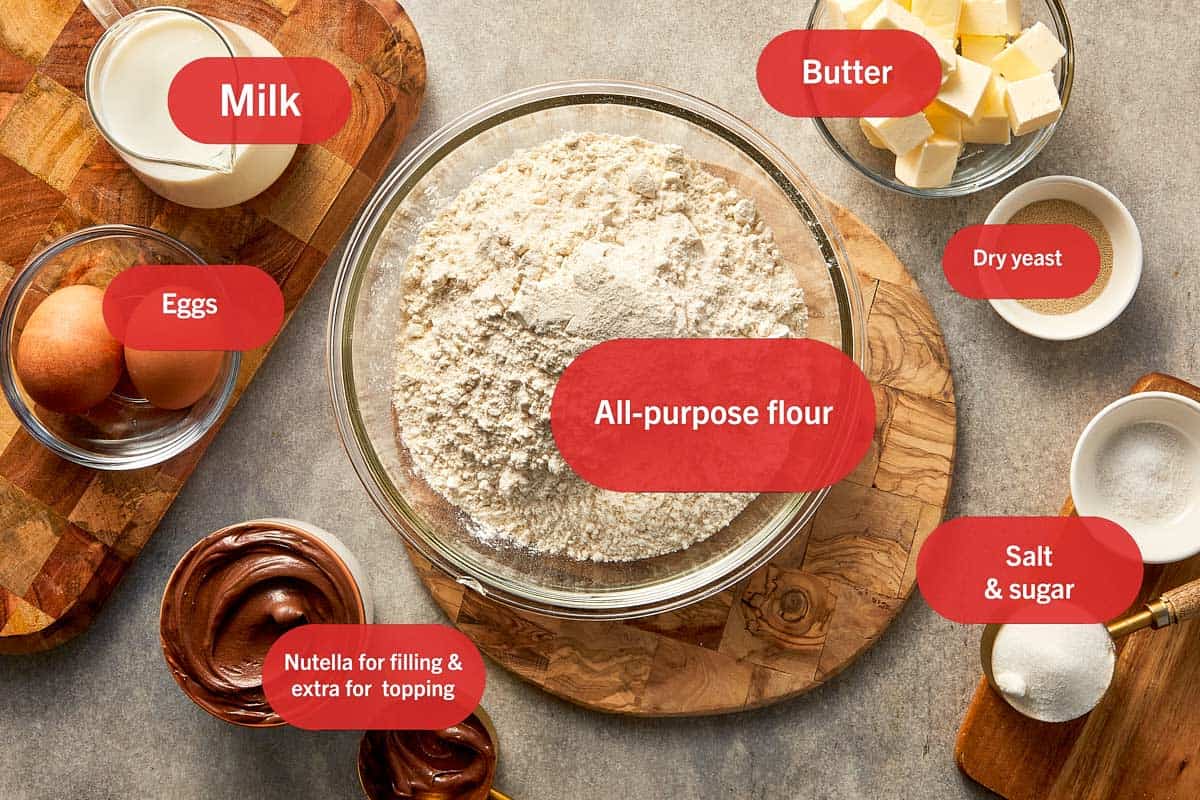
- The milk is what activates the yeast and helps start the rise. It also adds moisture to the dough, which is why the final rolls don't feel dry. Using warm milk helps the yeast develop properly, which directly affects how light the dough becomes.
- The yeast is what gives the dough structure and lift. As it works, it creates air pockets that turn into the soft layers inside the rolls once baked. Without a proper rise, the rolls tend to come out dense.
- For the filling Nutella replaces the traditional cinnamon sugar. It melts into the layers as the rolls bake, creating a more even spread of flavor throughout instead of staying in one place.
Note: Please see recipe card at the bottom for a full list of ingredients with measurements.
A few substitutions that still work well:
We like to find different options for our desserts, whether it's trying lighter versions like using sweet potato as a brownie baseor simple substitutions when we don't have everything at home.
- Instant yeast can be used instead of active dry yeast, with a slightly faster rise
- Other chocolate spreads can be used in place of Nutella with a similar result
- The amount of filling can be adjusted depending on how strong you want the chocolate flavor
Once you understand how each ingredient works, it's easier to adjust the recipe without affecting the final result.
Tips & Techniques
- When you're mixing the dough, we like to stop as soon as it looks smooth and comes together. Don't overthink it. If you keep kneading for too long, it starts tightening up and you'll feel it later when the rolls don't rise the same way.
- When it comes to flour, go slowly. It's always easier to add a little more than to fix a dough that's already too dry. We usually keep it slightly soft and a bit tacky, that's what gives you that lighter texture in the end.
- For the Nutella warm it just a little before spreading. It makes everything easier. If it's too firm, it pulls on the dough and you end up fighting it instead of just spreading it smoothly.
- When you roll the dough, don't rush it. Use your hands to guide it and keep it even as you go. We like to apply light pressure and roll slowly so the layers stay consistent instead of bunching up in one spot.
- Cutting is another one people overlook. Don't press down too hard. We usually use a serrated knife and let it glide through, or even dental floss if we want clean edges. That way the rolls keep their shape.
- For the second rise, just let them sit until they look slightly puffed. You don't need to guess too much here, if they look fuller and softer, they're ready.
- And when baking, keep an eye on them toward the end. You're not looking for deep color, just lightly golden. We usually pull them out a little earlier rather than later, so they stay soft inside.
On the stove
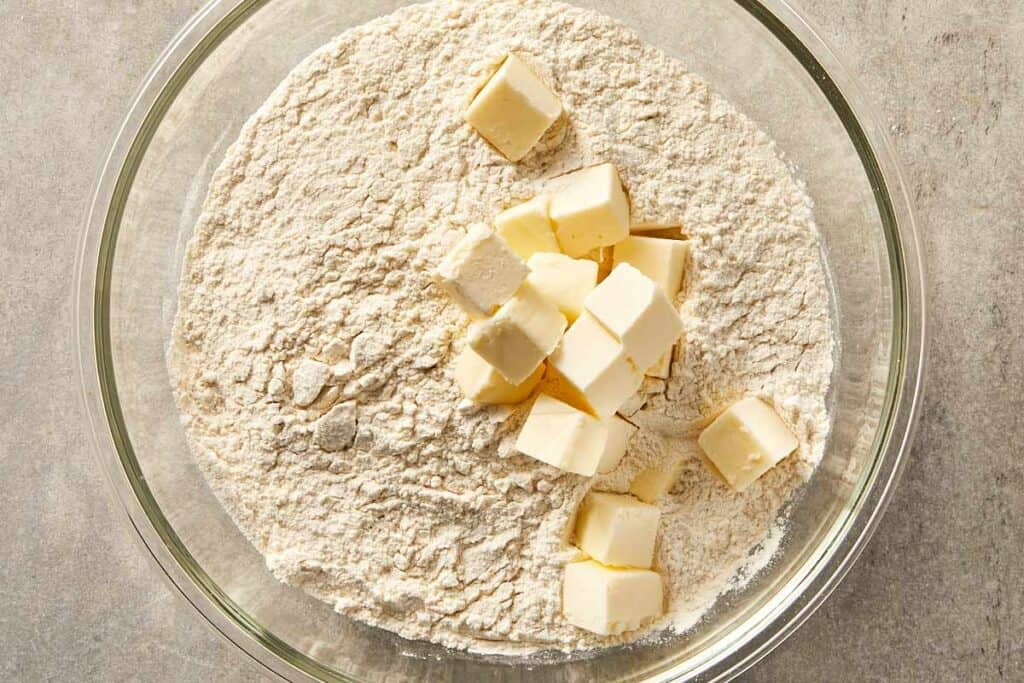
- In a large mixing bowl, prepare the dry ingredients. Sift the flour and add the sugar and salt. Add the cubed butter and cut it into the flour until the mixture looks like small pea-sized crumbs.
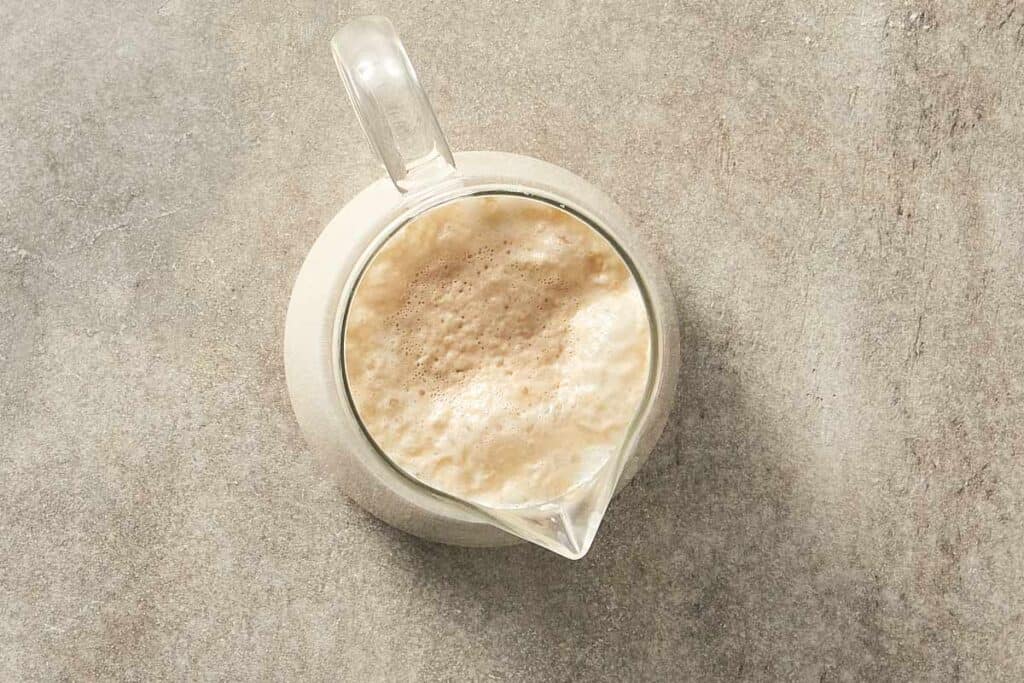
- In a jug or measuring cup, stir the warm milk, yeast, and a little sugar together. Let it sit for about 10 minutes, or until foamy on top.
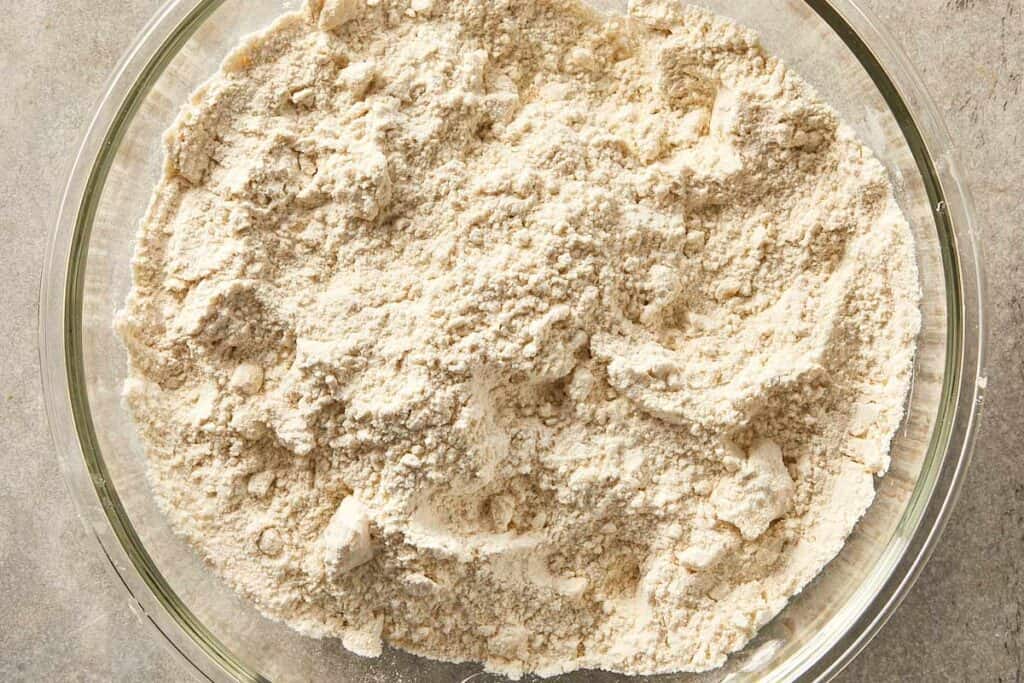
- Keep mixing the butter into the flour until you have a crumbly mixture with small pieces of butter throughout.
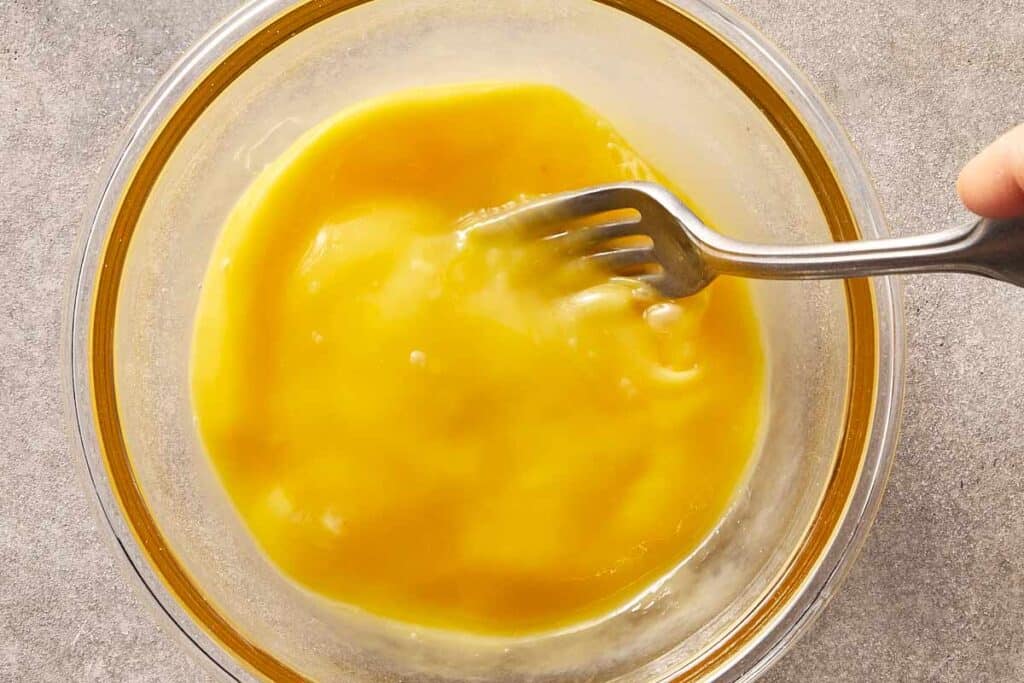
- Lightly beat the eggs in a small bowl until combined.
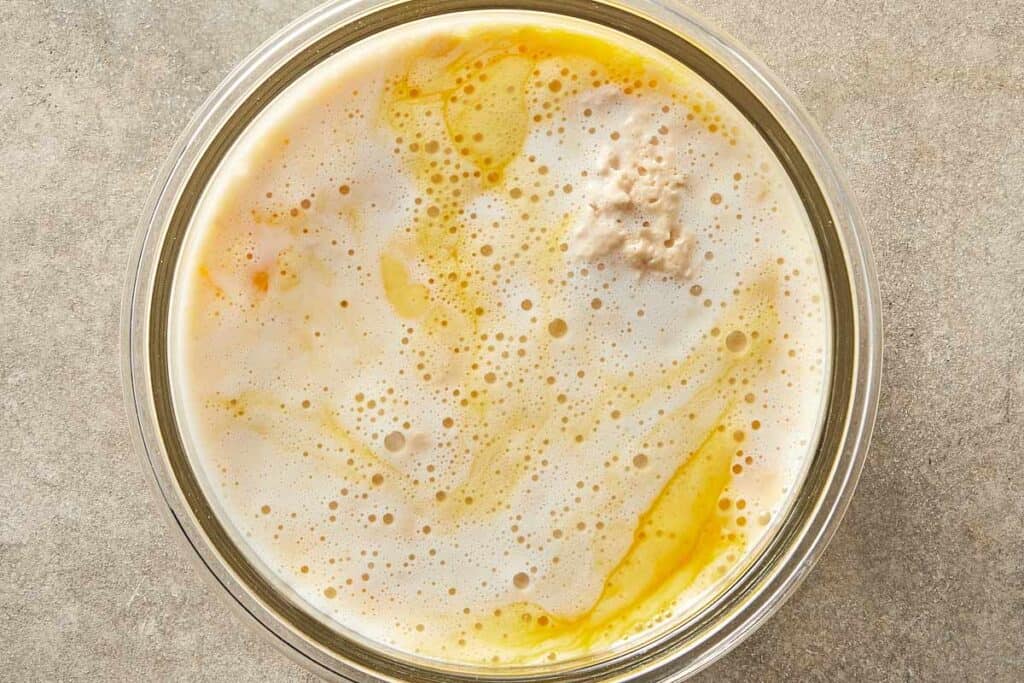
- Add the beaten eggs and the foamy yeast mixture together so they're ready to go into the dough.
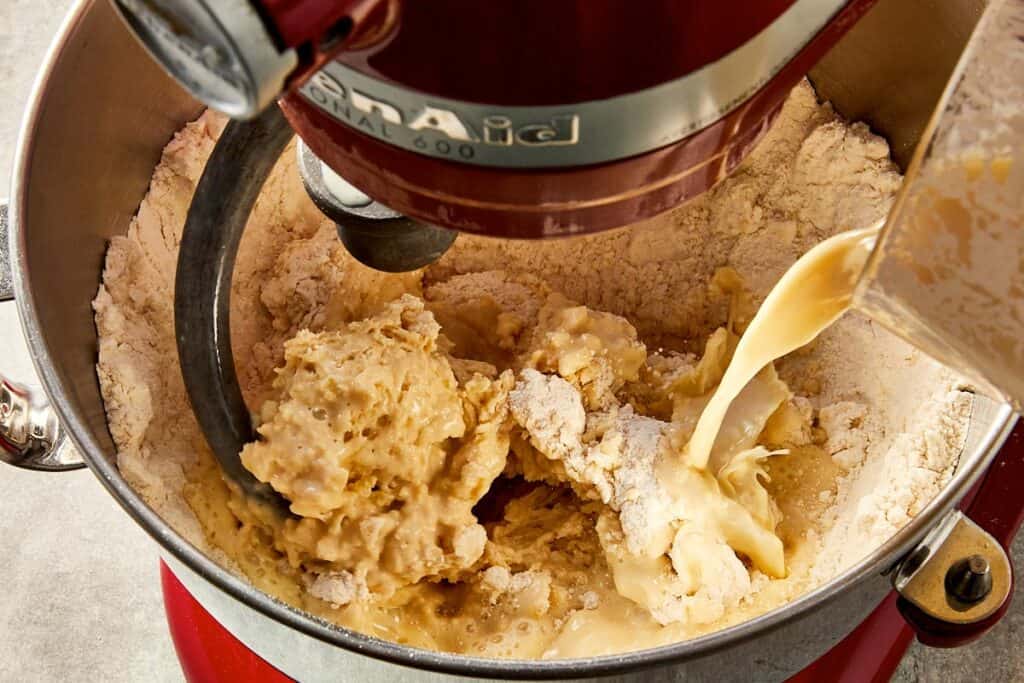
- Transfer the flour mixture to the bowl of a stand mixer fitted with a dough hook. Pour in the yeast mixture and beaten eggs.
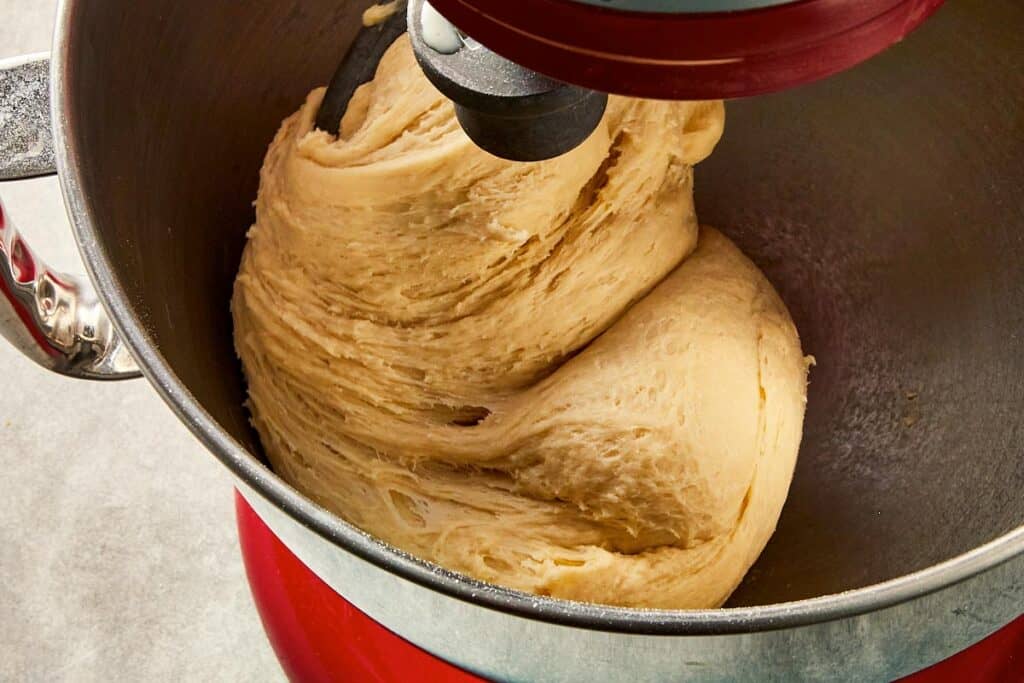
- Mix on low speed until the dough starts coming together, then increase to medium speed and knead for about 5 minutes, until smooth and elastic.
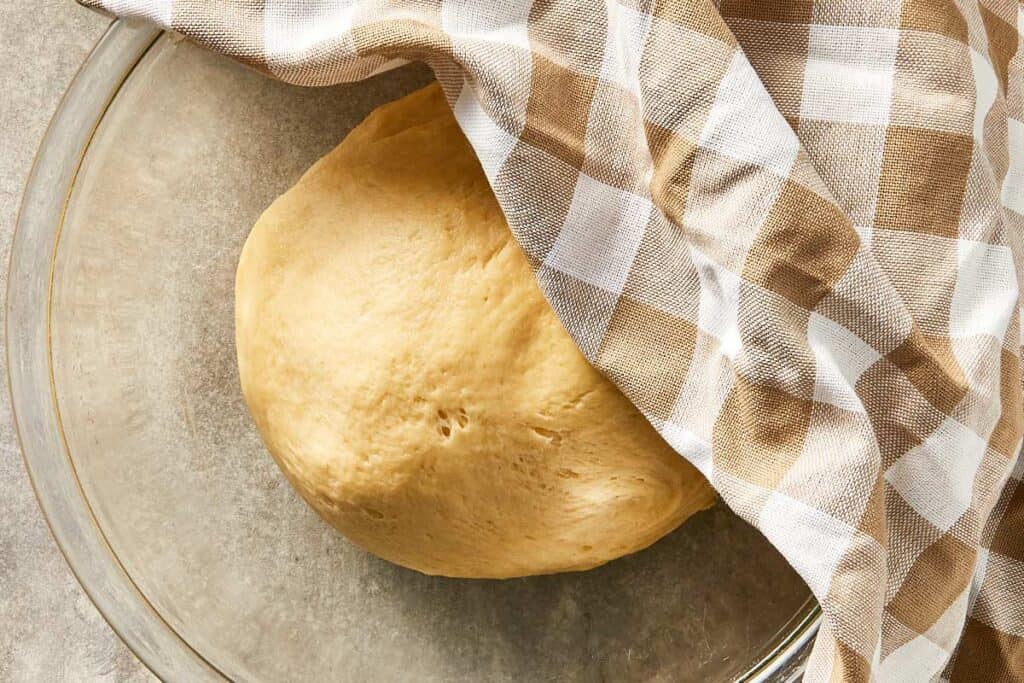
- Shape the dough into a ball and place it into a lightly greased bowl. Cover with plastic wrap or a clean towel.
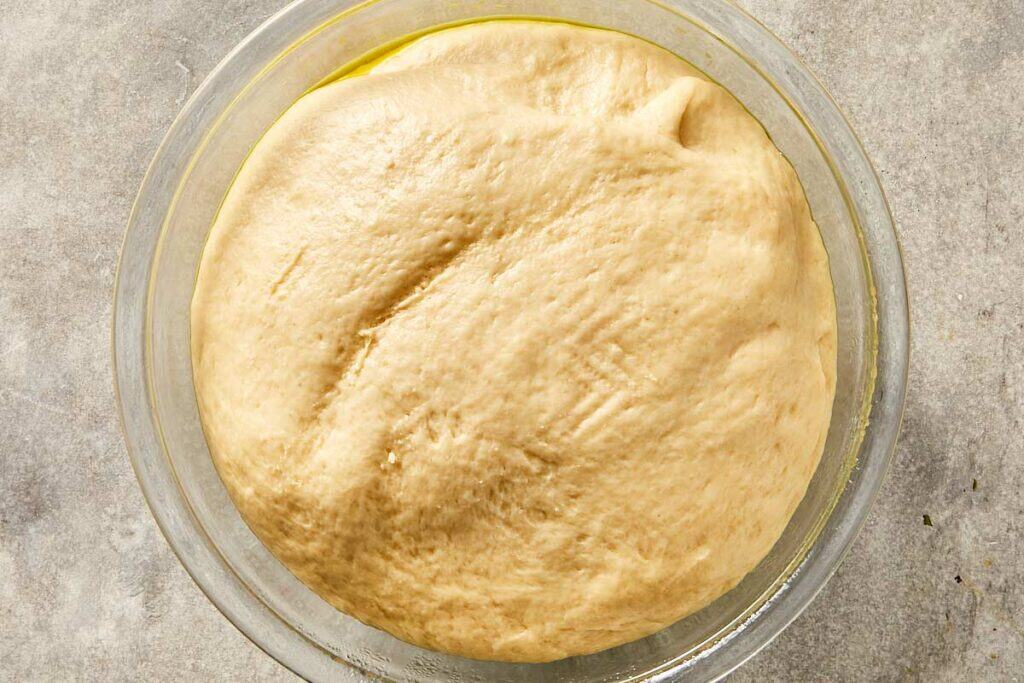
- Let the dough rise in a warm spot for about 1 hour, or until doubled in size.
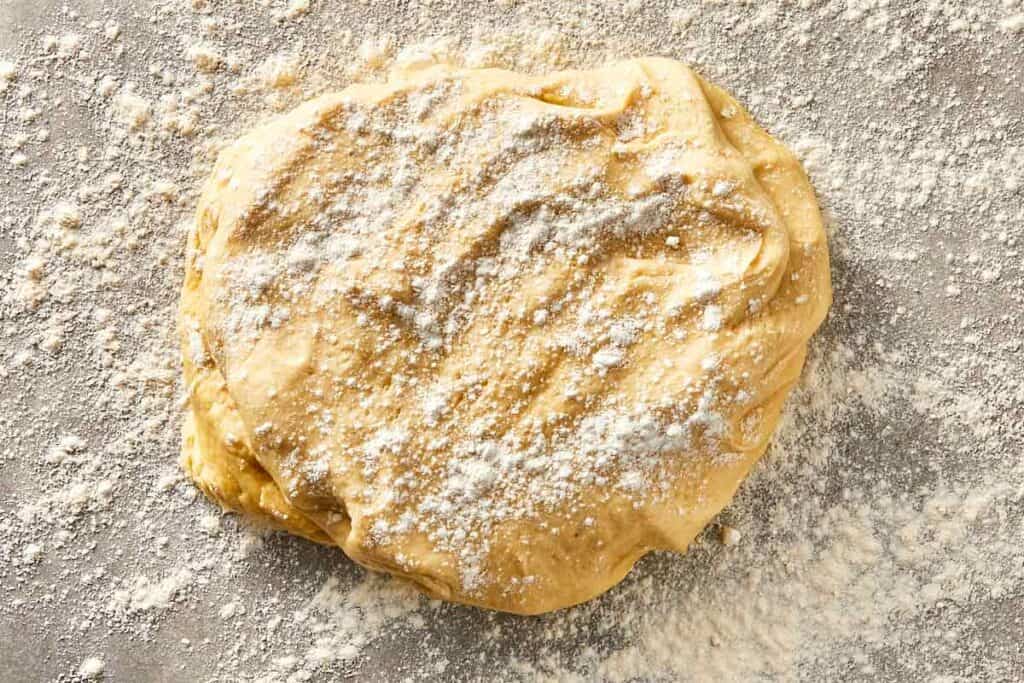
- Turn the dough out onto a lightly floured surface.
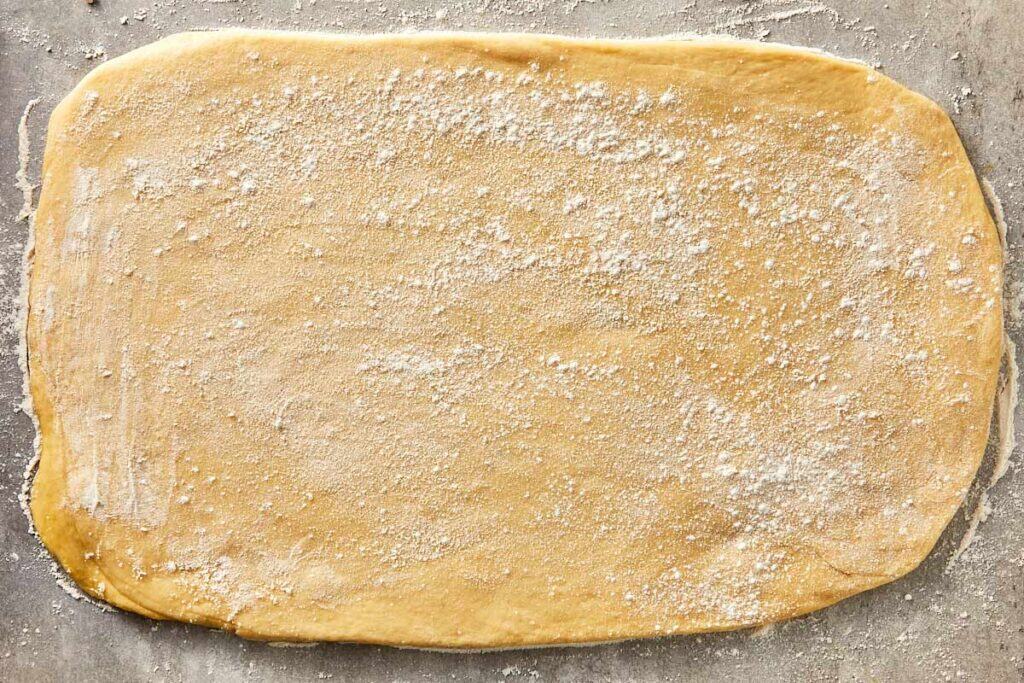
- Roll the dough into a large rectangle about 1/4 inch thick.
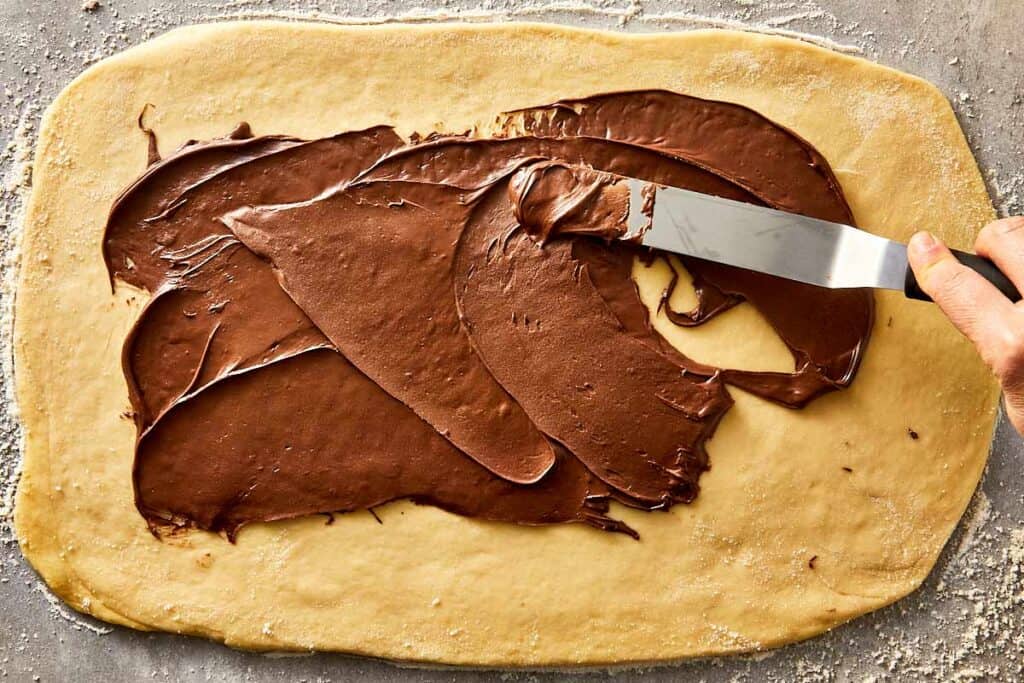
- Warm the Nutella, so it's easier to spread.
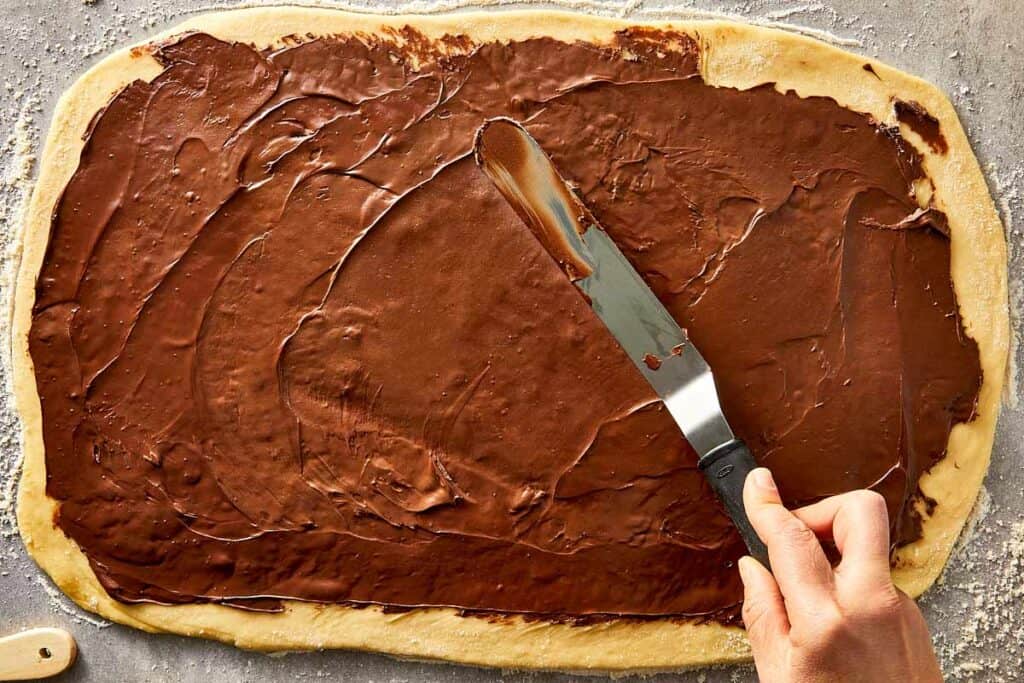
- Use an offset spatula or knife to spread the Nutella into an even layer, leaving a small border around the edges.
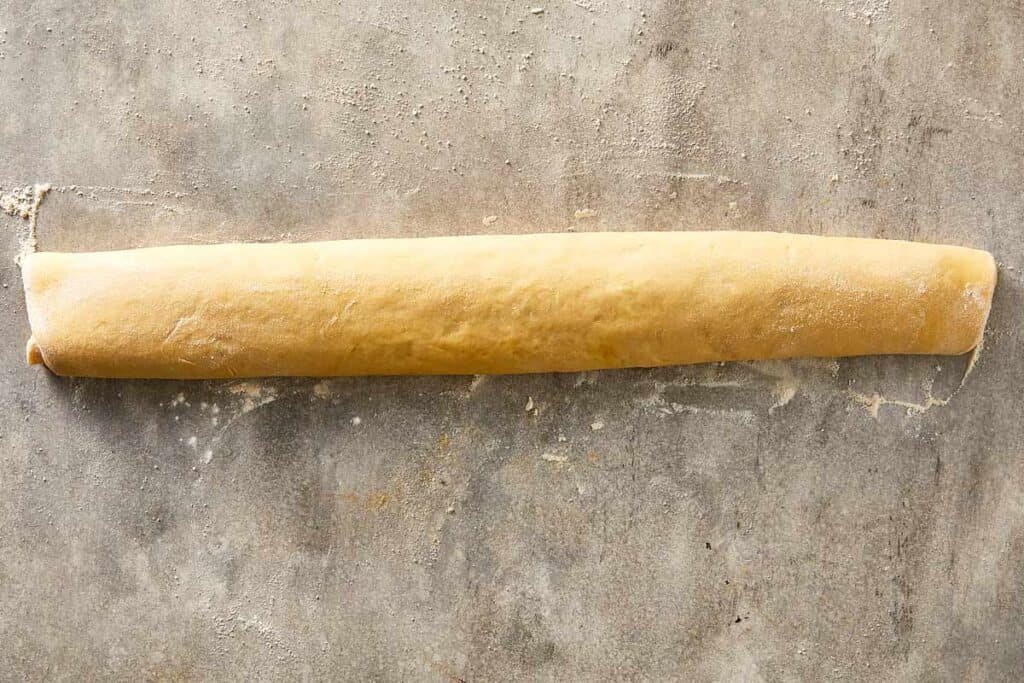
- Starting from the short side, roll the dough up into a log.
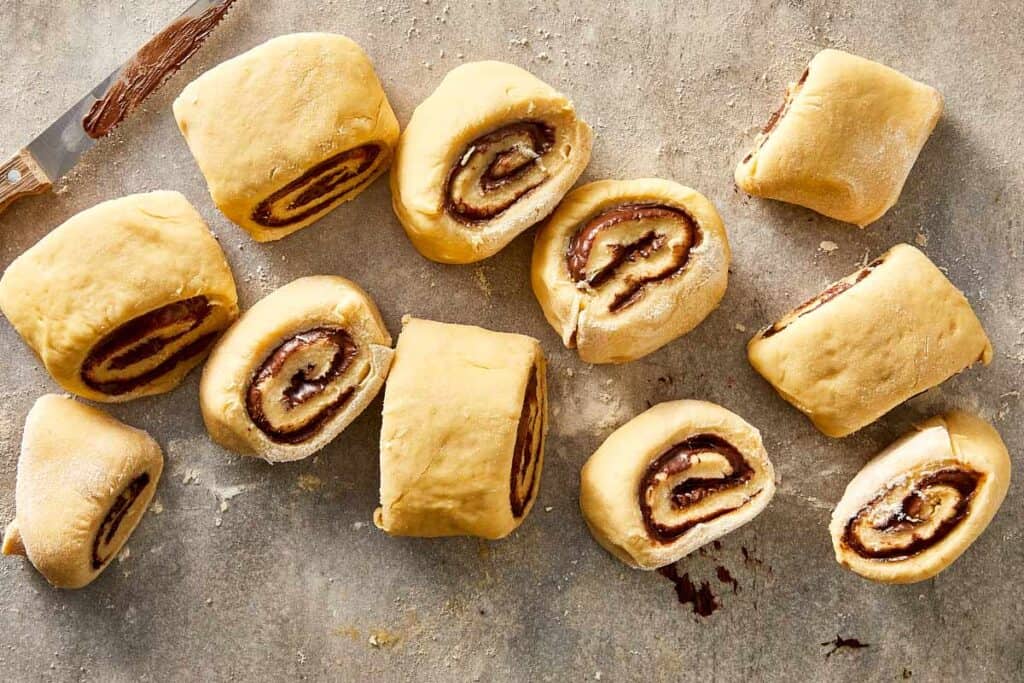
- Cut the log into 12 equal pieces using a serrated knife or unflavored dental floss.
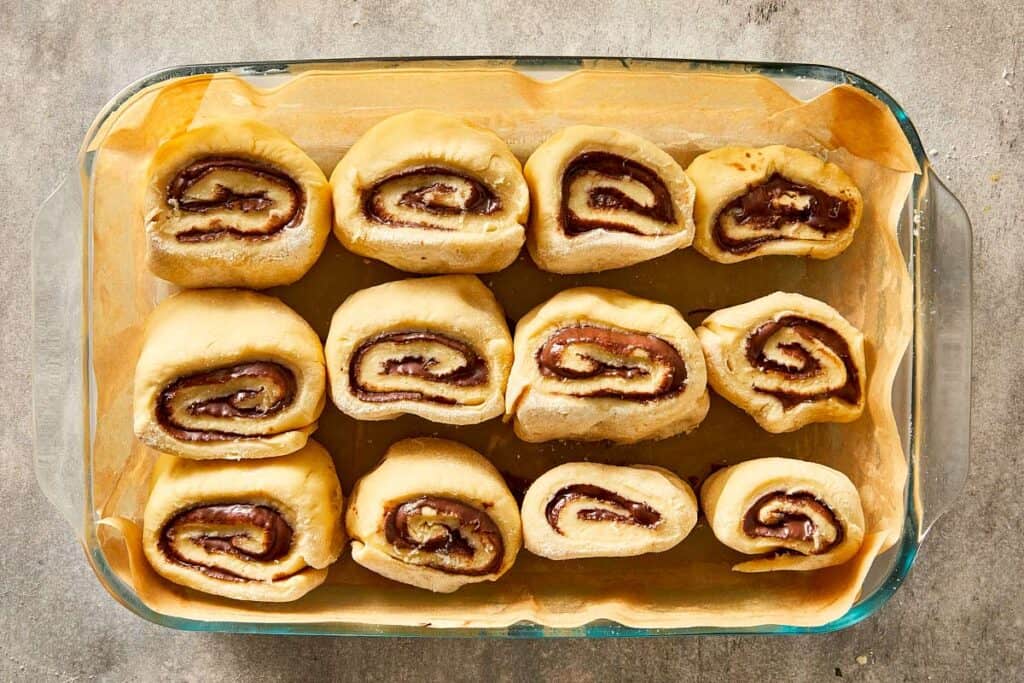
- Arrange the rolls in a greased 9×13-inch baking sheet lined with baking paper. (You can use parchment paper too)
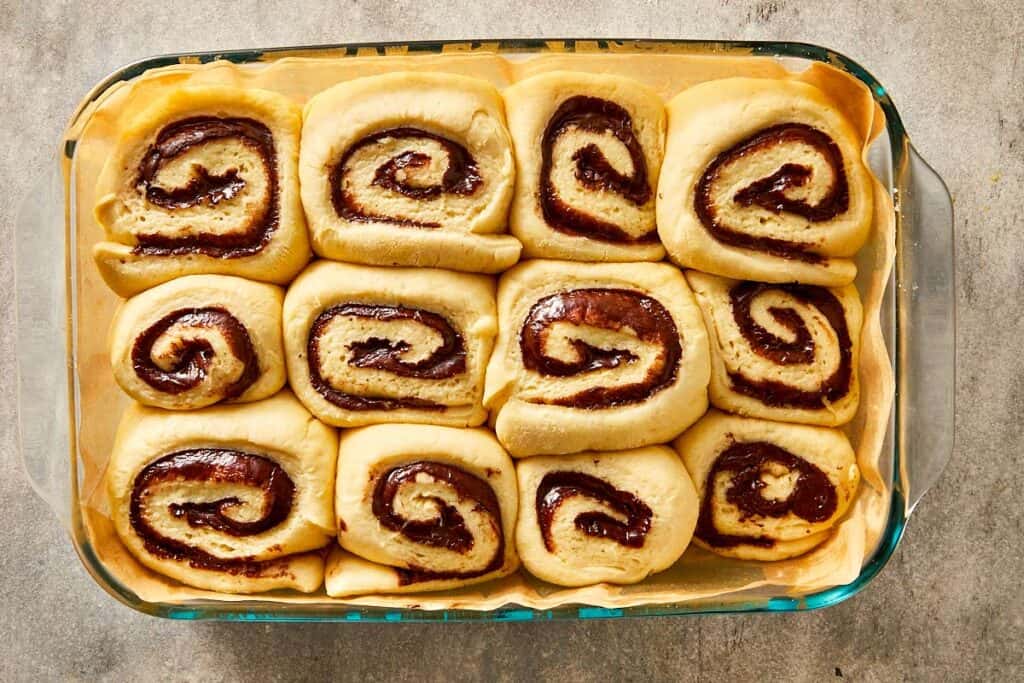
- Cover and let them rise again for 30 minutes to 1 hour, or until puffed and touching.
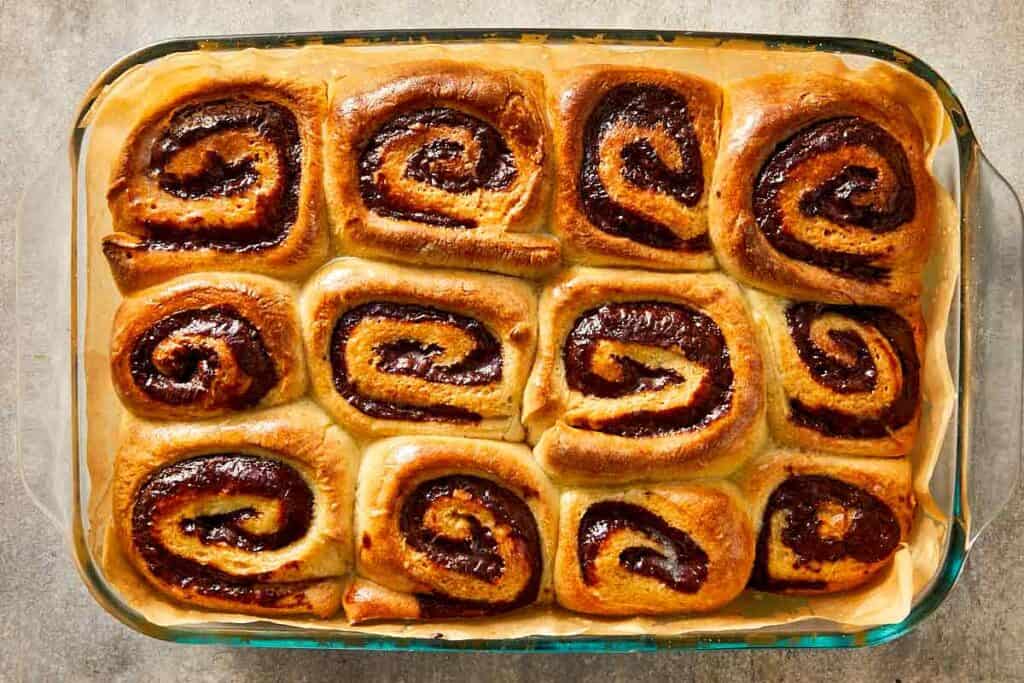
- Bake until lightly golden brown and cooked through.
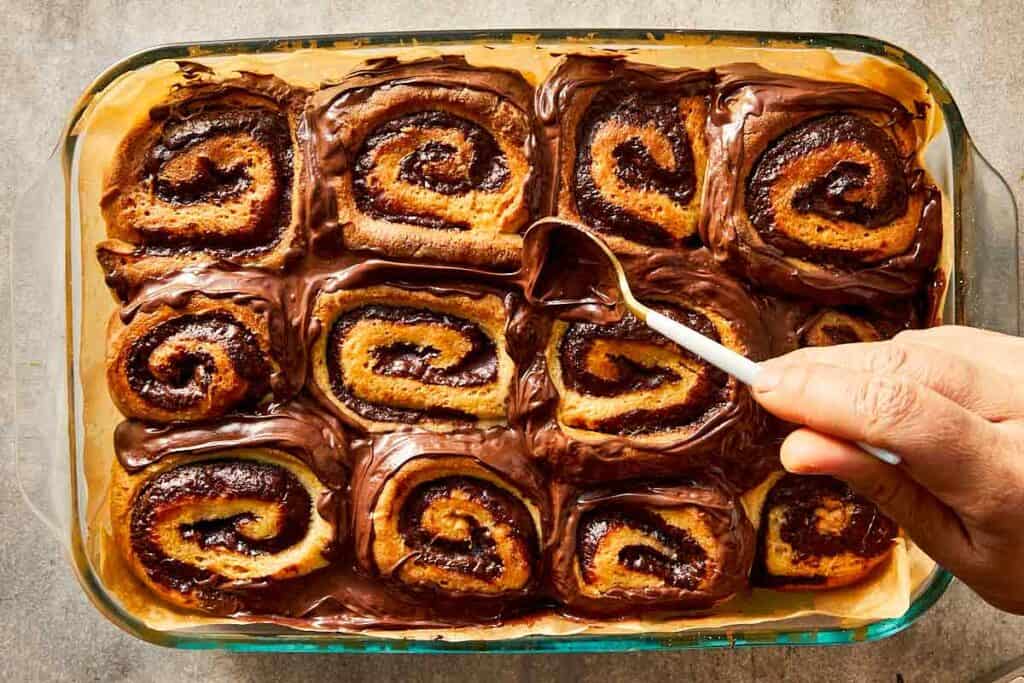
- While still warm, drizzle or spread melted Nutella over the top with a spoon.
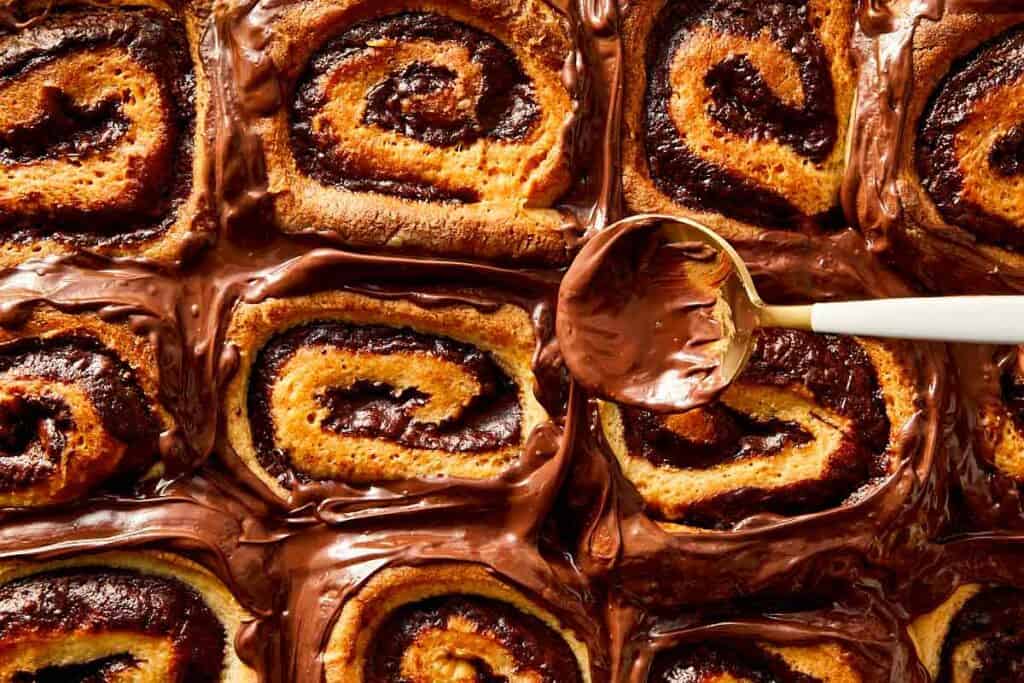
- Serve warm, while the Nutella is still soft and glossy.
:
If your dough didn't rise, it's usually because the yeast didn't activate properly. Make sure the milk isn't too hot or too coldand that you see some foam before moving on.
If the rolls turned out dense, it often comes from adding too much flour or not letting the dough rise fully. The dough should feel soft before rising and double in size.
If the Nutella is leaking out while baking, it was likely too melted. It should be soft enough to spread, but not runny.
If the tops are browning too fast in the oven, loosely cover the pan with foil for the last few minutes.
Serving Suggestions
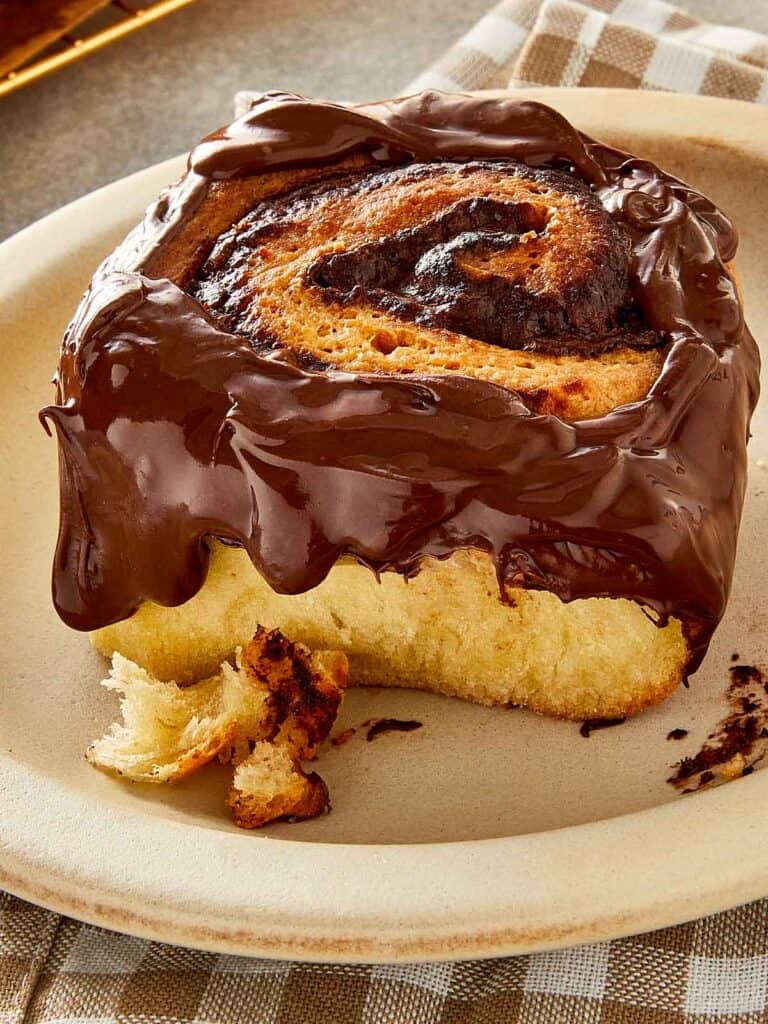
These Nutella swirl buns are best when they're warm, right after the Nutella on top has melted into the rolls.
We usually serve them straight from the pan and let everyone pull one apart while they're soft. That's when the layers are easiest to see, and the filling is still creamy.
If you want to make them feel a bit more “complete” (especially for brunch), you can serve them with something lighter on the side to make them feel less heavy. Fresh fruit salad or fresh strawberries work well, or something simple like yogurt.
You can also:
- Add a light dusting of powdered sugar if you want something a little less rich
- Serve with coffee or espresso to cut through the sweetness
- Warm them slightly before serving if they've been sitting for a while
You don't need much else to complete them.
Keeping leftovers
If you have leftovers, they keep well and stay soft if stored properly.
To store, let them cool completely and place them in an airtight container.
- At room temperature: up to 1–2 days
- In the fridge: up to 4 days
For reheating, we usually go with the microwave because it brings the softness back quickly.
- Microwave in a microwave-safe bowl 15–25 seconds per roll until warm and soft again
- Oven: warm at low temperature (around 300°F / 150°C) for a few minutes if reheating multiple rolls
If they feel a little dry after being in the fridge, just warming them slightly makes a big difference.
You can also freeze them:
- Freeze baked rolls (without topping if possible) for up to 2 weeks
- Thaw overnight in the fridge, then warm before serving
Once reheated, the texture comes back surprisingly close to fresh.
Cook notes
What Is The Difference Between Crescent Rolls And These Nutella RollsCrescent rolls are made with a laminated-style dough (similar to a quick croissant dough), which gives them a lighter, more layered and slightly flaky texture. These Nutella scrolls use a soft yeast dough instead, so they bake up more like a classic cinnamon roll, fluffy, structured, and easier to control when shaping and filling.
How To Use Store-Bought Dough InsteadYou can, but the texture will be different. Homemade dough gives you more control and keeps the rolls softer. Store-bought versions tend to bake up a bit heavier and don't hold the layers the same way.
How To Make Nutella Rolls Without Them Turning DenseThis usually happens when too much flour is added or the dough didn't rise enough. The dough should feel soft before rising and double in size before baking.
What you need
- 1 cup milk warmed to 110°F (44°C)
- 2 1/4 tsp active dry yeast
- 2 large eggs room temperature
- 4 1/2 cups all-purpose flour
- 1 tsp salt
- 1/4 cup granulated sugar
- 10 tbsp unsalted butter room temperature and cubed
- 1 1/4 cups Nutella
- 1/2 cup melted nutella extra, optional
Method
- Heat the milk until it reaches 110°F. Stir in the yeast and 1/2 tbsp sugar, then let it sit for 10 minutes until foamy.
- In a large mixing bowl, sift the flour, then add salt and sugar. Add the cubed butter and work it in until it resembles small pea-sized pieces.
- Lightly beat the eggs, then add them along with the yeast mixture into a stand mixer. Mix with a dough hook on low speed until the dough forms, then increase to medium and knead for 5 minutes.
- Place the dough in a greased bowl, cover, and let it rise in a warm oven (turned OFF) for about 1 hour, or until doubled.
- Turn the dough onto a lightly floured surface and roll it into a rectangle about 1/4 inch thick.
- Warm the Nutella for about 15 seconds, then spread it evenly over the dough.
- Roll the dough from the short side into a log, then cut into 12 rolls using a serrated knife or dental floss.
- Place the rolls in a greased 9×13-inch pan, cover, and let rise again for 30 minutes to 1 hour.
- Bake at 375°F for 23–27 minutes until lightly golden brown.
- Spread or drizzle melted Nutella over the warm rolls.