Let's be honest for a second. Homemade bread can feel intimidating. Yeast, rising times, kneading, all of it sounds like a commitment. Focaccia is the bread that made us stop overthinking it.
The first time we made this Focacciawe wasn't planning on baking bread at all. We just wanted something warm to go with dinner and didn't feel like running out to the store. We mixed everything in one bowl, pressed the dough into a pan, drizzled olive oil on top, and hoped for a reliable.
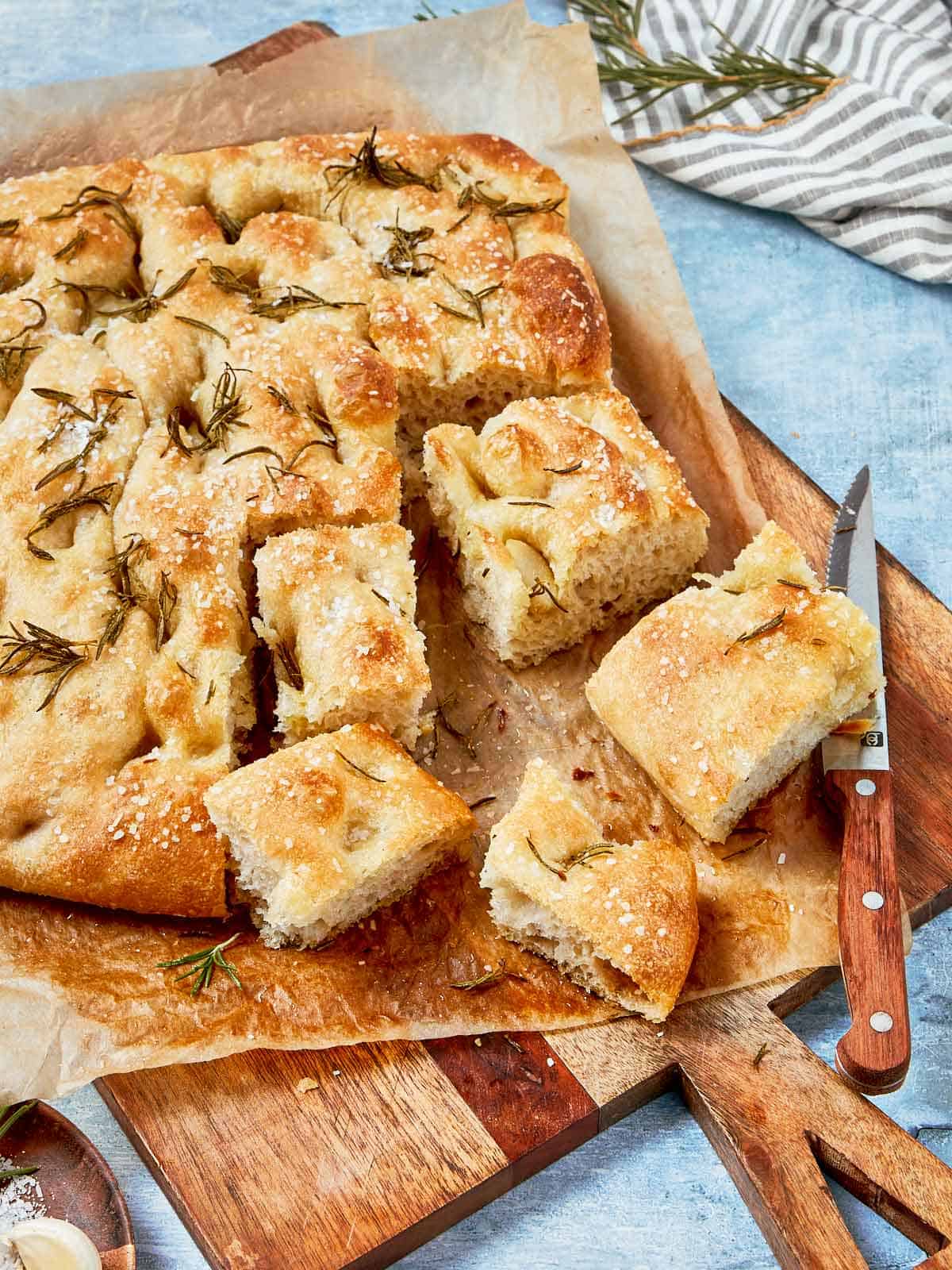
It came out better than expected. Soft inside, crisp on the edges, and gone faster than anything else on the table. That's when we realized focaccia doesn't need to be complicated to be good.
This recipe has been on repeat ever since.
It's the kind of bread that's good for soaking up sauces, especially something sweet and sticky like our Honey Lemon Chicken.
Why This Recipe Works
Here's why this focaccia works even if you've never baked bread before.
First, the dough is forgiving. There's no heavy kneading and no complicated steps. You mix, let it rise, press it into the pan, and let the oven do the rest. If the dough looks a little messy, that's fine. It's supposed to.
The olive oil does a lot of the work here. It keeps the inside soft and gives the top that crisp, slightly chewy texture that focaccia is known for. Skimping on the oil is the fastest way to end up with dry bread, and we learned that lesson once, so you don't have to.
Timing also matters, but not in a stressful way. This dough doesn't need hours of babysitting. A good rise and a hot oven are enough to get that bakery-style result without turning your kitchen into a project.
And if you want to get a little creative with this bread, you should try cooking a good Focaccia Pizza.
Ingredients That Actually Matter
You'll see a short ingredient list for this focaccia, but a few of them do the heavy lifting. These are the ones you can't mess with.
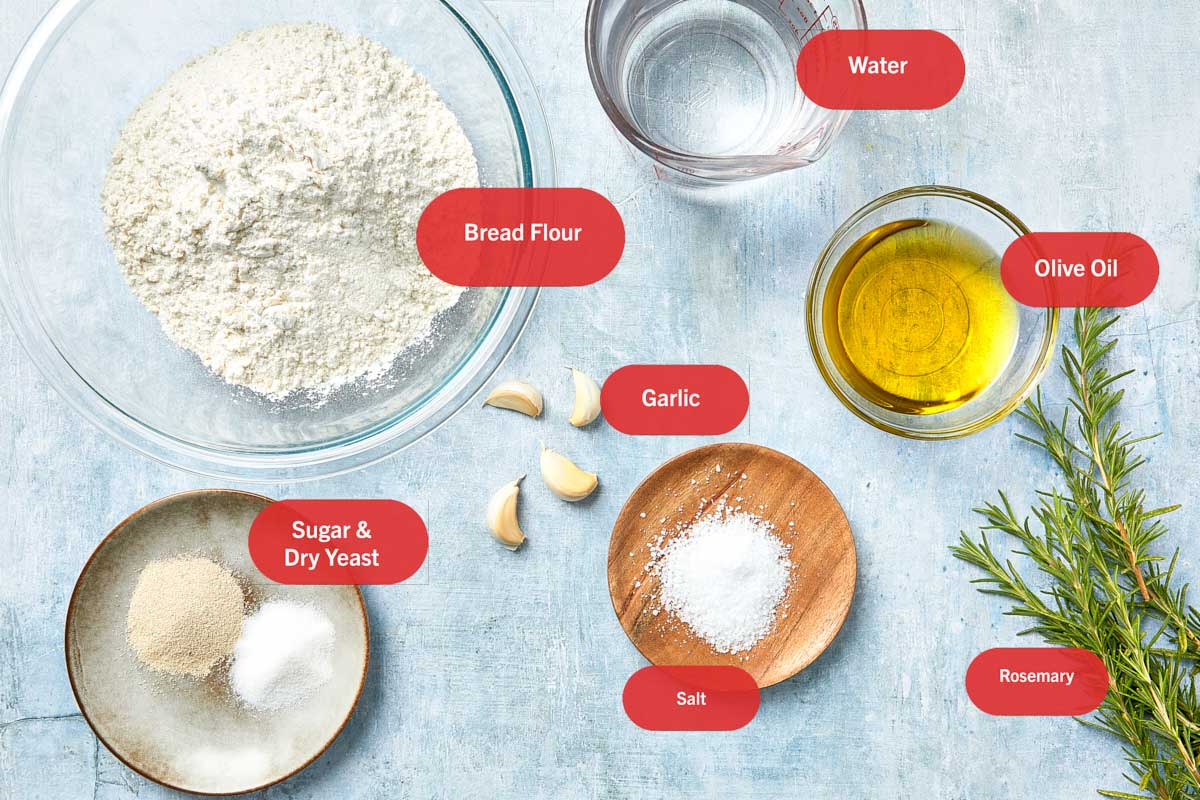
- Bread Flour: This is what gives focaccia its structure. Bread flour has a higher protein content, which means better gluten development and that chewy, airy crumb everyone expects from good focaccia. Can you use all-purpose flour? Yes, it works in a pinch. But the texture won't be the same. You'll still get bread, just softer and less chewy. If you want that bakery-style bite, bread flour is the move.
- Dry Yeast :This is the engine of the recipe. Dry yeast gives you a reliable rise without extra steps. No blooming, no guessing.If your yeast is old, the dough won't rise properly and there's no fixing that later. Flat focaccia is usually a yeast issue, not a technique issue. Always check the expiration date.
- Olive Oil :This is not optional. Olive oil is what makes focaccia, focaccia. It flavors the dough, keeps the inside soft, and creates that crisp, golden top when it hits the oven.Using neutral oil will technically work, but you'll lose flavor and texture. This is one of those recipes where you actually taste the olive oil, so use one you like.
- Salt :Salt does more than season the dough. It strengthens the gluten, controls the rise, and balances the oil.If you reduce it too much, the bread tastes bland and flat. If you skip it, the texture suffers too. Focaccia without enough salt just feels unfinished.
Note: Please see Recipe Card at the bottom for full list of ingredients and measurements.
Additions and Variations
This is one of those breads we end up tweaking depending on who we're cooking for. The base focaccia stays the same, but little changes here and there make it work for everyone at the table.
Herbs and Toppings
We love rosemary, but we'll be honest, we have friends who are not into woody herbs at all. When they're coming over, we switch to thyme or oregano, or we skip herbs completely and just go heavy on olive oil and salt. It still works. If you want something a little extra, thin slices of garlic pressed into the dough before baking are always a hit. Not overpowering, just enough to notice.
Olive Oil Upgrade
This is not the place to use a bland oil. Focaccia tastes like olive oil, so quality matters. We keep a good extra virgin olive oil on hand just for bread. Something bold and peppery makes the whole thing taste better, especially when you drizzle more on top after baking.
Salt on Top
We usually finish with flaky sea salt. It's optional, but once you try it, it's hard to go back. The crunch and little bursts of salt make a difference. We have a few friends who are sensitive to salt, so we just go lighter in certain spots. A good flaky salt lets you control it easily.
Cheese or No Cheese
Some people love cheese on focaccia, some don't. When we add it, we keep it simple. A light sprinkle of parmesan or pecorino near the end of baking so it melts and crisps without overpowering the bread. If we know someone isn't a cheese fan, we skip it completely and no one complains.
Helpful Tools
You don't need much, but we will say a sturdy rimmed baking pan makes life easier. Focaccia dough is soft and likes to spread, so having a pan that can handle the oil and heat helps. We've been using one like this for years and it's been solid for bread and pretty much everything else.
These are small changes, nothing complicated. The dough stays the star, and you just adjust it based on who you're feeding.
On the stove
Once you've gathered your ingredients, it's time to get a little messy in a reliable way. This Italian Focaccia recipe keeps things humble, but each step plays a part in the magic:
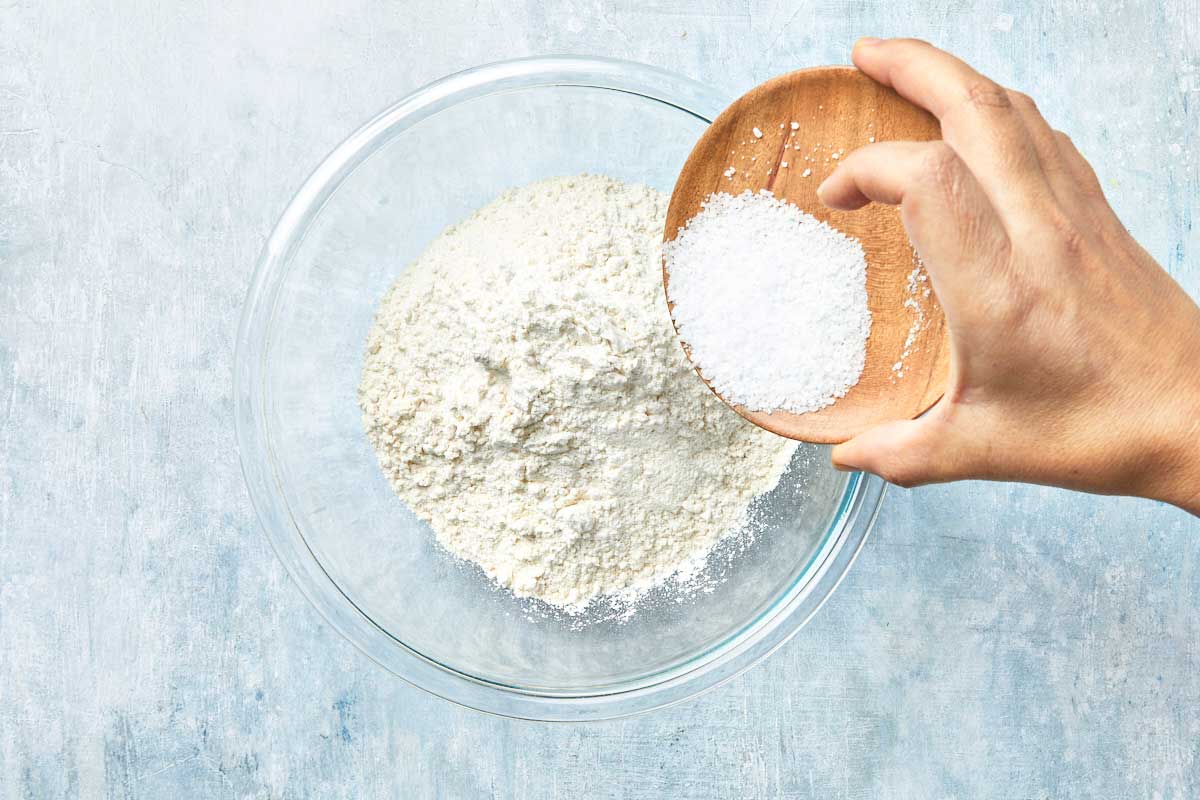
- Whisk the base: Mix flour and salt in a large bowl.
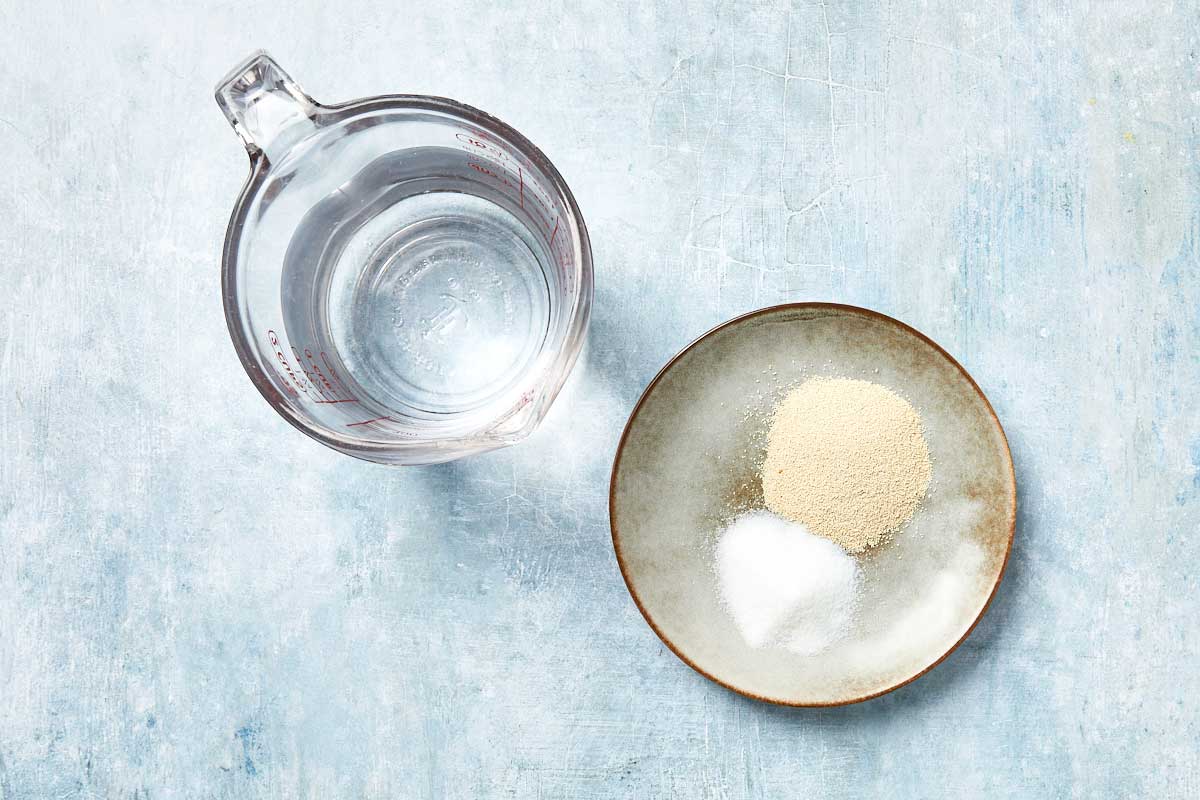
- Bloom the yeast: Stir warm water, yeast, and sugar. Let sit for 30 min until foamy. This means your yeast is alive and kicking.
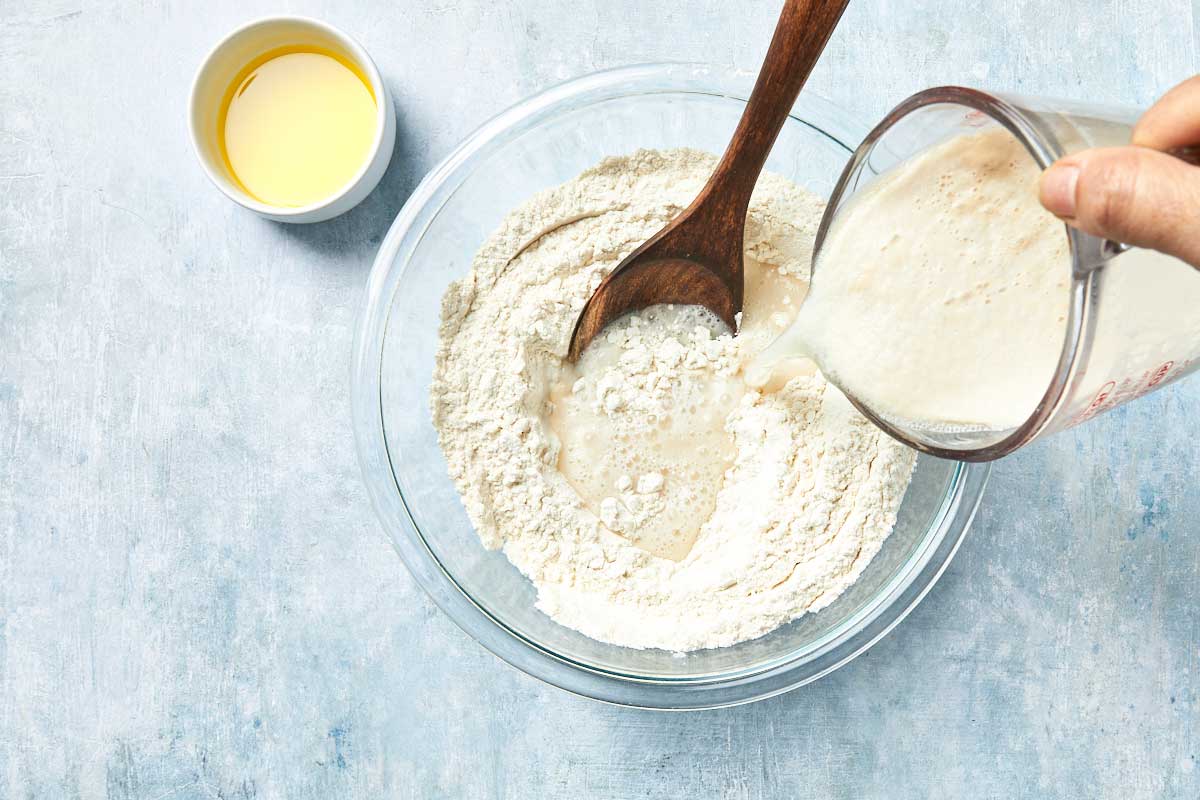
- Bring it together: Pour yeast mix into flour. Stir until a sticky dough forms.
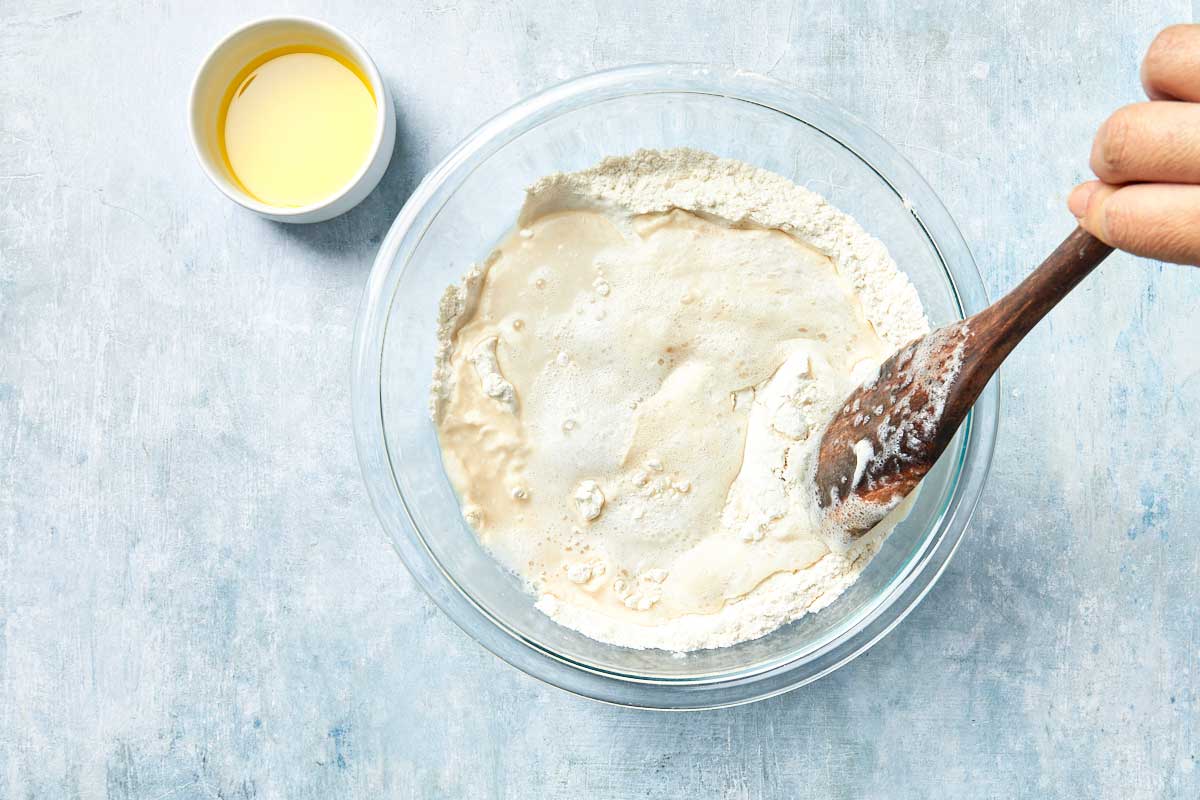
- Add some oil: Drizzle in 2 tsp olive oil and knead gently for 1–2 min. The dough will be soft and sticky, don't worry, that's what we want.
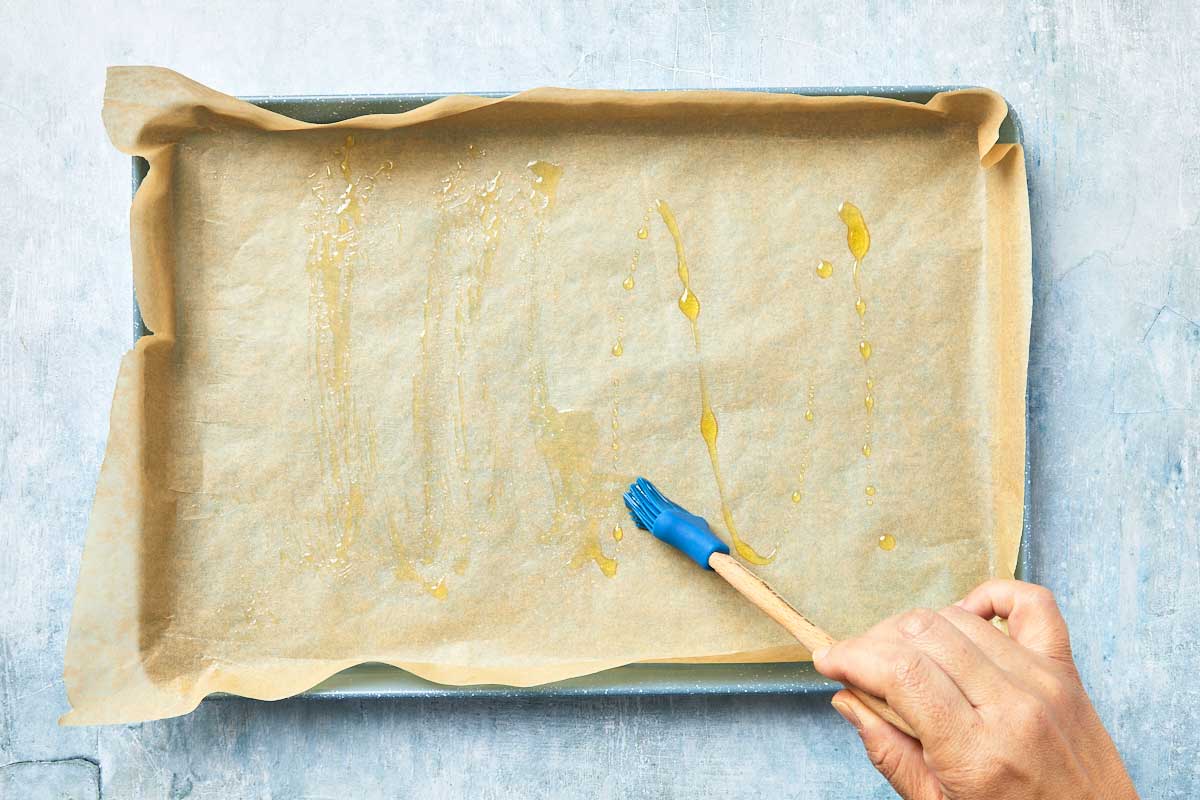
- Prep your pan: Line a 9×13-inch pan with parchment and grease with olive oil.
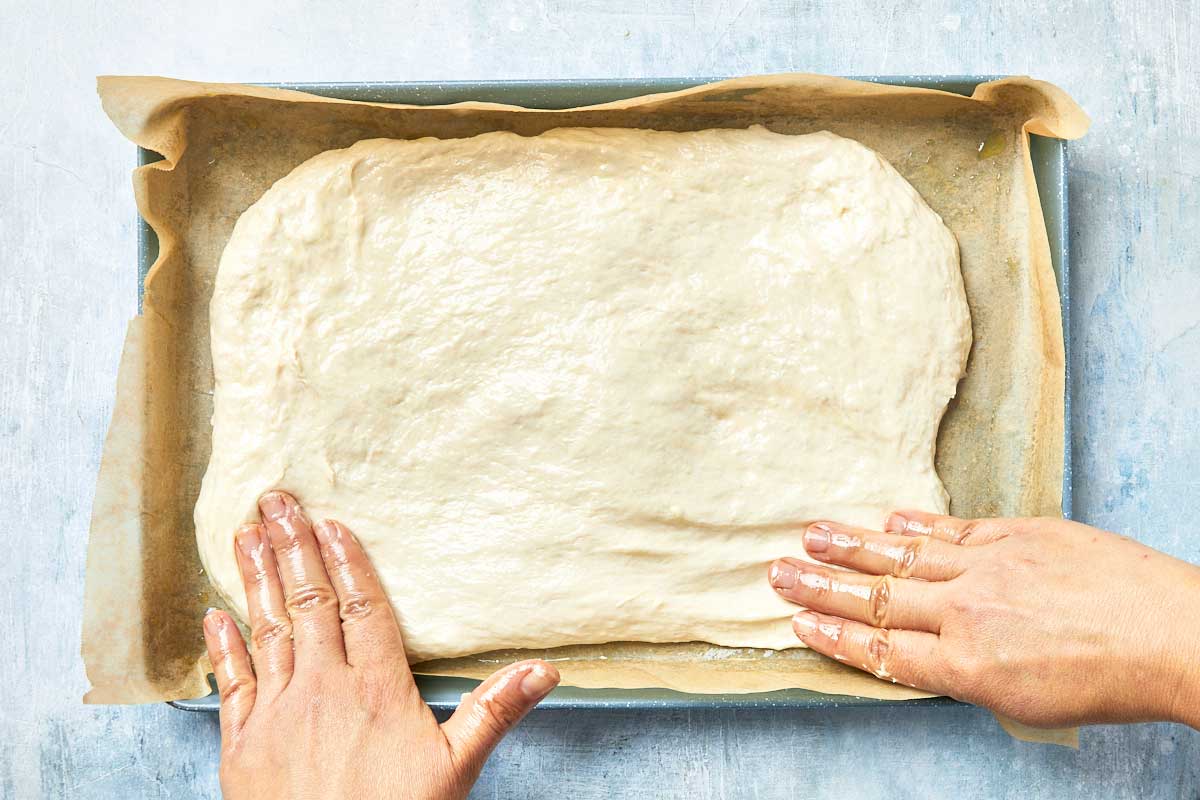
- Transfer the dough: Move the dough to a pan, oil your fingers, and gently press it out.
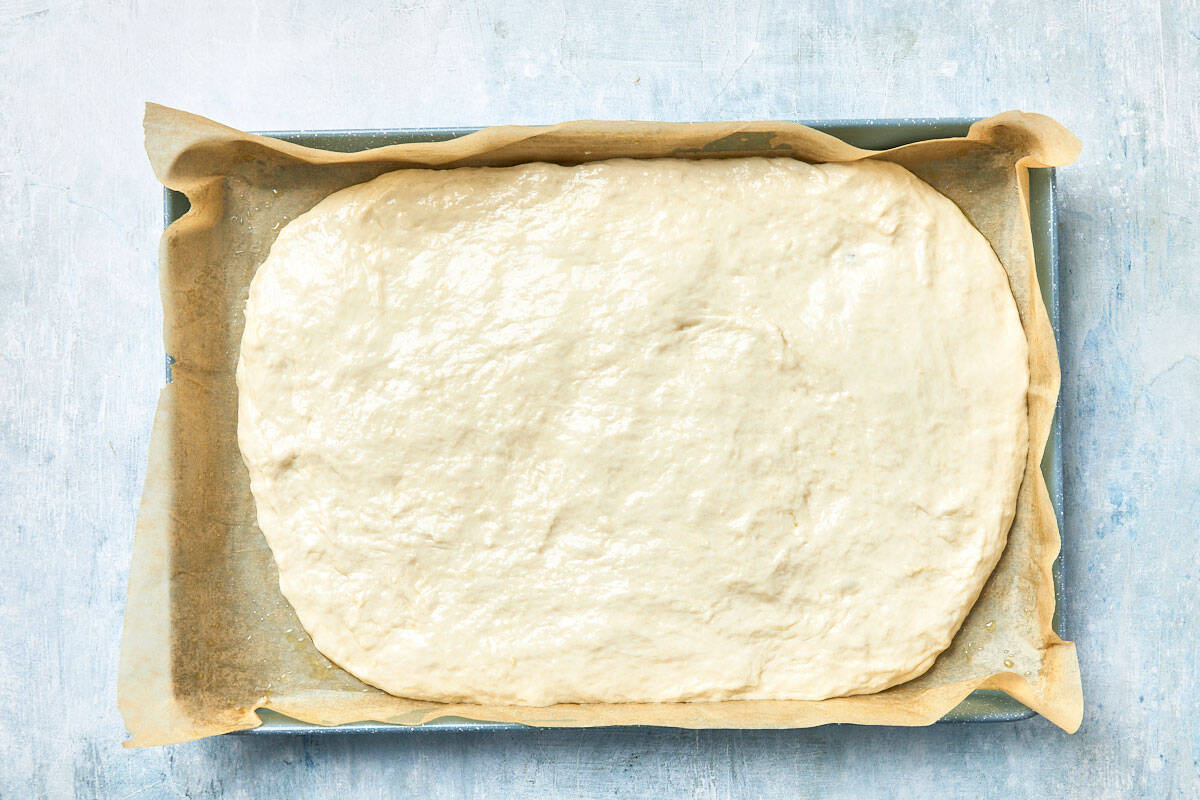
- Let it rest: Expand all the dough in the pan. Once ready, it's time to let it rest.
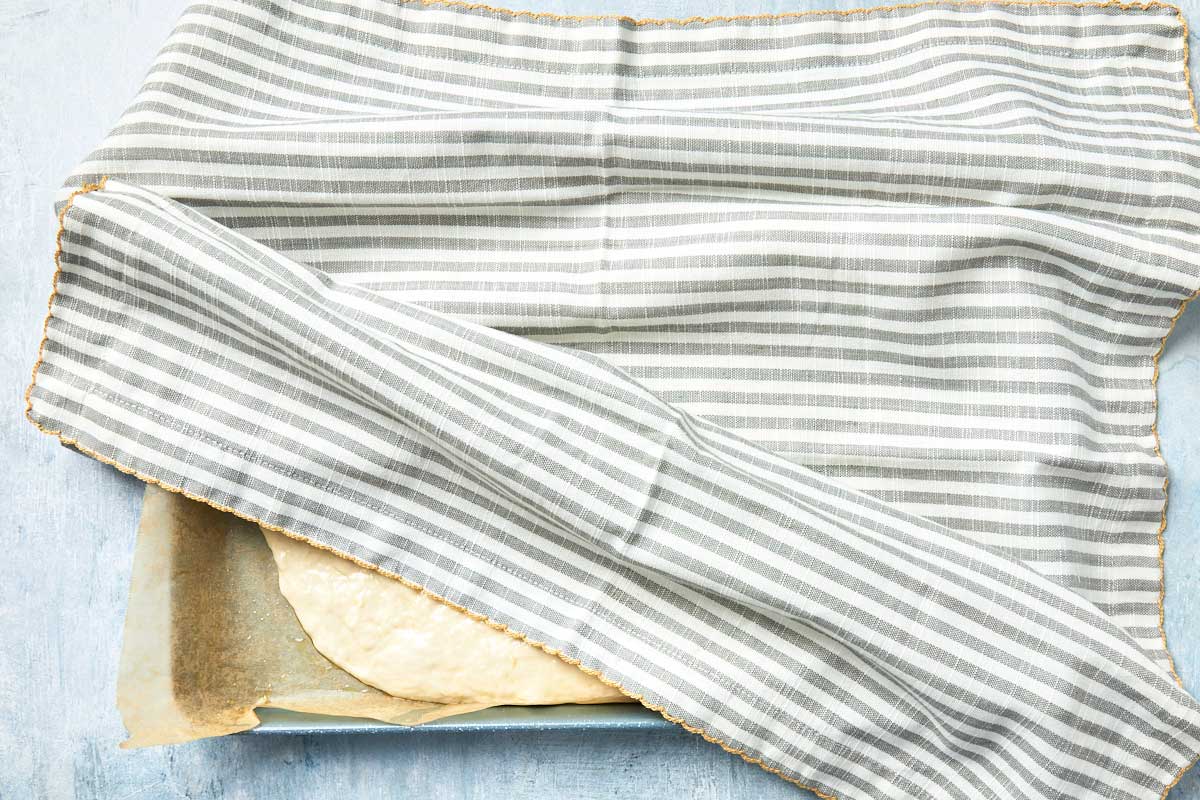
- First rise: Use a towel or plastic wrap to cover the pan. Let it rest in a warm spot for 2 hours until puffy.
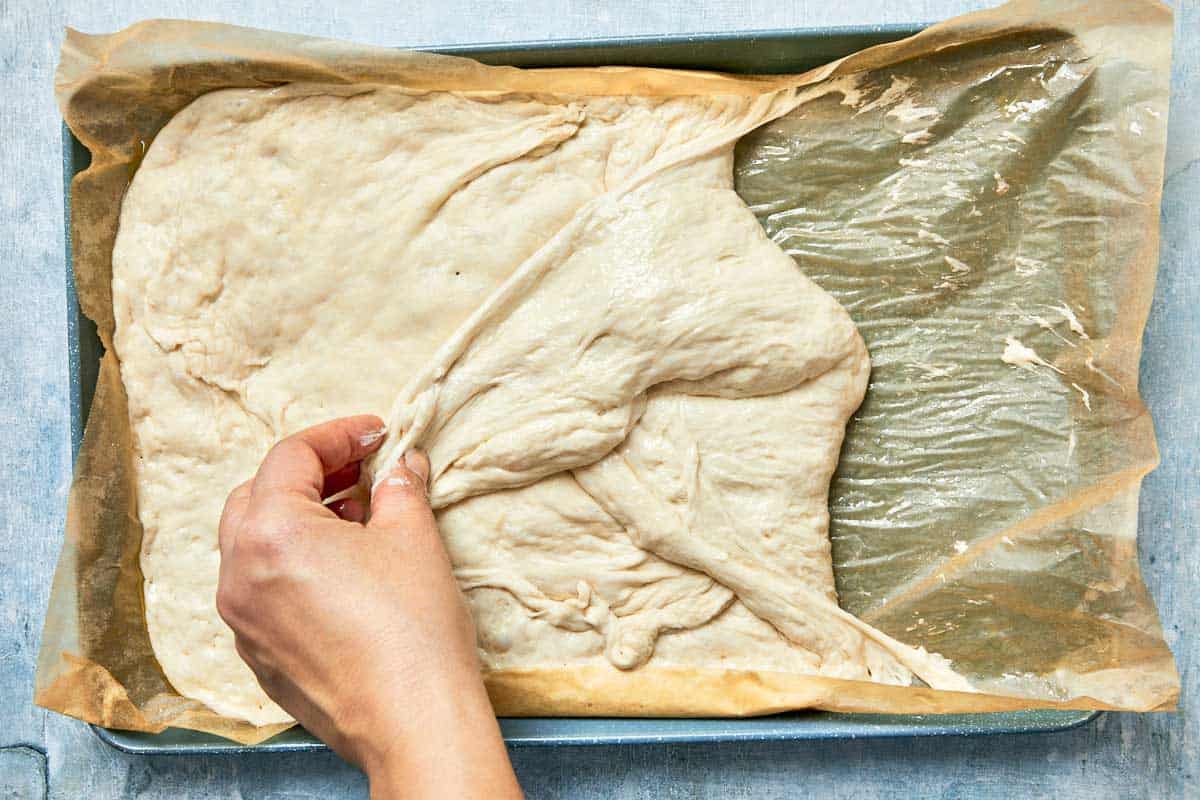
- First fold: Fold dough gently from all four sides, then cover and rest 2 more hours.
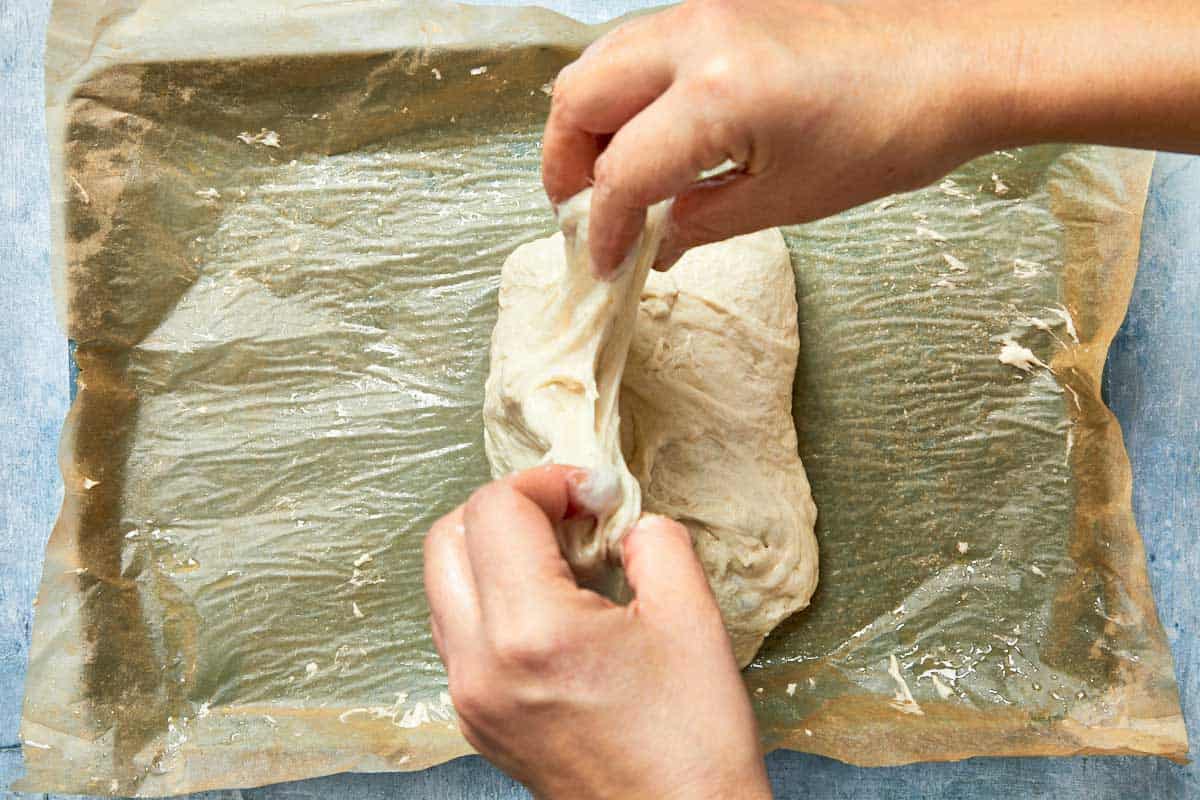
- Second fold: Repeat the folds, this builds structure and flavor.
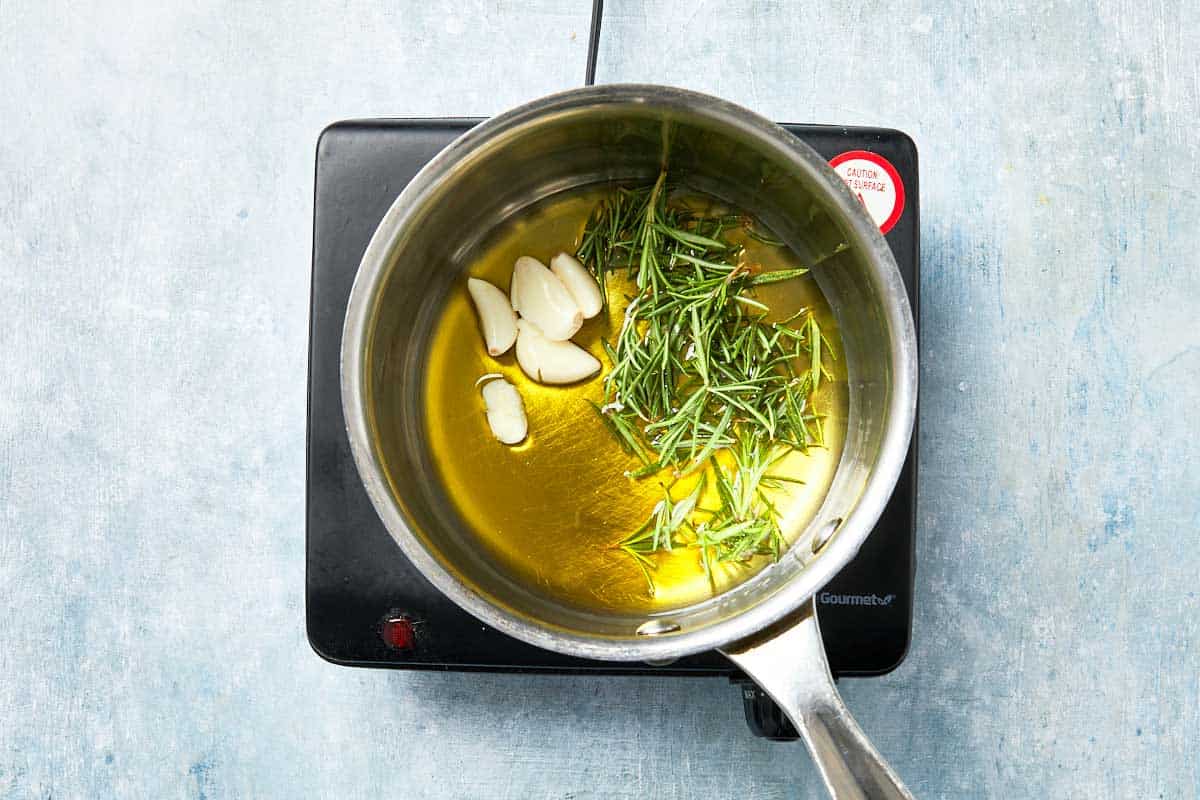
- Infuse the oil: Gently heat olive oil with rosemary and garlic for 10 min. Let cool.
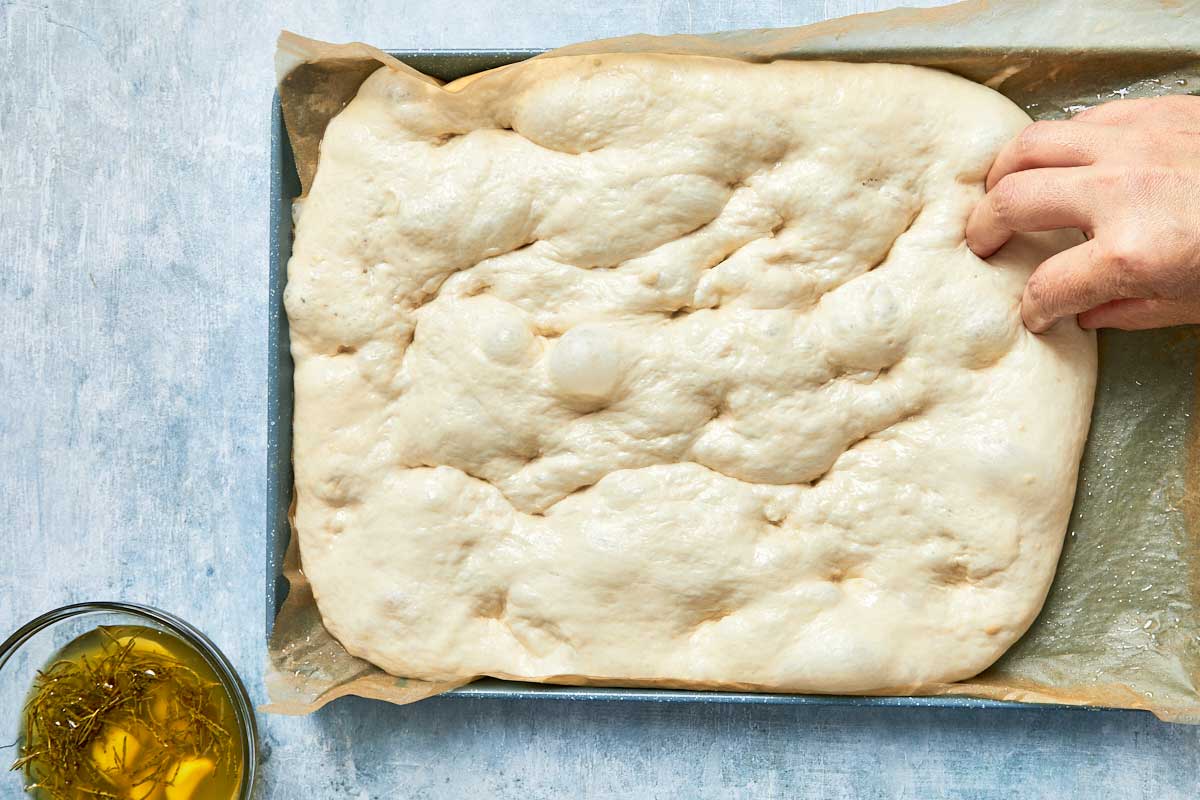
- Make those dimples: Oil your fingers and press dimples all over the surface.
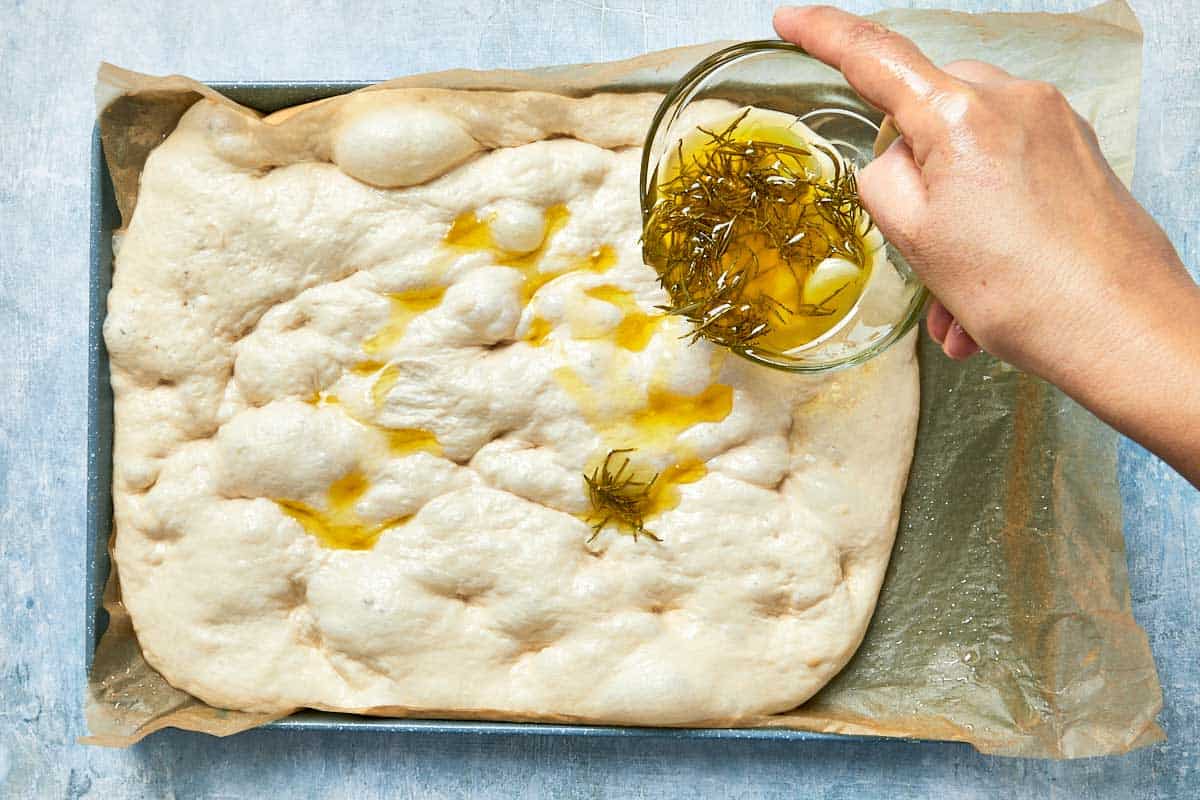
- Oil and season: Drizzle with the cooled oil and sprinkle with coarse salt. You can leave the rosemary and garlic on, or not.
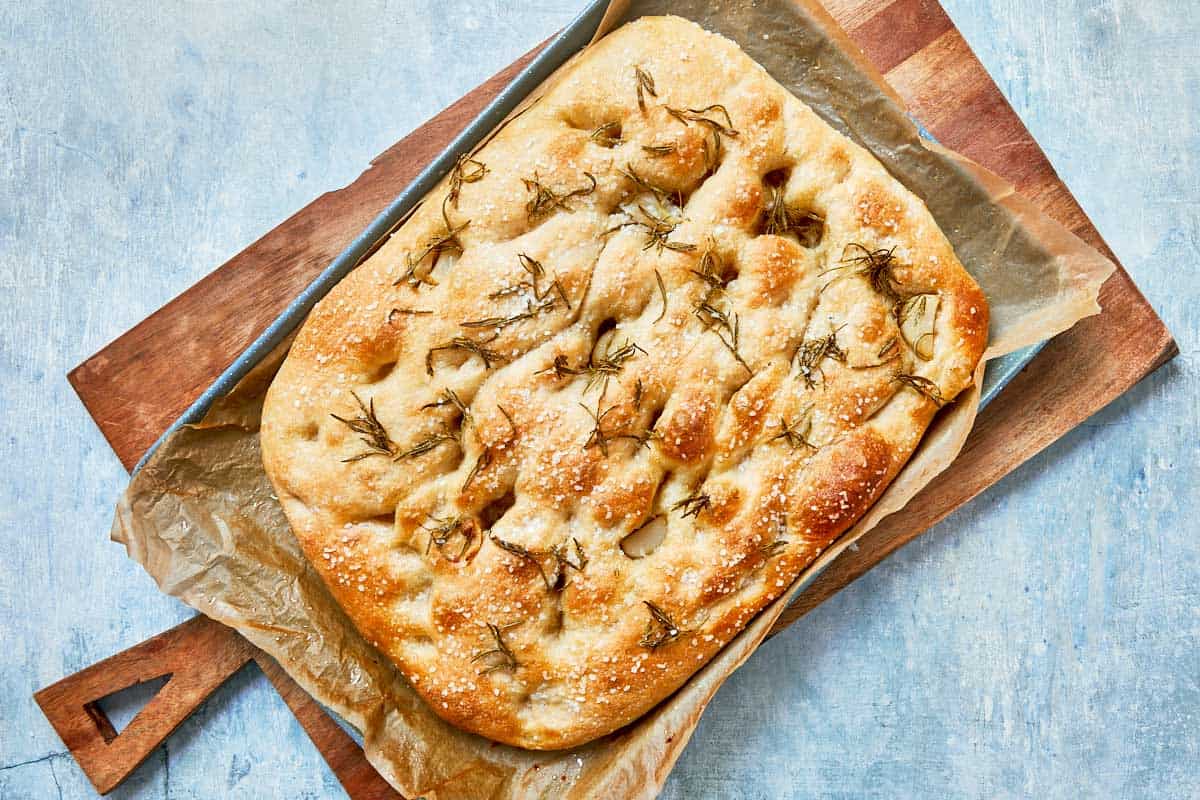
- Bake: Preheat to 465°F (240°C). Bake 20 minutes or until golden and cooked through.
TIP: Don't Rush the Rest. The long resting times are key to Focaccia's airy, bubbly texture. Don't skip or shorten them!
Why Is My Focaccia Dense?
If your focaccia came out dense, heavy, or more like a flat bread than that airy, dimpled dream, don't panic. This is one of those recipes where a few small things make a BIG difference.
- Your Dough Didn't Hydrate Enough Focaccia dough is supposed to be wet. Like, slightly sticky and a little messy. If you kept adding flour because it felt too soft, that's usually the first mistake . A drier dough can't create those open air pockets, so you end up with a tight crumb instead of that fluffy interior.Trust the process. The dough should relax and smooth out as it rests.
- The Yeast Wasn't Active Even dry yeast needs to be alive. If your yeast is old or has been sitting open too long, the dough won't rise properly no matter how long you wait .Dense focaccia is often a yeast issue, not a kneading issue.
- You Didn't Give It Enough Time Focaccia is forgiving, but it still needs time. If the dough didn't double in size during the first rise, it wasn't ready. Rushing this step means the gluten didn't have time to develop and trap air. When in doubt, wait. A slow rise almost always gives you better texture.
- Too Much Handling Before Baking Pressing too hard, overworking the dough, or deflating it right before baking pushes all that precious air out.When you dimple the dough, be gentle. You want to create pockets, not knock the life out of it.
Most dense focaccia isn't ruined, it's just under-proofed or overfloured. Once you nail the hydration and give the dough time, the texture completely changes.
Not That She Needs It, But…
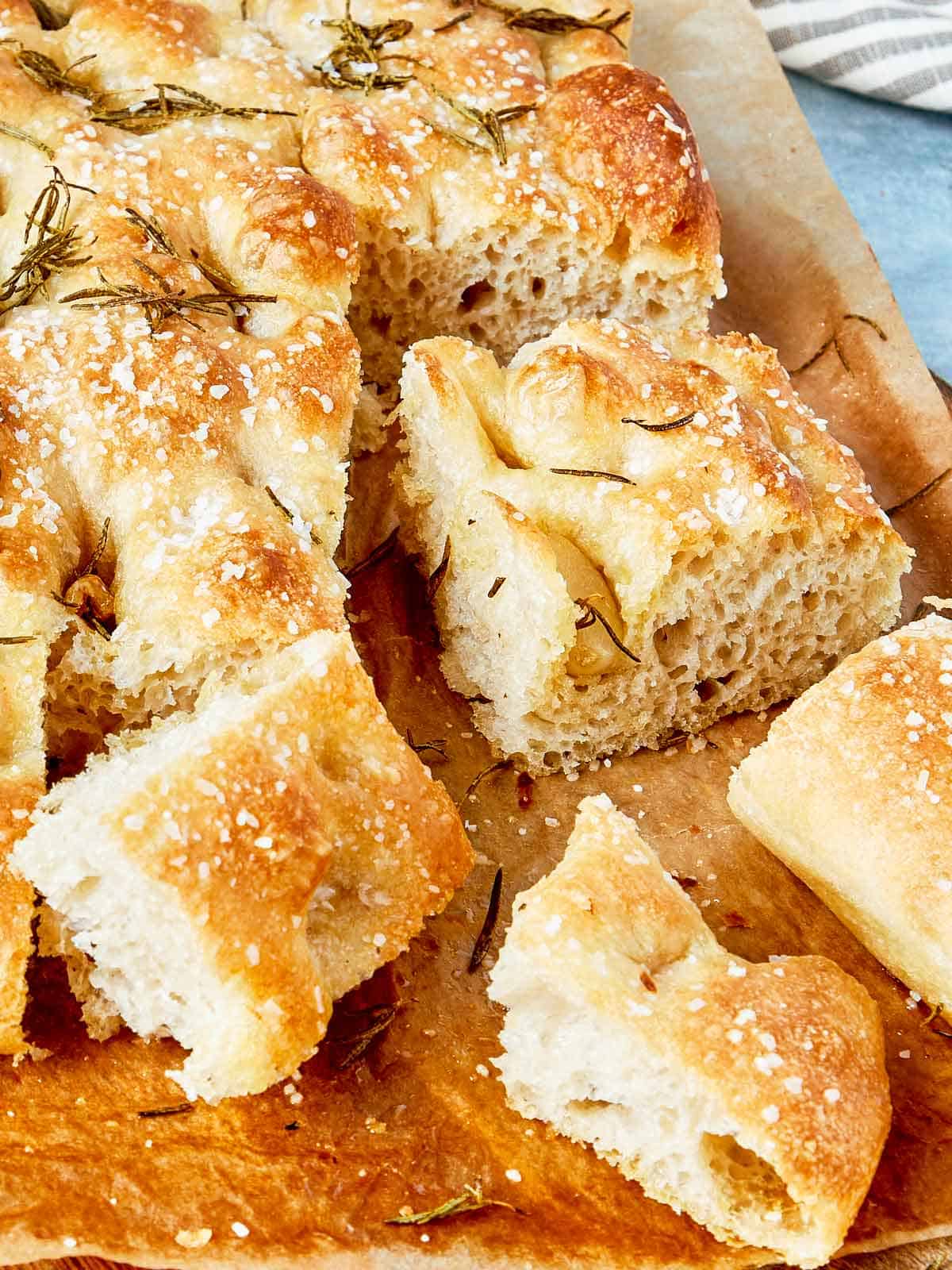
By now, she's soft, golden, and infused with rosemary-garlic magic, but if you're feeling generous (or just want to show off), she plays well with others.
Tear off a piece and dip it into creamy hummus or whipped feta, cozy up with a bowl of our Creamy Roasted Tomato Basil Soup or let her soak up every drop of our Cheesy Chicken and Roasted Tomato Mozzarella Pasta Bake or the gravy from our Salisbury Steak.
She's also brunch material, just toast a slice and top it with these good Turkish Eggs. And if you're keeping it light, she's the good match for a crisp Greek Chickpea Salad or something lemony and green. Honestly? Whatever you serve, she'll steal the spotlight.
Recipe FAQs
Why Didn't My Yeast Foam?Most likely, the water was too hot (it should feel like a warm bath, around 105–115°F), or the yeast had expired. If there's no foam after 30 minutes, it's best to start fresh.
Do we Need Both Resting Periods and Folds?Yes, you do. That's what gives focaccia its beautiful structure and airy, bubbly texture. Skipping them will give you a flatter, denser bread. This recipe is all about time, not kneading.
My Dough Feels Super Sticky. Is That Normal?Absolutely. This dough is meant to be soft, wet, and a little wild. That sticky texture leads to the softest crumb once baked, don't add more flour.
What you need
- 3 ¾ cups all-purpose flour or bread flour
- 1 ½ cups warm water
- 2 ¼ tsp active dry yeast we use one packet sachet
- ½ tsp granulated sugar
- 1½ tsp salt for the dough
- 2 tsp olive oil for the dough
- ¼ cup olive oil for the rosemary-garlic oil
- ⅓ cup fresh rosemary optional as it's quite punchy
- 4 cloves garlic peeled and smashed or sliced
- ¾ tsp coarse salt for sprinkling on top
Method
- In a large bowl, whisk together the flour and salt.
- In a small bowl or measuring cup, mix the warm water, yeast, and sugar. Stir gently and let it sit for about 30 minutes until foamy, this means your yeast is alive and kicking.
- Pour the foamy yeast mixture into the bowl with flour. Stir with a spoon or your hands until a shaggy, sticky dough forms.
- Drizzle in the 2 teaspoons of olive oil. Knead gently in the bowl for 1–2 minutes until the oil is mostly absorbed. The dough will be soft and sticky, don't worry, that's what we want.
- Line a 9×13 inch (approx. 23×33 cm) baking pan with parchment paper, then lightly grease it with olive oil.
- Move the dough into the greased pan. Lightly oil your fingers and gently press the dough to spread it out a bit. No need for perfection here.
- Cover the pan with a clean kitchen towel or plastic wrap. Let the dough rest in a warm spot for 2 hours. It should puff up beautifully.
- With oiled hands, gently pull one edge of the dough and fold it over toward the center. Repeat with all four sides (top, bottom, left, right). Cover again and let it rest another 2 hours.
- Repeat the same folding process, this helps build structure and flavor.
- While the dough rests, gently heat ¼ cup olive oil in a small pot over medium-low heat. Add rosemary (optional) and smashed or sliced garlic. Let the flavors infuse for 5–10 minutes, making sure the garlic doesn't burn. Remove from heat and cool completely.
- Once rested, lightly oil your fingers and press all over the surface of the dough to create the signature focaccia “dimples.”
- Drizzle the cooled rosemary-garlic oil generously over the top. Sprinkle with coarse salt. You can leave the rosemary and garlic on, or not.
- Preheat your oven to 465°F (240°C). Bake for about 20 minutes, or until golden brown on top and fully baked through.