Focaccia pizza became a regular in our kitchen after a weeknight where we were too tired to make a full pizza from scratch. We already had dough rising for focaccia, so we pressed it into a baking tray, added whatever toppings were left in the fridge, and slid it into the oven. The smell alone had everyone wandering into the kitchen before it even finished baking.
When we cut into it, the edges were crisp, the center stayed soft, and the toppings settled into the dough in a reliable way. It felt like pizza, but a little easier and somehow a little more special. Since then, it's the recipe we reach for when we want something warm and shareable without a lot of fuss.
Why This Focaccia Pizza Works Every Time
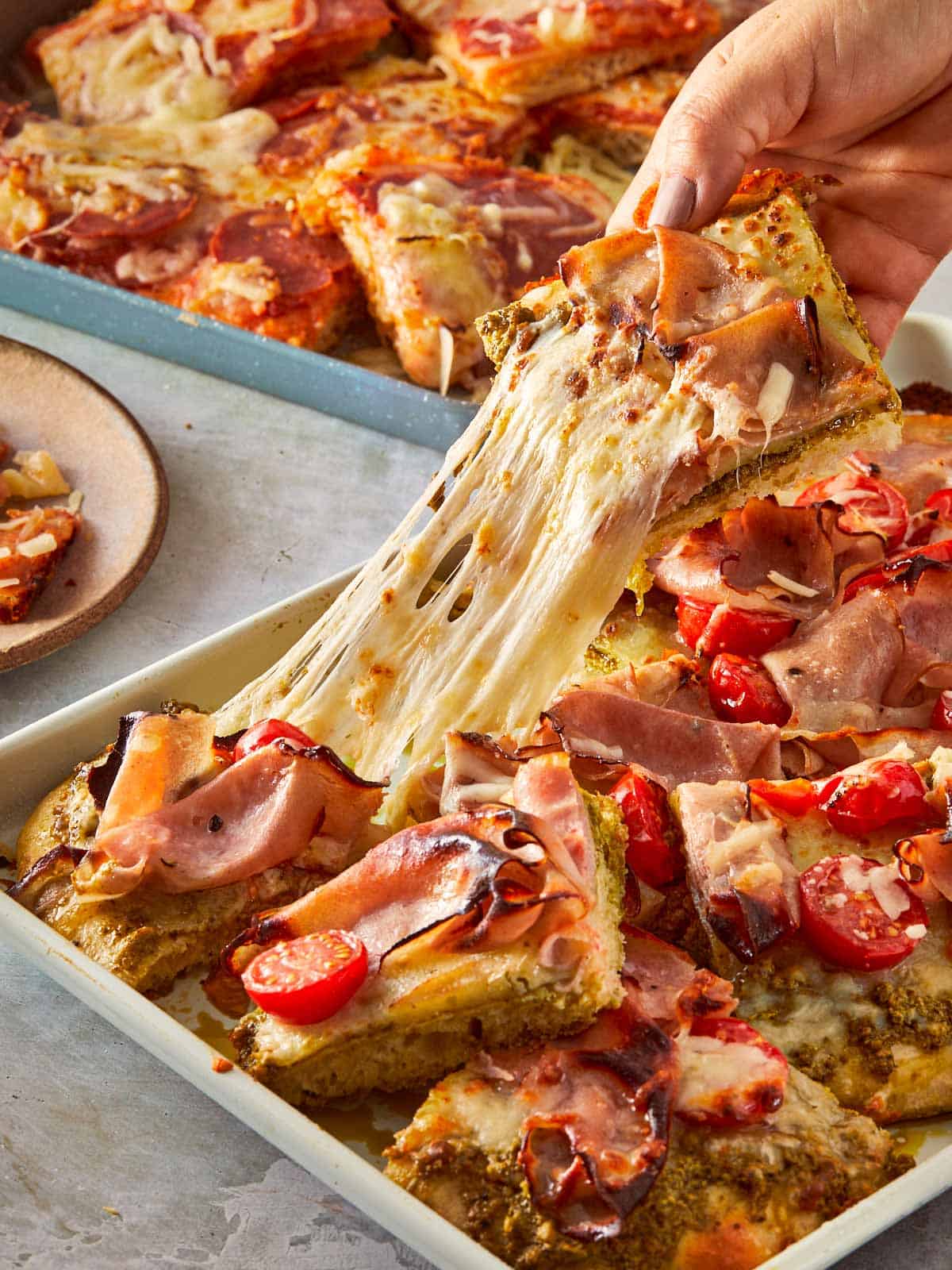
The beauty of this focaccia pizza showed itself the first time we brought the pan to the table. We remember pulling it from the oven and hearing that soft crackle the crust makes when the air hits it. Everyone was already waiting, plates in hand, because the smell filled the kitchen long before it finished baking. The base turns golden in a way regular pizza dough never quite does, and the toppings settle into the focaccia so everything tastes warm and full.
What we love most is how flexible it is. Some nights we keep it simple with tomatoes and herbs. Other times we go a little heavier, especially if there are leftovers in the fridge that need a home. It never feels like a complicated dinner, but somehow it still gets the same reaction as something more elaborate.
If baking is your thing, this recipe fits right in. You can pair it with our Easy Homemade Focaccia when you want extra bread on the side, or serve it next to the Easiest No-Knead Crusty Artisan Bread when the mood calls for a cozy, fresh loaf. Both work beautifully with a warm pan of focaccia pizza.
Ingredients
- Strong flour We use strong flour because it gives the dough the structure it needs to rise well without collapsing. Regular flour works, but strong flour creates that airy crumb and gentle chew that makes focaccia pizza feel different from standard pizza dough. After trying a few different types over the years, this is the one that consistently gives that bakery-style texture at home.
- Olive oil Good olive oil is a big part of what makes focaccia focaccia. It keeps the dough tender and gives it that familiar Italian flavor that soaks into the base as it bakes. My family loves that little shine it leaves on top, and it helps the crust brown beautifully in the oven.
- Yeast This is what brings the dough to life. Give it warmth and time, and it builds all the bubbles that make focaccia light instead of dense. When we first learned to make this recipe, we underestimated how much the resting time mattered, but letting the yeast do its job makes all the difference.
- Mozzarella We always reach for mozzarella because it melts evenly and gives that soft, stretchy top layer that everyone expects on pizza night. It doesn't overpower anything, so you can add herbs, vegetables or cured meats and everything comes together nicely.
- Pesto or tomato sauce
- Both change the whole personality of the pizza. Tomato sauce gives you that comforting classic flavor, while pesto brings a fresh, herby richness that sinks into the dough as it bakes. We switch between them depending on what we have on hand or what everyone is craving that day.
Note: Find the full list of ingredients and measurements in the Recipe Card.
Tips & Troubleshooting
- Let the dough rise fully If your focaccia comes out a little dense, it usually means the dough needed more time. We've learned not to rush this part. We cover the bowl and leave it somewhere warm while we prep toppings. In our video you can see exactly how the dough should look when it's ready, which helps a ton the first time you make this.
- Oil makes the difference Focaccia loves olive oil. It keeps the crumb soft and helps the crust brown. When we first started making this recipe, we didn't use enough and the edges dried out. Now we drizzle a bit under the dough and a bit on top. If you want clean dimples, oil your fingertips first.
- A good baking pan matters We used to bake focaccia pizza in a thin tray and the bottom would burn before the center finished cooking. Switching to a heavy-duty nonstick baking pan from Amazon made a huge difference. It heats evenly, gives you a crisp bottom, and keeps the sides from over-browning.
- If the dough feels too sticky Humidity can change everything. Instead of adding a ton of flour, we lightly dust the counter and keep a silicone dough mat (also from Amazon) underneath. It keeps the dough from grabbing onto the counter and makes cleanup easier.
- If the top browns too quickly This usually happens if your oven runs hot. Cover the pizza loosely with foil during the last few minutes. The focaccia keeps rising and the cheese stays melty instead of turning dark too fast.
- Don't skip the rest after shaping Once the dough is in the pan, give it a short rest so it relaxes and fills the corners. Skipping this step makes the texture a little tight. A quick pause lets the focaccia rise evenly and bake lighter.
Substitutions
Strong flour If you don't have strong flour at home, plain all-purpose flour will still work. The focaccia just won't have that same chewy lift, but the flavor stays good. We've made it this way on days when we realized too late that we were out of strong flour, and no one at home complained.
Yeast Instant yeast and active dry yeast are both fine. If you're using active dry, dissolve it in warm water first so it wakes up properly. We learned this the hard way when our dough barely rose because we added it straight in.
Mozzarella Any good melting cheese works here. Provolone, Monterey Jack or even a mix of cheeses will give you a nice stretch. We use whatever we have in the fridge when the kids get involved in topping the pizza.
Pesto or tomato sauce If you're out of both, olive oil mixed with garlic and a few herbs makes a simple base that tastes much better than you expect. We've done this on nights when the pantry looks empty, and it still bakes into a good focaccia pizza.
Olive oil If you don't have a strong olive oil on hand, a neutral oil with a splash of olive oil works. It won't have the same flavor, but it keeps the focaccia soft and helps the crust brown nicely.
Fresh vs. Frozen Focaccia Dough (and What You Should Know)
This is one of the most common questions we get. The short answer is that both workbut they behave a little differently, and knowing what to expect makes the whole process easier.
If you are using fresh focaccia dougheither homemade or bought from a bakery, you will get a lighter crumb and a stronger olive-oil flavor. It is naturally more elastic, so let it rest before shaping. Resting relaxes the gluten and keeps the dough from shrinking back when you press it into the pan.
Refrigerated or store-bought dough is a great option too. On busy nights our kids ask for pizza, and this is the dough we reach for because it is ready the moment we need it. Let it come to room temperature and give it a short rest of about 20 to 30 minutes. Once it softens, it is easy to stretch without tearing and still bakes up golden with crisp edges.
How to get it ready
- Bring the dough to room temperature so it becomes pliable.
- Press it into the pan with your fingertips to create those classic focaccia dimples.
- Drizzle olive oil on top to help the crust turn golden and flavorful as it bakes.
My practical tips
Store-bought dough can be a bit firmer and drier, so add a little extra olive oil to the pan. If you want an even crispier bottom, warm your baking pan in the oven for a couple of minutes before adding the dough. And if the dough tears while stretching, just pinch it back together. Once it rises and bakes, no one will ever notice.
On the stove
Quick, clear, and straight to the point, here's the flow from dough to golden pizza.
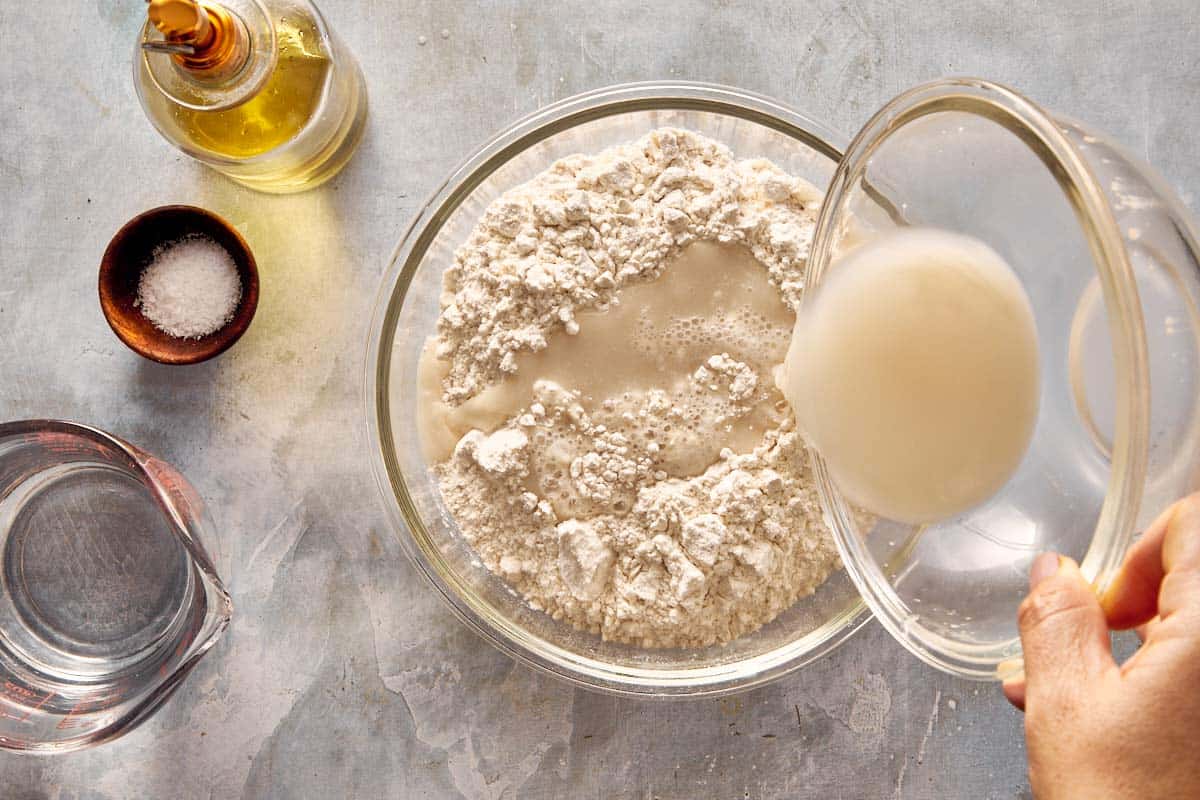
- Make the dough. Dissolve the yeast in water, mix in the flour and salt, then knead with olive oil until smooth.
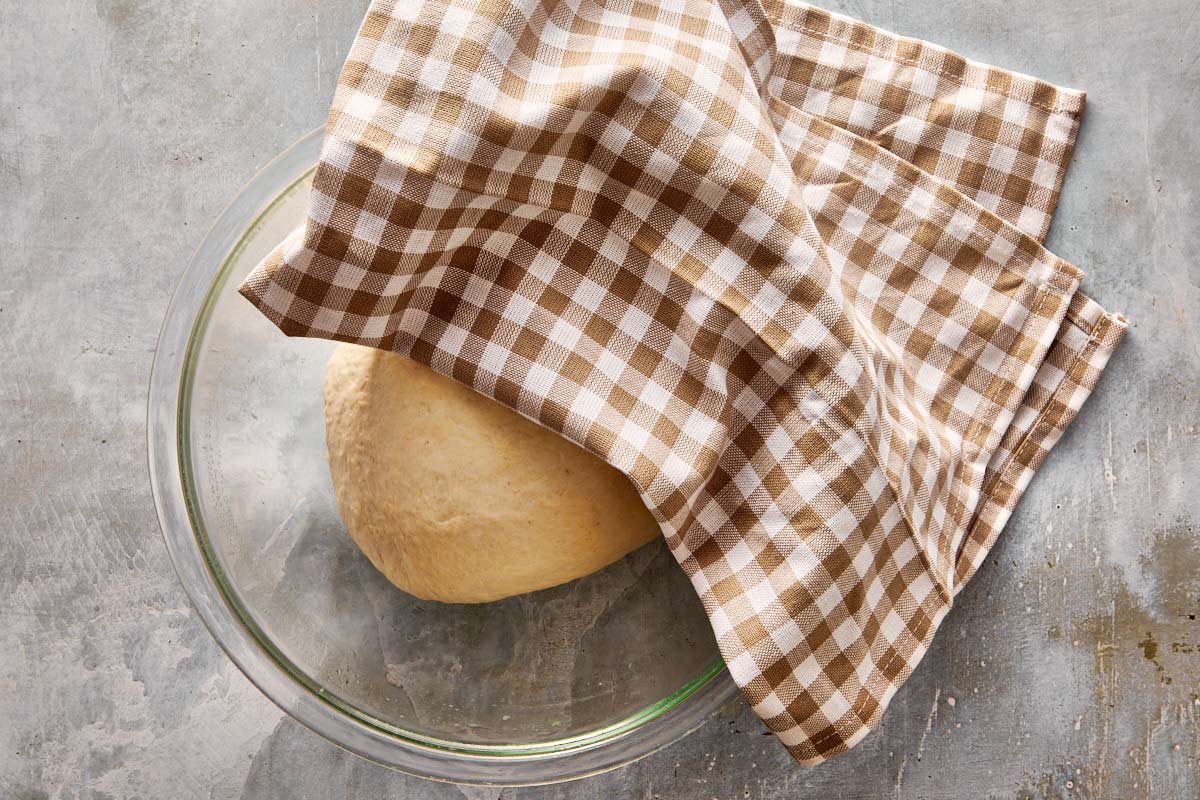
- First rise. Cover and let rest, performing stretch-and-folds as it develops. Let rise until doubled in size.
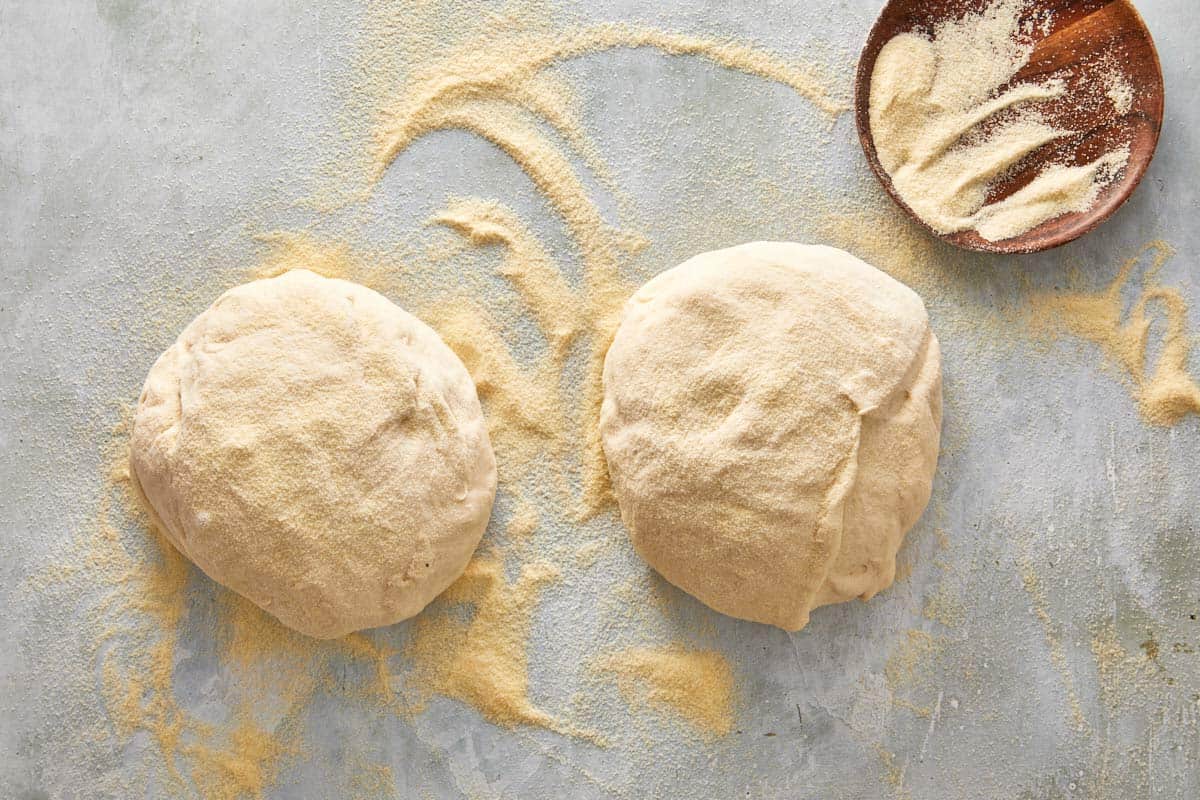
- Divide and shape. Split the dough into two portions. Roll each one on semolina flour, place on greased trays, and let rise again.
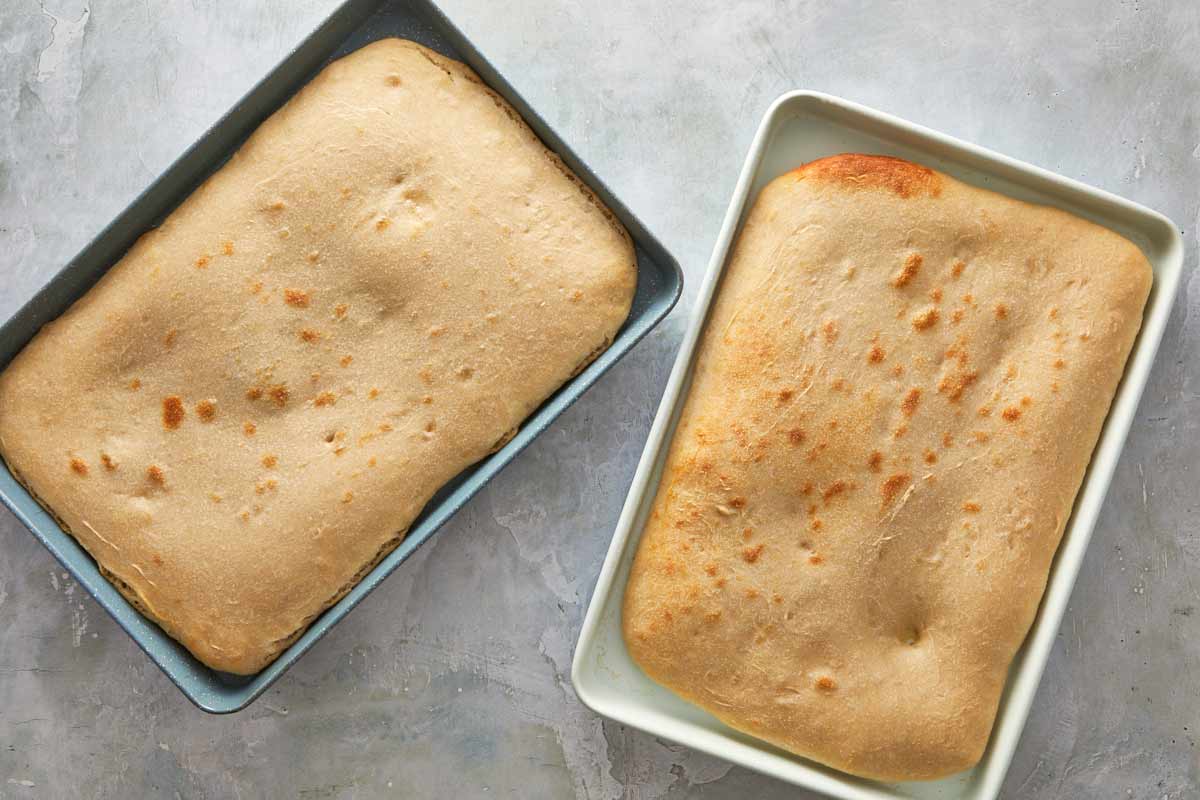
- Precook bases. Bake the bases briefly on the bottom rack until lightly set.
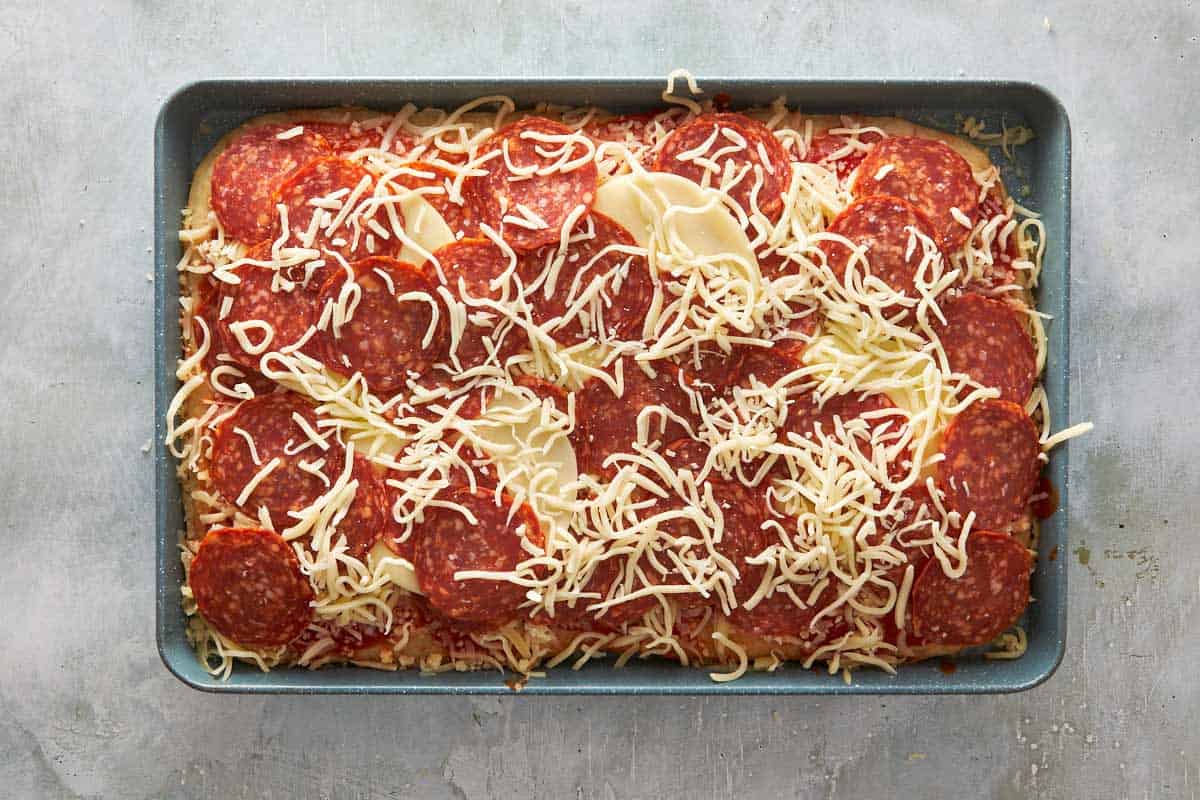
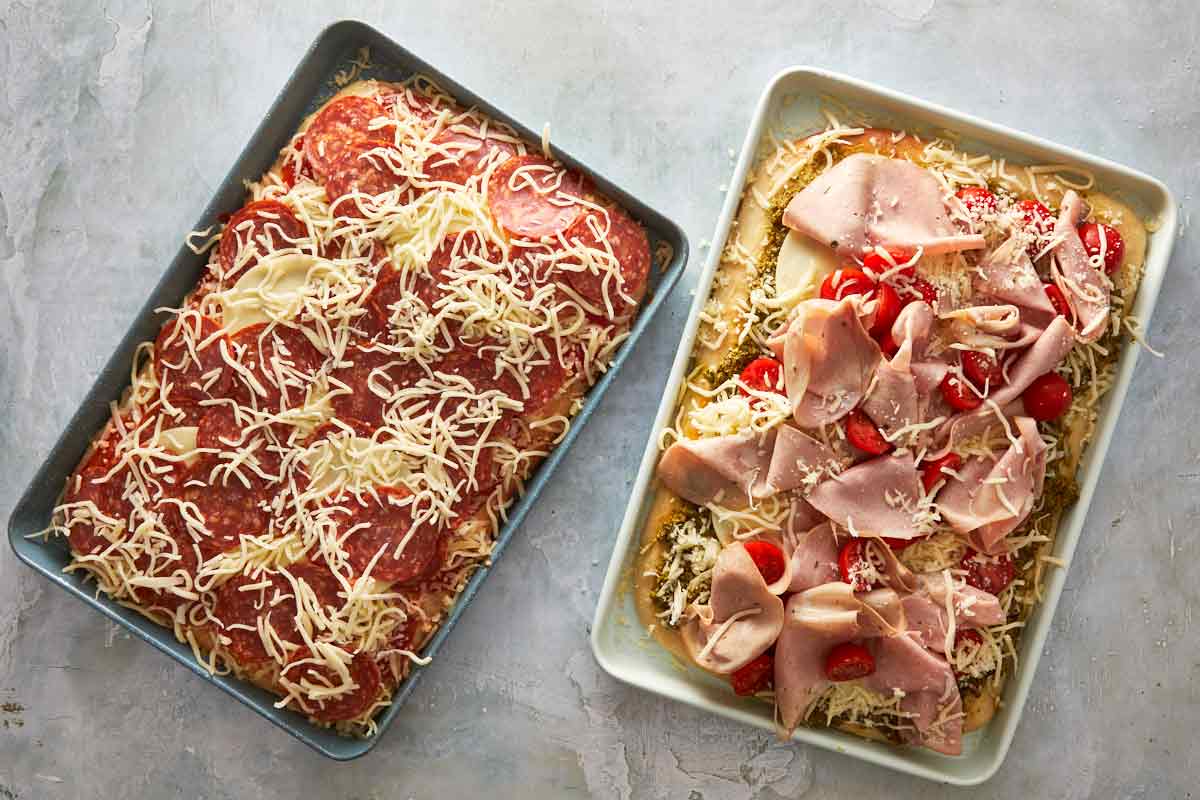
- Tomato pizza. Brush base with olive oil, spread tomato sauce, and top with cheeses and pepperoni.
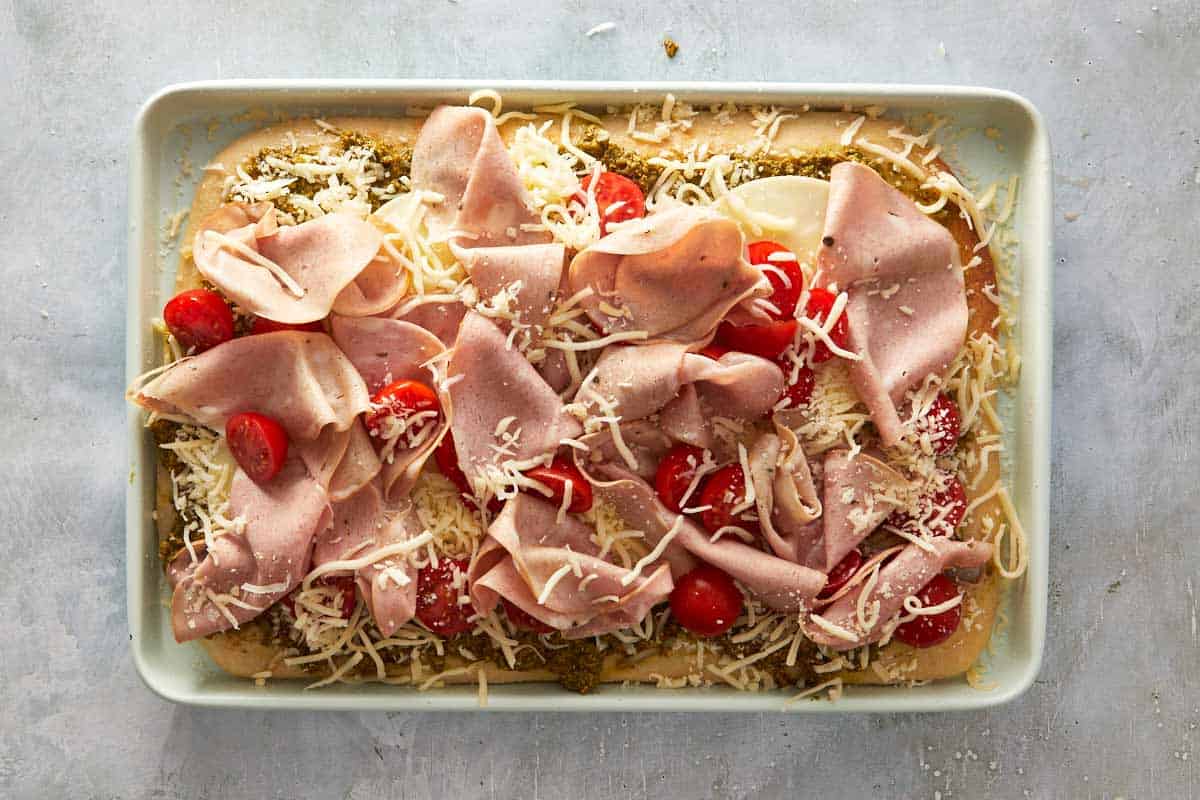
- Pesto pizza. Brush base with olive oil, spread basil pesto, and top with cheeses, cherry tomatoes, and mortadella.
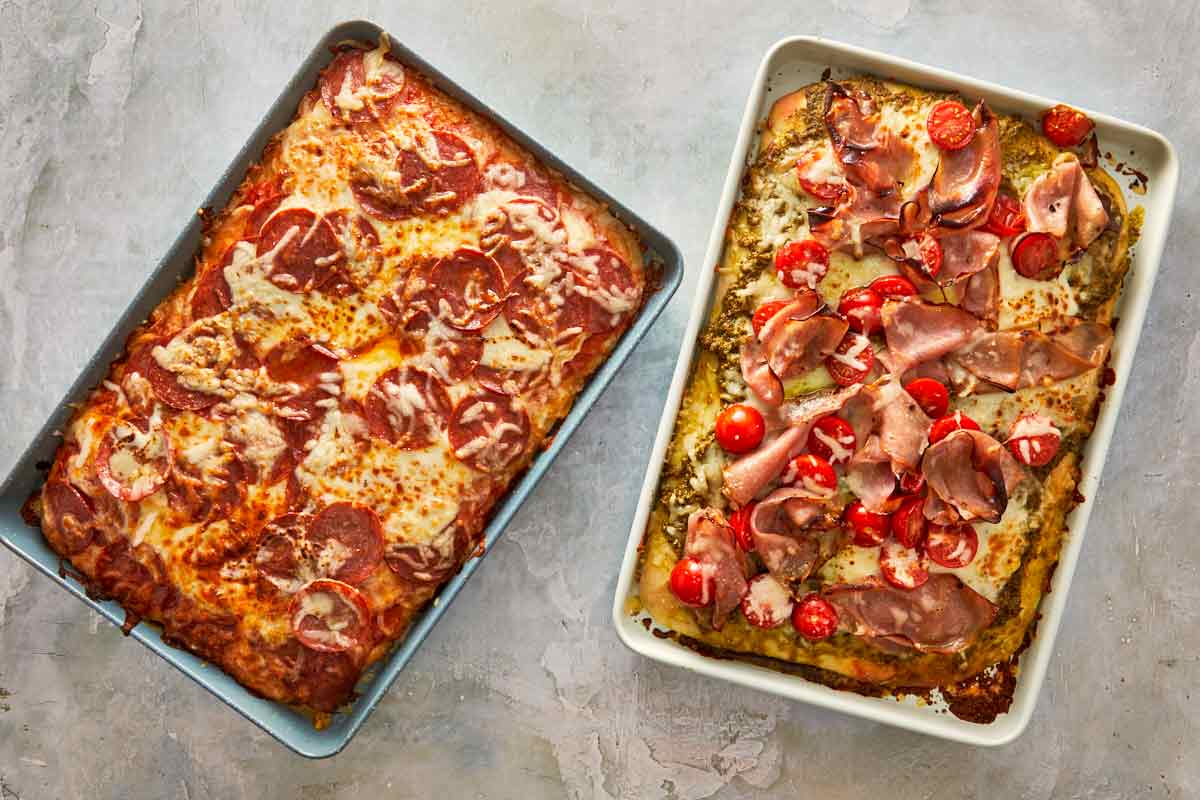
- Finish baking. Return pizzas to the oven and bake until the cheese is bubbling and golden.
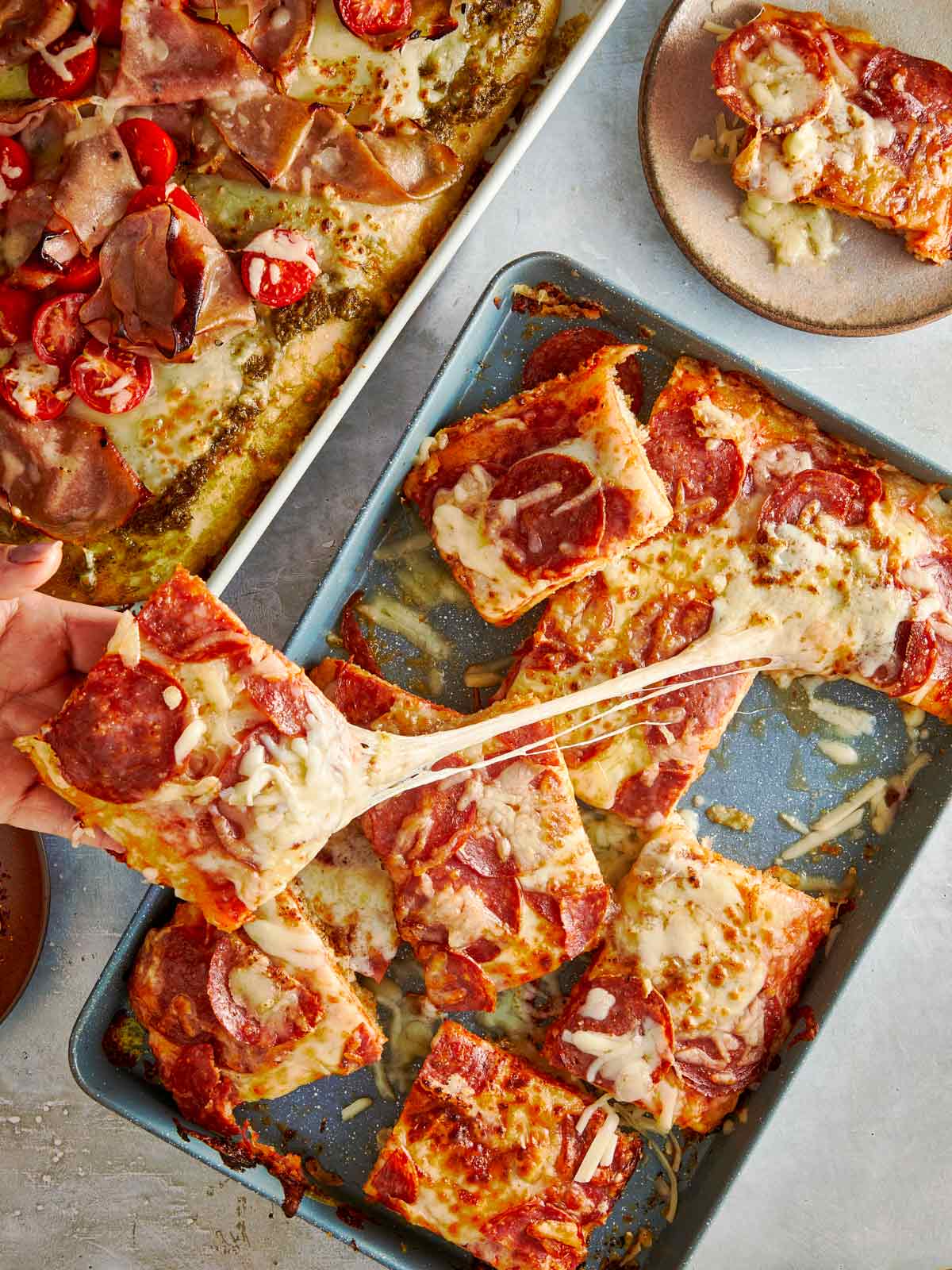
- Enjoy! Slice, serve, and share while hot.
Want to see how it all comes together? Check out the video in See It In Action for the full step-by-step.
If you enjoy homemade pizza as much as we do, there are plenty more ways to mix things up. For something bright and fresh, our Smoked Salmon and Avocado Pizza layers a herb cream cheese base with smoked salmon, avocado and peppery arugula. And if we're feeding a crowd, our The Ultimate Pull Apart Cheesy Garlic Bread is pure comfort: a golden loaf crosshatched and stuffed with mozzarella, garlic butter, and herbs that disappear within minutes.
Cook notes
Can we Use Pizza Dough To Make Focaccia?Yes, but the texture won't be quite the same. Focaccia has more hydration, which gives it that airy, fluffy crumb and golden crust.
Can we Use Focaccia Dough To Make Pizza?Absolutely! That's exactly what we're doing here, it bakes up soft inside, crisp on the edges, and good for any toppings you love.
What's The Difference Between Focaccia And Pizza Dough?Focaccia dough is wetter, proofed longer, and usually brushed with olive oil before baking. Pizza dough is drier, stretched thinner, and baked hotter for a crispier finish.
How Do we Make My Focaccia Pizza Extra Crispy?Use a well-oiled pan and bake on the lower oven rack. The olive oil helps the bottom turn beautifully golden and crisp.
Can we Make Focaccia Pizza Ahead Of Time?Yes! You can prepare the dough in advance and refrigerate it overnight. Just bring it back to room temperature before baking.
See It In Action: Step-By-Step
What you need
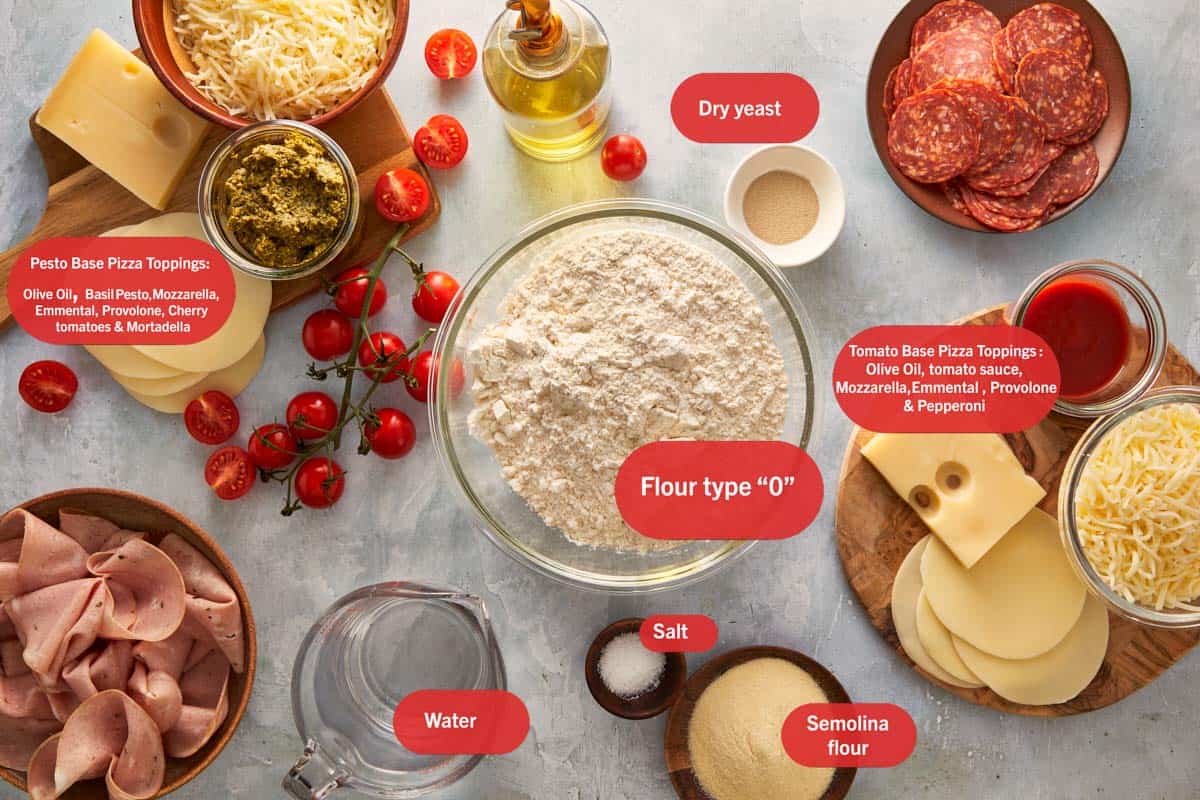
- 3½ cups type 0 flour at least 12% protein
- 2½ cups water
- 1 tsp dry yeast
- 1½ tsp salt
- 2 tbsp olive oil
- semolina flour for dustin
- 2 tbsp olive oil for brushing dough
- 1 cup tomato sauce
- 2 cups mozzarella
- ½ cup emmental
- ¼ cup provolone
- 35 slices pepperoni
- 1 cup basil pesto
- 15 cherry tomatoes halved
- 12 slices mortadella
Method
- Using only ¾ of the water, mix in the yeast until dissolved. Add the flour and mix until the dough starts to come together.
- Add salt with the remaining water, then knead. Gradually drizzle in olive oil and knead until smooth.
- Cover and let rest. Every 15 minutes, perform stretch-and-folds. Let rise until doubled in volume
- Divide dough into 2 equal portions (about 660 g each). Roll each portion on semolina flour and place onto 2 greased half sheet pans (18 x 13 inches). Let rise again until doubled.
- Preheat oven to 480°F (250°C). Bake bases on the bottom rack for 6–7 minutes.
- Brush dough with olive oil, spread with tomato sauce, and top with mozzarella, Emmental, provolone, and pepperoni.
- Brush dough with olive oil, spread with basil pesto, and top with mozzarella, Emmental, provolone, cherry tomatoes, and mortadella.
- Return topped pizzas to the middle of the oven. Bake for another 6 minutes, or until cheese is bubbling and golden.