
Unlock Your Culinary Potential: The Ultimate Guide to a Perfectly Organized Pantry
Imagine this: you’re ready to whip up a delicious, healthy meal. You open your pantry door, and instead of a chaotic jumble, you’re greeted by neatly arranged shelves, clear containers revealing their contents, and everything exactly where it should be. No more digging, no more tumbling boxes, no more mystery ingredients. This isn’t just a dream; it’s the reality of an organized pantry, and it’s far more achievable than you might think.
A disorganized pantry is a stealthy saboteur of healthy eating habits. When ingredients are hidden, expired, or simply impossible to find, the motivation to cook evaporates faster than water on a hot stove. The frustration of searching for a specific spice, finding a half-empty bag of flour, or having a stack of cans cascade onto the floor often leads to the easiest solution: reaching for your phone to order takeout. This cycle not only derails your wellness goals but also wastes precious time and money.
For years, I navigated the chaos of a cluttered kitchen pantry. Despite my love for cooking and experimenting with new recipes, pantry organization remained an elusive task, perpetually sliding to the bottom of my to-do list. It seemed less urgent than other household chores, or certainly less appealing than a spontaneous beach trip or a relaxing glass of wine with a friend. However, the transformation I experienced after finally tackling this challenge was profound, revolutionizing my cooking experience and supporting my journey towards a healthier lifestyle.
The Undeniable Benefits of Pantry Organization
While the idea of organizing your pantry might not sound like the most thrilling activity, the return on your time investment is truly remarkable. Committing just a few focused hours to this task can yield a multitude of benefits that resonate through your daily life:
- Reduced Stress & Frustration: Say goodbye to the daily grind of searching for ingredients. A well-organized pantry means everything is visible and accessible, making meal preparation a calm and enjoyable process.
- Significant Cost Savings: Eliminate duplicate purchases. When you can clearly see what you have, you won’t buy another bag of lentils or a second jar of cumin that’s already buried deep within your shelves. This also helps reduce food waste by ensuring older items are used before they expire.
- Promotes Healthier Eating: A tidy pantry stocked with wholesome ingredients encourages home cooking. You’re more likely to prepare nutritious meals when the process is streamlined and stress-free, reducing reliance on unhealthy convenience foods.
- Saves Time: From grocery list creation to actual cooking, an organized pantry shaves minutes off every step. You’ll know exactly what you need to buy and can quickly grab ingredients without a scavenger hunt.
- Inspires Creativity: When your ingredients are neatly displayed, you might discover items you forgot you had, sparking new recipe ideas and culinary adventures.
Before diving headfirst into ambitious healthy eating plans and resolutions, take this foundational step. Dedicate a focused hour—perhaps put on your favorite playlist—and truly commit to transforming your pantry. You’ll be amazed at the sense of accomplishment and the lasting positive impact it has on your kitchen and your well-being.
Your Blueprint for a Beautifully Organized Pantry
Like any successful endeavor, a clear game plan is essential. Here are actionable tips to guide you through the process of creating a functional, beautiful, and highly efficient pantry that supports your healthy lifestyle goals:
1. Start Fresh: The Grand Purge and Reset
This is arguably the most crucial step. To truly organize, you need to know exactly what you’re working with. Begin by taking *everything* out of your pantry. This provides a clean slate and allows you to accurately inventory your supplies. As you remove items, sort them into categories: keep, toss, or donate. Immediately discard anything past its expiration date, stale, or unrecognizable. Get rid of half-opened packages of forgotten ingredients that have lost their freshness. This purge isn’t just about decluttering physical space; it’s about resetting your mindset and aligning your pantry with your health and cooking aspirations. Once empty, take the opportunity to thoroughly wipe down shelves and surfaces, ensuring a sparkling clean environment for your newly organized items.
2. Free Up Space: Smart Packaging and Bulk Buying
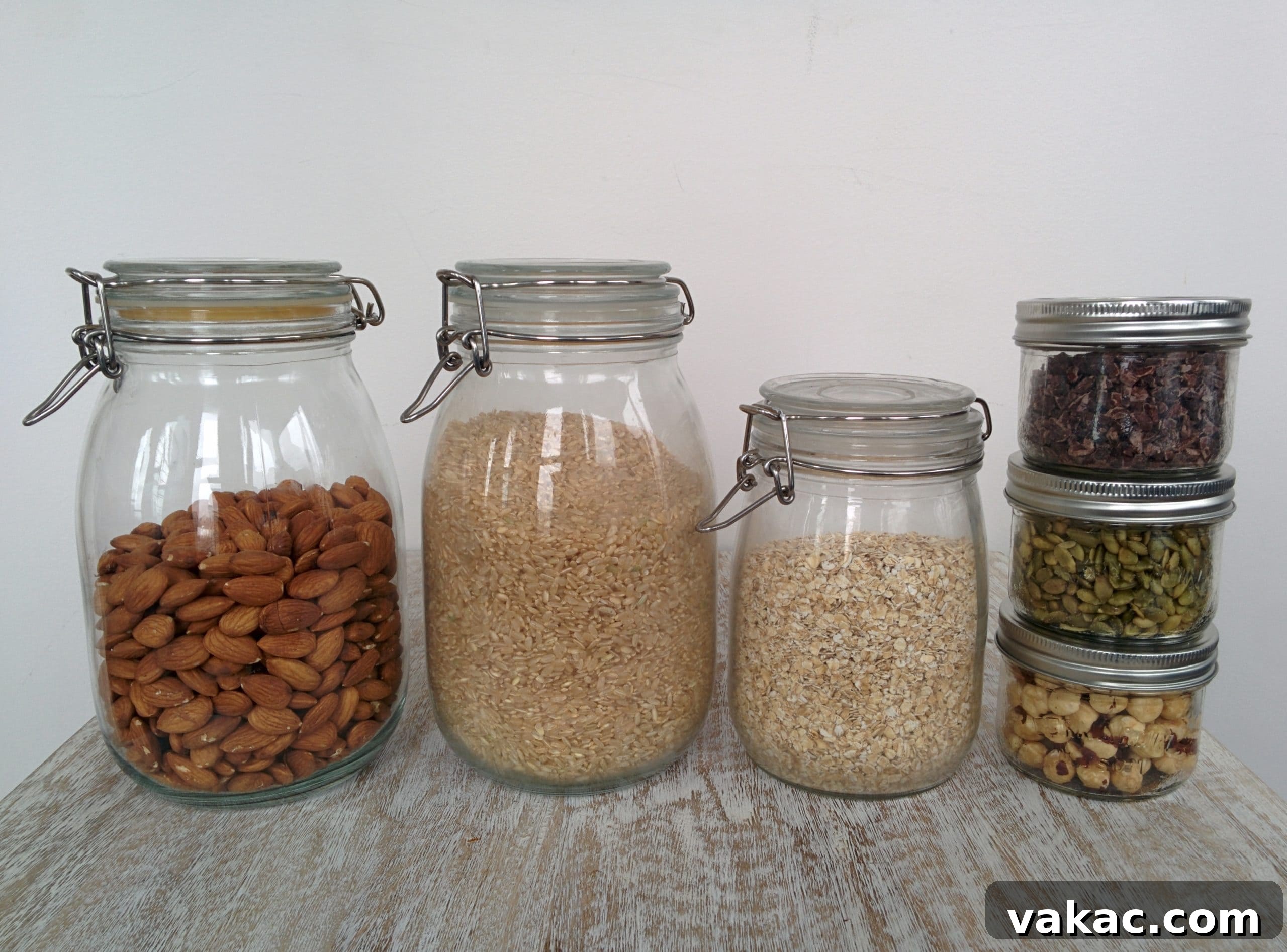
Bulky, oddly shaped packaging from supermarkets is a major contributor to pantry clutter and wasted space. Many items, especially dry goods, come in boxes or bags that are inefficient for storage. Transferring items like pasta, rice, grains, cereals, and flours into uniform containers instantly creates more usable space and a cleaner aesthetic. Furthermore, consider the benefits of buying in bulk. Purchasing staples like nuts, seeds, dried fruits, and grains in larger quantities can often be more cost-effective and environmentally friendly. Once home, these bulk items can be portioned into your storage containers. This approach not only saves money but also ensures you always have a fresh supply on hand without excess packaging.
3. Thoughtful Storage Solutions: Clear Containers, Jars, and Baskets
Once you’ve decluttered and considered bulk options, the next step is investing in effective storage. Clear containers, jars, and bins are game-changers for pantry organization. They allow you to see contents at a glance, preventing forgotten items and duplicate purchases. Opt for a variety of sizes and shapes to accommodate different items – tall containers for pasta, wider ones for flour, smaller jars for nuts and seeds. Glass containers offer excellent airtightness and durability, while BPA-free plastic options are lightweight and shatter-resistant. Beyond individual containers, incorporating a few sturdy baskets can be incredibly useful for grouping miscellaneous items, snacks, or baking supplies that might not fit neatly into jars. These create flexible zones and keep smaller, awkward items contained and easy to access.
4. The Power of Spices: Flavoring Your Healthy Journey
Spices are the heart and soul of healthy, flavorful cooking. A well-stocked and organized spice collection is an invaluable asset in any kitchen, allowing you to create diverse and exciting meals without relying on high-sodium, pre-made sauces. My own experience with organizing my spices, initially just on a dedicated shelf, proved to be one of the most impactful and surprisingly low-cost investments in my kitchen. Having a variety of fresh spices at your fingertips arms you for almost any recipe, eliminating last-minute dashes to the grocery store. Look for solutions like tiered spice racks, magnetic tins, or small uniform jars that keep your spices visible and accessible. Remember to store spices away from direct heat and light to preserve their potency. For guidance on how long your spices retain their flavor and efficacy, you might find this handy chart extremely useful, ensuring your culinary creations are always vibrant and delicious.
5. Labeling for Clarity: Your Pantry’s Secret Weapon
While clear containers are an excellent start, proper labeling is the next level of pantry organization, especially in a well-stocked kitchen where many different grains, flours, or spices can look remarkably similar. Labels eliminate guesswork and ensure that everyone in the household can easily identify contents. You can use simple adhesive labels, a label maker for a more uniform look, or even chalkboard paint on glass jars for a rustic, customizable touch. Beyond just identifying the item, consider adding the purchase date or expiration date to your labels. This practice is incredibly helpful for managing inventory, ensuring freshness, and implementing a “first-in, first-out” system to minimize food waste. Consistent and clear labeling transforms a good pantry into a truly efficient one.
6. Maximizing Vertical Space: Adding Smart Storage Solutions
Many pantries, especially smaller ones, have untapped potential in their vertical space. Don’t let valuable wall space go to waste. Consider installing extra shelves on an unused wall or the inside of your pantry door. Stackable bins or risers can double your storage capacity within existing shelves. Rolling metal drawer units, similar to this or this, can provide versatile, mobile storage for heavier items or overflow. Look for over-the-door organizers for spices or smaller packets. Get creative and assess your unique pantry layout to identify areas where you can add functionality and maximize every inch, turning dead space into practical storage.
7. Organizing by Frequency of Use: The Accessibility Principle
This principle is all about ergonomics and efficiency. Place the items you use most frequently at eye level or within the easiest reach. This minimizes bending, stretching, and rummaging, making your cooking process smoother and less physically demanding. If you’re on the shorter side, like me, prioritize the middle shelves for your everyday staples and consider keeping a small, foldable step stool in or near the pantry. Items used less often—perhaps specialty baking ingredients or holiday entertaining supplies—can be stored on higher or lower shelves. This thoughtful arrangement reduces friction in your daily cooking routine and helps you maintain an organized system with minimal effort.
8. Grouping by Food Type: Logical Zones for Efficiency
Complementing the “frequency of use” rule, grouping items by food type creates intuitive zones within your pantry. This logical categorization means you’ll always know where to look for specific ingredients. For instance, create a “baking zone” on an upper shelf with flours, sugars, leavening agents, and extracts. Below that, perhaps a “breakfast zone” with cereals, oats, and pancake mix. Nuts, seeds, and healthy snack foods can have their own dedicated area, while spices and flavorings are kept together for easy access. Heavier items like canned goods, jarred sauces, and oils should reside on the bottom shelves for stability and safety. Combining this method with the accessibility principle ensures that your pantry is not only tidy but also incredibly functional.
9. Keep a Running List: Never Run Out (or Buy Duplicates) Again
This simple habit can revolutionize your meal planning and grocery shopping. Attach a small notepad or a mini whiteboard to the inside of your pantry door (and your freezer door too!). Every time you run out of an item or notice supplies getting low, immediately add it to the list. This “running list” serves multiple purposes: it prevents those frustrating moments of realizing you’re missing a key ingredient mid-recipe, it eliminates duplicate purchases, and it makes writing your weekly grocery list an absolute cinch. By consistently updating your inventory list, you’ll save time, reduce food waste, and always be prepared for your next culinary adventure.
Now that you have these powerful tips, it’s time to put them into action! Transforming your pantry is an investment in your time, money, and overall well-being. Share this article with anyone you know who could benefit from a little kitchen organizing inspiration and efficiency boost.
What are your absolute best kitchen organization tips and tricks? I’d love to hear your insights and experiences in the comments below!
Coming up next:
Time-Saving Kitchen Tools: My Top 12 Picks That Will Change Your Kitchen Game