

Yo-yo dieting, often referred to as weight cycling, describes the frustrating and repetitive pattern of losing weight through restrictive diets, only to regain it, and then embarking on another diet. This relentless cycle is largely fueled by the immense societal pressure to conform to a specific body ideal within a pervasive diet culture. Many of us find ourselves caught in this loop, clinging to the optimistic belief that the next diet will finally be the one that works, or that this time, our willpower will be strong enough to maintain the weight loss for good.
But is it truly about finding a new plan or simply exercising more discipline? As an intuitive eating dietitian, my core mission is to empower you with accurate, evidence-based information. This knowledge allows you to make informed and compassionate decisions that truly serve your well-being. In this comprehensive guide, we will delve deep into the definition of yo-yo dieting, explore its underlying causes, understand the physiological and psychological impact of the yo-yo effect on our health, and, most importantly, provide you with three actionable strategies to break free from the yo-yo diet cycle for good.

Whether we consciously recognize it or not, the shadow of yo-yo dieting looms large across our society. It’s a pervasive phenomenon that appears in countless conversations and life situations. Perhaps you’ve overheard a friend detailing their intense 90-day fitness challenge to get “shredded,” or witnessed the immense stress of a bride-to-be striving to “slim down” for her wedding day. New mothers, too, often face relentless scrutiny and pressure to “bounce back” to their pre-pregnancy bodies. These scenarios, though varied, all reflect the same underlying current of weight cycling – a never-ending merry-go-round that many of us feel compelled to join, even when we intuitively sense it’s not truly serving us.
If any of these experiences resonate with you, please know that you are far from alone. The pursuit of weight loss is a deeply ingrained societal norm. A report from the Centers for Disease Control and Prevention’s National Center for Health Statistics revealed that nearly half of American adults surveyed between 2013 and 2016 reported actively trying to lose weight within the preceding 12 months. Given that we are now well past 2022, it’s reasonable to assume this statistic has only climbed higher, especially considering the American weight loss industry’s staggering valuation, now reported to be around 250 billion dollars annually. This immense financial engine consistently reinforces the belief that weight loss is the key to health and happiness.
If these statistics evoke a sense of frustration or existential dread, take a deep breath – we are here to offer a different perspective and tangible support. As an intuitive eating dietitian, my mission is to provide you with the essential facts, empowering you to make choices about your health and body that genuinely resonate with your inner wisdom and feel truly good to you. Today, on the blog, we will meticulously unpack the complexities of yo-yo dieting, uncover its root causes, examine the profound effects of this pattern, explore its often-detrimental impacts on our overall health, and, crucially, equip you with three powerful strategies to liberate yourself from the grip of yo-yo dieting permanently.
Ready to Transform Your Relationship with Food?
Embark on a journey to deeply understand not only *what* you eat, but also *why* you eat, how different foods make you *feel*, and identify any underlying patterns that influence your food choices and overall well-being. Begin your path to true food freedom today!
What Exactly Is Yo-Yo Dieting? Understanding Weight Cycling
At its core, yo-yo dieting, also known as weight cycling, is the predictable and often disheartening cyclical pattern characterized by intentional weight loss, followed by an inevitable regaining of that lost weight, and subsequently, the initiation of yet another diet. This pattern creates a continuous loop that can feel impossible to escape.
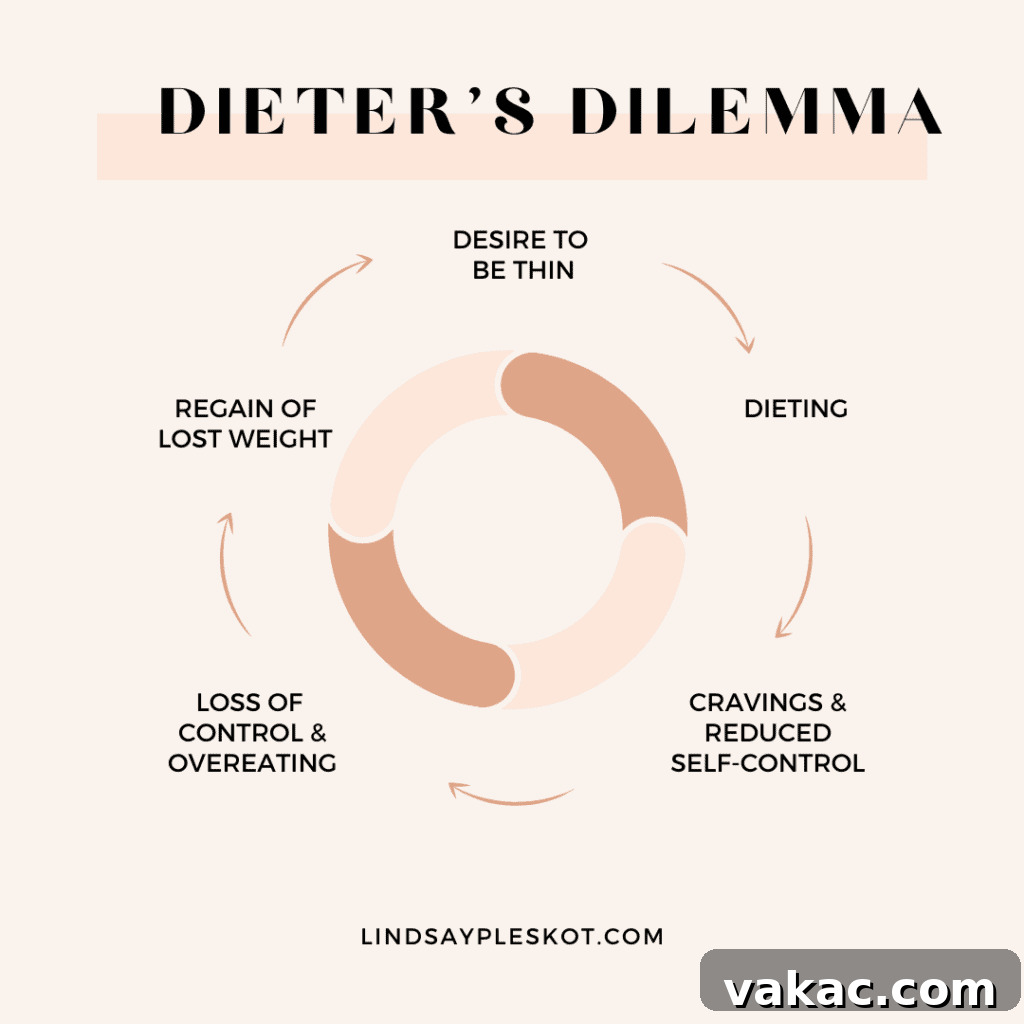
This cyclical nature is eloquently illustrated by the “Dieter’s Dilemma” model, conceptualized by psychologists John P. Foreyt and G. Ken Goodrick. The model vividly depicts how the journey often begins with the intense “desire to be thin.” This desire typically leads to the act of “dieting,” which, over time, frequently results in intense food cravings and feelings of deprivation. These feelings often culminate in a “loss of control eating” – episodes of overeating or binge eating – which then directly causes the “regain of lost weight.” Tragically, this weight regain often fuels the initial “desire to be thin” once more, thus completing the cycle and sending the individual back to square one, or often, even further behind. With each turn of this cycle, individuals not only regain the weight but frequently end up weighing more than they did when they initially started dieting, reinforcing a sense of failure and frustration.
What Perpetuates This Destructive Cycle? The Role of Diet Culture
The primary trigger for yo-yo dieting is almost always an intrinsic desire to achieve a smaller or thinner body. This motivation is entirely understandable when viewed through the lens of our contemporary society. We are immersed in a culture that relentlessly promotes and celebrates thinness above almost all other attributes, equating it with health, success, moral goodness, and desirability.
To fully grasp this phenomenon, it’s crucial to understand “diet culture.” According to registered dietitian Christy Harrison, diet culture is a pervasive system of beliefs that:
- Worships Thinness: It elevates thinness as the ultimate ideal, conflating it with health, virtue, and social status, often ignoring the vast diversity of healthy body sizes.
- Promotes Weight Loss as a Means to Higher Status: It suggests that losing weight will magically unlock happiness, improved health, and greater acceptance, thereby acting as a gateway to a better life.
- Demonizes Certain Ways of Eating While Elevating Others: It creates rigid rules around “good” and “bad” foods or eating patterns, fostering guilt and shame around natural human eating behaviors.
- Oppresses People Who Don’t Conform: It marginalizes and discriminates against individuals whose bodies do not align with the narrow “thin ideal” or the often-unrealistic “gold standard” of health, leading to widespread body shaming and health disparities.
Given that every single one of us has been exposed to, and influenced by, diet culture to some degree, it’s hardly surprising that so many individuals actively pursue weight loss. The desire to fit into the perceived “safety” and acceptance of societal values is incredibly powerful. However, as comprehensively detailed in our article Why Diets Don’t Work and 6 Steps to Take Instead, conventional diets boast an alarming 95% failure rate. This means that the vast majority of people who embark on a diet regain the lost weight within two to five years. Even more concerning, up to two-thirds of these dieters end up regaining *more* weight than they initially lost, often surpassing their starting weight. In fact, a thorough review of 29 long-term studies consistently identified going on a diet as a strong predictor for long-term weight gain. This well-documented phenomenon of repeated weight regain is a primary contributor to the widespread yo-yo dieting effect we observe today, making it clear that the problem lies not with individual willpower, but with the efficacy of dieting itself.
Unpacking the Yo-Yo Effect: A Closer Look at the Cycle
The yo-yo effect typically unfolds in a predictable, almost insidious manner. It often begins with the decision to go on a diet, meticulously adhering to a strict set of rules that dictate what, when, and how much to eat. These dietary regimens almost always involve a caloric intake significantly lower than what your body genuinely requires for optimal functioning. You might diligently follow this plan for a period, perhaps reaching an initial goal weight. During this phase, the positive reinforcement – praise, admiration, and compliments from peers and your community – can be incredibly motivating, making the strict adherence feel worthwhile and even enticing.
However, once that initial goal is met, or even before, the sustainability of such a rigid diet begins to unravel. You start to experience persistent, often insatiable hunger, intense cravings for forbidden foods, and profound fatigue. Beyond the physical, there’s often a deep sense of deprivation, not only regarding food but also social connections, as restrictive routines can isolate individuals from activities centered around food. Inevitably, you start to notice the number on the scale creeping upwards. Over time, the stark realization hits: you have not only regained the weight you initially lost but, quite often, an additional amount. This leads directly back to the “desire to be thin” and the temptation to restart the cycle.
So, what are the underlying mechanisms that drive this frustrating up-and-down effect, making it so difficult to maintain weight loss and often leading to greater weight gain?
The Profound and Lasting Impacts: Long-term Effects of Yo-Yo Dieting
The repeated cycles of weight loss and regain associated with yo-yo dieting can have significant and often detrimental long-term effects on various physiological systems within the body. These impacts extend far beyond mere changes on the scale.
Decreased Metabolism: Your Body’s Famine Response
One of the most profound and perhaps surprising effects of dieting is a reduction in your basal metabolic rate (BMR). Your body, a marvel of evolutionary adaptation, interprets prolonged periods of caloric restriction, or dieting, as a state of “famine.” From an evolutionary perspective, the body cannot differentiate between self-imposed caloric restriction and genuine scarcity of food in the environment. Its primary directive is survival.
Remarkably, within as little as a week of consistent dieting, the body can lower its metabolism by up to 40%.
This metabolic slowdown is a sophisticated survival mechanism known as adaptive thermogenesis, where the body becomes incredibly efficient at conserving energy. It achieves this by downregulating non-essential bodily functions, such as bone metabolism, reproductive function, and the maintenance of healthy hair, skin, and nails. When the “famine” (i.e., the diet) eventually ends, the body attempts to increase its metabolism back towards its baseline. However, this new baseline is often lower than the original pre-diet metabolic rate, partly due to the inevitable loss of lean muscle tissue during the weight loss phase. Furthermore, during the subsequent weight regain phase, the body exhibits a strong preferential tendency to store fat rather than rebuild muscle mass. This regained fat is often disproportionately distributed as visceral fat – the particularly harmful type of fat that surrounds vital organs within the abdomen. This enhanced fat storage serves as another survival mechanism, preparing the body to store *more* energy in anticipation of the next perceived “famine,” making future weight loss even more challenging and weight regain more likely.
Loss of Lean Muscle Tissue: A Double Whammy for Metabolism
While dieting aims to burn fat for fuel, your body isn’t always discerning. When it’s not receiving adequate energy from your diet, it will inevitably begin to break down its own lean muscle tissue. This occurs because crucial organs like your brain, central nervous system, and red blood cells rely almost exclusively on glucose (sugar) for their energy supply. Unlike muscles or other organs, these vital systems cannot store glucose for later use; they require a constant, steady supply.
When there’s a deficit of glucose from dietary intake, the body adapts by initiating a process called gluconeogenesis. In this process, amino acids, the building blocks of protein, are extracted from your body’s muscle tissue and converted into glucose. This breakdown of lean muscle mass is problematic because muscle tissue is metabolically active, meaning it burns more calories at rest compared to fat tissue. Therefore, the loss of lean muscle tissue directly contributes to a further decrease in your resting metabolic rate, making it even harder to manage weight in the long term and easier to regain it.
Increased Levels of the Stress Hormone, Cortisol: Fueling Fat Storage
From a physiological perspective, dieting – which often involves a state of semi-starvation and considerable restriction – acts as a significant stressor on your body. In response to stress, your adrenal glands release increased levels of the hormone cortisol. Elevated cortisol levels have a direct impact on your metabolism, promoting increased fat storage, particularly in the abdominal area, and simultaneously increasing your appetite.
From an evolutionary standpoint, this response makes perfect sense. When our ancestors faced a threat (like a predator or a rival tribe), their bodies would prepare for “fight or flight” by storing extra fat. This fat served as readily available energy reserves, vital for survival in a dangerous situation. In today’s modern environment, while tigers may no longer be a daily threat, our bodies still respond to chronic stressors – work pressure, academic demands, family responsibilities, financial worries, and even the stress of dieting itself – by increasing cortisol. This ancient survival mechanism, triggered by modern stressors, contributes significantly to fat accumulation and makes breaking the yo-yo diet cycle even more challenging.
The Paradox: Is Weight Loss Always a Good Thing for Health?
Ironically, our society’s relentless pursuit of weight loss, often driven by the desire for improved health, may inadvertently be undermining our overall well-being. This is a critical point that challenges deeply held beliefs about health and body size.
While initial weight loss might lead to short-term improvements in metabolic parameters – such as blood pressure, blood sugar levels, lipid profiles, and markers of inflammation – studies consistently demonstrate a disturbing trend. These health markers often worsen each time the lost weight is regained. This means that repeated weight cycling can lead to a progressively deteriorating metabolic profile over time, making an individual less healthy than if they had maintained a stable weight, even if that weight was higher. Research has unequivocally linked chronic weight cycling with a significantly increased risk for a host of serious health conditions, including Type 2 diabetes, various forms of heart disease, hypertension (high blood pressure), non-alcoholic fatty liver disease, and even certain types of cancer.
One of the most compelling pieces of evidence comes from the seminal Framingham Heart Study, a longitudinal study that tracked over 3,000 men and women for an astounding 32 years. The findings were stark: regardless of their initial body weight, participants who engaged in weight cycling or yo-yo dieting exhibited a higher overall death rate. Furthermore, they faced double the risk of dying from heart disease compared to individuals whose weight remained relatively stable. This long-term research highlights the severe cardiovascular risks associated with the constant fluctuation of weight.
Beyond the physical health implications, yo-yo dieting also takes a heavy toll on mental and emotional well-being. Studies have linked this pattern to an increased risk for developing eating disorders, heightened social anxiety, diminished self-esteem, and pervasive feelings of failure and self-blame. The emotional distress, shame, and obsession with food and body image that often accompany yo-yo dieting can significantly detract from one’s quality of life and overall psychological health.
Ready to Transform Your Relationship with Food?
Embark on a journey to deeply understand not only *what* you eat, but also *why* you eat, how different foods make you *feel*, and identify any underlying patterns that influence your food choices and overall well-being. Begin your path to true food freedom today!
3 Ways to Stop Yo-Yo Dieting Immediately: Breaking the Cycle for Good
If you are feeling ready to step off the exhausting yo-yo dieting merry-go-round and cultivate a more peaceful relationship with food, including learning How to Stop Feeling Guilty After Eating, know that we are here to offer our unwavering support every step of the way. Here are three powerful and immediate steps you can take to begin your journey towards food freedom and body respect:
- Arm Yourself with the Facts and Challenge Diet Culture
- If reading about the ineffectiveness and harms of dieting has stirred feelings of cognitive dissonance or confusion, that is an entirely normal and valid reaction! You are not alone in questioning long-held beliefs. This questioning is a vital part of the unlearning process, as breaking away from diet culture’s pervasive mainstream messages requires significant courage, critical thinking, and consistent practice. Empowering yourself with accurate information is the first crucial step. Here are some essential resources to help you begin this journey of understanding and challenging ingrained narratives:
- Why Diets Don’t Work (and what to do instead)
- 3 Reasons Counting Calories Doesn’t Work (and what to do instead)
- How to Have a Healthy Relationship with Food
- What is Healthy Eating Anyway? A Non-Diet Perspective
- If reading about the ineffectiveness and harms of dieting has stirred feelings of cognitive dissonance or confusion, that is an entirely normal and valid reaction! You are not alone in questioning long-held beliefs. This questioning is a vital part of the unlearning process, as breaking away from diet culture’s pervasive mainstream messages requires significant courage, critical thinking, and consistent practice. Empowering yourself with accurate information is the first crucial step. Here are some essential resources to help you begin this journey of understanding and challenging ingrained narratives:
- Explore and Embrace the Principles of Intuitive Eating
- Moving beyond the dieting mentality is a significant leap, but once you let go of restrictive rules, where do you turn for guidance? The framework of Intuitive Eating offers a powerful alternative. Begin by exploring the 10 Principles of Intuitive Eating – What Is It and Is It Right for You? These principles are designed to help you release rigid mental food rules and external restrictions, guiding you towards reconnecting with your body’s inherent wisdom. This involves learning to honor your hunger and fullness cues, discovering what foods truly taste good, feel good, and provide genuine satisfaction, and becoming attuned to what your body genuinely needs in any given moment. Working with a trusted intuitive eating professional can provide invaluable support and personalized guidance through this transformative process.
- Learn About and Apply the Health At Every Size (HAES) Movement
- If you’re feeling uncertain about how to support your health without resorting to dieting, delving into the Health At Every Size (HAES) movement can provide a liberating and evidence-based pathway. The HAES approach prides itself on being weight-neutral, which means its focus shifts away from the *outcome* of a specific number on the scale. Instead, it champions health-promoting *behaviors* that enhance well-being for people of all shapes and sizes. The five core principles of HAES include:
- Weight Inclusivity: Accepting and respecting the inherent diversity of body shapes and sizes, and rejecting the idealizing or pathologizing of specific weights.
- Health Enhancement: Supporting health policies and practices that improve well-being for people of all sizes, emphasizing accessible and individualized health care.
- Respectful Care: Acknowledging our biases, and working to end weight discrimination, weight stigma, and weight bias.
- Eating for Well-being: Promoting flexible, individualized eating based on hunger, satiety, nutritional needs, and pleasure, rather than external rules or guilt.
- Life-Enhancing Movement: Supporting all physical activities that allow people of all sizes, abilities, and interests to engage in enjoyable movement, rather than exercise focused solely on weight loss.
By embracing HAES, you can cultivate practices that genuinely improve your health, such as finding joyful and sustainable ways to incorporate movement into your daily routine, prioritizing adequate and restorative sleep, developing effective and compassionate stress management strategies, and providing your body with consistent, balanced, and nourishing nutrition without restriction or judgment. Here are some excellent resources to help you deepen your understanding:
- Explore the Association for Size Diversity and Health (ASDAH) for comprehensive information and resources on HAES.
- Read Body Respect: What Conventional Health Books Get Wrong, Leave Out, and Just Plain Fail to Understand about Weight by Dr. Linda Bacon and Lucy Aphramor, RD.
- If you’re feeling uncertain about how to support your health without resorting to dieting, delving into the Health At Every Size (HAES) movement can provide a liberating and evidence-based pathway. The HAES approach prides itself on being weight-neutral, which means its focus shifts away from the *outcome* of a specific number on the scale. Instead, it champions health-promoting *behaviors* that enhance well-being for people of all shapes and sizes. The five core principles of HAES include:
- Eat Regularly Throughout the Day with Well-Balanced Meals and Snacks
- One of the most immediate and impactful actions you can take to disrupt the yo-yo dieting cycle is to ensure you are eating consistently and adequately throughout your day. Regular eating helps to stabilize blood sugar levels, preventing the drastic spikes and subsequent drops that can trigger intense hunger, cravings, and feelings of being “out of control” around food. These uncontrolled eating episodes often lead back to the desire to restrict and diet again. By providing your body with consistent, balanced nutrition, you foster physical satiety and psychological peace, reducing the urge to overeat or restrict. Here are a few of our favorite recipes designed to support well-balanced meals and snacks:
- Healthy Meal Prep Breakfast Burritos
- Crispy Honey Garlic Cauliflower Power Bowl
- Coconut-Lemon Energy Balls with Dates
- One of the most immediate and impactful actions you can take to disrupt the yo-yo dieting cycle is to ensure you are eating consistently and adequately throughout your day. Regular eating helps to stabilize blood sugar levels, preventing the drastic spikes and subsequent drops that can trigger intense hunger, cravings, and feelings of being “out of control” around food. These uncontrolled eating episodes often lead back to the desire to restrict and diet again. By providing your body with consistent, balanced nutrition, you foster physical satiety and psychological peace, reducing the urge to overeat or restrict. Here are a few of our favorite recipes designed to support well-balanced meals and snacks:
And to make this even easier, we’ve compiled a fantastic roundup of quick and easy meal prep snack ideas that are both nourishing and satisfying!
Now Over to You: Your Thoughts and Experiences
We’re keen to hear from our community. Your insights and experiences are invaluable in fostering a supportive and understanding environment. Please share your thoughts:
- Does the description of the yo-yo diet cycle resonate with your personal experiences?
- Were you surprised by any of the research or facts presented in this article, particularly regarding the long-term impacts of weight cycling on health?
- Is there anything we might have overlooked or an important point you would add to this discussion about yo-yo dieting and breaking free from its grasp?
We invite you to share your comments and reflections below, or feel free to take a screenshot of this post and share it with us over on Instagram! If you found this article helpful and empowering, please consider passing it along to a friend, family member, or anyone in your network who might benefit from this vital information and support.