Ratatouille wasn't always on our weekly menu. The first time we thought about making it was years ago, after watching the Disney movie with the kids when they were little. They were completely fascinated by the idea that a dish made mostly of vegetables could be the star of the table. Of course, they immediately asked if we could try “the ratatouille from the movie,” and we remember smiling, wondering how we were going to make something so simple actually exciting.
That night stuck with us. Not because the dish was fancy, but because it reminded us of the line Chef Gusteau says: “Anyone can cook.” Ratatouille is proof of that. At its core, it's just good vegetables treated with a bit of patience and respect.
This easy ratatouille recipe is the version we keep coming back to. It's closer to how real families cook, not how movies plate it. The vegetables are gently simmered together so they soften, release their juices, and build flavor naturally. The result is a traditional French ratatouille that feels rustic and deeply satisfying without being complicated.
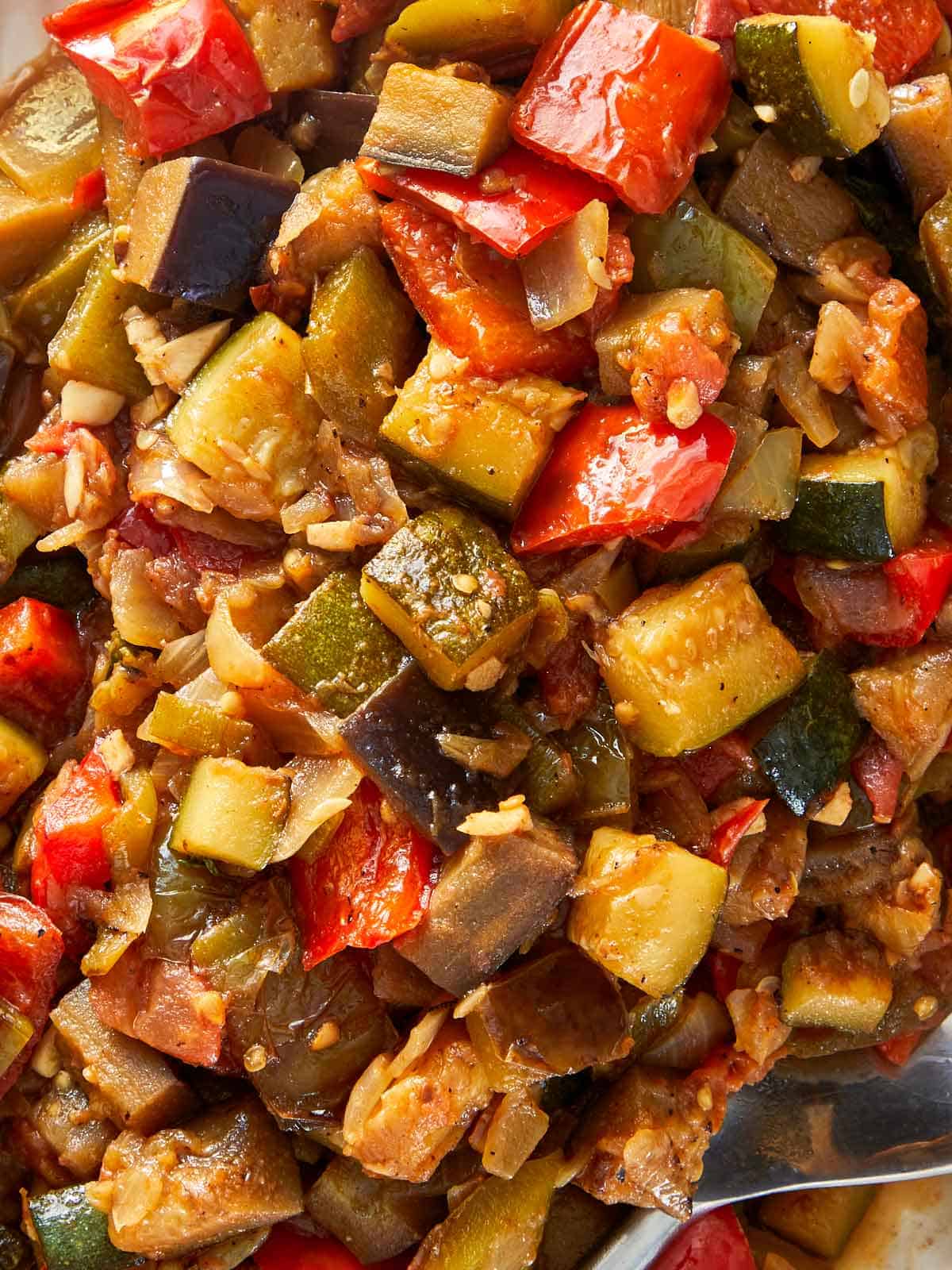
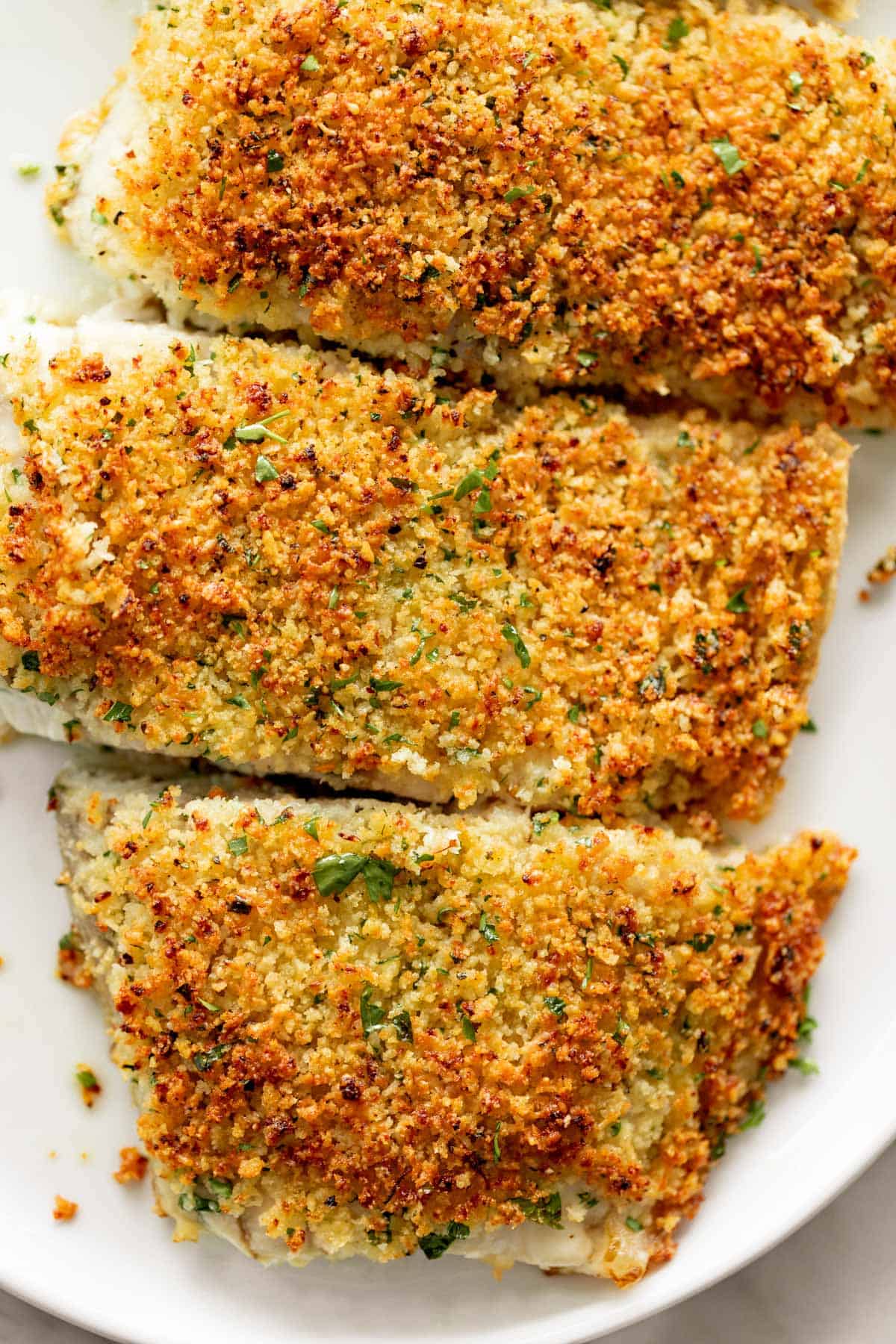
It's the kind of dish that works just as well spooned over crusty bread as it does alongside roasted chicken or a Parmesan Crusted Fish. And every time we make it, we still think back to that first request from the kids and how a simple animated movie reminded us that a reliable recipes don't need to impress. They just need to be done well.
What is the secret to a good easy ratatouille?
- You build flavour in layers, not all at once. This recipe starts with onions and garlic until they're soft and sweet, so the whole pot has a savoury “base note” before any vegetables even go in. That's why it tastes like ratatouille, not just “mixed veg.”
- You cook each vegetable separately on purpose. Eggplant, zucchini, and tomatoes don't behave the same way. When people dump everything in together, the pan steams, the vegetables collapse, and you end up with a watery, pale stew. Cooking them one by one gives each vegetable a chance to pick up colour and keep its shape.
- Eggplant goes first so it doesn't turn into an oily sponge. Eggplant drinks oil like it's thirsty. Giving it its own moment in the pot helps it brown properly without forcing you to drown everything else in oil later.
- You don't overcrowd the pot. Browning only happens when moisture can evaporate. If the pot is packed, you get steam. Steam equals soggy vegetables and flat flavour.
- You deglaze the pot with stock to capture the good bits. Scraping up the browned bits from the bottom is not “extra,” it's the difference between a thin, bland broth and a stew that tastes like it's been cooking all afternoon.
- You simmer low and covered so the flavours actually meld. A hard boil breaks vegetables down fast and turns ratatouille into baby food. Gentle heat lets everything soften slowly and keeps the texture rustic instead of mushy.
- Herbs go in at the right time. Thyme can handle the simmer and infuse the pot. Basil goes in right at the end so it stays fresh instead of tasting dull and cooked.
- Seasoning is easier to control because the veg aren't all releasing water at once. When everything cooks together from raw, the liquid level changes constantly and people over-salt early, then it reduces and turns too salty. This method is steadier, so you can taste and adjust with confidence.
- It works in a Dutch oven because heat stays even. That steady heat is exactly what you want for sautéing in batches and then simmering without hot spots that scorch the bottom.
When we're planning a meal around this ratatouille, we usually think about what will quietly support it rather than compete with it. Something like our French Onion Soup works beautifully on cooler nights, adding that deep, slow-cooked richness that feels comforting without being heavy. And when we want a little contrast on the plate, we reach for Garlic Butter Asparagus with Crispy Parmesan. That crisp bite and salty finish pair perfectly with the softness of the vegetables, turning a simple bowl of ratatouille into a meal that feels complete and intentional.
Ratatouille Ingredients
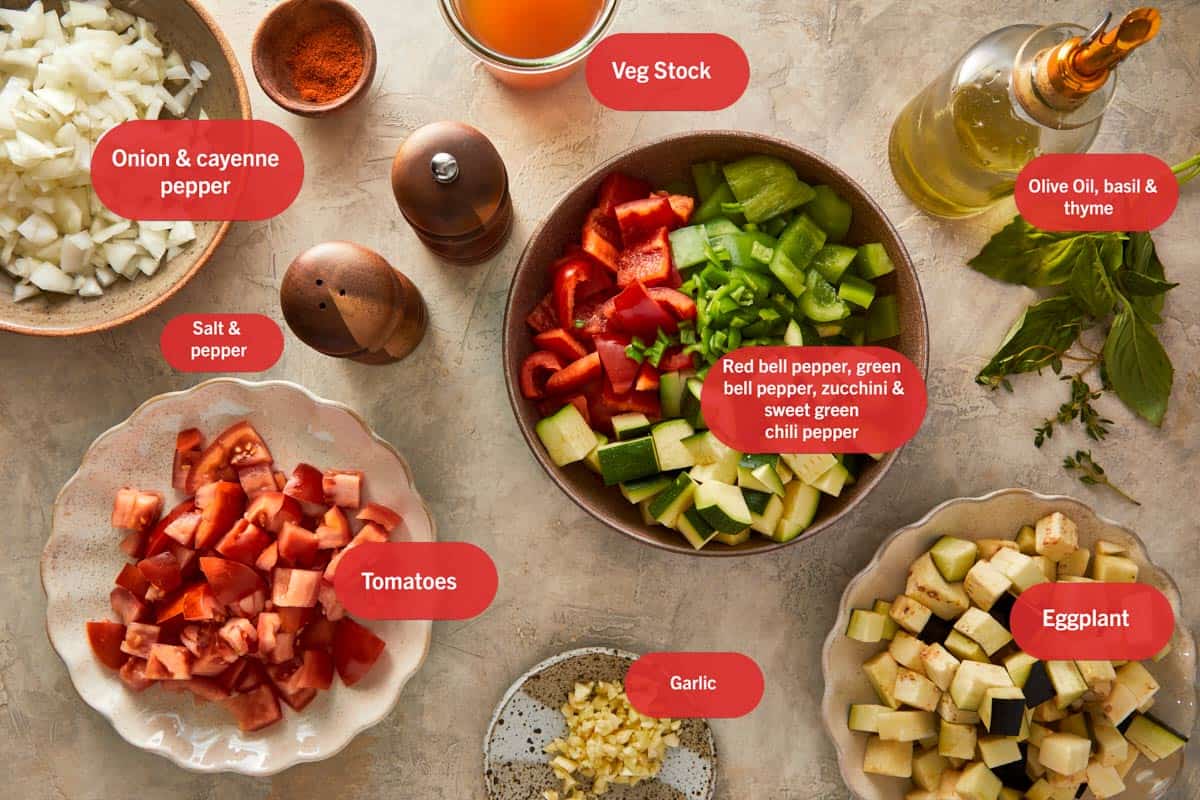
These four ingredients are what truly define this easy ratatouille recipe. When treated correctly, they turn simple vegetables into a classic French dish with real depth and character.
- Eggplant is the foundation of any traditional ratatouille. Sautéing it first prevents bitterness and allows it to soak up olive oil and seasoning, giving the dish its signature richness instead of a watery, stewed texture.
- Zucchini brings balance. It's lighter than eggplant and adds freshness to the stew. Cooking it separately keeps the slices tender but intact, so the final ratatouille has structure rather than collapsing into a vegetable mash.
- Tomatoes create the sauce that ties everything together. As they break down, they add gentle acidity and natural sweetness, forming a light, rustic base that lets the vegetables shine without overpowering them.
- Fresh Herbs. Thyme infuses the ratatouille as it simmers, building warmth and depth. Basil is added at the end for brightness. This timing is key. Overcooking herbs dulls their flavor, while adding them at the right moment keeps the dish vibrant and aromatic.
Note: Find the full list of ingredients and measurements in the Recipe Card.
Substitutions and Additions
Ratatouille is one of those dishes that naturally changes depending on what's in the kitchen that day. We've made it when the eggplants were good and glossy, and other times when we only had one lonely zucchini left in the fridge. It still works, as long as you respect how each vegetable cooks.
If eggplant isn't available or you know it's not everyone's favorite at the table, you can reduce it and lean more on zucchini and peppers. The dish will be lighter, less silky, but still satisfying. We've done this more than once when cooking for people who swear they “don't like eggplant” and never even notice it's missing.
Zucchini is easy to swap with yellow squashespecially in summer when gardens and markets are overflowing. They behave almost the same in the pot and keep that soft but not mushy texture that makes ratatouille feel rustic instead of overcooked.
Tomatoes are the one ingredient we're flexible with out of necessity. When fresh tomatoes are sweet and ripe, they're unbeatable. But on busy days or out of season, a good-quality canned tomato works just fine. We've learned not to fight the calendar. What matters is letting them cook down slowly so they become part of the dish, not just a sauce poured over vegetables.
For additionsthis is where life usually steps in. Some nights we stir in white beans at the end to make it more filling. Other times, especially when friends are coming over, we finish it with a drizzle of olive oil or a spoonful of pesto right before serving. It doesn't change the soul of the dish, it just adapts it to the moment.
Ratatouille has always been about using what you have and cooking it with patience. These swaps don't reinvent it. They just let it fit into real kitchens and real dinners, which is exactly how it was meant to be cooked.
Kitchen tip
Uniform slicing makes a bigger difference than most people expect. When the vegetables are cut to a similar thickness, they cook at the same pace and keep their shape instead of turning unevenly soft. A mandoline slicer is especially helpful here if you want consistent slices quickly, particularly with zucchini and eggplant.
Garlic is subtle in ratatouille, but it needs to be evenly distributed. Crushing or finely mincing it releases more flavor without leaving harsh chunks behind. A garlic press keeps things fast and clean, especially when you're already handling several vegetables.
Stirring is less about speed and more about timing. Once the vegetables start to soften, moving them gently keeps their shape intact and prevents everything from collapsing into a sauce. This is especially important toward the end, when the eggplant and zucchini are tender but should still look like themselves.
If you're making ratatouille for the first time, seeing the process once removes all the guesswork. Watching how the vegetables change color, release moisture, and come together over time makes the method feel intuitive instead of technical. The video below shows exactly what that final texture should look like before serving.
On the stove
Even a classic like easy ratatouille comes down to simple, easy steps. Follow along and let the aromas guide you because oui, anyone can cook.
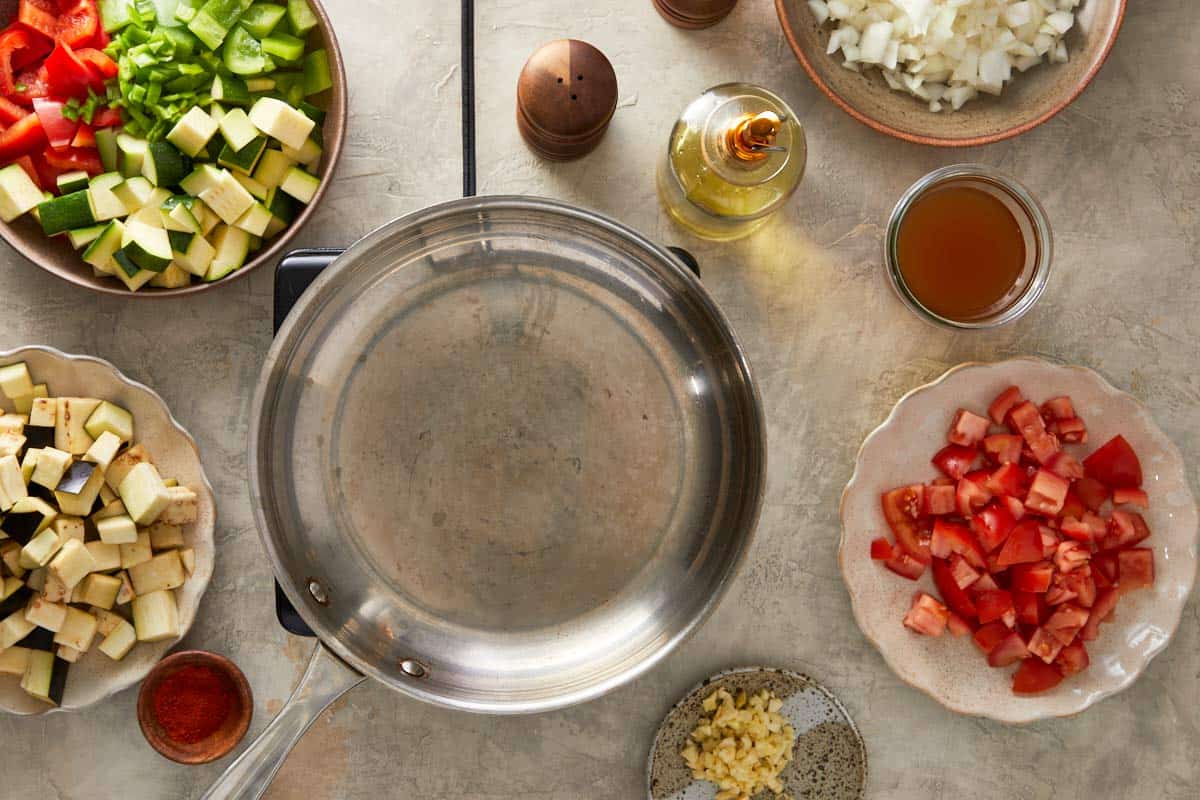
- Prepare the vegetables: Wash everything. Dice the eggplant, zucchini, tomatoes, and green chili. Seed and dice the bell peppers. Dice the onion and mince the garlic.
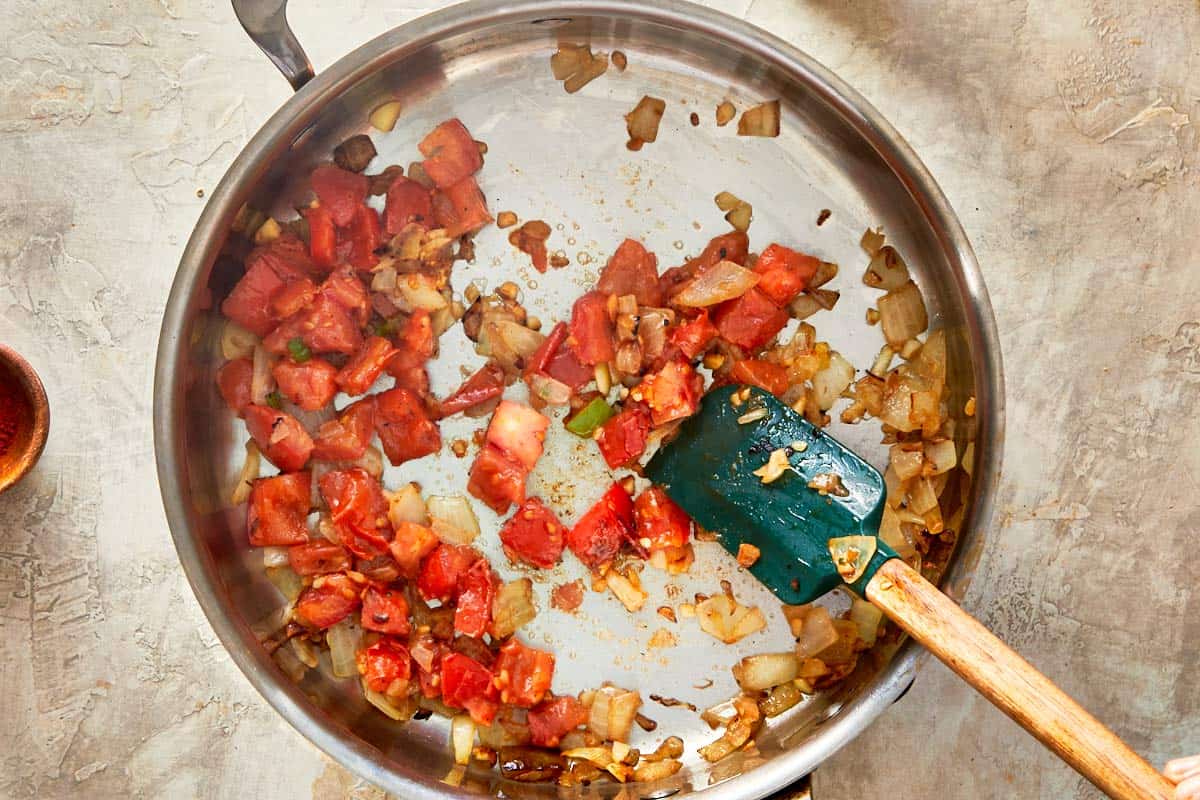
- Cook vegetables separately: In a skillet with olive oil, sauté each vegetable in turn. Onion and garlic first, then the rest. Deglaze with stock.
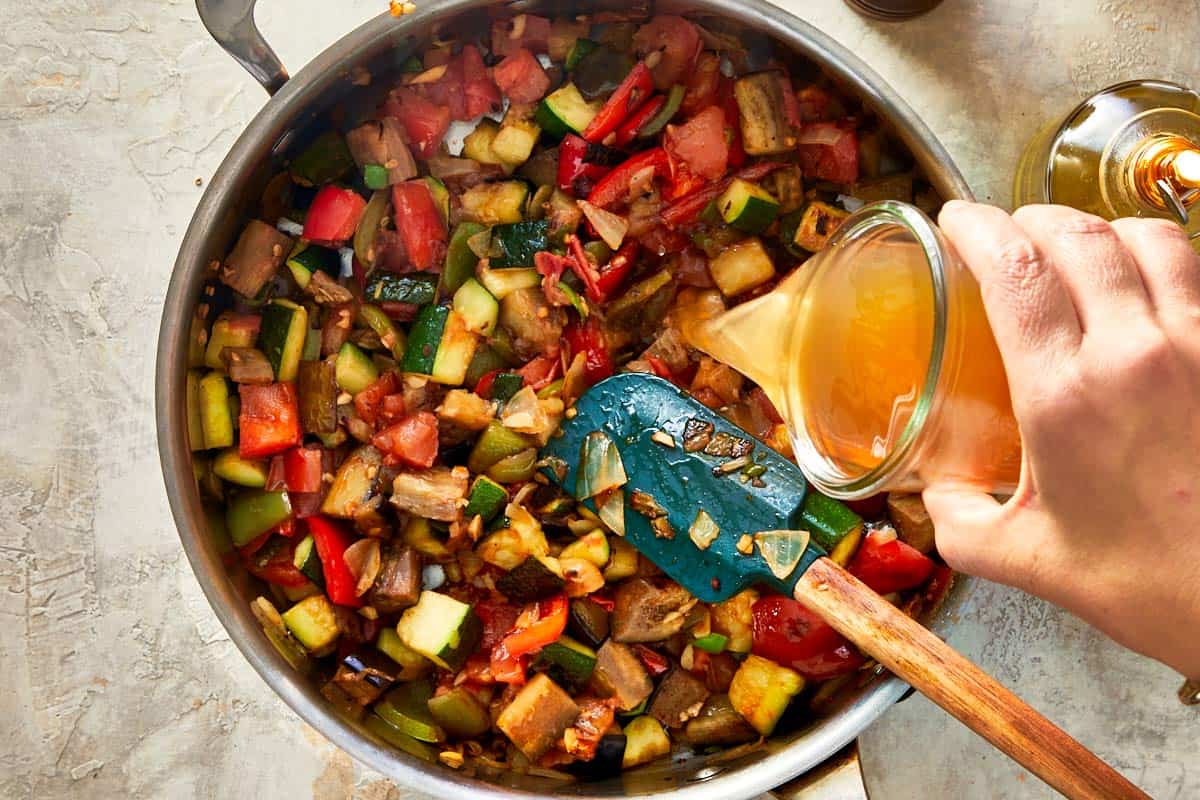
- Transfer to the pot: Pour the deglazing liquid into a large pot, then add all the sautéed vegetables.
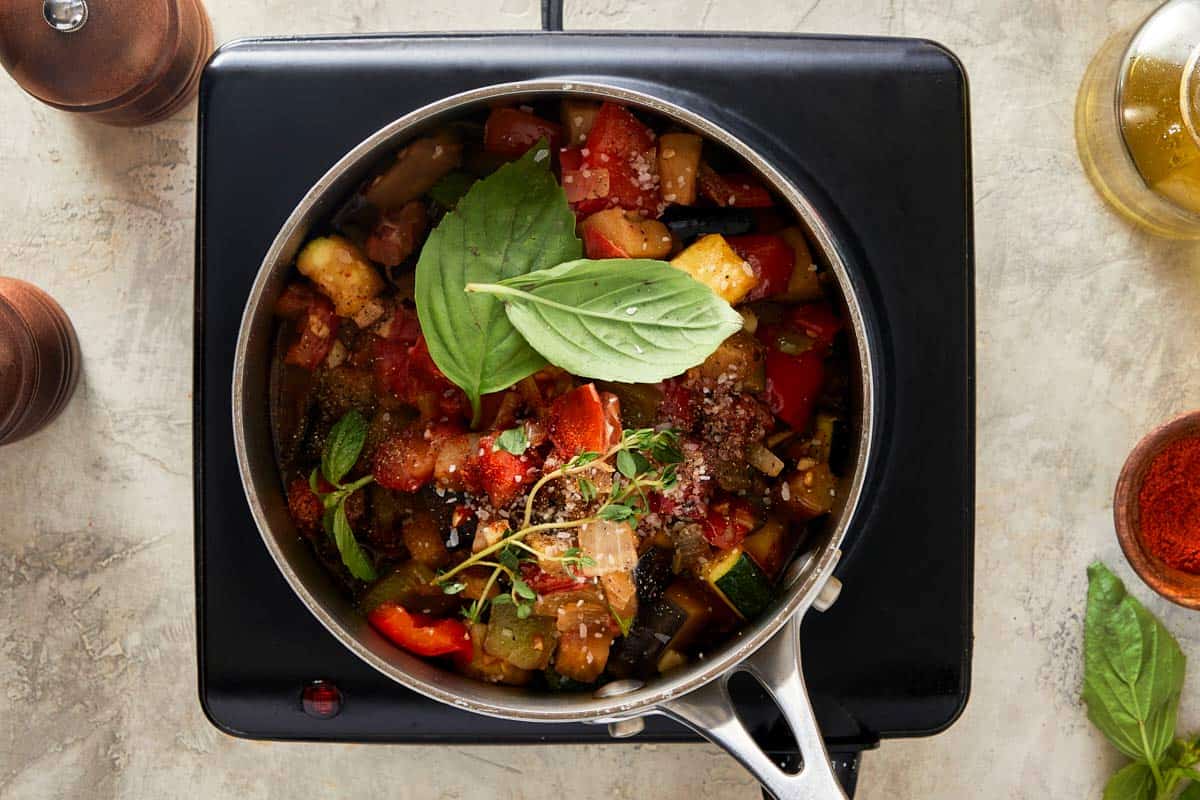
- Season: Add thyme, basil, salt, pepper, and cayenne. Stir gently to combine.
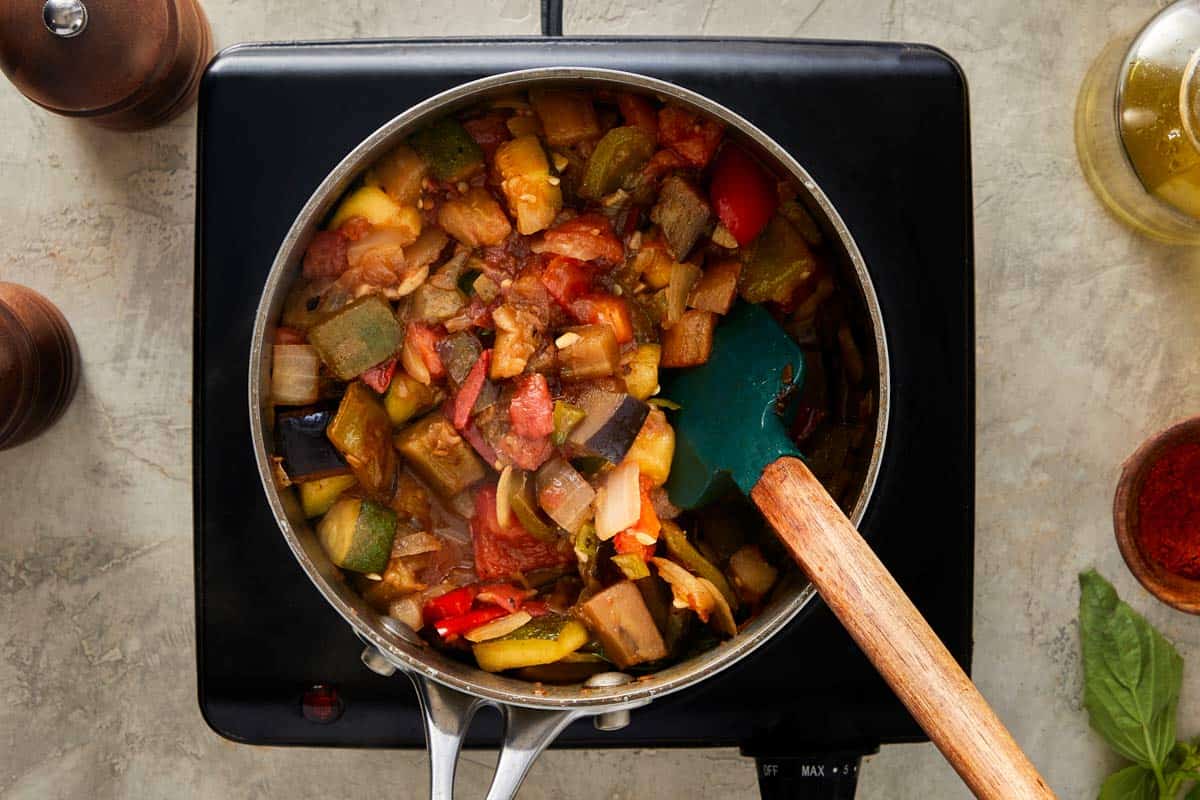
- Simmer: Cook over low heat for 15–20 minutes, stirring occasionally, until the flavors come together.
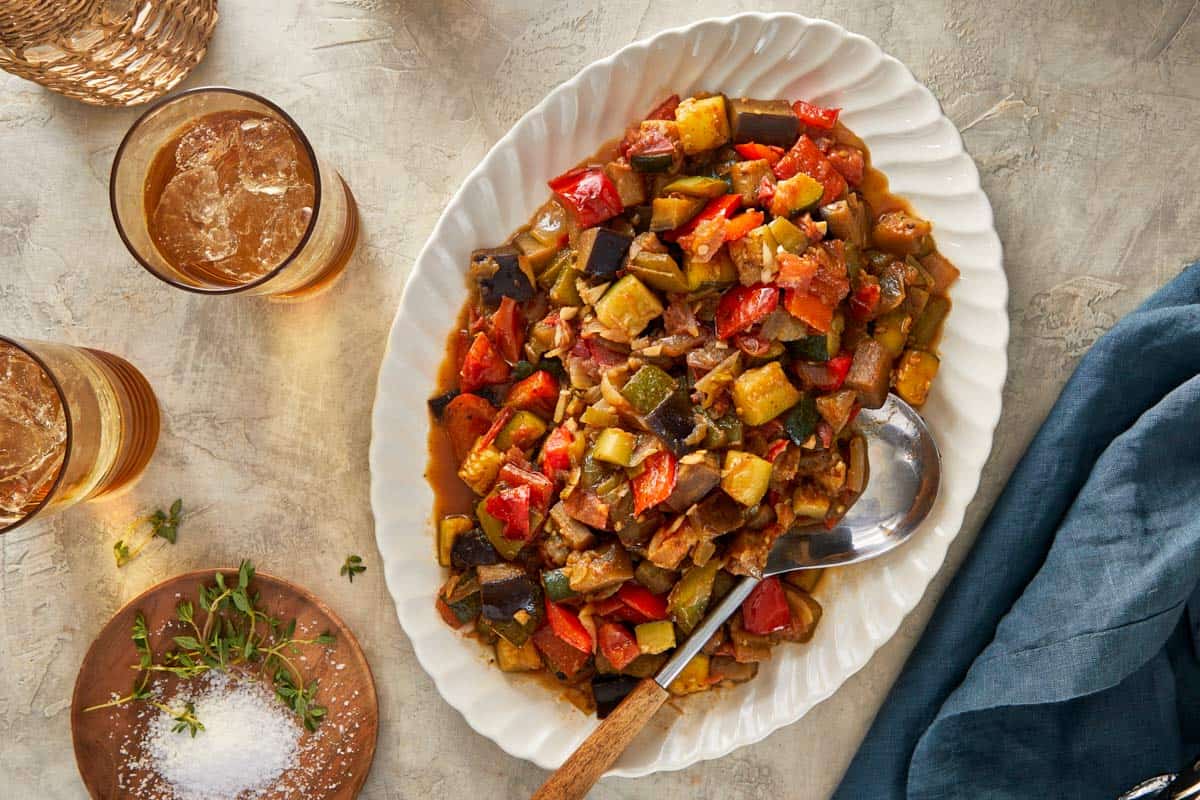
- Finish & serve: Taste, adjust, and bring it to the table warm and fragrant.
If this easy ratatouille has you craving more dishes in the same comforting lane, there are plenty of ways to build out the meal. When we're leaning into that classic French direction Coq Au Vinis always a natural match. Slow-cooked chicken, red wine, bacon, mushrooms, and herbs feel right alongside a bowl of tender vegetables, especially on nights when dinner is meant to linger.
For something quicker but still satisfying Parmesan Crusted Salmon works beautifully. It's one of those recipes that doesn't ask much of you, just a hot oven and a few minutes, and the crisp, golden crust pairs well with the softness of the ratatouille.
When there's time for a longer simmer Beef Bourguignonmakes the table feel complete. Tender beef cooked low and slow in red wine has that same depth and patience as ratatouille, and the two complement each other without competing. And if you're after something lighter with a bit of crunch Oven-Fried Chicken with Honey Garlic Sauce brings contrast without overwhelming the vegetables.
To round everything out, we almost always add Creamy Slow Cooker Mashed Potatoes. They soak up sauces beautifully, stay soft and fluffy, and quietly tie all the elements of the meal together without stealing attention from the main dish.
Cook notes
What Is Ratatouille?Ratatouille is a classic French Provençal dish of stewed vegetables from Nice. Traditional recipes simmer tomatoes, garlic, onion, zucchini, eggplant, and bell peppers with herbs like basil or thyme until tender.
What Do You Serve with Ratatouille?Ratatouille is versatile: enjoy it with crusty bread or serve it alongside grilled meats or fish. It's also good over rice, pasta or mashed potatoes, and makes a satisfying topping for toast or baked potatoes.
Is Ratatouille Vegetarian or Vegan?Traditionally, ratatouille is a vegetarian dish made entirely from vegetables and herbs, so it's naturally vegan and gluten‑free. Just ensure no animal products (such as cheese) are added.
Can You Make Ratatouille in Advance and Freeze It?Yes. Ratatouille can be prepared ahead of time and refrigerated for up to four days. For longer storage, freeze it tightly sealed for up to three months; thaw overnight in the refrigerator and gently warm before serving.
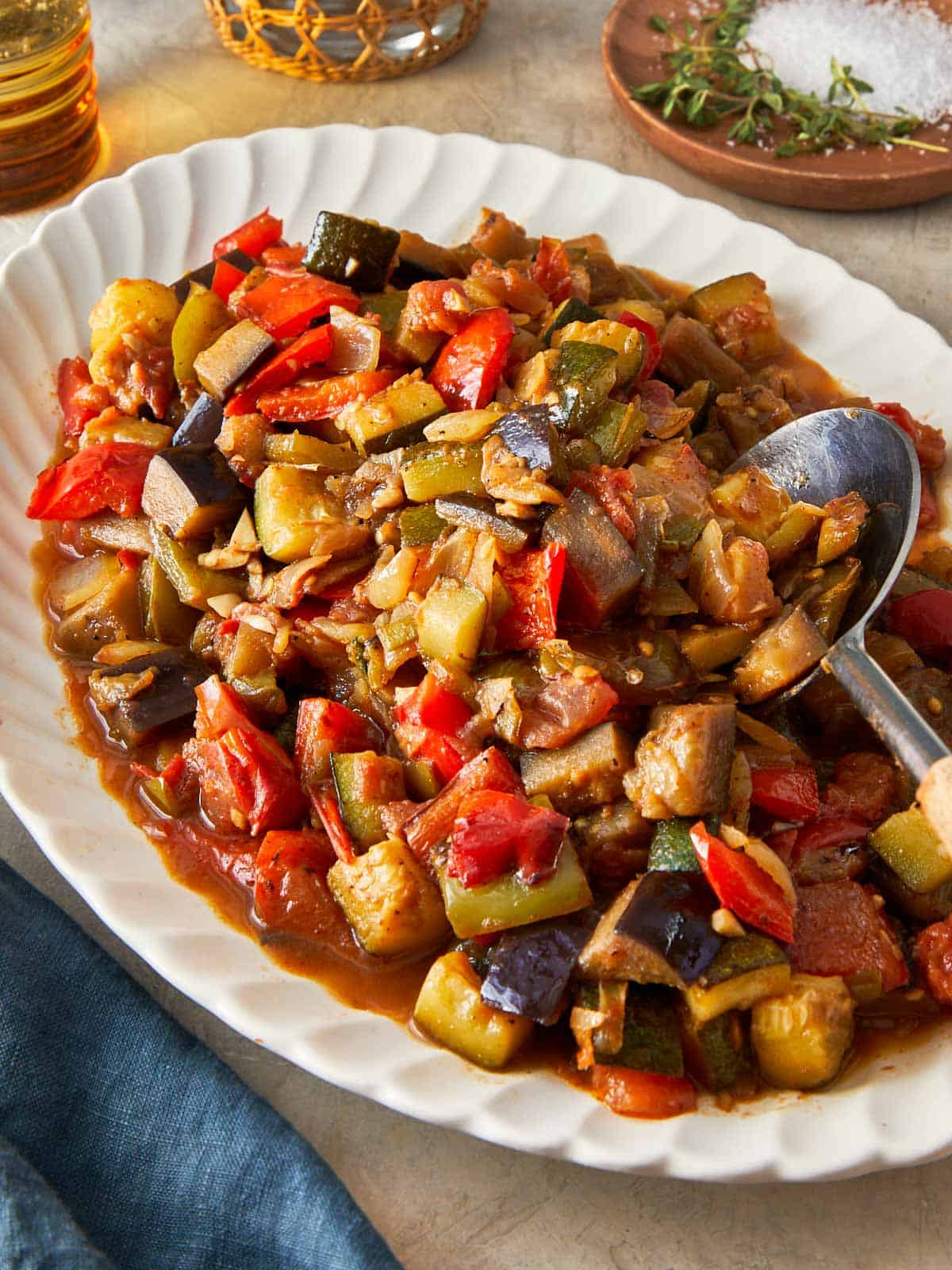
See It In Action: Step-By-Step
What you need
- 3 tbsp olive oil
- 1 onion diced ¼-inch (around 0.5 cm).
- 6 garlic cloved minced
- 2 tomatoes diced ½-inch to ¾-inch (1.5 cm)
- 1 eggplant diced ½-inch to ¾-inch (1.5 cm)
- 2 zucchini diced ½-inch to ¾-inch (1.5 cm)
- 1 green bell pepper seeded & diced ½-inch to ¾-inch (1.5 cm)
- 1 red bell pepper seeded & diced ½-inch to ¾-inch (1.5 cm)
- 1 sweet green chili pepper diced ½-inch to ¾-inch (1.5 cm)
- ⅔ cup vegetable stock
- 4 springs fresh thyme
- 10 basil leaves
- 1 pinch Salt to taste
- 1 pinch Pepper to taste
- 1 pinch Cayenne pepper to taste
Method
- Heat about 1 tablespoon of olive oil in a large pot or Dutch oven over medium-high heat. Cook the onions until soft and translucent, about 5-7 minutes. Add the garlic and cook for just one more minute until fragrant. Remove onions and garlic and set aside in a large glass bowl.
- Add another 1 tablespoon of oil and cook the eggplant until golden on all sides, remove and set aside with the onion and garlic. Repeat this process for the zucchini and tomatoes separately, adding in a little oil each time, then set it aside with the cooked eggplant, onion and garlic.
- Add the remaining oil, then sauté the bell peppers and chili until tender. Remove and set aside with the other cooked vegetables.
- Stir in the vegetable stock to the empty pot or dutch oven, scraping up any browned bits from the bottom of the pot. Bring the mixture to a simmer.
- Return all the cooked vegetables to the pot. Add the fresh thyme springs, salt, pepper, and a pinch of cayenne.
- Reduce the heat to low, cover, and let it gently simmer for at least 20 minutes for the flavours to meld together.
- Turn off the heat, remove the thyme springs, and stir in the fresh basil leaves just before serving. Adjust seasoning to taste.