

Unpacking Canada’s New Food Guide: A Dietitian’s Comprehensive Review and Insights
For nearly a decade as a registered dietitian, few topics have sparked as much debate and scrutiny in my professional world as Canada’s Food Guide. I recall countless prospective clients stipulating, “as long as you don’t use Canada’s Food Guide!” It’s a candid admission, but the previous iteration was simply not a practical or contemporary tool for effective nutrition counseling. Its rigid structure and often outdated recommendations made it challenging to apply in real-world scenarios, particularly when striving for personalized health approaches.
Therefore, it was a truly significant week in the realm of Canadian nutrition when the long-anticipated overhaul of the Food Guide finally arrived. This wasn’t just an update; it was a complete transformation designed to reflect modern nutritional science and societal understanding of health. The question on everyone’s mind, especially mine, was: what’s the verdict on these sweeping changes?
I am thrilled to report, with genuine enthusiasm, that for the first time in my career, I am wholeheartedly on board with Canada’s Food Guide. What excites me most profoundly is the guide’s expanded focus beyond just what we eat, to also encompass how we eat. This inclusion of mindfulness, intuitive eating principles, and the encouragement of connecting with our food and with others, elevates the guide from a mere dietary prescription to a holistic framework for a healthy eating experience. This shift acknowledges the profound psychological and social dimensions of food, which are just as critical to our well-being as the nutrients themselves.
Watch My Detailed Dietitian’s Review of The New Canada’s Food Guide Below
To provide a more in-depth understanding, let’s explore some of the major changes and my professional insights on each.
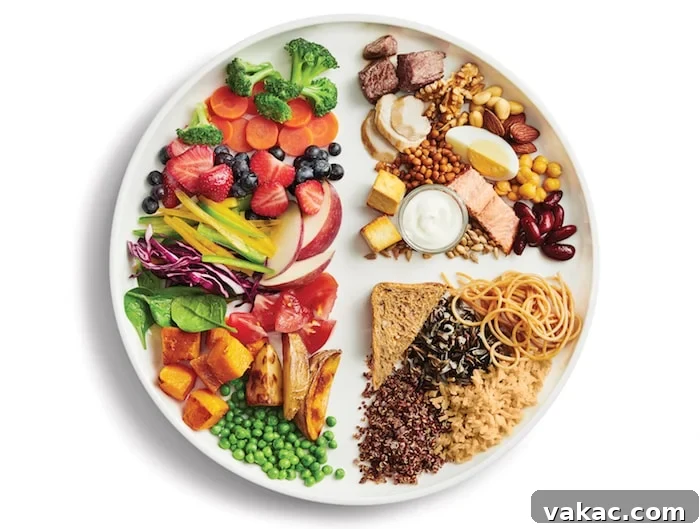
The Plate Model: A Shift from Prescriptive Portions to Balanced Proportions
One of the most radical and welcome changes in the new Canada’s Food Guide is the transition from a rigid “4 food groups with designated portion sizes” model to the more intuitive “Plate Model.” The previous guide, with its specific serving counts for each food group, often felt overly complex and detached from how people actually eat. It required constant measurement and calculation, which could be frustrating and unsustainable for many. Furthermore, the emphasis on discrete food groups often led to a fragmented view of meals.
The new Plate Model, by contrast, focuses on the visual proportions of different food types on your plate. It encourages filling half your plate with vegetables and fruits, a quarter with protein foods, and a quarter with whole grain foods. This approach is far more practical and adaptable, promoting a balanced eating pattern without the need for meticulous measuring cups or scales. It empowers individuals to intuitively build meals that are nutrient-dense and satisfying, accommodating various dietary preferences, cultural dishes, and individual hunger cues.
My Thoughts on the Plate Model
I am wholeheartedly in favor of this progressive shift. The Plate Model is inherently less prescriptive, which fosters a more positive and less restrictive relationship with food. It moves away from the “diet mentality” and instead provides flexible guidance, making healthy eating accessible and enjoyable. This model acknowledges that every person’s needs are unique and provides a foundational structure that can be easily modified. Whether you’re preparing a quick weeknight dinner or a celebratory feast, the visual guide helps ensure you’re getting a diverse array of nutrients.
Room for Improvement: Emphasizing Healthy Fats
While the new guide is significantly improved, there’s still an opportunity to place a stronger emphasis on healthy fats as an integral component of a balanced plate. Healthy fats are crucial for satiety, hormone production, nutrient absorption (especially fat-soluble vitamins like A, D, E, K), and supporting brain and heart health. Including sources like avocado, extra virgin olive oil, nuts, seeds, and omega-3 rich fish (salmon, mackerel, sardines) can greatly enhance the nutritional profile of meals. These fats not only provide essential nutrients but also contribute to the deliciousness and satisfaction derived from food. Incorporating a dedicated visual cue or more explicit recommendations for healthy fats within the Plate Model could further optimize its effectiveness.

Rethinking Our Sips: The New Beverage Blueprint
The recommendations for beverages have also undergone a much-needed transformation, aligning with contemporary health science. Historically, previous food guides often highlighted milk and fruit juice as primary beverage choices. The new guide adopts a refreshingly clear and health-centric approach:
- Water is now the recommended drink of choice: This is a crucial update, prioritizing pure hydration.
- Milk is included in the “protein” category: This makes sense as milk provides protein and is no longer given its own distinct food group, streamlining the guide.
- Fruit juice is no longer promoted as a recommended option for a serving of fruit: A significant and welcome change, acknowledging the concentrated sugars and lack of fiber in juice compared to whole fruit.
- Alcohol is addressed as a source of non-nutritive calories/energy: This provides important public health information without being judgmental, encouraging informed choices.
My Thoughts on Beverages
I completely and unequivocally agree with these updated beverage guidelines. Water is the purest and most effective way to stay hydrated, essential for countless bodily functions. For those who find plain water unexciting, there are numerous ways to liven it up – a squeeze of fresh lemon, slices of cucumber, sprigs of mint, or a splash of berries can transform it into a refreshing and flavorful drink. The key message here isn’t about strict deprivation, but about making informed choices for optimal hydration and health. The recognition that fruit juice, while derived from fruit, often contains high levels of natural sugars without the beneficial fiber of whole fruit, is a responsible and science-backed decision. This isn’t about an all-or-nothing approach; if you enjoy a glass of juice occasionally or a glass of wine to unwind, that’s perfectly fine within a balanced lifestyle. However, as an everyday staple for hydration, water remains the undisputed champion and should be the default choice.

Protein Power: Beyond “Meat & Alternatives” to “Protein Foods”
Another monumental and progressive change is the renaming of the “Meat & Alternatives” group to simply “Protein Foods.” This reclassification signifies a broader and more inclusive understanding of protein sources, moving beyond traditional animal products to emphasize plant-based options. The key components of this change include:
- No longer labelled Meat & Alternative, this section of the plate is now “protein foods” and strongly encourages plant-based options.
- Dairy has been removed as its own food group and is now included under the umbrella of protein foods, reflecting its protein content alongside other sources.
My Thoughts on Protein Foods
I wholeheartedly endorse this strategic renaming and the explicit encouragement of plant-based protein sources. This isn’t about advocating for everyone to become vegan or vegetarian; rather, it’s about recognizing the immense health and environmental benefits that come from incorporating more plants into our diets. Plant-based proteins such as lentils, beans, chickpeas, tofu, tempeh, nuts, and seeds are rich in fiber, vitamins, minerals, and antioxidants, and are typically lower in saturated fat compared to many animal proteins. Increasing their consumption can contribute to a lower risk of chronic diseases, better digestive health, and improved weight management.
Furthermore, the environmental impact of shifting towards a more plant-forward diet is undeniable. Reduced meat consumption can lead to lower greenhouse gas emissions, decreased water usage, and more sustainable land use, aligning individual health with global ecological well-being. This inclusive approach broadens our understanding of healthy protein sources and offers greater flexibility for individuals to choose foods that fit their values, cultures, and health goals. If you’re looking to explore more plant-based cooking, resources like a 5-day plant-focused meal plan can be a great starting point, and for those ready to dive deeper, structured programs like a 4-week vegan meal plan can provide comprehensive guidance.
The Mindful Meal: Cultivating Healthy Eating Habits Beyond Nutrients
Perhaps the most revolutionary aspect of the new Canada’s Food Guide is its unprecedented inclusion of recommendations and guidance on how to eat, not just what to eat. This signals a profound shift from a purely biochemical view of nutrition to a holistic understanding that encompasses lifestyle, environment, and psychological well-being. The guide now actively:
- Encourages mindful eating: Promoting awareness of hunger and fullness cues, savoring food, and reducing distractions during meals.
- Encourages cooking more at home: Highlighting the benefits of preparing meals from scratch, including control over ingredients and portion sizes.
- Encourages eating with others: Recognizing the social and cultural importance of shared meals for mental and emotional health.
My Thoughts on Cultivating Healthy Habits
I am an enormous proponent of this holistic approach, and it resonates deeply with my philosophy as a dietitian. For years, I’ve championed the belief that food and nutrition extend far beyond mere caloric content or nutrient profiles. The intention behind our food choices, the experience of eating, and how those choices make us feel, are absolutely paramount for fostering an all-encompassing healthy relationship with food. Mindful eating, in particular, is a powerful practice that helps us tune into our bodies’ innate wisdom, differentiate between physical and emotional hunger, and truly appreciate the sensory experience of eating. It’s a key strategy for preventing overeating and developing a more intuitive approach to nutrition.
Cooking at home offers numerous benefits: it allows for greater control over ingredients (reducing processed foods, excessive salt, sugar, and unhealthy fats), is often more cost-effective, and provides an opportunity to develop valuable life skills. Furthermore, sharing meals with family and friends strengthens social bonds, fosters a sense of community, and turns eating into a cherished ritual rather than just a necessity. Food has an incredible, beautiful ability to connect us – to ourselves, our communities, our cultures, and our histories. Seeing these vital aspects highlighted in a national food guide is incredibly encouraging and represents a significant step forward in promoting truly sustainable and healthy eating patterns for all Canadians.
The Future of Food Guidance: A Positive Outlook
In summary, the new Canada’s Food Guide represents a vital and overdue modernization of our national dietary advice. By moving away from restrictive serving sizes to a flexible Plate Model, prioritizing water, embracing diverse protein sources with a plant-forward emphasis, and, most importantly, integrating the crucial aspects of how we eat through mindfulness and shared meals, it offers a far more practical, sustainable, and psychologically sound framework for healthy living. It empowers individuals with general guidelines rather than rigid rules, acknowledging the diversity of dietary needs, cultural preferences, and personal lifestyles.
While no guide is perfect and there will always be areas for continued discussion and refinement—such as a more explicit stance on ultra-processed foods or more specific guidance for various dietary restrictions—this iteration marks a profound positive leap. It encourages a balanced and enjoyable relationship with food, moving beyond the traditional diet culture mentality towards one of well-being, sustainability, and connection.
I would genuinely love to hear your thoughts on these new guidelines. Do you agree with the changes? Are there any aspects that you feel don’t quite align with your understanding or personal experience? Please feel free to leave a comment on the video or below this post so we can chat about it!
xo Lindsay
LIKE THIS REVIEW? SHARE IT WITH SOMEONE YOU KNOW WILL LOVE IT TOO!