
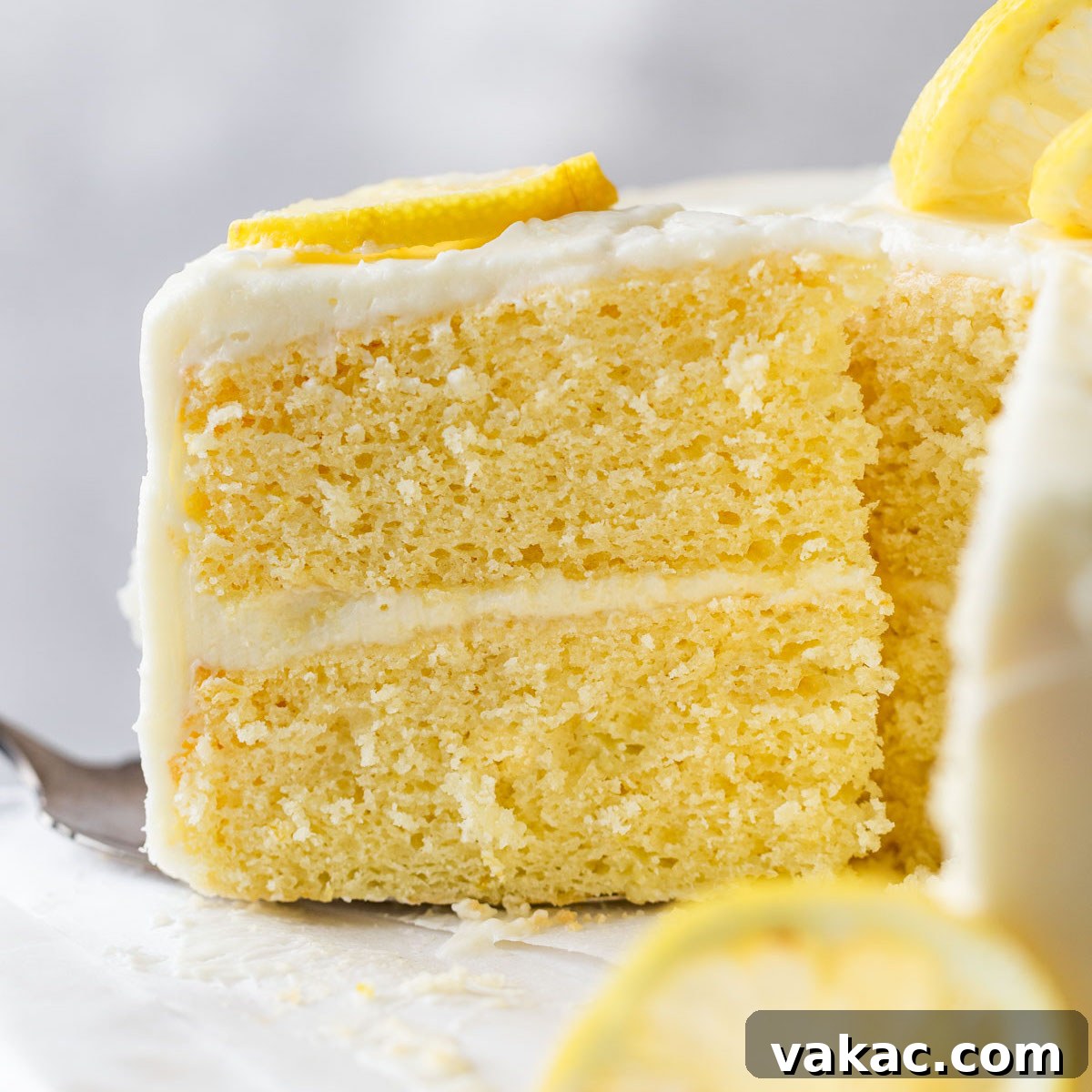
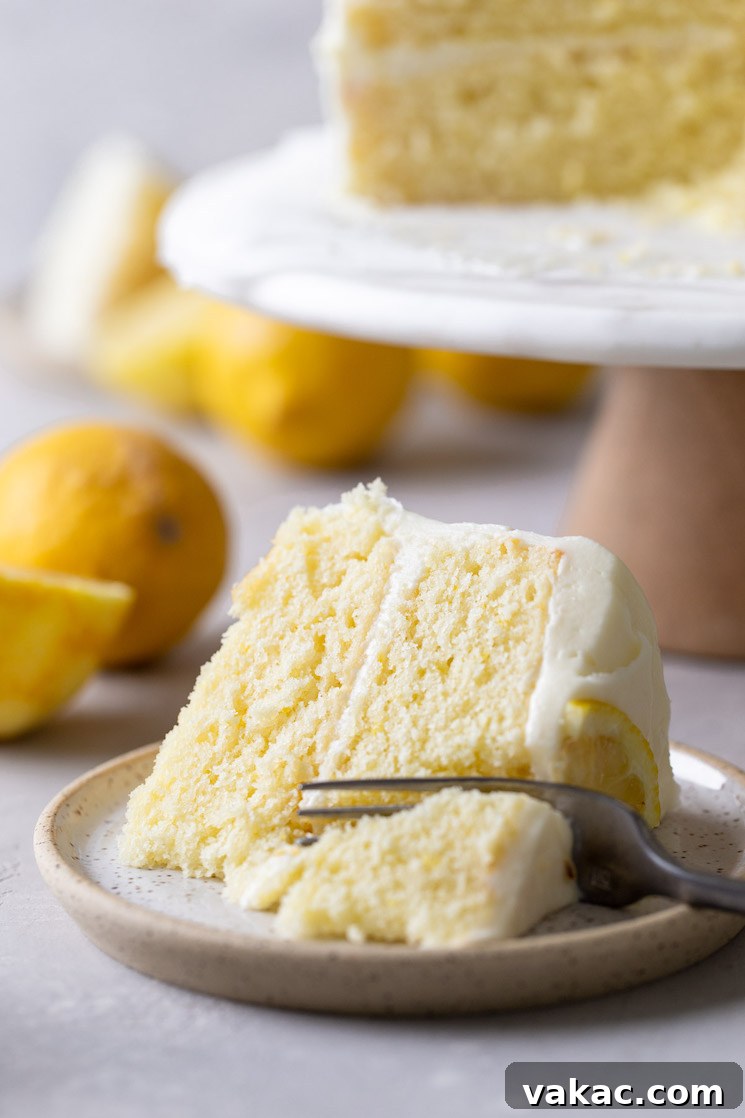
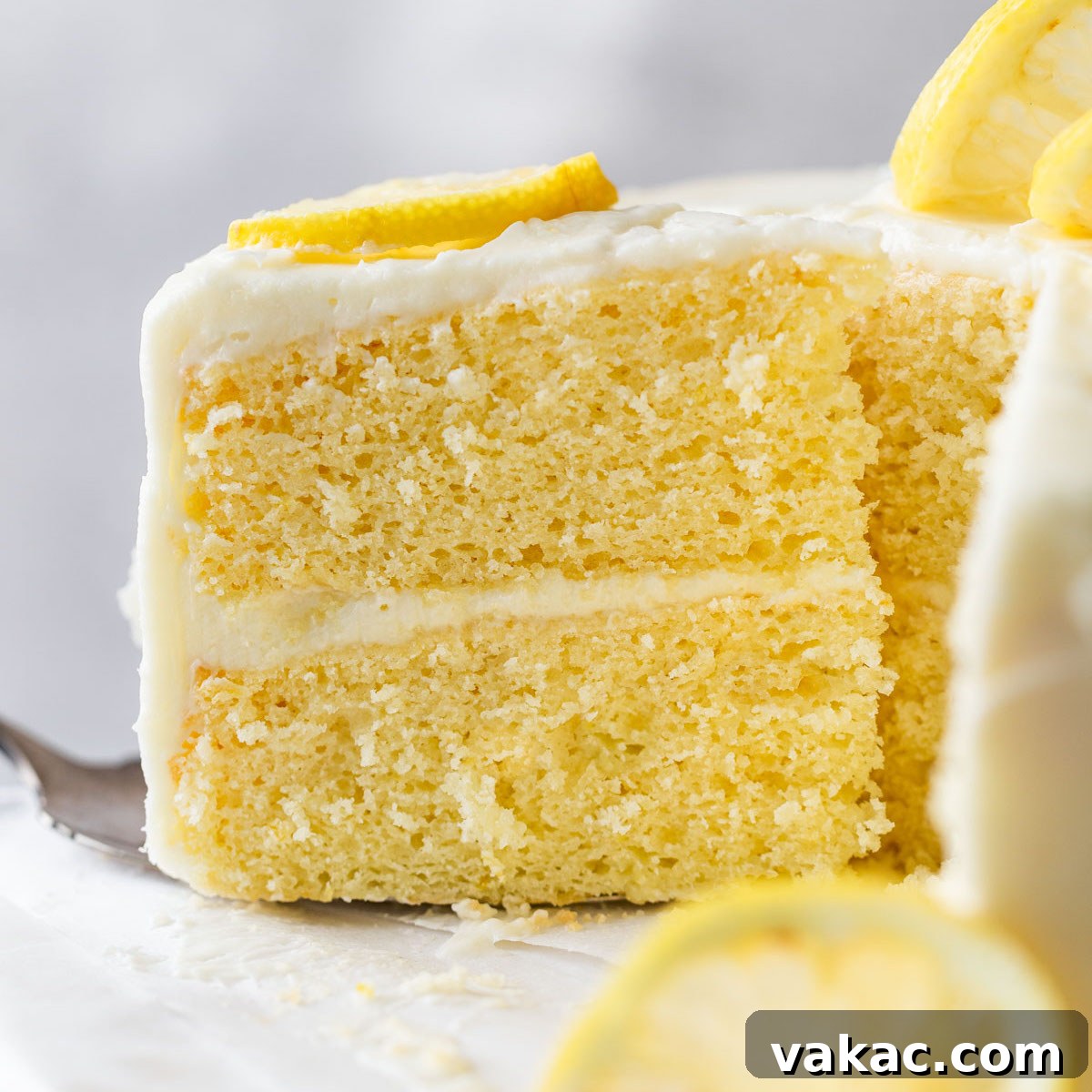
Unleash the bright, refreshing taste of citrus with this spectacular homemade lemon cake. Featuring incredibly light and fluffy cake layers crowned with a vibrant, zingy lemon cream cheese frosting, this dessert is an absolute showstopper. It’s the perfect treat for spring celebrations, baby showers, Easter gatherings, Mother’s Day brunches, or simply to brighten any day with its sunny flavor!
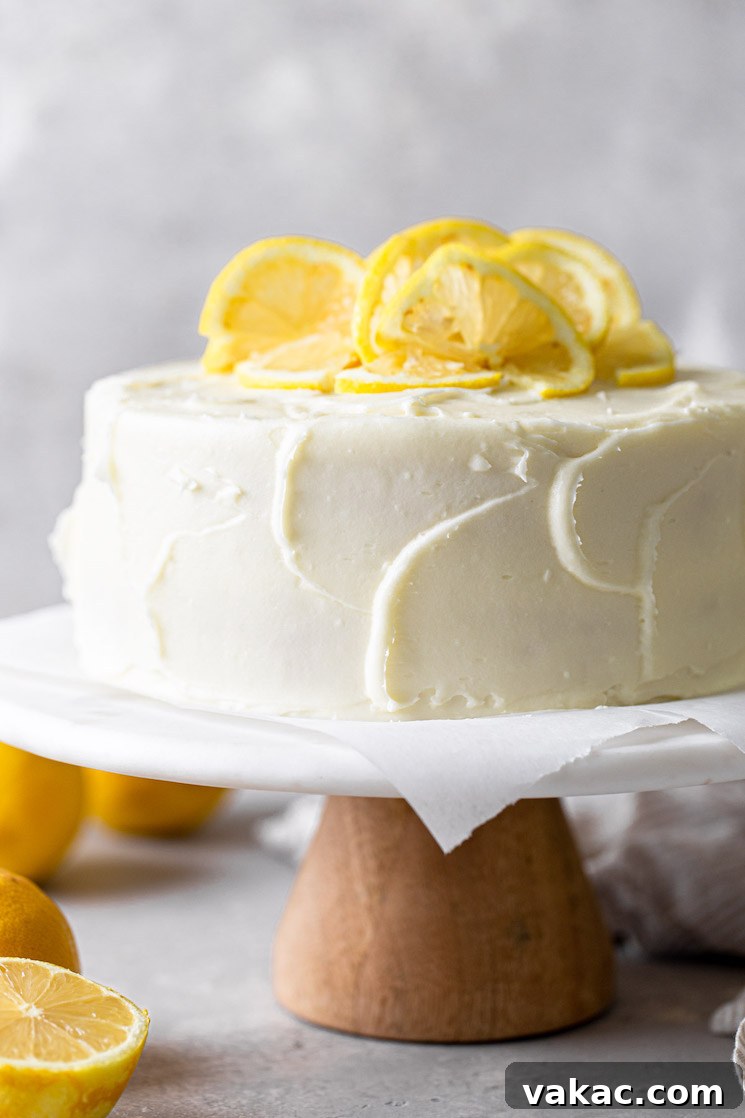
The Ultimate Homemade Lemon Layer Cake with Zesty Cream Cheese Frosting
This isn’t just any lemon cake; it’s a celebration of pure, unadulterated lemon goodness. Each bite offers a delightful balance of sweet and wonderfully tart notes, thanks to a generous infusion of fresh lemon flavor throughout the cake and its luscious frosting. We believe that when you bake a lemon cake, there should be no doubt about its star ingredient! That’s why we’ve incorporated freshly squeezed lemon juice into both the cake batter and the rich cream cheese frosting, alongside fragrant lemon zest in the batter to amplify that irresistible citrus aroma and taste. The result is a wonderfully moist and tender cake that truly tastes like sunshine.
While this recipe is designed for a stunning lemon layer cake, making it perfect for special occasions, we’ve also included detailed instructions on how to effortlessly adapt it for various pan sizes. This ensures you can enjoy this delightfully lemony dessert with whatever bakeware you have on hand. Get ready to impress your friends and family with a truly unforgettable lemon layer cake that’s both elegant and bursting with fresh, vibrant flavor!
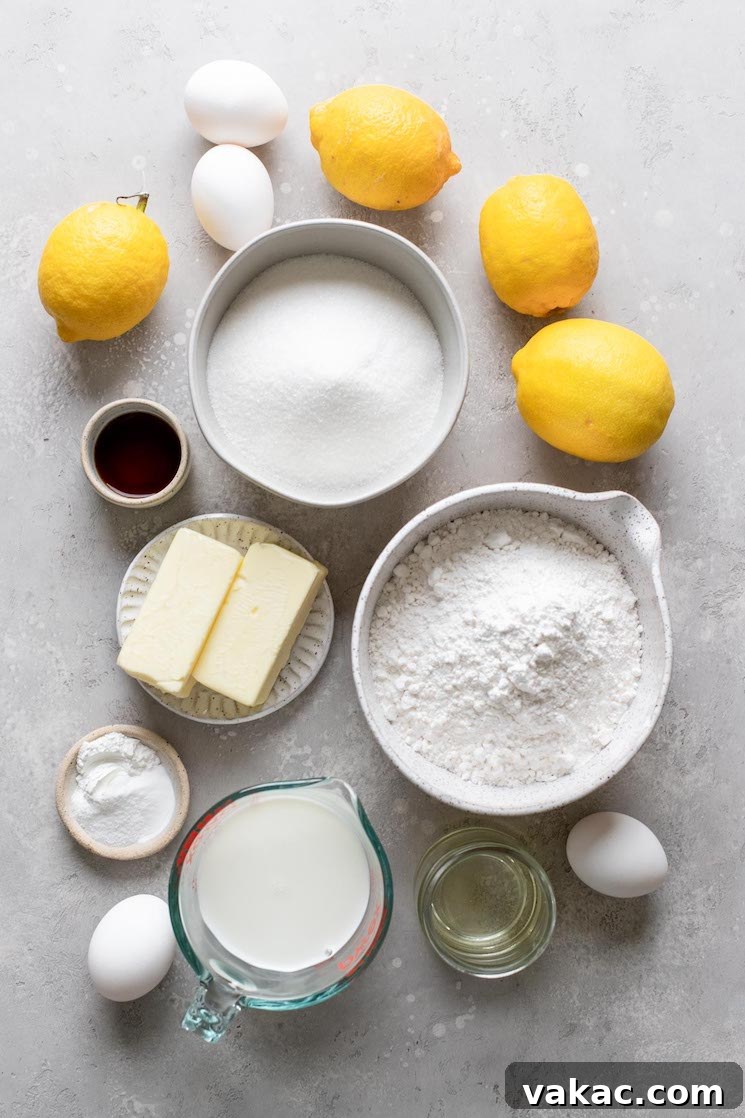
Essential Ingredients for Your Perfect Lemon Cake
Baking a show-stopping lemon layer cake doesn’t require an exotic grocery list. The ingredients for this homemade masterpiece are mostly common pantry staples, each playing a vital role in achieving that perfect moist crumb and intense lemon flavor. Let’s delve into what you’ll need and why:
- Cake Flour: The secret to an incredibly tender and light crumb! Cake flour has a lower protein content than all-purpose flour, which results in a softer, more delicate texture. If you don’t typically keep cake flour on hand, you can easily create a homemade substitute using all-purpose flour and cornstarch.
- Baking Powder & Baking Soda: These crucial leavening agents work in concert to give the cake layers their beautiful rise and airy texture, ensuring a light, fluffy result.
- Salt: A small but mighty flavor enhancer. Salt doesn’t just add seasoning; it brightens and balances the sweetness and acidity of the lemon, making the overall flavor more complex and pronounced.
- Buttermilk: Essential for a truly moist cake with a subtle tang. Buttermilk reacts with the baking soda to help the cake rise and contributes significantly to its tender texture. If real buttermilk isn’t available, a quick homemade substitute can be made in minutes.
- Neutral-Flavored Oil: Such as vegetable or canola oil. Oil ensures exceptional moisture and tenderness in the cake, helping it stay fresh longer without drying out. Its neutral flavor allows the lemon to shine.
- Fresh Lemons: The star of this lemon cake! You’ll need about 3 to 4 medium-sized lemons to yield enough fragrant zest and freshly squeezed juice for both the cake batter and the vibrant frosting. Fresh is non-negotiable for authentic, bright lemon flavor.
- Pure Vanilla Extract: While lemon takes center stage, vanilla extract adds a lovely warmth and depth, rounding out the overall flavor profile and preventing the cake from being one-dimensional.
- Unsalted Butter: Using unsalted butter in baking allows you to precisely control the salt content in your recipe. Ensure it’s softened to room temperature for proper creaming with sugar and for a smooth, lump-free frosting.
- Granulated Sugar: Provides essential sweetness to balance the tart lemon juice and also plays a crucial role in the cake’s structure and texture when creamed with butter.
- Large Eggs: You’ll need four large eggs for this lemon cake recipe. Like butter, make sure your eggs are at room temperature. This aids in better emulsification with other ingredients, leading to a more uniform, tender, and fluffy cake.
- Brick-Style Cream Cheese: Absolutely critical for achieving the perfect lemon cream cheese frosting! Always use full-fat, brick-style cream cheese. Cream cheese sold in tubs is typically thinner and has a higher water content, which will result in a runny, unstable frosting that won’t hold its shape.
- Powdered Sugar (Confectioners’ Sugar): This fine sugar is used to thicken and sweeten the lemon cream cheese frosting, giving it that wonderfully smooth and creamy consistency we all love.
Step-by-Step Guide: How to Bake a Fluffy Homemade Lemon Cake
Baking this delightful lemon layer cake is a rewarding experience, leading to a perfectly moist, fluffy, and flavor-packed dessert. Follow these clear, detailed steps for success:
1. Prepare Your Cake Pans
Begin by preparing your cake tins. For a two-layer cake, use two 9-inch round cake pans. Lightly spray them with nonstick cooking spray, then line the bottoms with parchment paper circles to ensure easy release. This small preparatory step makes a significant difference in preventing sticking.
2. Combine Dry Ingredients
In a large mixing bowl, thoroughly whisk together the cake flour, baking powder, baking soda, and salt. Whisking ensures these dry ingredients are evenly distributed, which is crucial for consistent rise and texture in your finished lemon cake. Set this mixture aside.
3. Prepare Wet Ingredients
In a separate medium-sized bowl or a large measuring cup, whisk together the room-temperature buttermilk, neutral-flavored oil, fresh lemon juice, and pure vanilla extract until they are well combined. Set this liquid mixture aside.
4. Cream Butter and Sugar
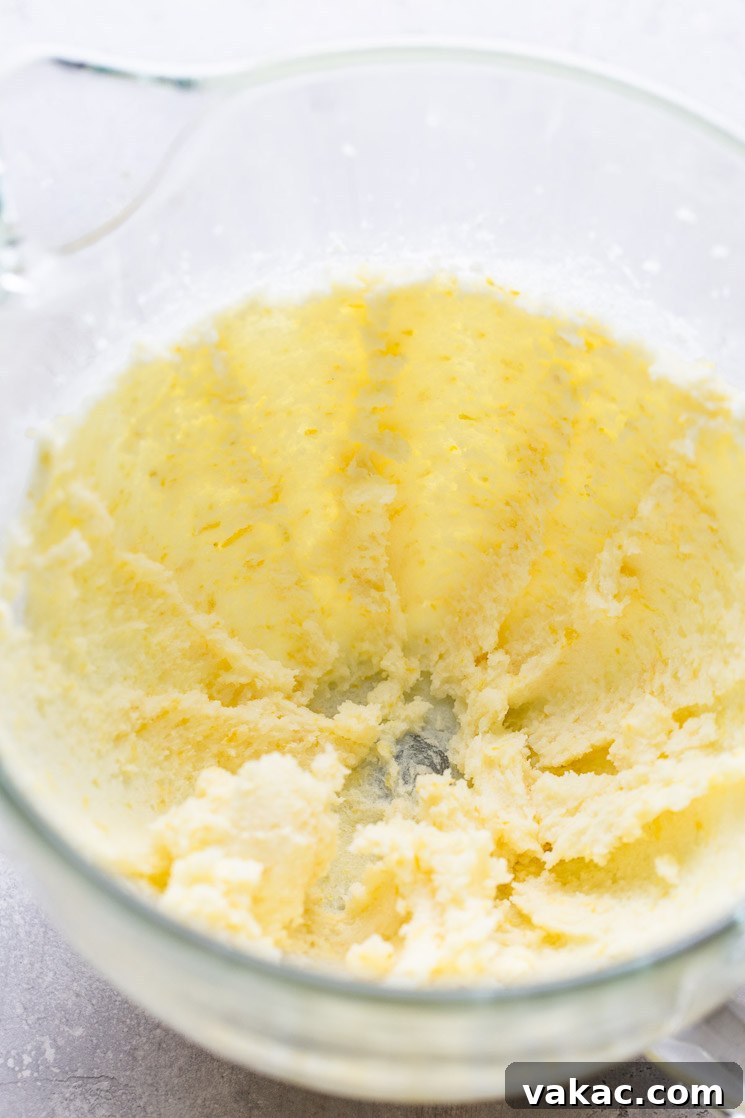
In the bowl of a stand mixer fitted with the paddle attachment (or using a large mixing bowl with a handheld electric mixer), beat the softened unsalted butter on low speed until smooth. Gradually add the granulated sugar, mixing until fully incorporated. Once the sugar is added, stir in the fresh lemon zest. Increase the mixer speed to medium-high and beat the butter mixture for 4 to 5 minutes until it becomes noticeably light, pale, and fluffy. This creaming process incorporates air, which is vital for a light and tender homemade lemon cake.
5. Incorporate Eggs
Reduce the mixer speed to low and add the large eggs one at a time, mixing thoroughly after each addition. Remember to stop and scrape down the sides and bottom of the bowl frequently with a rubber spatula to ensure all ingredients are fully incorporated, leading to a smooth and homogenous batter.
6. Combine Dry and Wet Mixtures
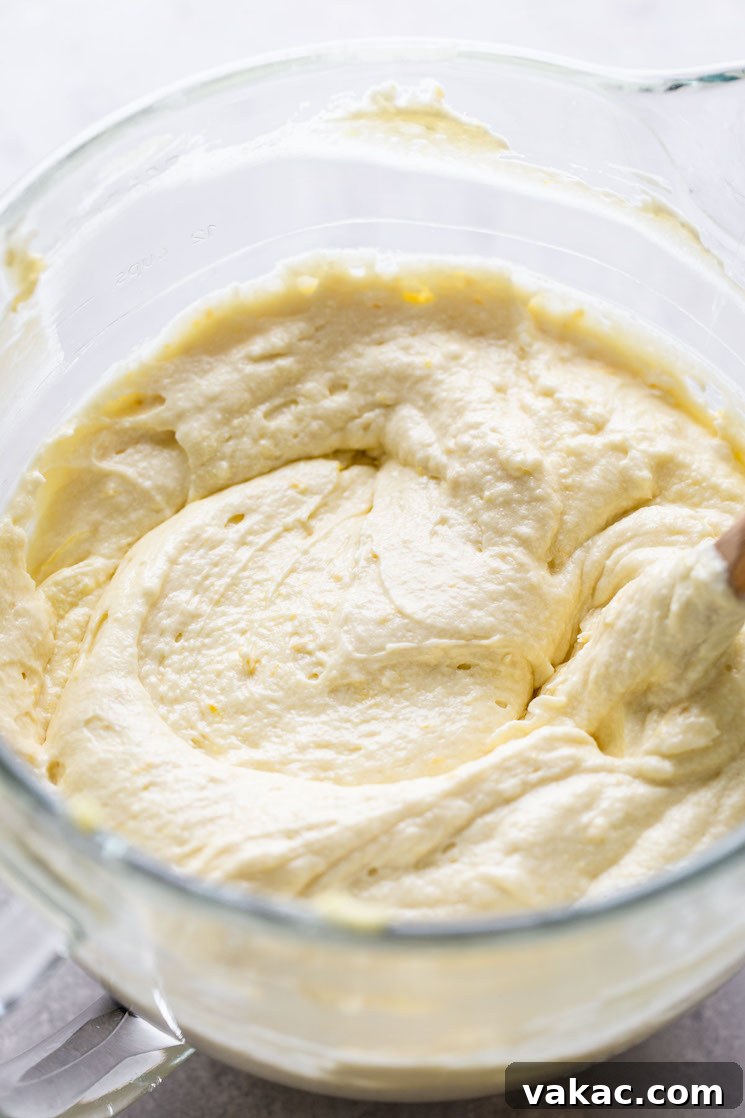
With the mixer still on low speed, alternate adding the dry ingredient mixture and the buttermilk mixture to the butter-egg mixture. Begin and end with the dry ingredients, adding them in three parts, with the buttermilk mixture in two parts. Mix each addition only until just combined; be careful not to overmix, as this can develop gluten and result in a tough cake. Finally, use a rubber spatula to give the batter a final gentle stir, ensuring no dry pockets remain at the bottom.
7. Bake the Cake Layers
Divide the lemon cake batter evenly between your two prepared cake pans, spreading it gently into an even layer. Bake in a preheated 350°F (180°C) oven for 28 to 32 minutes, or until a toothpick inserted into the center comes out clean. Remove from the oven and allow the layers to cool in their pans for about 20 minutes before carefully transferring them to a wire rack to cool completely. It is crucial for the cakes to be entirely cool before frosting.
Crafting the Zesty Lemon Cream Cheese Frosting
Our homemade lemon cream cheese frosting is the perfect complement to the moist lemon cake, adding an extra layer of tangy sweetness and creamy texture. It’s easy to make and irresistibly delicious.
1. Prepare the Frosting Base
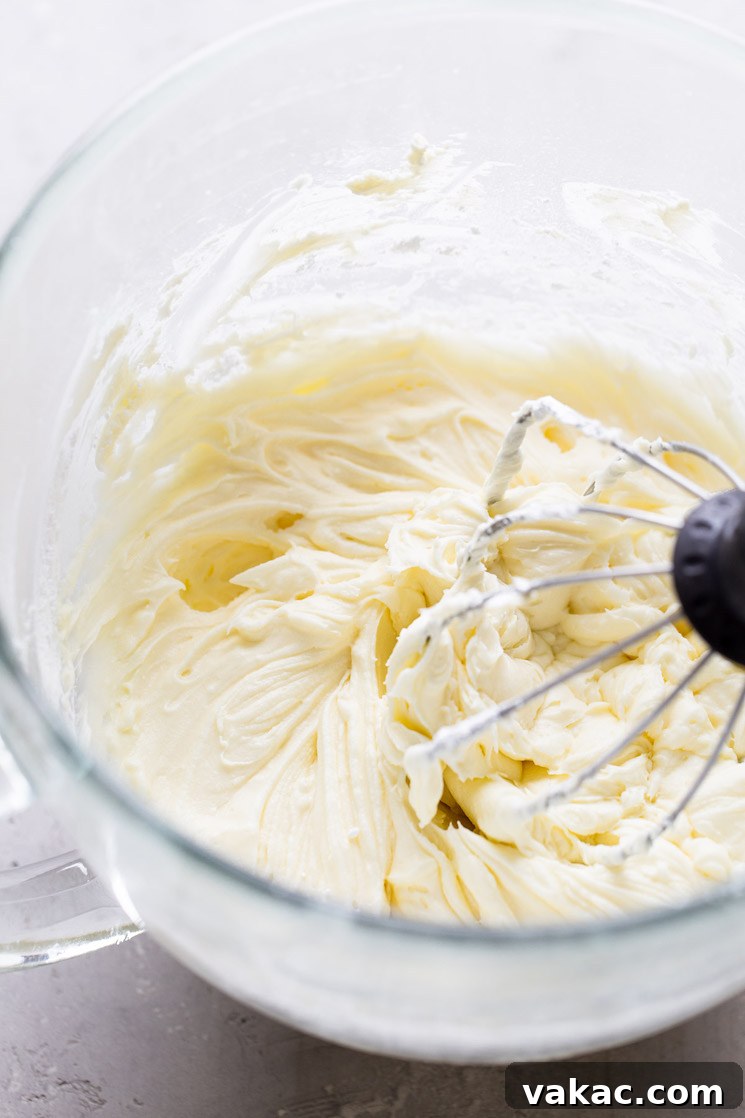
In the bowl of a stand mixer fitted with the paddle attachment, beat the softened brick-style cream cheese until it is completely smooth and free of lumps. Add the softened unsalted butter and continue beating for about 30 seconds to 1 minute until the mixture is well combined and smooth. Ensuring both ingredients are at room temperature is key for a lump-free frosting.
2. Add Sweetener and Flavor
Gradually add the powdered sugar to the cream cheese and butter mixture. Start with about half the sugar, mixing on low speed until incorporated. Then, add 1 to 2 tablespoons of fresh lemon juice, depending on your desired level of tang. Continue mixing until the frosting is light, fluffy, and smooth, stopping to scrape down the sides of the bowl as needed. For an even more intense lemon punch, you can substitute the fresh lemon juice with 1 and ½ teaspoons of pure lemon extract.
Assembling Your Masterpiece: The Lemon Layer Cake
Once your cake layers are completely cool and your lemon cream cheese frosting is ready, it’s time for the final, satisfying step – assembly! Achieving a beautifully layered and frosted cake is simpler than you might think.
1. Level the Cake Layers
For a professional-looking cake, it’s recommended to level the tops of your cooled cake layers. Use a long, serrated knife or a specialized cake leveler to carefully trim off any domed tops, creating flat, even surfaces. This ensures your layers stack neatly and your cake appears perfectly straight. Don’t throw away those cake scraps – they make a delicious “cook’s treat”!
2. Stack and Frost
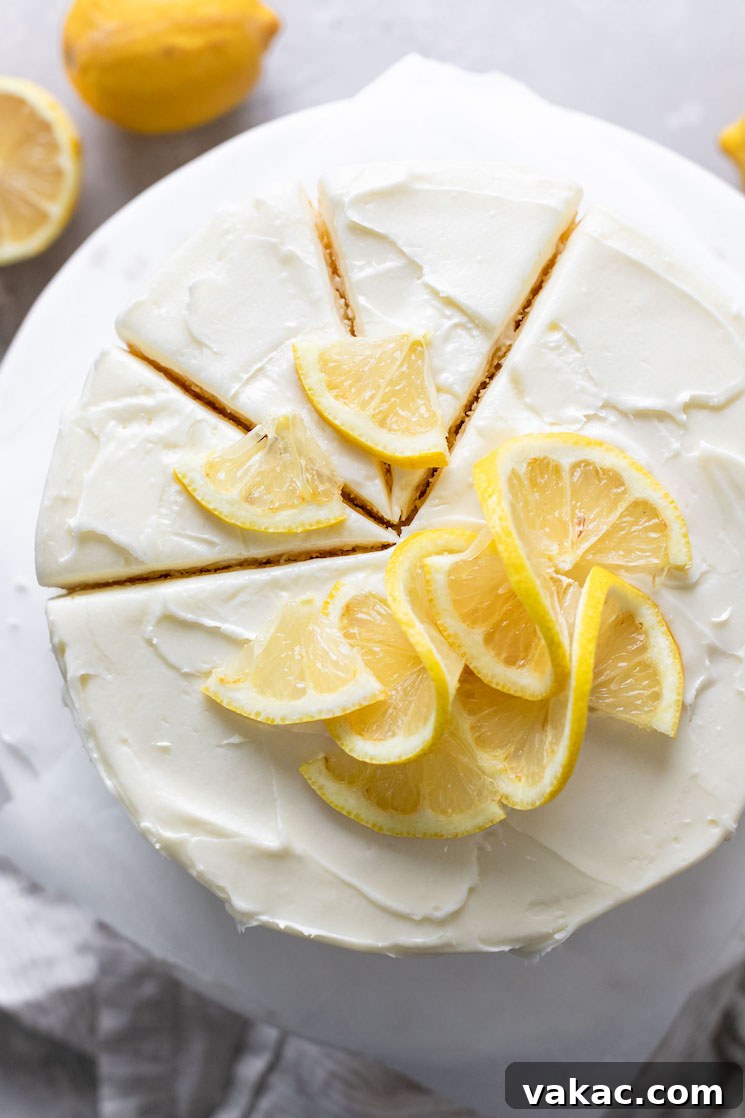
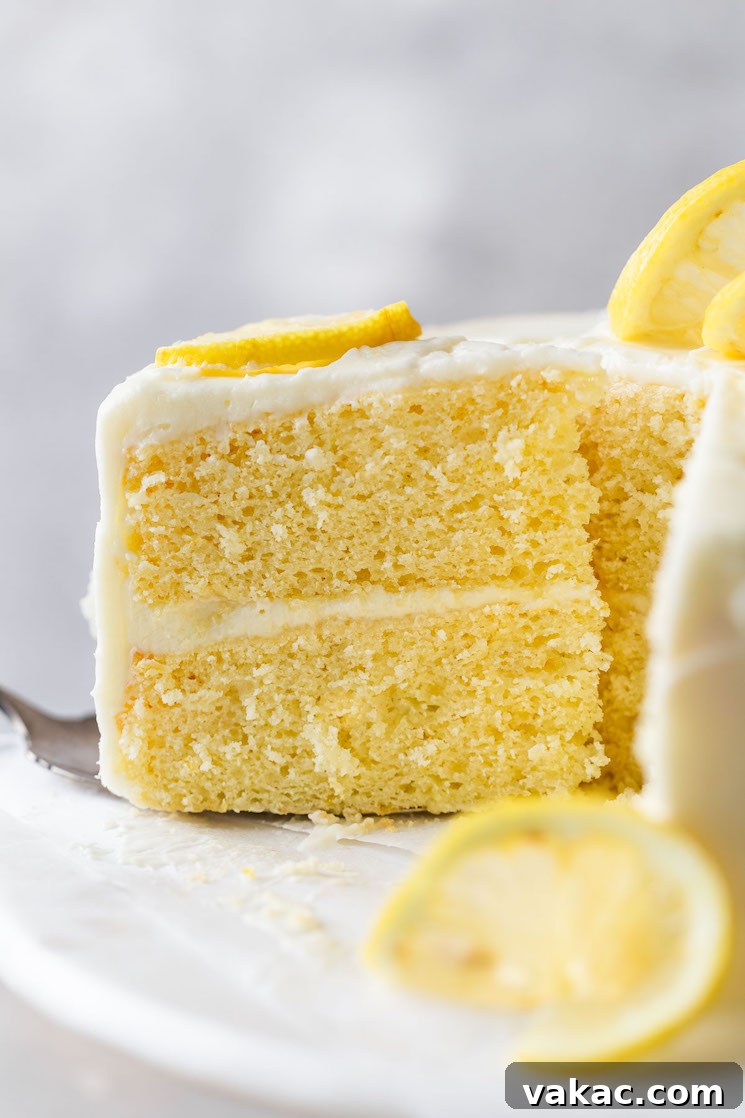
Place your first leveled cake layer on your chosen serving platter or cake stand. Spread a generous, even layer of your lemon cream cheese frosting over the top. Then, carefully place the second cake layer on top, aligning it as best as possible. Use the remaining frosting to cover the top and sides of the entire cake, creating a smooth and elegant finish. An offset spatula is particularly helpful for achieving a smooth, even coating, but any rubber spatula will work with a little practice and patience.
3. Garnish (Optional)
To add a final touch of visual appeal and emphasize the cake’s vibrant flavor, you can garnish your homemade lemon cake with thin lemon slices or elegant lemon zest curls. Alternatively, the cake is equally beautiful and delicious left unadorned, allowing its natural charm to shine.
Customizing Your Lemon Cake: Adjusting Pan Sizes
Don’t have two 9-inch round cake pans? Or perhaps you’re looking for a simpler sheet cake or a more dramatic three-layer creation? This versatile lemon cake recipe can be easily adapted to suit your baking needs and available bakeware:
- For a 9×13-inch Sheet Cake: Grease a 9×13-inch baking pan with nonstick cooking spray. Pour the entire cake batter into the prepared pan and spread it out evenly. Bake at 350°F (180°C) for approximately 35 to 40 minutes, or until a toothpick inserted into the center comes out clean. This modification yields a fantastic, easy-to-serve sheet cake.
- For a Three-Layer Cake (8-inch Pans): If you prefer a taller, more elegant presentation, divide the cake batter evenly among three 8-inch round cake pans. When baking in smaller pans, the layers will be thinner, requiring less baking time. Adjust the baking time to approximately 23 to 28 minutes, or until a toothpick inserted into the center comes out clean.
Storage and Freezing Instructions for Your Lemon Cake
To keep your delicious homemade lemon cake fresh and tasting its best, especially since the frosting contains cream cheese, proper storage is essential:
- Refrigerator Storage: Always store your frosted lemon cake in an airtight container in the refrigerator. This is crucial for food safety due to the cream cheese frosting and prevents the cake layers from drying out. It will stay fresh and delicious for up to 4 days. For optimal flavor and texture, allow slices to come to room temperature for about 15-30 minutes before serving.
- Freezing Cake Layers: If you want to bake ahead, you can freeze the unfrosted cake layers. Once completely cooled, wrap each layer tightly in plastic wrap, then again in aluminum foil. Freeze for up to 3 months. Thaw overnight in the refrigerator before frosting and serving.
- Freezing Frosting: The lemon cream cheese frosting can also be made ahead and frozen. Transfer the frosting to a large freezer-safe bag or an airtight container. Freeze for up to 3 months. Thaw overnight in the refrigerator, then re-whip briefly with a mixer to restore its smooth consistency before using.
- Freezing Frosted Cake Slices: You can even freeze individual slices of the frosted cake! Place slices on a baking sheet and freeze until firm, then wrap each slice tightly in plastic wrap and store in an airtight container or freezer bag. Thaw individual slices in the refrigerator or at room temperature as needed for a quick treat.
Expert Baking Tips for a Flawless Lemon Cake
Achieving baking perfection often comes down to a few key techniques and considerations. Here are some expert tips to ensure your homemade lemon cake turns out beautifully every time:
- Don’t Over-Lemon the Batter: While it’s tempting to add extra lemon juice for a stronger flavor, strictly adhere to the recipe’s specified amount for the cake batter. Adding too much acid (lemon juice) can negatively impact the chemistry of the batter, altering its texture and potentially preventing proper rising. For more lemon flavor, rely on the zest!
- Room Temperature Ingredients are Crucial: Ensure your butter, cream cheese, and eggs are at proper room temperature. This allows them to emulsify correctly, creating a smooth, homogenous batter and frosting. Cold ingredients can lead to a lumpy mixture and affect the cake’s texture and overall consistency.
- Measure Flour Correctly: For accurate results and a tender cake, always spoon your flour into the measuring cup and then level it off with a straight edge. Scooping directly from the bag can compact the flour, leading to too much flour and a dry, dense cake.
- Zest Wisely: When zesting your lemons, be careful to only remove the bright yellow outer layer, avoiding the bitter white pith underneath. A microplane zester works best for fine, flavorful zest without the bitterness.
- Do Not Overmix the Batter: Once you add the dry ingredients to the wet, mix only until just combined. Overmixing develops the gluten in the flour, which can result in a tough, chewy cake rather than a tender one.
- Cool Cakes Completely: This cannot be stressed enough! Attempting to frost warm cake layers will cause the frosting to melt and slide off, creating a messy situation. Patience is key for a beautifully decorated cake.
Frequently Asked Questions About Baking Lemon Cake
Here are answers to some common questions that arise when baking this delicious lemon cake, ensuring you have all the information for a perfect bake:
- Q: Can I use all-purpose flour instead of cake flour?
A: Yes, you can substitute it, though cake flour yields a slightly more tender crumb. To make a substitute, for every cup of cake flour required, use 1 cup of all-purpose flour minus 2 tablespoons, then add 2 tablespoons of cornstarch. Sift this mixture together thoroughly before using. - Q: Why is my cake dense or dry?
A: This often happens due to overmixing the batter (which develops gluten, leading to toughness) or using too much flour (if not measured correctly, see baking tips above). Ensure your ingredients are at room temperature and follow the mixing instructions carefully, mixing only until just combined. - Q: How do I prevent my cream cheese frosting from being runny?
A: The most common culprits are using tub-style cream cheese (which is thinner than brick-style) or not having your butter and cream cheese at the correct, softened room temperature (if too warm, it can separate). Always use full-fat, brick-style cream cheese and ensure both fats are soft enough to cream smoothly but not melted. Also, avoid adding too much liquid (lemon juice) to the frosting.
More Irresistible Lemon Desserts to Explore!
If you’re a fan of bright, tangy, and delightful citrus flavors, you’ll love these other lemon-infused treats:
- Classic Lemon Pie
- Chewy Lemon Cookies
- Traditional Lemon Bars
- Glazed Blueberry Lemon Bread
- Lemon Blueberry Bundt Cake
Video Tutorial
For a visual guide to baking this delicious lemon cake, watch our step-by-step video tutorial!
This ultimate homemade lemon cake is more than just a dessert; it’s an experience. Its tender crumb, intense lemon flavor, and luscious cream cheese frosting make it an unforgettable treat for any occasion. We hope you enjoy baking and sharing this recipe as much as we do!
Lemon Cake Recipe
A truly special lemon cake with fluffy layers and a zesty homemade lemon cream cheese frosting. Perfect for any celebration!
Rating: 4.94 from 29 ratings
Prep Time: 45 mins
Cook Time: 33 mins
Total Time: 1 hr 18 mins
Servings: 10 slices
Ingredients
Lemon Cake
- 3 cups (345 grams) cake flour (spooned & leveled)
- 2 teaspoons baking powder
- ½ teaspoon baking soda
- ½ teaspoon salt
- 1 cup (240 ml) buttermilk (room temperature)
- ¼ cup (60 ml) canola or vegetable oil
- ¼ cup (60 ml) fresh lemon juice
- 2 teaspoons pure vanilla extract
- 1 cup (2 sticks, or 230 grams) unsalted butter (softened)
- 1 ¾ cups (350 grams) granulated sugar
- Zest of 3 medium lemons
- 4 large eggs (room temperature)
Lemon Cream Cheese Frosting
- 12 ounces (340 grams) brick-style cream cheese (softened)
- ¾ cup (1.5 sticks, or 170 grams) unsalted butter (softened)
- 3 cups (360 grams) powdered sugar
- 1 to 2 tablespoons (15 to 30 ml) fresh lemon juice
Instructions
- To make the lemon cake: Preheat the oven to 350°F (180°C). Spray two 9-inch round cake pans with nonstick cooking spray, line the bottom of the pans with parchment paper, and set aside.
- In a large mixing bowl, whisk the cake flour, baking powder, baking soda, and salt together until well combined. Set aside.
- In a separate large mixing bowl or measuring cup, whisk the buttermilk, oil, lemon juice, and vanilla extract together until well combined. Set aside.
- In the bowl of a stand mixer fitted with the paddle attachment or in a large mixing bowl using a handheld mixer, beat the butter on low speed until smooth, then slowly mix in the granulated sugar.
- Once all of the sugar is added, add the lemon zest, and increase to medium speed and continue mixing for another 4 to 5 minutes or until the mixture is light and fluffy.
- Mix in the eggs, one at a time, making sure to stop and scrape around the bottom and sides of the bowl after each egg.
- Add the dry ingredients in three additions alternating with the buttermilk mixture (begin and end with the dry ingredients) on low speed. Mix in each addition until just combined, making sure not to overmix the batter.
- Use a rubber spatula to scrape around the bottom and sides of the bowl to ensure that everything is well combined.
- Evenly divide the cake batter between the two prepared cake pans and spread it around into one even layer.
- Bake for 28 to 32 minutes or until a toothpick inserted into the center of the cakes comes out clean. Remove from the oven and allow to cool in the pans for about 20 minutes. Slide a knife around the outside of the cakes, then carefully remove the cakes from the pans, and transfer to a wire rack to cool completely.
- To make the lemon cream cheese frosting: In the bowl of a stand mixer fitted with the paddle or whisk attachment, or in a large mixing bowl using a handheld mixer, beat the cream cheese until smooth. Add the butter and mix for about 30 seconds to 1 minute until well combined and smooth.
- Add the powdered sugar and lemon juice (start with 1 tablespoon and add more if needed) and continue mixing until fully combined, stopping to scrape down the sides of the bowl as needed.
- To assemble the cake: Level the tops of each cake with a knife or cake leveler. Place one of the cakes on a cake stand, top with a layer of frosting, and smooth it out into one even layer. Place the second layer on top, then use the remaining frosting to frost the top and sides of the cake.
Notes
- Storage Instructions: Store cake in an airtight container in the refrigerator for up to 4 days. Bring to room temperature before serving, if desired.
- Freezing Instructions: Cake layers may be wrapped tightly and frozen for up to 3 months; thaw overnight in the refrigerator. Frosting can be stored in a large freezer bag and frozen for up to 3 months. Thaw overnight in the refrigerator and bring to room temperature before frosting the cake.
- Cake flour substitute: If you don’t have any on hand, you can make your own by using 1 cup of all-purpose flour minus 2 tablespoons, then adding 2 tablespoons of cornstarch per cup needed.
- Cream Cheese for Frosting: Make sure to use brick-style cream cheese for the frosting. Cream cheese spread in a tub is thinned out and will result in a runny frosting.
- To make a 9×13 cake: Grease a 9×13 pan with nonstick cooking spray, pour the batter into the pan, and spread it out into one even layer. Bake at 350°F (180°C) for 35 to 40 minutes or until a toothpick inserted into the center comes out clean.
- To make a three layer cake: Divide the batter between three 8-inch round cake pans. Adjust the baking time to 23 to 28 minutes.
Cuisine: American
Course: Dessert
Author: Danielle Rye
Did you make this recipe? Mention @livewellbakeoften on Instagram or tag #livewellbakeoften.