
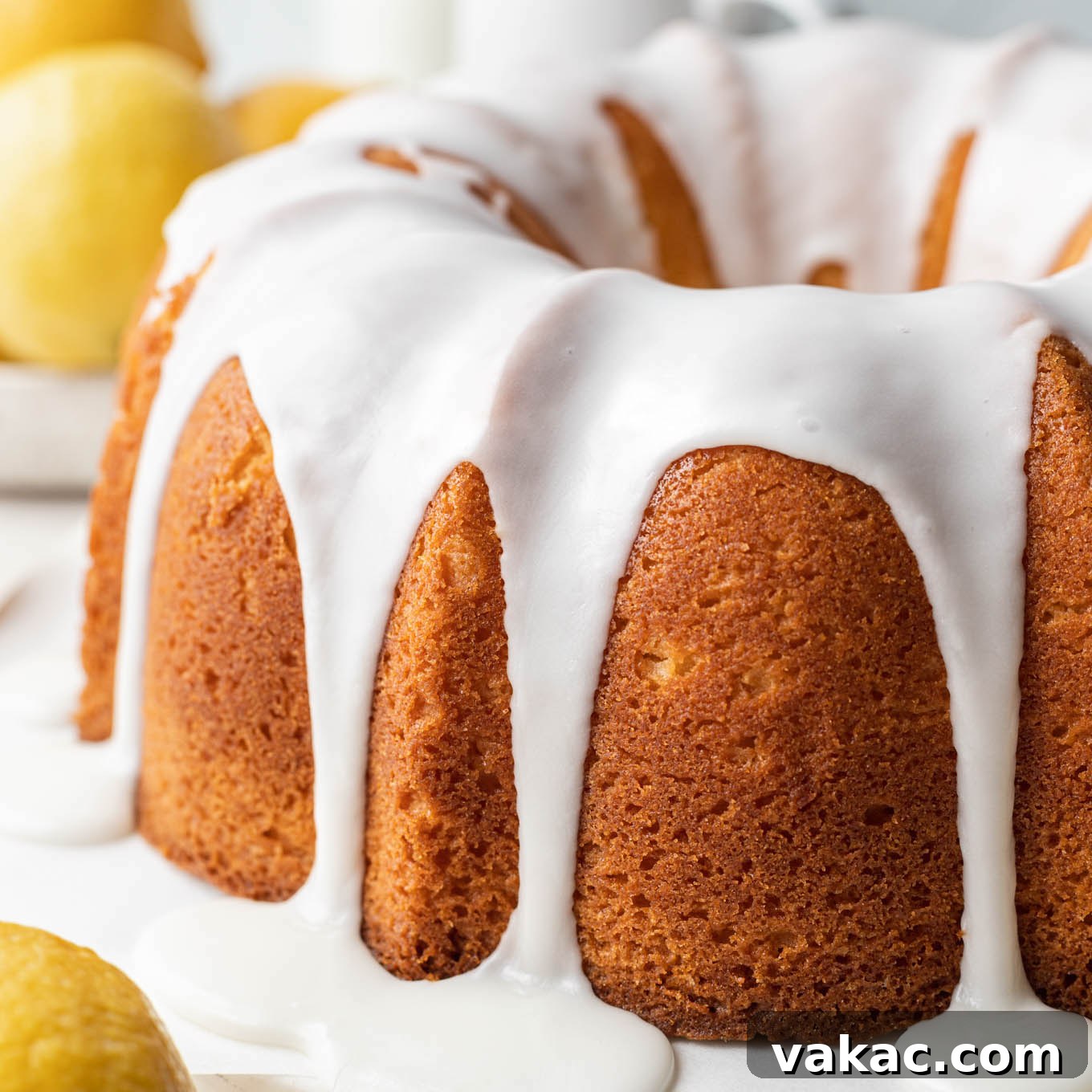
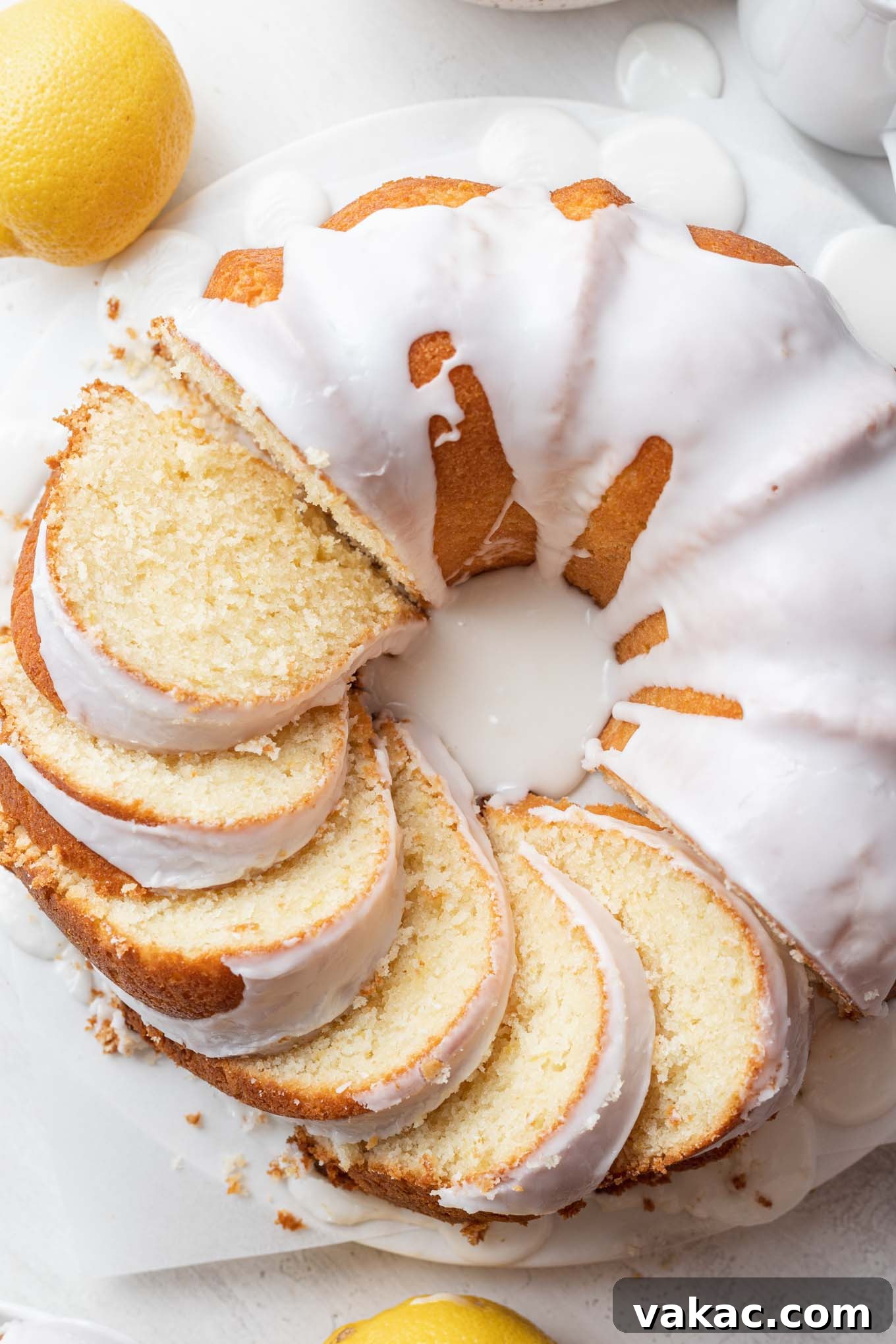
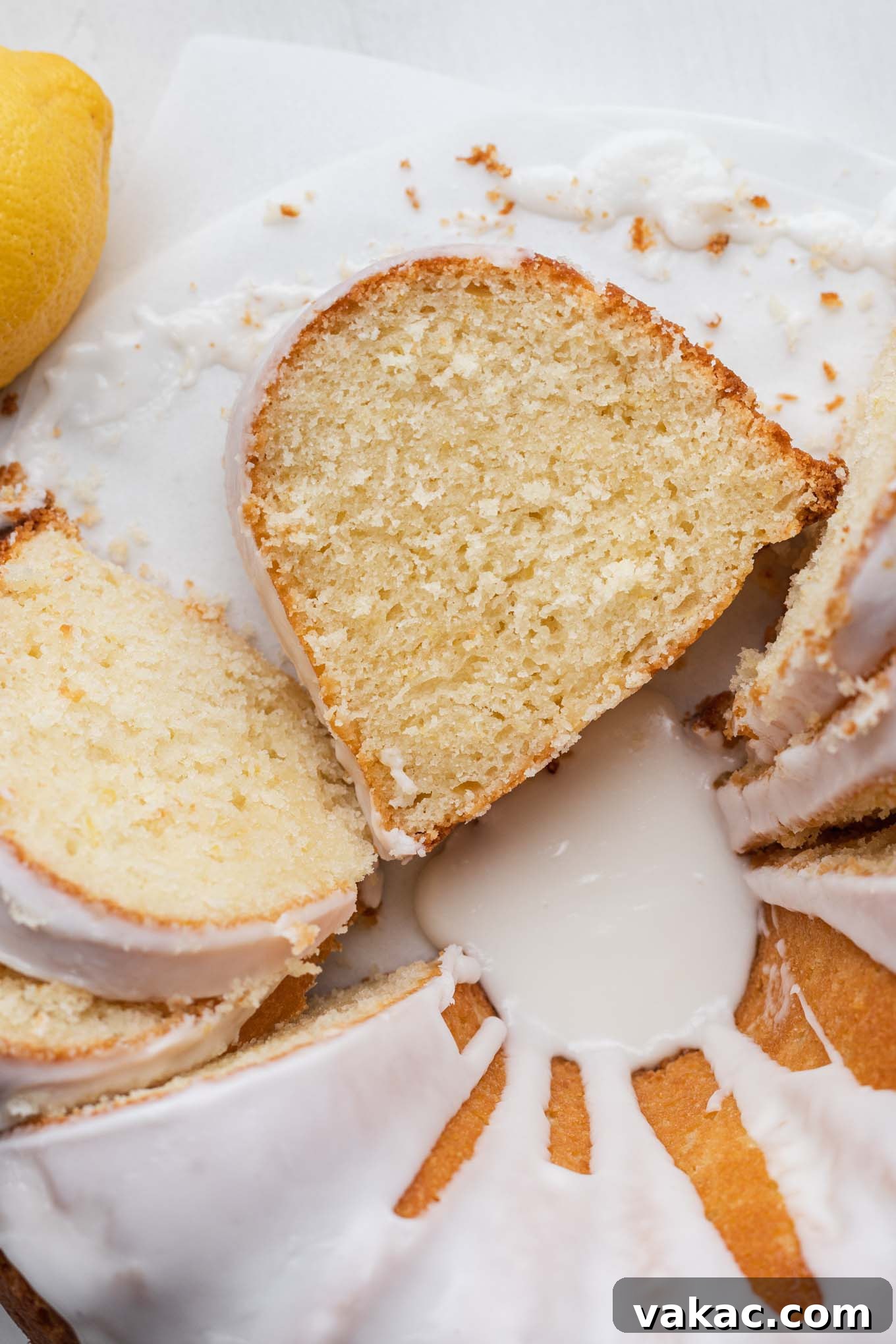
Welcome to the ultimate guide for creating the most delectable and moist Glazed Lemon Pound Cake you’ll ever taste! Forget those dry, dense pound cakes of the past; this recipe revolutionizes the classic, transforming it into a light, fluffy, and intensely flavorful dessert. Infused with bright, zesty lemon notes and topped with a glistening, tangy glaze, this cake is a celebration of citrus that’s perfect for any occasion. Whether you’re hosting a summer brunch, a festive potluck, or simply craving a delightful treat to enjoy with your afternoon coffee, this Lemon Pound Cake is guaranteed to impress with its irresistible charm and melt-in-your-mouth texture.
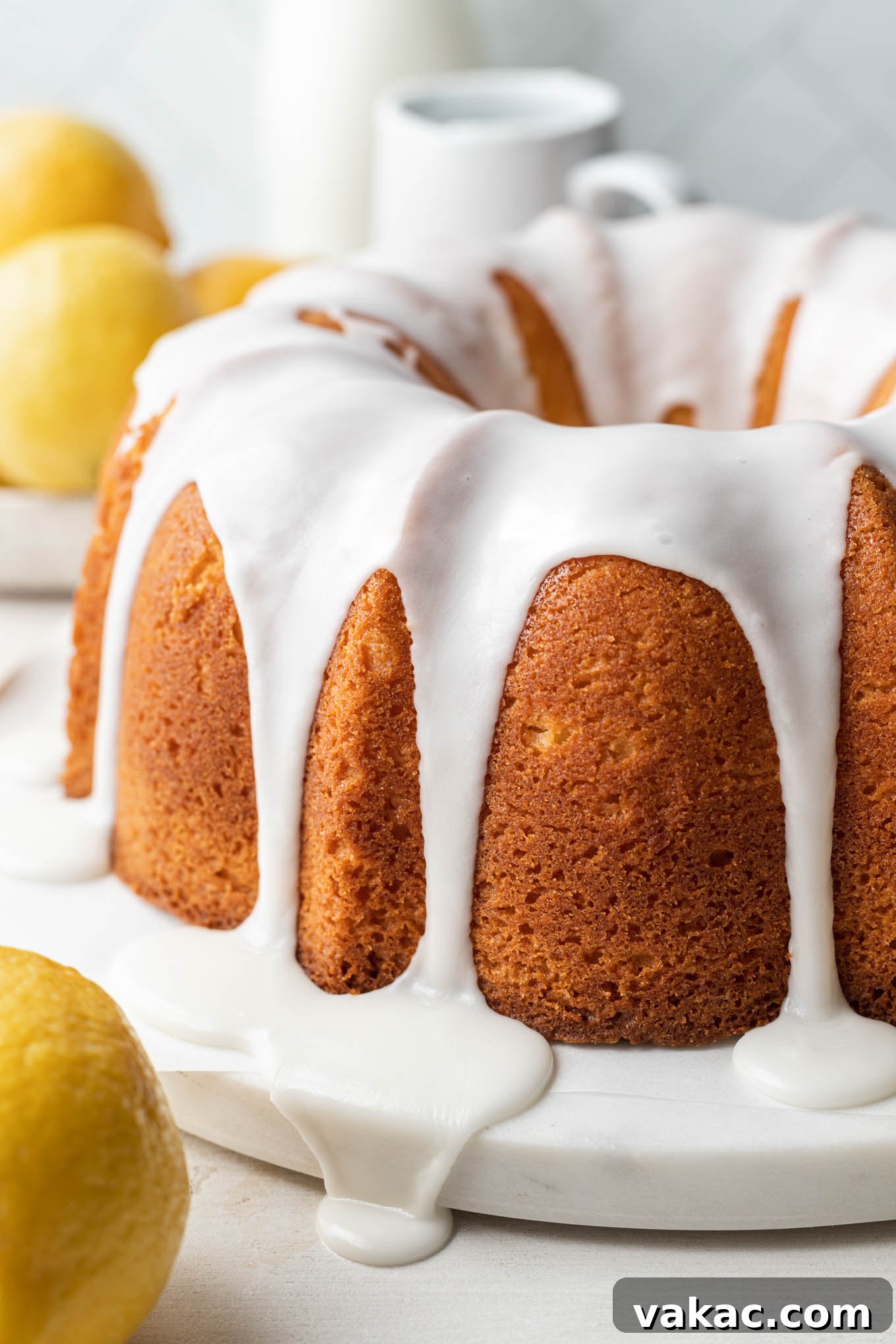
Traditional pound cakes, historically made with a pound each of butter, sugar, eggs, and flour, often lean towards a heavier, sometimes dry, texture. While there’s a certain nostalgia for the classic, this modern interpretation breaks free from convention, offering a supremely moist and tender crumb that sets it apart. Our secret lies in a thoughtfully crafted blend of ingredients, including rich sour cream and a touch of oil, which work in harmony to ensure every slice is incredibly moist. Furthermore, the inclusion of cake flour, baking powder, and baking soda contributes to a wonderfully lighter and softer structure, elevating the pound cake experience to new heights.
But what truly makes this recipe shine is the vibrant lemon flavor. We incorporate both freshly squeezed lemon juice and aromatic lemon zest directly into the cake batter, creating a fragrant foundation. The crowning glory, however, is the simple yet powerful two-ingredient lemon glaze. This brilliant addition provides an extra burst of tangy sweetness, beautifully complementing the cake’s richness and delivering that quintessential lemon “punch” that makes this dessert truly unforgettable. Prepare to embark on a baking adventure that promises a show-stopping dessert, effortlessly made with common pantry staples.
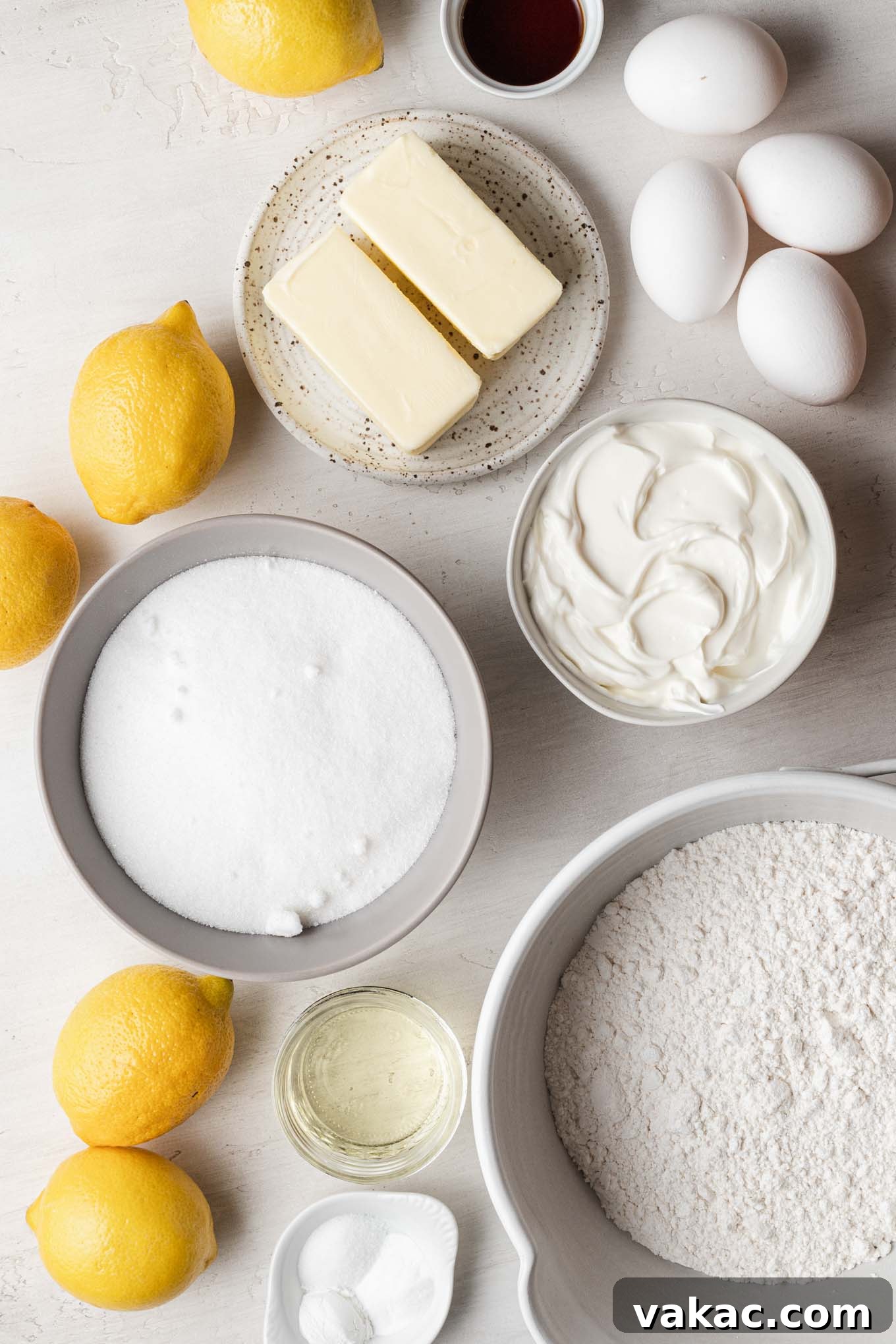
Essential Ingredients for Your Lemon Pound Cake Masterpiece
While this recipe might call for a few more items than the bare-bones traditional pound cake, rest assured that all ingredients are readily available and likely already staples in your kitchen. Each component plays a crucial role in achieving the desired moist texture and intense lemon flavor. Here’s a detailed look at the key players you’ll need for both the cake and its luscious glaze:
- Fresh Lemons: These are non-negotiable for that bright, authentic lemon flavor. You’ll need approximately 3 to 4 large lemons or 4 to 5 medium lemons to yield enough zest and juice for both the cake batter and the zesty glaze. Always zest your lemons before juicing them – it’s much easier!
- Cake Flour: This is a game-changer for achieving a lighter, more tender crumb. Cake flour contains a lower protein content compared to all-purpose flour, which helps prevent the cake from becoming overly dense, a common pitfall for many pound cake recipes. If you don’t have cake flour on hand, you can easily make a homemade substitute.
- Unsalted Butter: For optimal creaming and even incorporation into the batter, ensure your unsalted butter is at true room temperature. This means setting it out on the counter for at least an hour, or until it yields slightly when pressed but isn’t melted. Room temperature butter creates a light, airy base when creamed with sugar.
- Granulated Sugar: Essential for sweetness and structure. When creamed with butter, it creates air pockets that contribute to the cake’s lift and texture.
- Large Eggs: Like butter, eggs should be at room temperature. This helps them emulsify better with the fat in the batter, leading to a smoother, more uniform cake. Eggs also contribute to richness and help bind the ingredients.
- Neutral Oil (Canola or Vegetable): Adding oil alongside butter is one of the secrets to this cake’s incredible moisture. Oil remains liquid at room temperature, keeping the cake tender and moist for days. Melted coconut oil can also be used for a subtle tropical hint.
- Full-Fat Sour Cream or Plain Greek Yogurt: Another star ingredient for moisture and a delicate tang that beautifully complements the lemon. Use full-fat varieties and ensure it’s at room temperature for seamless integration into the batter. This ingredient prevents the cake from becoming dry and adds a rich depth of flavor.
- Baking Powder and Baking Soda: While not always traditional in classic pound cake recipes, these leavening agents are crucial for our lighter, fluffier version. Baking powder provides a gentle lift, while baking soda reacts with the acidic sour cream and lemon juice to create air pockets, ensuring a tender, airy crumb.
- Pure Vanilla Extract: A touch of vanilla rounds out the flavors, adding warmth and complexity to the bright lemon notes.
- Powdered Sugar: The base for our simple, yet irresistible lemon glaze. Its fine texture dissolves easily, creating a smooth, pourable icing.
Having these ingredients prepped and ready will make your baking process smooth and enjoyable, setting you up for success in creating a truly memorable Glazed Lemon Pound Cake.
Crafting Your Perfect Lemon Pound Cake: A Step-by-Step Guide
Making this Lemon Pound Cake is a straightforward and rewarding process. Following these steps carefully will ensure a perfectly baked cake with that signature moist texture and vibrant lemon flavor. Let’s dive into the details:
Preparing the Cake Batter
- Prep Your Oven and Pan: Begin by preheating your oven to 350°F (180°C). This ensures the oven is at the correct temperature when your batter is ready. Crucially, prepare your 12-cup bundt pan. Spray it VERY generously with a high-quality non-stick baking spray, making sure to get into every crevice and nook. You can also butter and flour it thoroughly. This step is vital to prevent the cake from sticking.
- Combine the Dry Ingredients: In a large mixing bowl, whisk together the cake flour, baking powder, baking soda, and salt. Whisking ensures these ingredients are evenly distributed, which is important for the cake’s rise and texture. Set this bowl aside.
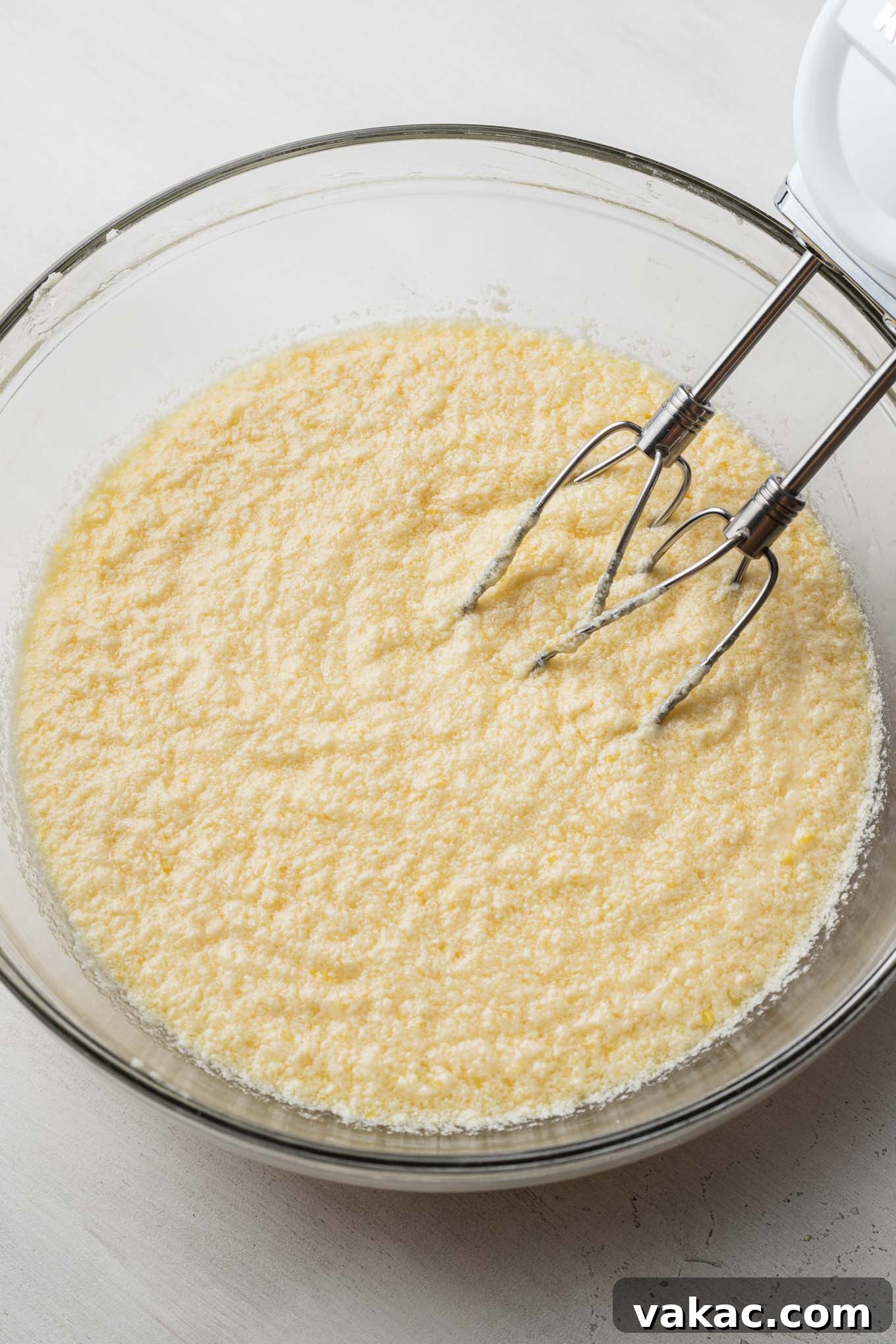
- Cream Together Butter and Sugar: In a separate, larger bowl (preferably a stand mixer bowl with a paddle attachment, or a large bowl with a handheld electric mixer), beat the softened room-temperature butter on low speed until it’s smooth and creamy. Then, gradually add the granulated sugar, continuing to beat. Increase the speed to medium and beat for about 4 to 5 minutes, or until the mixture becomes visibly lighter in color and fluffy. This creaming process incorporates air, which contributes to the cake’s light texture.
- Incorporate the Eggs: Add the room-temperature eggs, one at a time, to the butter and sugar mixture. Beat well after each addition until fully incorporated. It’s important to scrape down the sides and bottom of the bowl periodically with a rubber spatula to ensure all ingredients are mixed evenly. This prevents unmixed streaks in your final cake.
- Add the Wet Flavor Boosters: Once the eggs are fully mixed in, add the canola oil, fresh lemon juice, fragrant lemon zest, and pure vanilla extract. Mix on low speed until just combined. Be careful not to overmix at this stage.
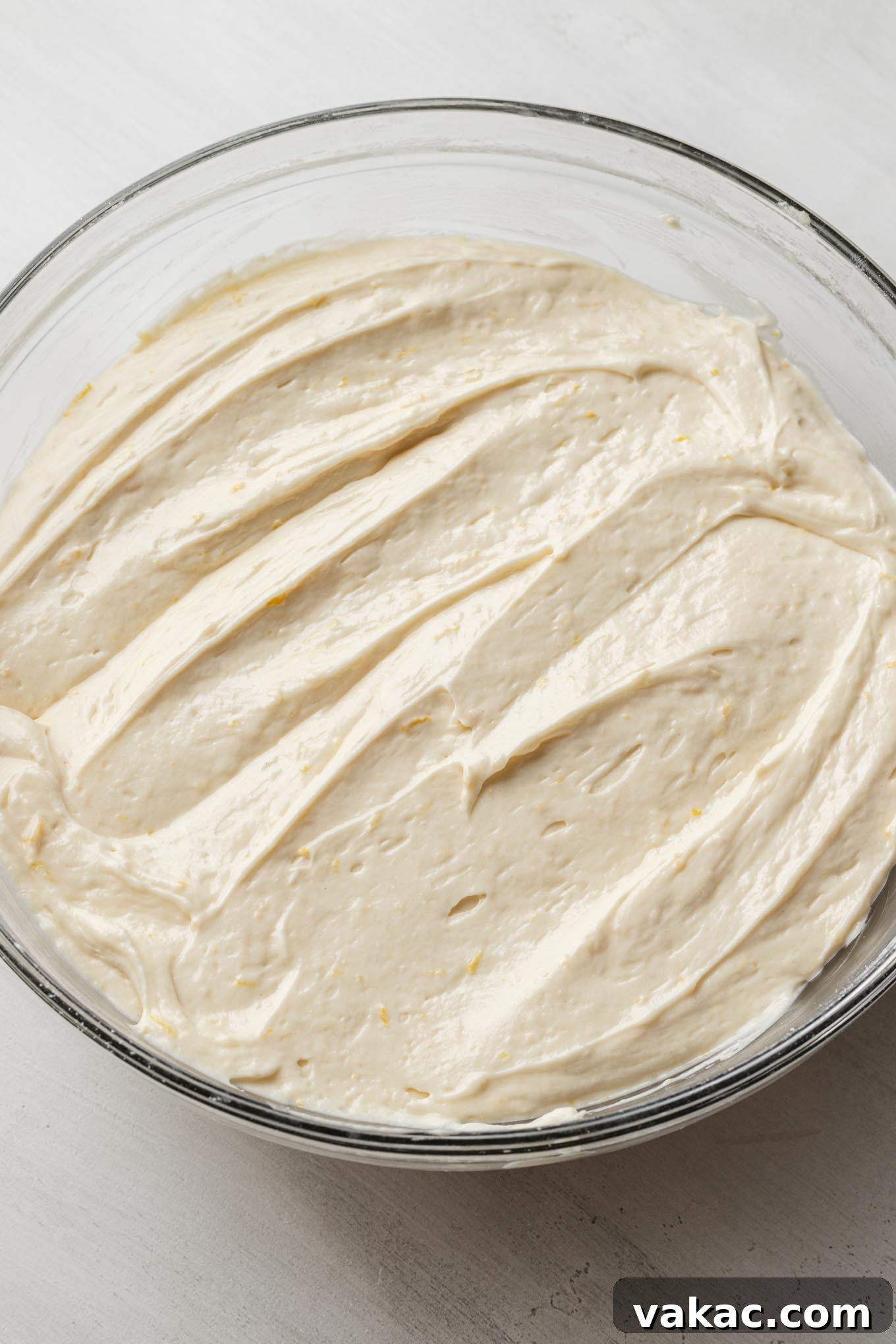
- Alternate Dry and Wet Ingredients: Now, it’s time to bring everything together. Add the dry ingredient mixture to the wet mixture in two additions, alternating with the room-temperature sour cream. Begin and end with the dry ingredients. Mix each addition on low speed only until just combined. Overmixing the batter once the flour is added can develop too much gluten, resulting in a tough cake. Gently fold with a spatula at the end to ensure no pockets of dry flour remain.
- Fill the Bundt Pan: Pour the perfectly prepared batter into your generously greased bundt pan. Use a spoon or an angled spatula to gently spread the batter out evenly. This helps ensure even baking and a beautiful shape.
- Bake to Golden Perfection: Place the bundt pan in the preheated oven. Since bundt pans are quite deep, the cake will need to bake for approximately 55 to 70 minutes. Baking times can vary depending on your oven, so keep an eye on it. You’ll know the cake is perfectly done when a wooden toothpick or skewer inserted into the center comes out clean, with no wet batter clinging to it. Mine typically bakes perfectly between 55 to 60 minutes.
Glazing Your Pound Cake
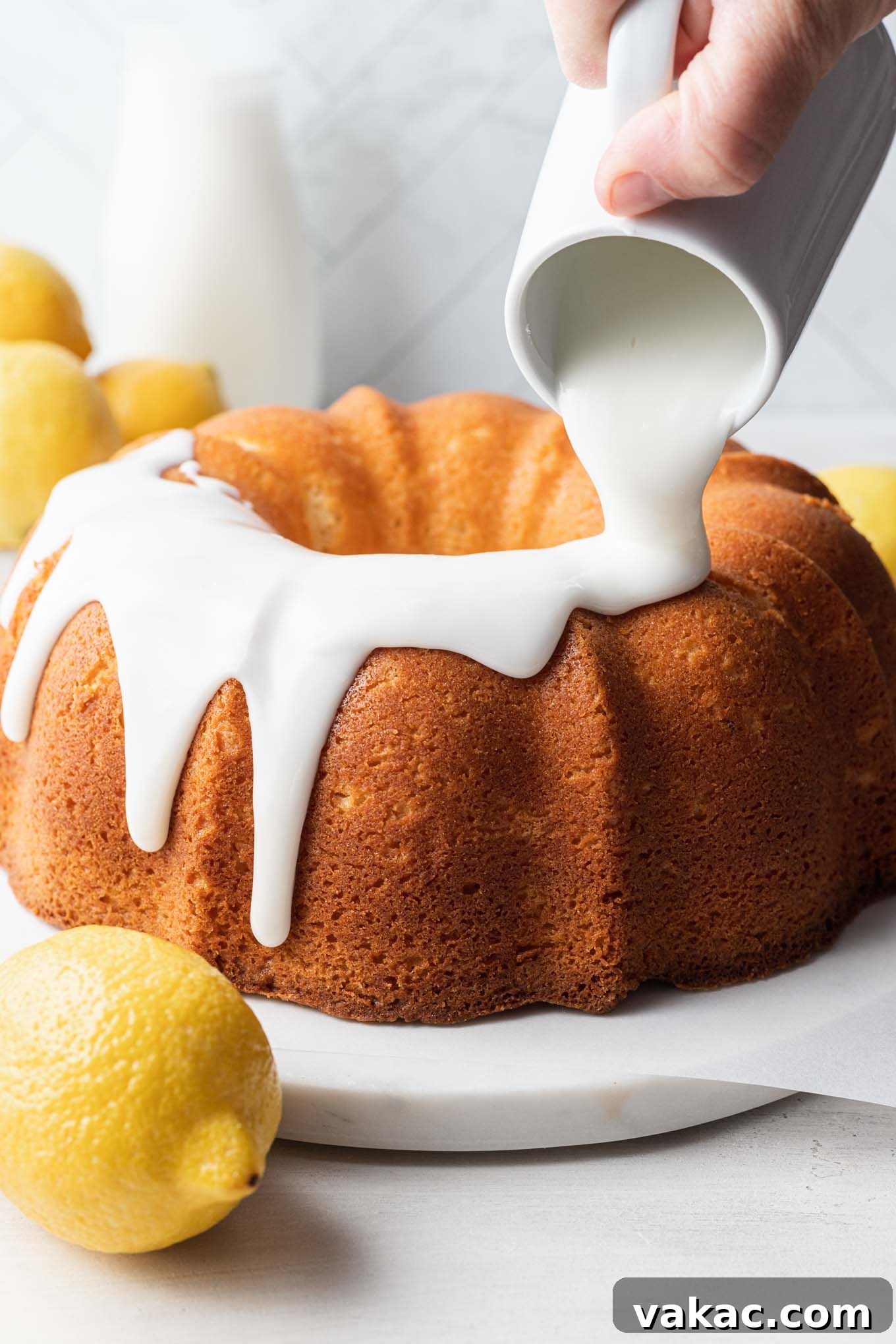
Once the cake finishes baking, remove it from the oven and let it cool in the bundt pan for 10-15 minutes. This resting period allows the cake to firm up slightly, making it easier to invert without breaking. After 10-15 minutes, carefully invert the cake onto a wire cooling rack and allow it to cool completely to room temperature. This is crucial before glazing, as a warm cake will absorb the glaze rather than letting it set beautifully on top.
- Prepare the Lemon Glaze: While your cake is cooling, prepare the simple yet sensational lemon glaze. In a medium bowl, whisk together the powdered sugar and 2 tablespoons of fresh lemon juice until a smooth, pourable consistency is achieved.
- Adjusting Glaze Consistency: The perfect glaze should be thin enough to drizzle beautifully but thick enough to form a slight opaque coating on the cake. If your glaze appears too thick, add a tiny bit more lemon juice, about ½ teaspoon at a time, until it reaches the desired consistency. Conversely, if it seems too thin, whisk in a tablespoon or two more of powdered sugar until it thickens up.
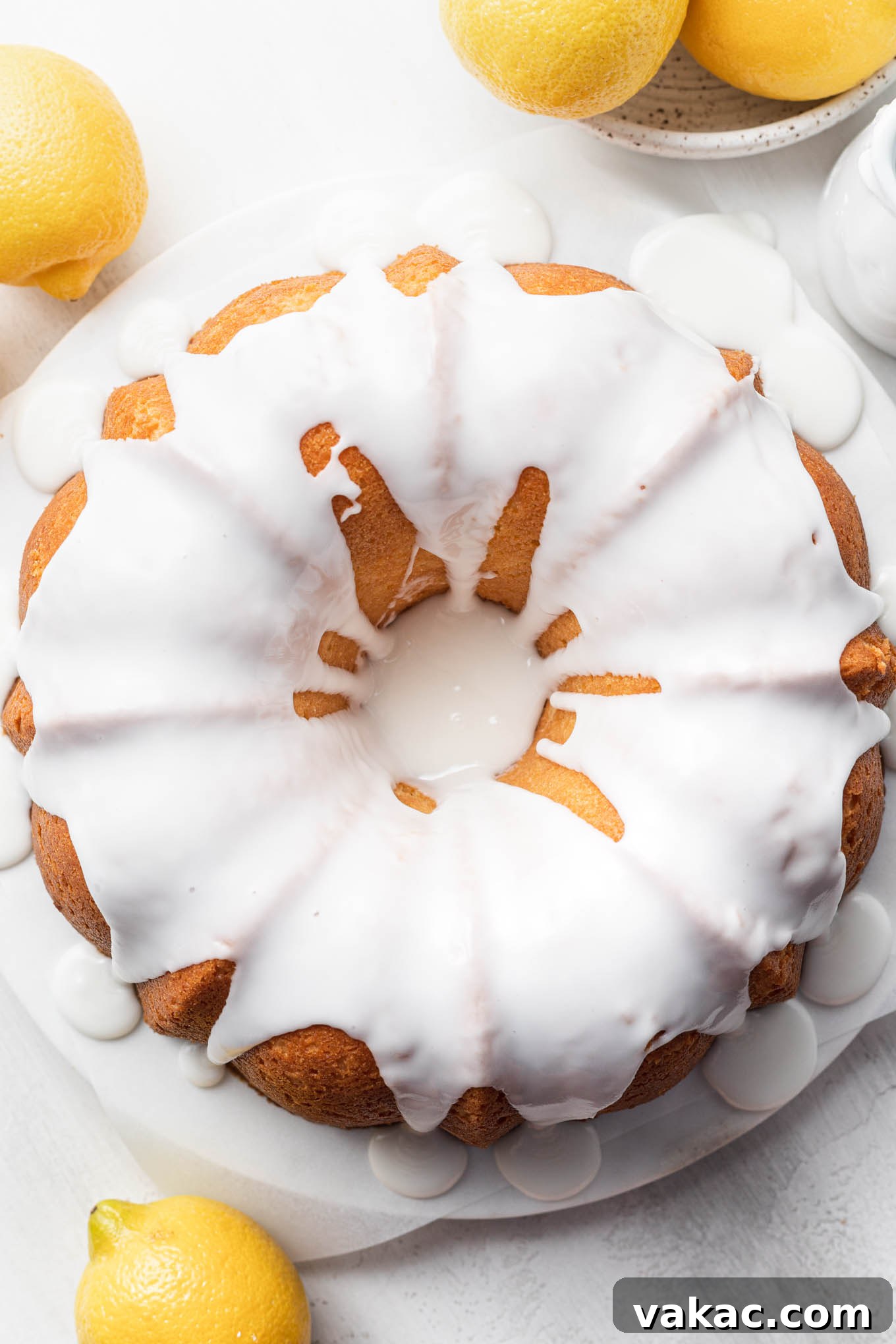
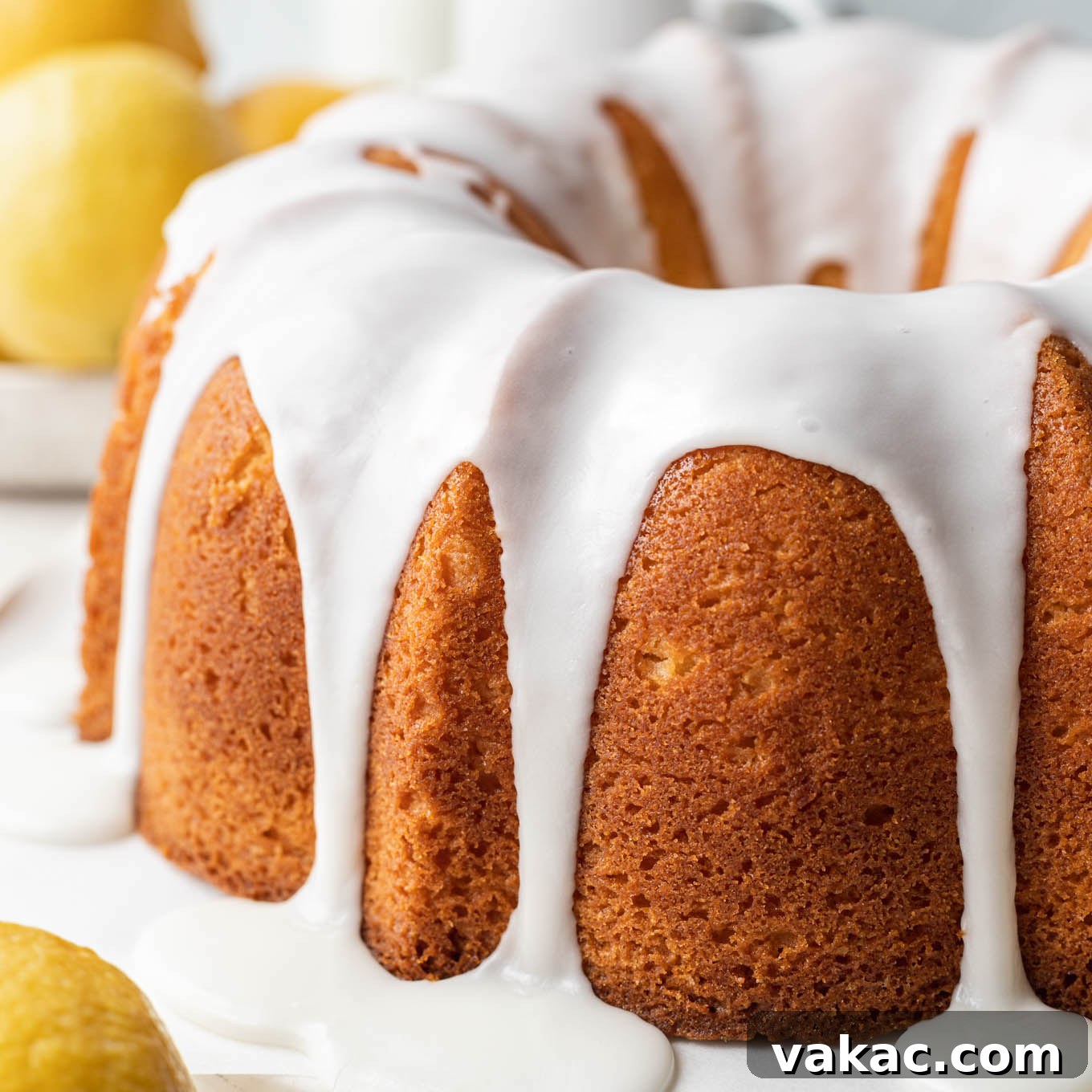
- Drizzle and Set: Once the cake is completely cool and your glaze is ready, generously drizzle the lemon icing all over the top of the cake, allowing it to cascade down the sides. For an extra aesthetic touch, you might use the back of a spoon to spread some glaze to your liking. Let the glazed cake sit for about 15 to 20 minutes to allow the icing to set and harden slightly before slicing and serving. This gives it that professional, shiny finish.
Frequently Asked Questions About Lemon Pound Cake
Here are answers to some common questions that arise when baking and serving this delightful Lemon Pound Cake:
Can Pound Cake Be Made in Advance?
Absolutely! Pound cakes are wonderfully robust and keep exceptionally well, making them an excellent choice for advance preparation. Once baked and cooled, whether glazed or plain, store the cake in an airtight container at room temperature. It will maintain its freshness and deliciousness for up to four days. If you plan to make it further in advance, freezing is an excellent option.
Can Lemon Extract Be Added to the Batter for More Flavor?
Yes, for those who crave an even more intense lemon flavor, adding lemon extract to the batter is certainly an option. If you choose to do so, I recommend substituting 1 teaspoon of the vanilla extract with 1 teaspoon of high-quality lemon extract. This will provide a concentrated citrus punch without altering the cake’s moisture or texture. Just be sure to use lemon *extract*, not lemon *oil*, as they are different products and can yield varying results in baking.
Can You Freeze This Cake?
Indeed! This Lemon Pound Cake freezes beautifully, either with or without the glaze. To freeze, wrap the cooled cake tightly first in plastic wrap, ensuring no air can get in, and then place it in a large freezer bag or wrap it again in aluminum foil. It can be stored in the freezer for up to 3 months. When you’re ready to enjoy it, simply thaw the cake to room temperature before slicing and serving. This makes it perfect for having a delicious dessert on hand for unexpected guests or future cravings.
Why Did My Pound Cake Turn Out Dry?
Several factors can lead to a dry pound cake, even with a recipe designed for moisture. The most common culprits are over-baking and incorrect ingredient measurements. Over-baking can cause the cake to lose too much moisture. Always test for doneness with a toothpick and remove the cake as soon as it comes out clean. Another factor is not using room temperature ingredients, which can prevent proper emulsification and lead to a less tender crumb. Lastly, ensure you’re accurately measuring your flour, preferably by weight (grams), or using the “spoon and level” method rather than scooping directly, which can compact the flour and result in using too much.
How to Store Leftover Glazed Lemon Pound Cake?
To keep your leftover glazed lemon pound cake fresh and moist, store it in an airtight container at room temperature. While refrigeration might seem like a good idea for baked goods, it can actually dry out pound cake and make it dense. The glaze will typically set and protect the cake, so room temperature storage is ideal for up to 4 days. If your kitchen is particularly warm, you might consider refrigerating it for extended freshness, but allow it to come to room temperature before serving for the best texture and flavor.
Adjusting the Pan Size for Your Baking Needs
While this recipe is specifically developed for a 10-inch bundt pan, which typically holds 12 cups of batter, you have flexibility! If you don’t own a bundt pan or need to adapt to what you have on hand, this amount of batter can easily be baked in several other common pan sizes. Keep in mind that baking times will need to be adjusted, as shallower pans will bake faster than deeper ones. Always keep an eye on your cake and use the toothpick test for doneness.
Here are some alternative pan sizes you could use:
- A 9×13-inch Rectangular Pan: This is a versatile pan that will produce a flatter, sheet-cake style lemon cake. The baking time will likely be shorter, roughly 40-50 minutes.
- Two 9-inch Round or Square Pans: If you’re looking to make a layered cake or two smaller cakes, two 9-inch pans work well. Baking time will be reduced to approximately 30-40 minutes.
- Three 8-inch Round Pans: Ideal for creating a taller, more elegant layered cake. Baking time will be similar to two 9-inch pans, around 25-35 minutes.
- Loaf Pans: For smaller portions or gifting, you could divide the batter among two standard 9×5-inch loaf pans. Baking time will be approximately 50-60 minutes, but check earlier.
- Cupcake Liners: For individual servings, you can make approximately 24-30 standard-sized cupcakes. Fill liners about two-thirds full and bake for 18-22 minutes.
When using alternative pans, always grease and flour them thoroughly (or line with parchment paper where appropriate) to prevent sticking. Start checking for doneness 10-15 minutes before the estimated baking time for shallower pans, and continue until a toothpick inserted into the center comes out clean. The goal is a golden-brown exterior and a fully baked interior.
Expert Baking Tips for the Best Lemon Pound Cake
Achieving a perfectly moist and flavorful Lemon Pound Cake is within reach with a few expert tips and tricks:
- Zest Before You Juice: Always zest your lemons first! It’s much easier to extract the fragrant zest from a whole, firm lemon. Once zested, roll the lemons on your countertop a few times with firm pressure to break down the membranes inside, making them easier to juice. Then, cut them in half and squeeze out every last drop of fresh juice.
- Enhance Lemon Flavor Strategically: If you desire an even more pronounced lemon flavor in the cake itself, resist the urge to add extra lemon juice to the batter, as this can upset the liquid balance. Instead, consider two effective methods:
- Increase Zest: Add another tablespoon or two of lemon zest. Zest carries the most concentrated lemon oil, providing intense flavor without adding liquid.
- Lemon Extract Swap: As mentioned in our FAQs, substitute some of the vanilla extract with lemon extract. A 1:1 swap (e.g., 1 teaspoon vanilla, 1 teaspoon lemon extract) works wonderfully to boost the citrus notes.
- Prevent Sticking: A Non-Negotiable Step: This cake is incredibly moist, which can sometimes lead to it sticking to the pan if not properly prepared. To avoid heartbreak, make sure to spray your bundt pan (or any chosen pan) VERY generously with a high-quality nonstick cooking spray containing flour, or meticulously butter and flour every nook and cranny, right before you add the batter. Don’t spray too early, as the coating can drip down the sides.
- Don’t Overmix: Once you add the dry ingredients to the wet, mix only until just combined. Overmixing develops gluten, which can lead to a tough, rubbery cake. A few small lumps are perfectly fine.
- Room Temperature Ingredients are Key: This can’t be stressed enough! Room temperature butter, eggs, and sour cream emulsify much better, creating a smoother, more uniform batter and a finer, more tender crumb in the final cake.
- The Glaze is Optional, but Highly Recommended: While the cake is delicious on its own, the bright, tangy lemon glaze takes this pound cake from great to extraordinary. It adds a beautiful sheen, extra moisture, and a final burst of lemon flavor. If you prefer to omit the glaze, a simple dusting of powdered sugar over the cooled cake makes for an elegant finish.
- Cool Completely Before Glazing: Patience is a virtue here! Glazing a warm cake will cause the glaze to melt and soak into the cake, rather than forming a beautiful, set layer on top. Allow your cake to cool completely on a wire rack before drizzling the glaze.
By following these tips, you’ll ensure your Glazed Lemon Pound Cake is not only stunning but also boasts the perfect texture and flavor every single time.
More Easy Lemon Desserts to Brighten Your Day!
If you’ve fallen in love with the vibrant flavors of lemon, you’re in luck! There’s a whole world of delightful lemon-infused desserts waiting to be explored. Here are some fantastic recipes to keep the citrus celebration going:
- Classic Lemon Cake
- Lemon Blueberry Bundt Cake
- Lemon Poppyseed Bundt Cake
- Lemon Raspberry Cupcakes
- Lemon Blueberry Cupcakes
Lemon Pound Cake
Prep Time: 40 minutes
Cook Time: 1 hour 10 minutes
Cooling Time: 3 hours
Total Time: 4 hours 50 minutes
Glazed lemon pound cake is ultra moist and packed with fresh lemon flavor! This is a simple recipe that can be made with pantry staples.
Print Recipe
Pin Recipe
Ingredients
Servings: 12 slices
Lemon Pound Cake
- 3 cups cake flour spooned & leveled (345 grams)
- ½ teaspoon baking powder
- ½ teaspoon baking soda
- ½ teaspoon salt
- 1 cup unsalted butter softened (2 sticks; 230 grams)
- 2 ¼ cups granulated sugar (450 grams)
- 4 large eggs at room temperature
- ¼ cup canola oil can sub vegetable or melted coconut oil (60 ml)
- ¼ cup fresh lemon juice (60 ml)
- 3 tablespoons lemon zest 3 large lemons or 4 medium lemons
- 2 teaspoons pure vanilla extract
- 1 cup full-fat sour cream or plain Greek yogurt at room temperature (240 grams)
Lemon Icing
- 1 ½ cups powdered sugar (180 grams)
- 2 to 3 tablespoons fresh lemon juice (30 to 45 ml)
Instructions
- To make the lemon cake: Preheat the oven to 350°F (180°C).
- In a large mixing bowl, whisk together the cake flour, baking powder, baking soda, and salt until well combined. Set aside.
- In the bowl of a stand mixer fitted with the paddle attachment or in a large mixing bowl using a handheld mixer, beat the butter on low speed until smooth, then slowly mix in the granulated sugar.
- Once all of the sugar is added, increase to medium speed and continue mixing for another 4 to 5 minutes or until the mixture is light in color and fluffy.
- Mix in the eggs, one at a time, making sure to stop and scrape around the bottom and sides of the bowl as needed.
- Stop and scrape down the sides of the bowl again, then add the oil, lemon juice, lemon zest, and vanilla extract and mix until fully combined.
- Add the dry ingredients in two additions alternating with the sour cream (begin and end with the dry ingredients). Mix in each addition on low speed and until just combined, making sure not to over mix the batter.
- Use a rubber spatula to scrape around the bottom and sides of the bowl to make sure the batter is well combined.
- Spray a 10-inch (12 cup) bundt pan generously with nonstick cooking spray. Make sure to coat it VERY well, otherwise the cake may stick to the pan!
- Pour the batter into the prepared pan and spread it around into one even layer.
- Bake for 55 to 70 minutes or until a toothpick or skewer inserted all the way into the center of the cake comes out clean. Mine is usually perfect between 55 to 60 minutes. Remove from the oven and allow to cool in the pan for 10 to 15 minutes. Slide a butter knife down the sides of the cake to loosen any parts that may be stuck. Carefully invert the cake on top of a cooling rack and allow to cool completely to room temperature.
- To make the lemon icing: Whisk the powdered sugar and lemon juice together until fully combined and no lumps remain. If the icing is too thick, add a little more lemon juice. You want the icing to be thin enough to drizzle, but thick enough to set up on the cake. If the icing is too thin, add more powdered sugar as needed.
- Drizzle the icing all over the top of the cake. Set aside for 10 to 15 minutes to give the icing time to harden.
Notes
Storage Instructions: Cake may be stored in an airtight container at room temperature for up to 4 days.
Freezing Instructions: The whole cake or slices of cake may be frozen for up to 3 months. I recommend wrapping the cake tightly with plastic wrap, then storing it in a large freezer bag. Thaw to room temperature before serving.
Cuisine: American
Course: Dessert
Author: Danielle Rye
Mention @livewellbakeoften on Instagram or tag #livewellbakeoften.