
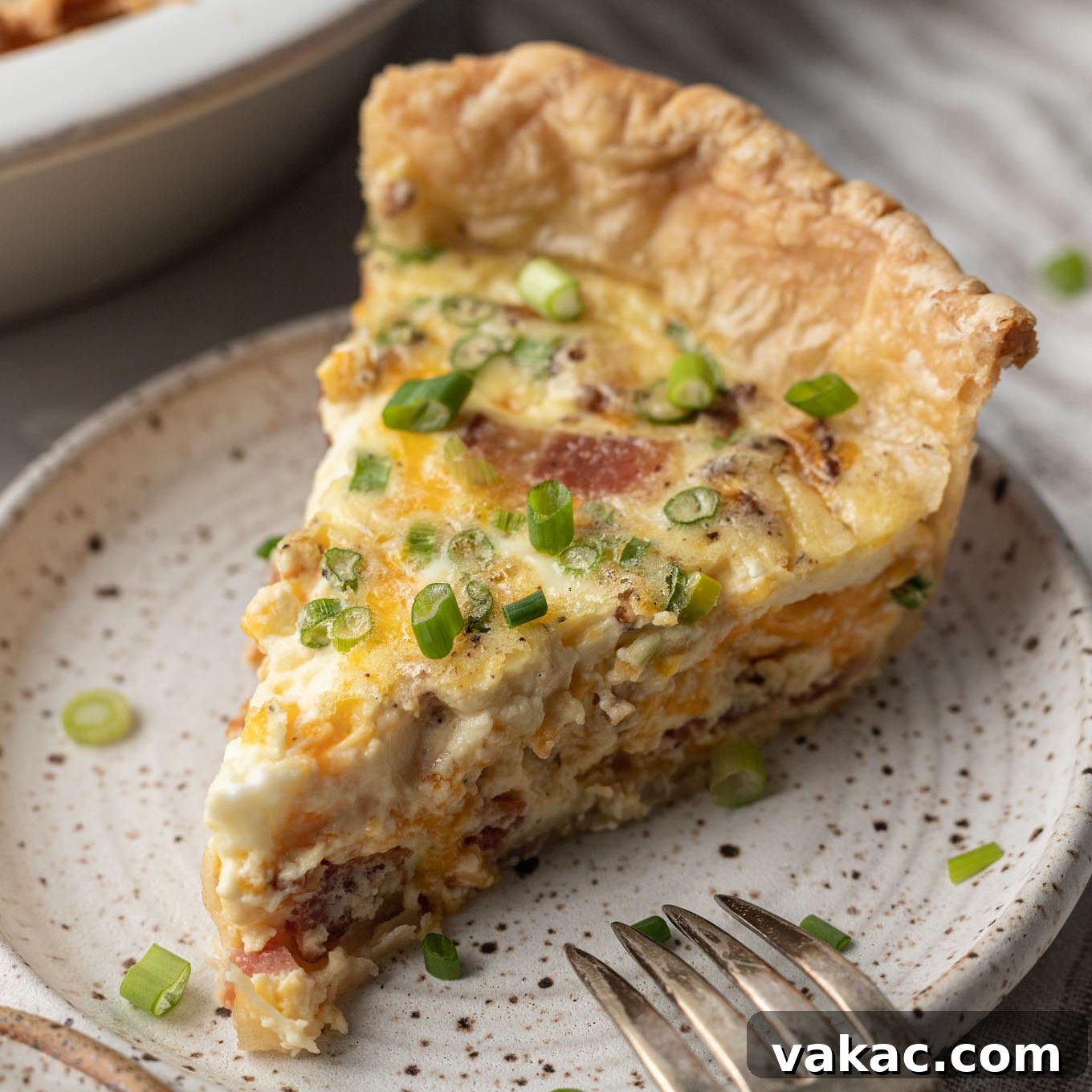
Quiche, a timeless culinary delight, offers a perfect blend of rich flavors and comforting textures, making it a stellar choice for any meal. This particular recipe for Bacon and Cheese Quiche transforms simple ingredients into an extraordinary dish, ideal for hearty breakfasts, elegant brunches, cozy dinners, or impressive potlucks. Its robust profile, highlighted by savory bacon and creamy cheddar, is universally appealing, yet incredibly versatile.
Whether you’re hosting a gathering, preparing meals for the week, or simply craving a delicious and satisfying dish, this quiche is designed to impress with minimal fuss. Beyond its classic appeal, this recipe serves as a fantastic foundation for culinary creativity. We’ll delve into how you can easily adapt it with various mix-ins, cheeses, and proteins to suit your personal taste or whatever ingredients you have on hand. Get ready to discover the secrets to a perfectly baked, gloriously golden quiche that promises flaky crusts and a silky-smooth, flavorful filling every single time.
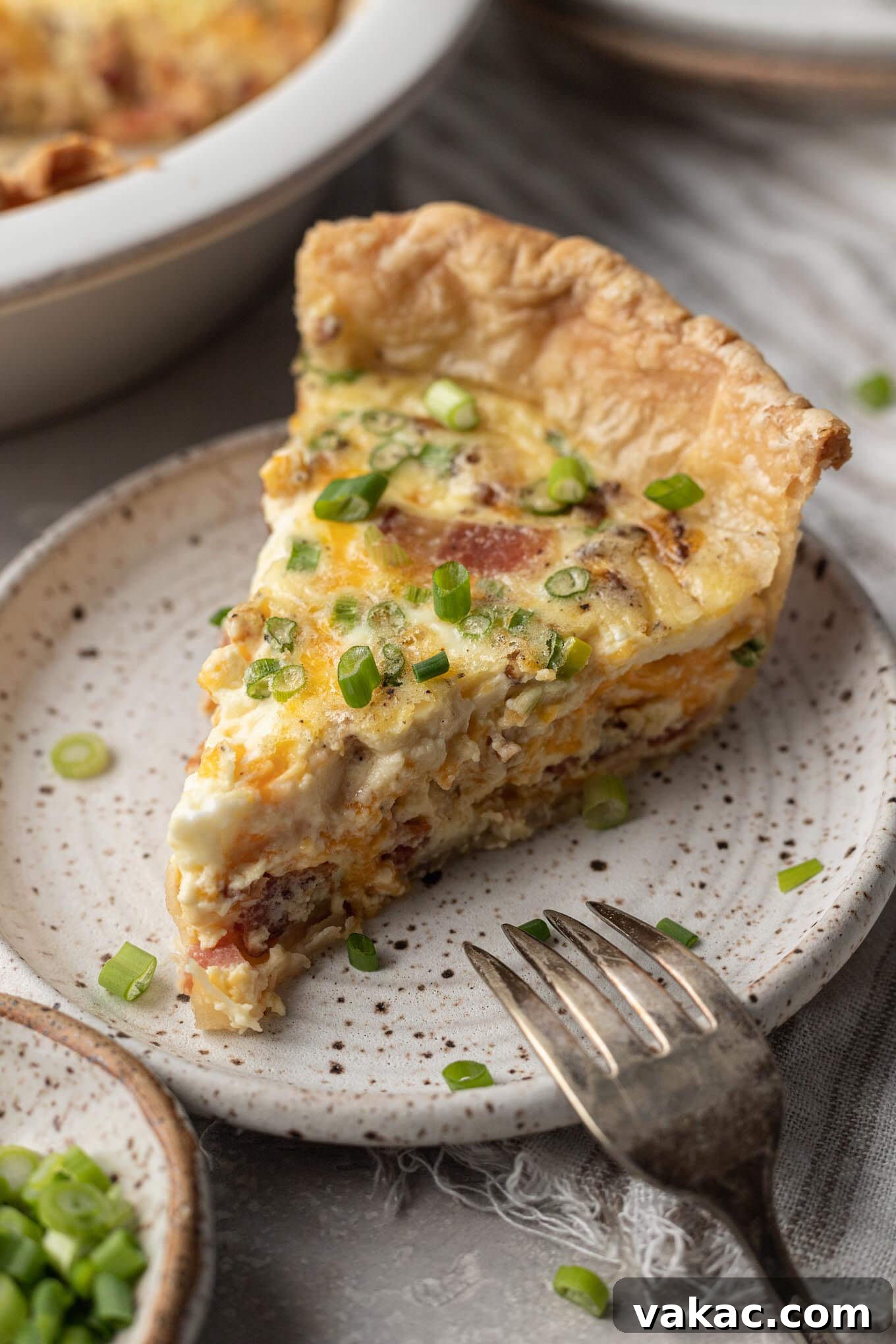
Homemade quiche is more than just a dish; it’s an experience. Imagine waking up to the aroma of freshly baked quiche, its golden-brown crust and bubbling, cheesy filling promising a delightful start to your day. This bacon and cheddar quiche recipe is a testament to how simple ingredients can come together to create something truly spectacular. It’s an effortlessly impressive dish, making it perfect for family breakfasts, celebratory brunches, or even a sophisticated addition to your weekly meal prep rotation.
While our focus today is on the beloved bacon and cheese variation – a classic for a reason – this easy recipe is fundamentally a blank canvas. The beauty of quiche lies in its adaptability. Don’t feel limited by bacon and cheddar; consider this a jumping-off point for your own culinary masterpieces. Feel free to incorporate sautéed seasonal vegetables, experiment with different cheeses, or swap the bacon for another protein that tickles your fancy. We’ll explore numerous ways to customize your quiche throughout this guide, ensuring every creation is uniquely yours.
To complete your meal, consider pairing this rich and savory quiche with a crisp green side salad for balance, delicate crepes for a touch of sweetness, or a vibrant fruit salad for a refreshing contrast. However you choose to serve it, prepare to dig into a dish that’s both comforting and gourmet.
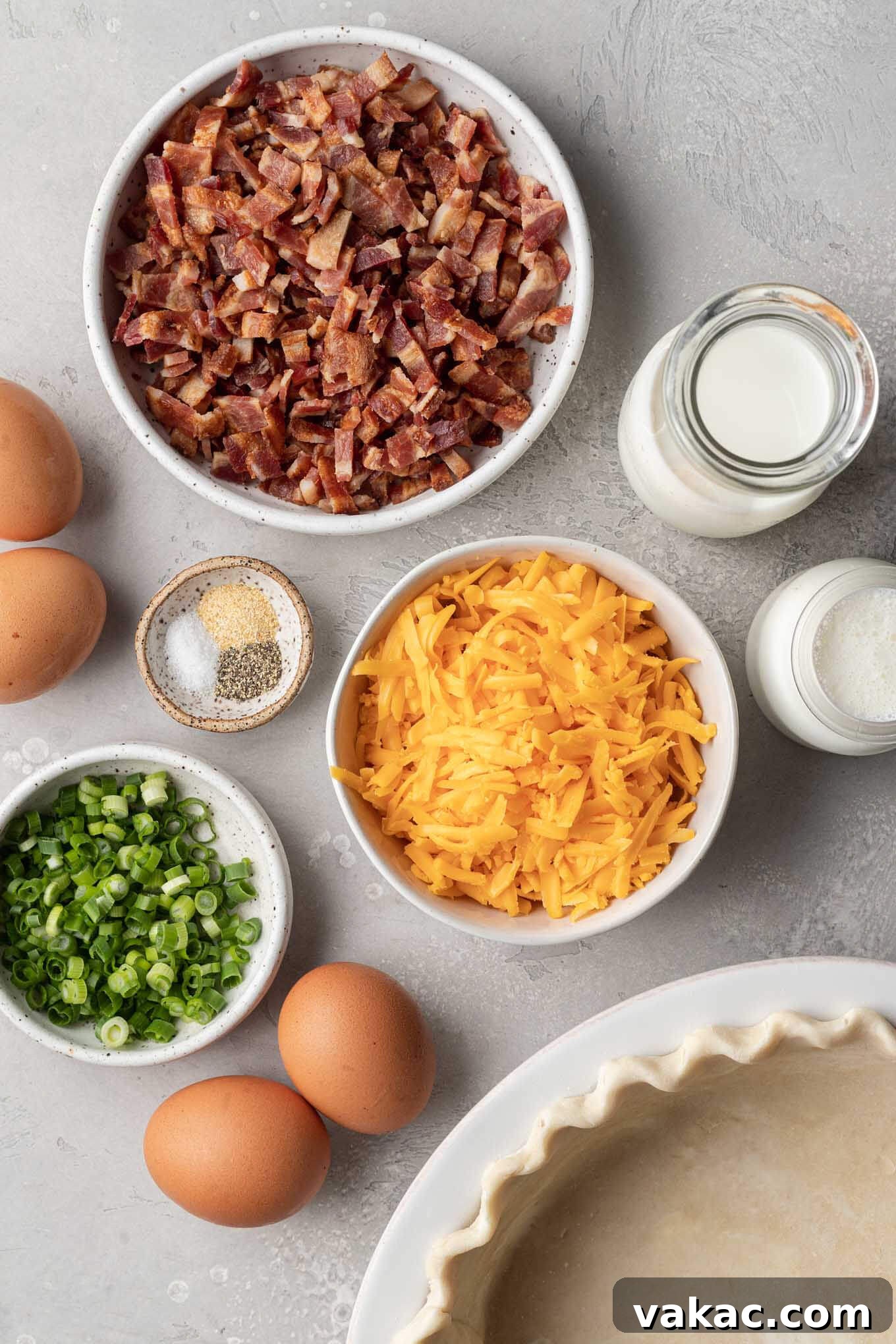
Essential Ingredients for a Delicious Quiche
Crafting this delightful homemade bacon and cheese quiche requires fewer than 10 core ingredients, many of which you likely already have in your pantry or refrigerator. This makes it an incredibly convenient dish to prepare, even when spontaneity strikes. Below is a detailed overview of the main components that bring this quiche to life, along with tips for selecting the best quality ingredients for optimal flavor and texture.
- Pie Crust: The foundation of any great quiche is a stellar crust. While I highly recommend my homemade pie crust recipe for an unparalleled flaky texture and rich flavor, a store-bought pie crust offers a convenient shortcut without compromising too much on quality. The key, regardless of your choice, is proper pre-baking (also known as blind baking) to prevent a soggy bottom and ensure a crisp, golden base that perfectly complements the creamy filling.
- Bacon: For this recipe, cooked and chopped bacon lends a wonderfully salty, smoky depth. Aim for good quality, thick-cut bacon for the best flavor and texture. If bacon isn’t your preference, or if you’re looking for an alternative, diced ham, crumbled sausage, or even smoked salmon make excellent substitutions, each offering a unique twist to the classic flavor profile. Ensure your bacon is cooked to a desired crispness and drained of excess fat before adding it to the quiche.
- Whole Milk & Heavy Cream: The secret to a luxuriously creamy quiche filling lies in the perfect balance of dairy. A combination of whole milk and heavy cream provides a rich, velvety custard that is neither too heavy nor too watery. The whole milk contributes body, while the heavy cream imparts an undeniable richness. For a slightly lighter option, or if you don’t have both on hand, 1 and 1/4 cups of half-and-half can be used as a direct substitute, yielding a similar, albeit slightly less rich, result.
- Cheese: Cheddar cheese, with its sharp and savory notes, is a classic choice for a reason, melting beautifully and adding robust flavor. However, the world of cheese is your oyster when it comes to quiche! Feel free to experiment with Gruyère for a nutty, complex flavor, Swiss for its mild and slightly sweet notes, Gouda for a creamy, buttery touch, or even a crumbled feta or goat cheese for a tangy kick. A crucial tip for the best melt and texture: buy a block of your preferred cheese and shred it yourself. Pre-shredded cheeses often contain anti-caking agents that can hinder smooth melting and sometimes impart a slightly floury texture to the finished dish.
- Green Onions: Thinly sliced green onions (scallions) are more than just a garnish; they provide a delicate, fresh onion flavor and a vibrant pop of color that beautifully cuts through the richness of the bacon and cheese. For a more pronounced onion flavor, feel free to use a greater proportion of the white and light green parts of the scallions. Alternatively, finely diced chives or even a touch of sautéed yellow onion can be used.
- Eggs: The binding agent of the quiche, eggs provide structure and form the creamy custard. Using large eggs at room temperature helps them blend more smoothly with the dairy, creating a more cohesive and tender filling.
- Seasonings: Beyond salt and black pepper, a touch of garlic powder enhances the savory notes of the bacon and cheese. Consider a pinch of nutmeg for a traditional quiche depth, or a dash of smoked paprika if you’re looking to amplify the smoky flavor.
Step-by-Step Guide to Crafting Your Perfect Quiche
Creating a beautiful and delicious quiche is a straightforward process when you follow these simple steps. Precision in each stage ensures a perfect balance of textures and flavors, from the crisp crust to the silky filling.
- Prepare and Partially Bake Your Pie Crust: This crucial first step, known as blind baking, is essential for preventing a soggy bottom crust, which is a common quiche pitfall. Begin by carefully lining your pie crust with parchment paper or foil, then fill it with pie weights, dried beans, or uncooked rice, ensuring the weights press firmly against the sides to prevent shrinking. Bake for 15 minutes at a higher temperature (usually 400°F or 204°C) to set the crust. After this initial bake, remove the weights and parchment, then return the crust to the oven for another 5 minutes until the bottom appears dry and lightly golden. This two-stage process ensures a perfectly crisp crust that can stand up to the rich filling. For more detailed instructions on achieving a perfectly blind-baked crust, refer to our dedicated guide. Once par-baked, set the crust aside on a wire rack to cool slightly while you prepare the filling.
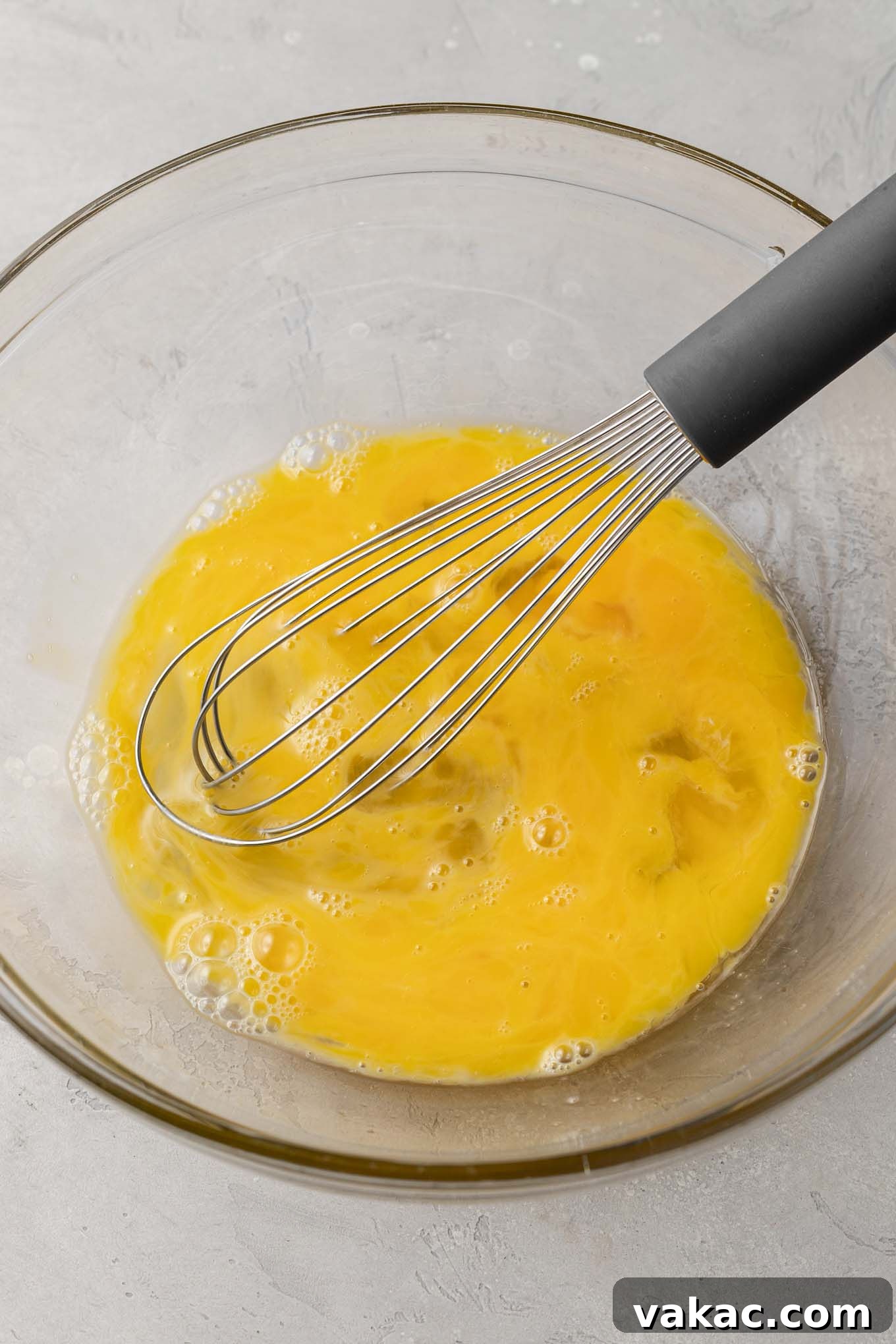
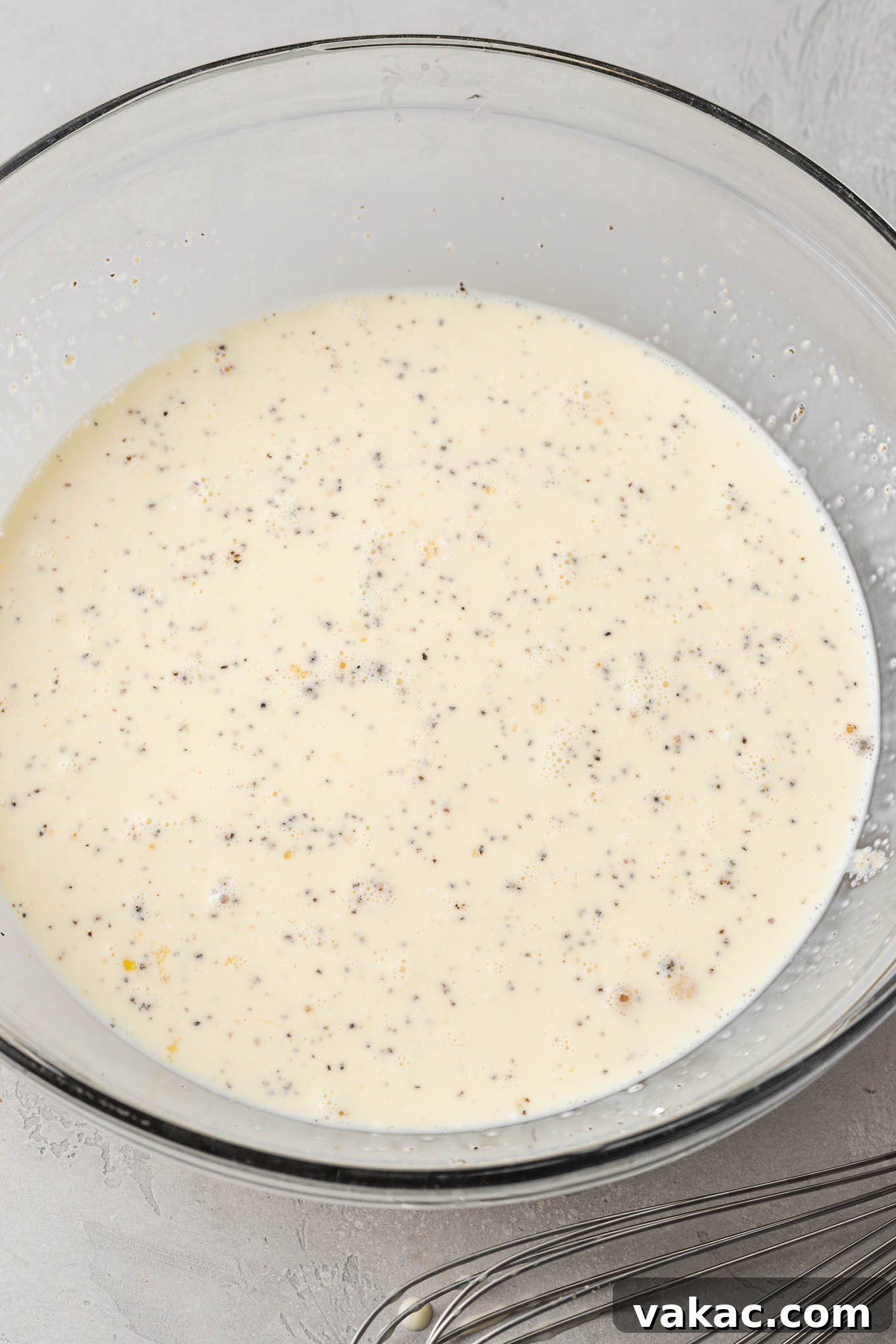
- Lightly Beat the Eggs: In a large mixing bowl, gently crack your room-temperature eggs. Using a whisk or fork, beat them just until the yolks and whites are combined and uniform in color. The key here is to incorporate as little air as possible. Over-beating the eggs can introduce too much air, which might cause your quiche to puff up excessively in the oven and then deflate, leading to a spongy or rubbery texture rather than the desired smooth, creamy custard.
- Combine Dairy and Spices: To the lightly beaten eggs, add the whole milk, heavy cream, salt, black pepper, and garlic powder. Whisk gently until all ingredients are just combined. Again, avoid over-mixing to maintain that ideal custard consistency. The exact amount of seasoning can be adjusted to your preference; feel free to add a pinch of nutmeg for a traditional touch or a dash of your favorite herb.
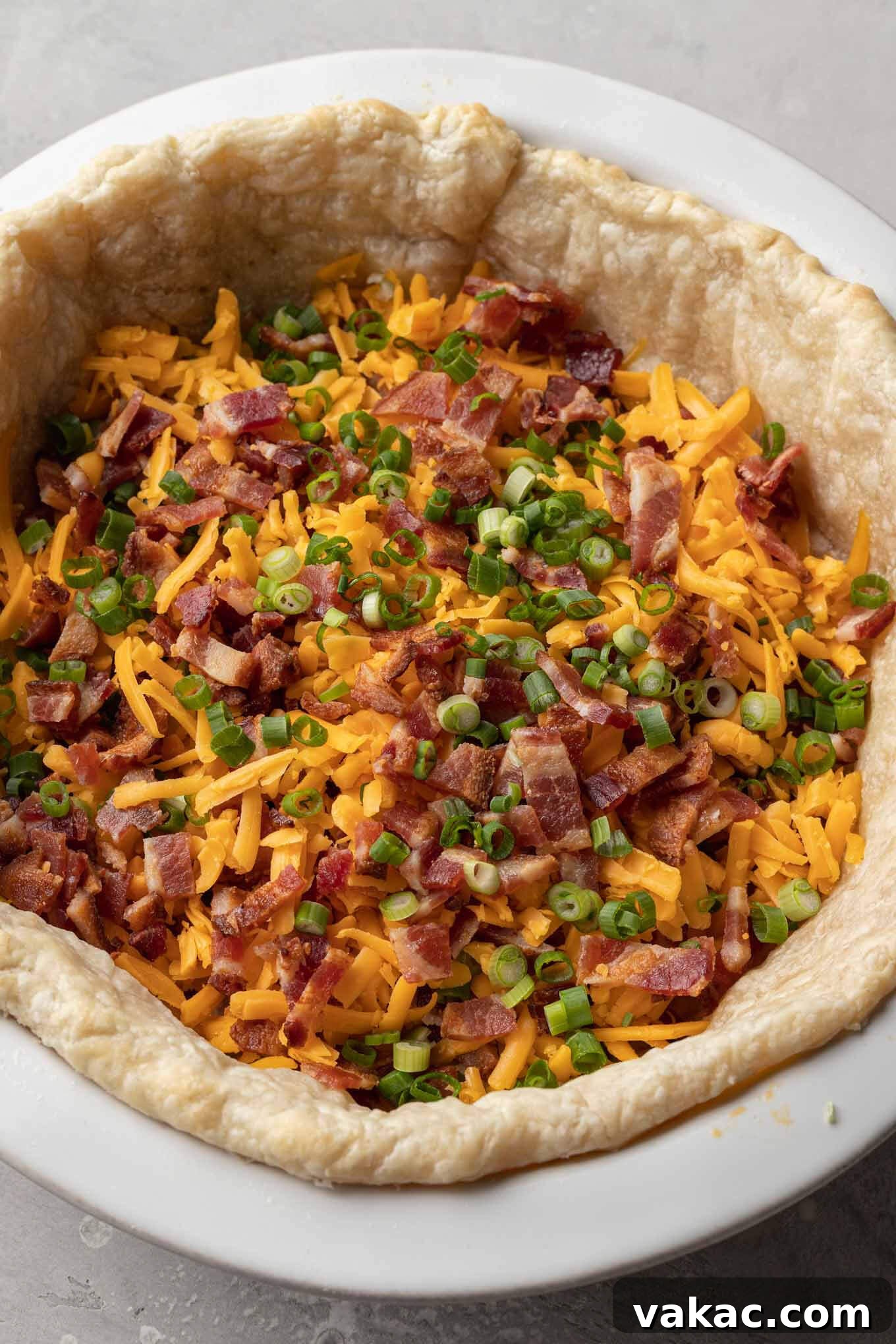
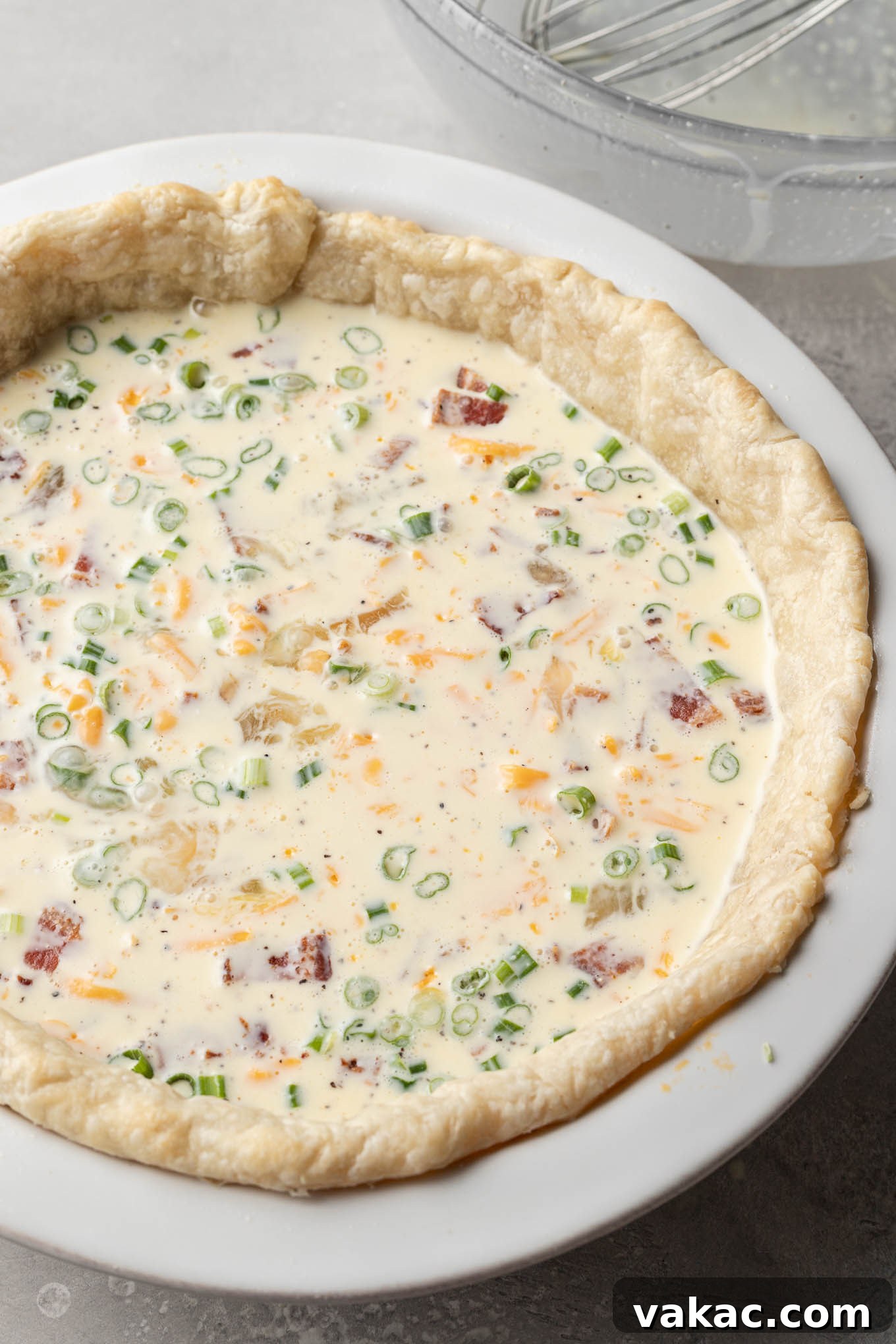
- Assemble the Quiche: With your par-baked crust ready and slightly cooled, it’s time to build the quiche. Evenly sprinkle the cooked and chopped bacon, shredded cheddar cheese, and thinly sliced green onions across the bottom of the pie crust. Distribute them as uniformly as possible to ensure every slice has a balanced mix of ingredients. Then, carefully pour the prepared egg and dairy mixture into the pie crust, filling it just to the top. If any of your mix-ins look clumped together or uneven, gently use a fork or rubber spatula to spread them out, ensuring they are well-distributed throughout the liquid custard before baking.
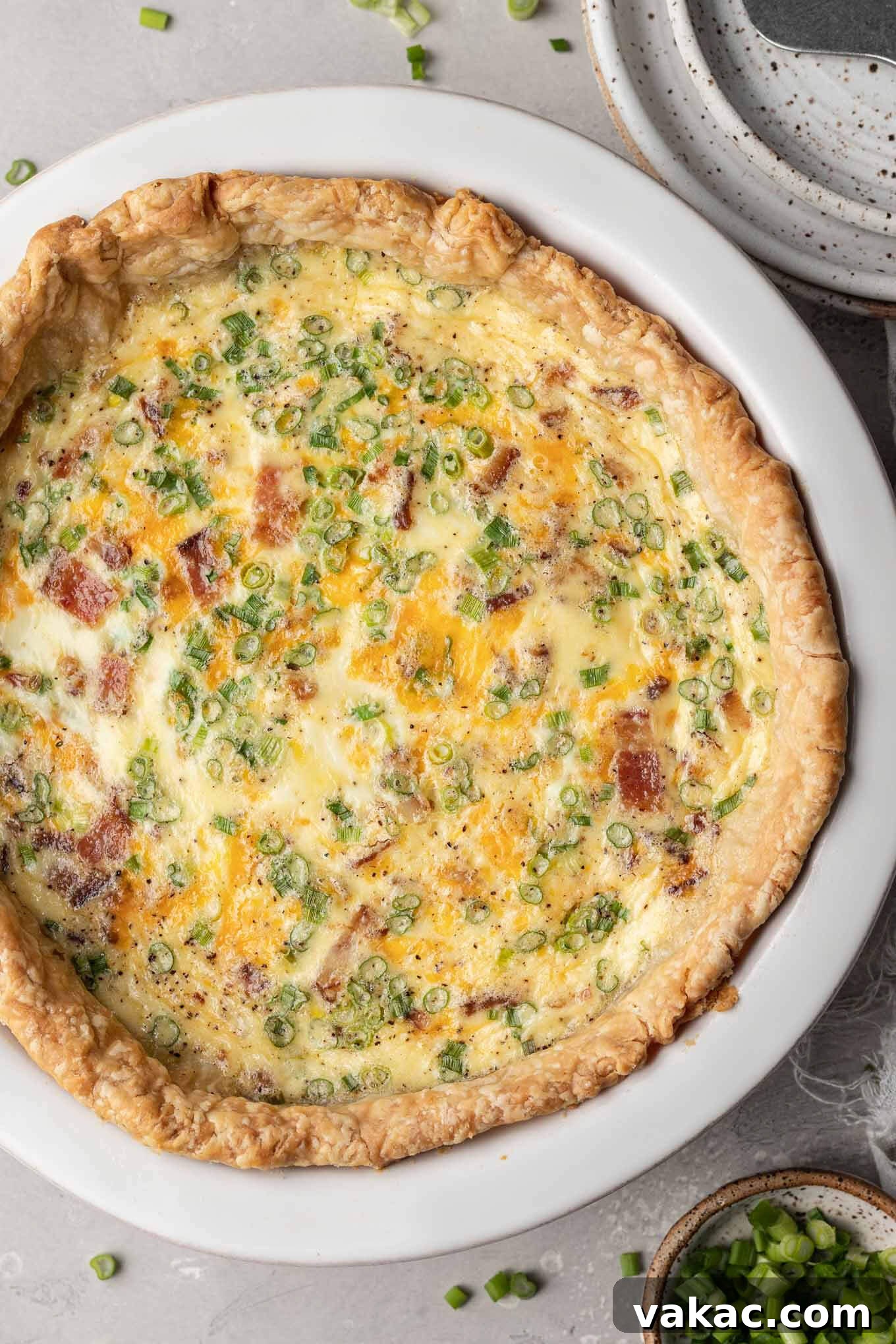
- Bake to Perfection: Transfer the assembled quiche to the preheated oven, ideally on the center rack. Bake for approximately 45 to 50 minutes at 350°F (180°C). You’ll know your quiche is perfectly baked when the edges are set and lightly golden, the center no longer appears liquid, and has a slight jiggle (like firm gelatin) when gently shaken. A toothpick or thin knife inserted into the center should come out mostly clean. If the crust edges begin to brown too quickly, loosely cover them with a pie crust shield or aluminum foil to prevent burning while the filling finishes cooking.
Frequently Asked Questions About Quiche
Here are some common questions about baking, storing, and enjoying your homemade quiche, designed to ensure your culinary success and extend the life of your delicious creation.
For this simple quiche recipe, utilizing a standard 9-inch pie plate, the filling will typically require about 45 to 50 minutes of cooking time in a partially baked crust at 350ºF (175ºC). However, cooking times can vary slightly depending on your specific oven’s calibration, the depth of your pie plate, and even the initial temperature of your ingredients. Always rely on visual cues for doneness: a set and slightly puffed-up center that still has a gentle wobble, and a clean toothpick inserted into the middle.
To preserve the delicate, creamy texture of the egg filling and prevent it from becoming dry or rubbery, the best method for reheating quiche is in the oven. Preheat your oven to 350ºF (175ºC) and reheat individual slices for about 10-15 minutes, or a whole quiche for 20-25 minutes, until thoroughly warmed through. If you’re in a hurry and absolutely must use a microwave, heat individual slices in 30-second bursts, checking for warmth after each interval, until desired temperature is reached. Be cautious not to overcook, as this is where the filling can turn rubbery.
Absolutely! Quiche, whether it’s bacon and cheddar or another variation, freezes exceptionally well, making it an excellent make-ahead meal. To freeze, allow the cooked quiche to cool completely to room temperature on your countertop. Once cooled, wrap the entire quiche or individual slices tightly in several layers of plastic wrap, then seal it securely in a heavy-duty zip-top freezer bag or an airtight freezer-safe container. Quiche can be frozen for up to three months without significant loss of quality. When you’re ready to enjoy it, thaw the frozen quiche overnight in the refrigerator before reheating as instructed above for best results.

Delicious Quiche Variations to Explore
One of the most appealing aspects of this quiche recipe is its incredible versatility. It serves as a perfect base for countless flavorful creations. Don’t hesitate to personalize it with your favorite ingredients. Here are some of my top recommendations for exciting quiche variations:
- Vibrant Veggie Quiche: For a delightful meat-free option, sauté your favorite vegetables until tender-crisp. Excellent choices include finely chopped broccoli florets, vibrant red bell peppers, earthy sliced mushrooms, tender spinach, or sweet caramelized onions. Sauté them in 1 to 2 tablespoons of olive oil, then remove from heat, pat dry with paper towels to eliminate excess moisture (this is key to prevent a watery quiche!), and use them in place of the bacon. If desired, add a little extra salt to bring out the vegetable flavors. A combination of spinach and feta or mushroom and Swiss also works wonderfully.
- Classic Ham & Cheese Quiche: A timeless combination, replace the bacon with 1 cup of finely diced ham. You can use pre-cooked deli ham or leftover baked ham. If your ham is particularly salty (like some cured varieties), I recommend reducing or omitting the additional salt from the egg custard mixture to maintain balance. This variation pairs beautifully with Gruyère or Swiss cheese.
- Explore Different Cheeses: Elevate your quiche with a distinct cheese profile. While cheddar is fantastic, here are other exceptional options:
- Gouda: Offers a mild, sweet, and nutty flavor with a smooth melting quality.
- Swiss: Known for its distinctive holes and nutty, slightly sweet taste, it melts beautifully.
- Gruyère: A sophisticated choice with a rich, creamy, and slightly earthy flavor that complements many savory ingredients.
- Feta: Provides a tangy, salty crumbly texture that works well with spinach and sun-dried tomatoes.
- Goat Cheese: Delivers a delightful tangy and creamy punch, especially good with herbs like thyme or roasted red peppers.
- Protein Power-Up: Beyond bacon and ham, consider other proteins. Crumbled cooked sausage (pork, chicken, or turkey), shredded cooked chicken, or even flaked smoked salmon can transform the quiche. Ensure any protein is fully cooked and drained of excess fat before adding.
- Herbaceous Delights: Fresh herbs add a burst of flavor. Incorporate finely chopped fresh chives, parsley, dill, or thyme into your egg mixture or sprinkle them over the top before baking.
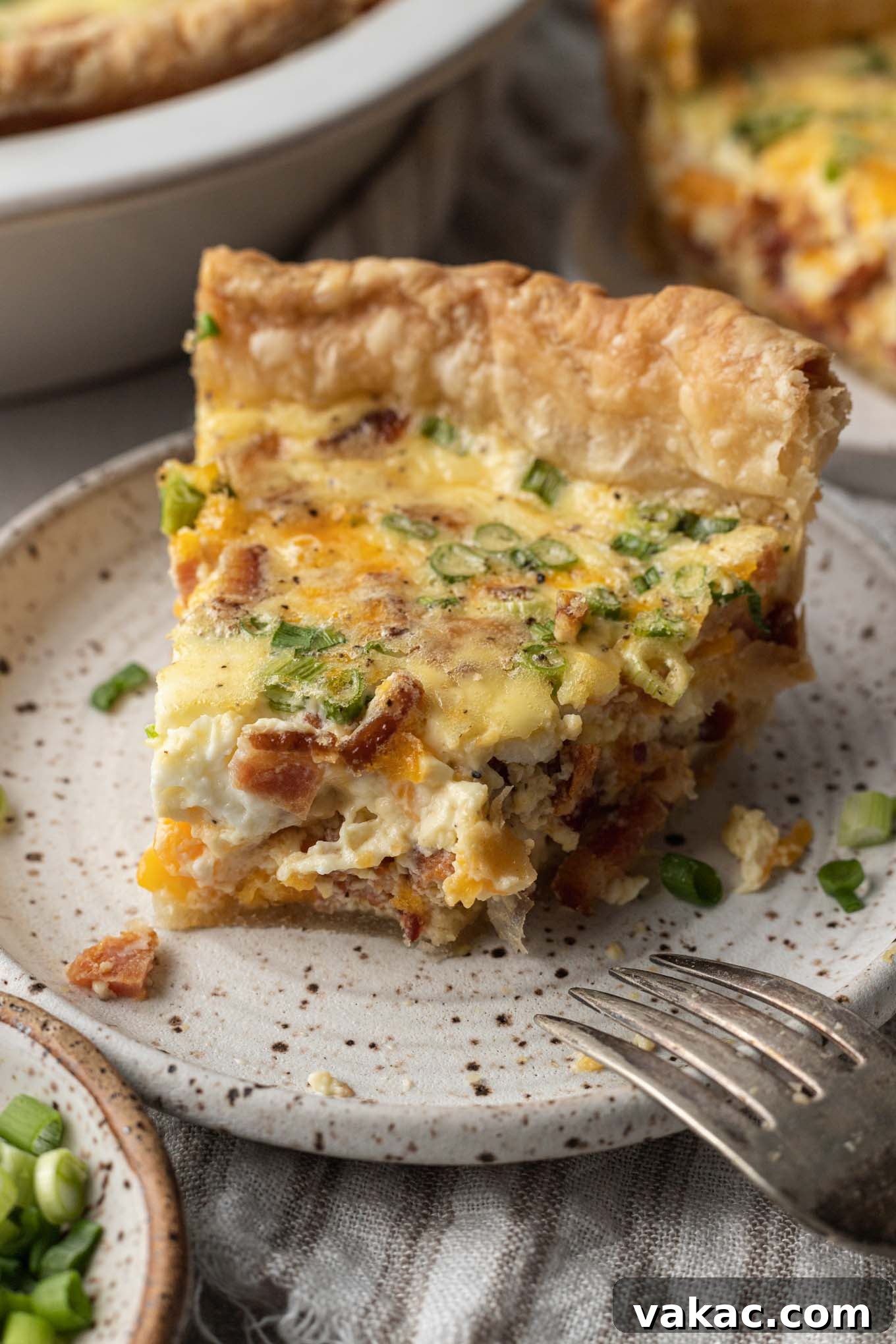
Expert Baking Tips for a Flawless Quiche
Achieving quiche perfection is simple with a few key techniques. These baking tips will help ensure your quiche boasts a golden, flaky crust and a smooth, creamy custard every time.
- Avoid Over-Beating Eggs: This is a crucial step! When preparing the egg mixture, beat the eggs just enough to combine the yolks and whites with the dairy and seasonings. Over-beating incorporates too much air, which can cause the quiche to puff up dramatically in the oven, creating an airy, spongy texture that quickly deflates, leading to a less desirable, often rubbery, final product. A gentle whisk is all you need for a perfectly tender, creamy custard.
- Always Blind Bake Your Crust: Whether you opt for a homemade or a store-bought pie crust (like Pillsbury), partially baking it before adding the filling is non-negotiable. This process, also known as blind baking, ensures a crisp bottom crust and prevents it from becoming soggy from the moist filling. Follow the instructions for your specific crust or refer to our guide on blind baking for the best results.
- Recognizing Doneness: A perfectly baked quiche will have set edges, a beautifully golden-brown top, and a center that is mostly firm but still has a slight, gentle wobble, similar to set gelatin. If a toothpick or thin knife inserted into the center comes out clean, your quiche is done. Be careful not to overbake, as this can lead to a dry, rubbery texture.
- Preventing Over-Browning of the Crust: If you notice the edges of your pie crust browning too quickly before the filling is fully set, simply cover them with a pie crust shield or a strip of aluminum foil. This protective barrier will prevent burning, allowing the quiche filling to finish cooking evenly.
- Allow for Cooling Time: Once removed from the oven, resist the urge to slice into your quiche immediately. Allowing it to cool on a wire rack for at least 15-20 minutes lets the custard set completely, making for cleaner slices and a more cohesive texture.
- Serving Temperature Versatility: Quiche is wonderfully versatile and can be enjoyed warm, at room temperature, or even cold. This makes it an ideal dish for meal prep or for taking to potlucks, as it tastes fantastic even after it has cooled.
Recipe Video (Video placeholder)
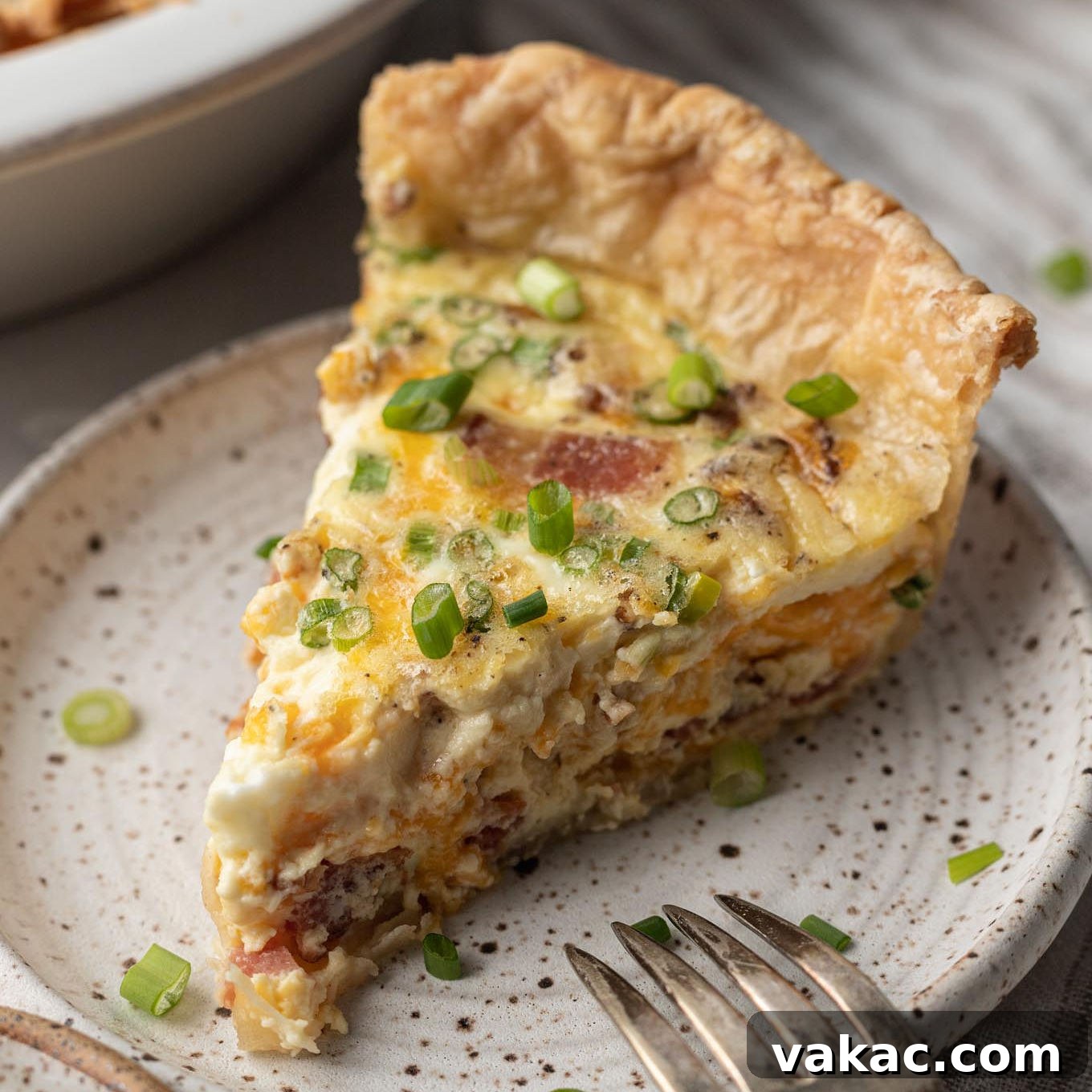
Classic Bacon and Cheese Quiche Recipe
Pin Recipe
Leave a Review
Ingredients
For the Crust:
- 1 pie crust homemade or store-bought (9-inch)
For the Filling:
- 4 large eggs at room temperature
- ¾ cup whole milk (180 ml)
- ½ cup heavy whipping cream (120 ml)
- ¼ teaspoon salt
- ¼ teaspoon black pepper
- ¼ teaspoon garlic powder
- 8 to 10 slices fully cooked bacon chopped (approx. ¾ cup)
- 1 cup shredded cheddar cheese (100 grams)
- ¼ cup thinly sliced green onions (15 grams)
Instructions
-
To prepare the pie crust (blind bake): Preheat your oven to 400°F (204°C).
-
If using homemade dough, roll it out into a circle larger than your 9-inch pie dish. Carefully transfer the dough to the pie plate, gently press it into the dish, and trim any excess dough or tuck it under to form a neat edge.
-
Place the pie plate with the dough in the refrigerator to chill for 15 to 20 minutes while the oven preheats. This helps prevent shrinkage during baking.
-
Once chilled and the oven is preheated, remove the pie plate. Line the dough with parchment paper or foil, ensuring it covers the bottom and sides. Fill with pie weights (dried beans or rice also work), pressing them up against the sides.
-
Bake with the pie weights for 15 minutes, or until the edges of the crust just begin to lightly brown. If using a thinner, store-bought crust, you might need to slightly reduce this initial baking time.
-
Carefully remove the pie plate from the oven, then gently lift out the parchment paper (or foil) and pie weights. Return the crust to the oven for an additional 5 minutes, or until the bottom of the crust looks set and dry.
-
Remove the par-baked crust from the oven and set it aside on a wire rack to cool slightly while you prepare the quiche filling.
-
To prepare the filling: Reduce the oven temperature to 350°F (180°C).
-
In a large mixing bowl, lightly beat the eggs. Add the whole milk, heavy cream, salt, pepper, and garlic powder, and whisk until just combined. Remember, do not over-beat the eggs to avoid incorporating too much air, which can lead to a spongy quiche texture.
-
Evenly sprinkle the cooked bacon, shredded cheese, and chopped green onions around the bottom of the partially baked pie crust.
-
Carefully pour the egg mixture over the scattered mix-ins in the pie crust. If necessary, use a spoon or rubber spatula to gently move the mix-ins around, ensuring they are evenly distributed throughout the liquid.
-
Bake the quiche on the center rack of the oven for 45 to 50 minutes, or until the top of the quiche is set, appears golden, and the center is no longer jiggly (a toothpick inserted into the center should come out clean). If the edges of the pie crust start to brown too much before the quiche is fully cooked, cover them with a pie crust shield or aluminum foil.
-
Remove the quiche from the oven and transfer it to a wire rack. Allow it to cool for at least 20 minutes before slicing and serving. This resting period allows the custard to fully set, ensuring perfect slices.
Notes
Quiche may be reheated in a 350°F (175°C) oven for 10-15 minutes for slices (20-25 for whole), or microwaved in 30-second increments until warmed through, being careful not to overcook.
Freezing Instructions: After the quiche has completely cooled, wrap the entire quiche or individual slices tightly with plastic wrap, then place in a large zip-top freezer bag or airtight container. Freeze for up to 3 months. For best results, thaw overnight in the refrigerator before reheating.