

This soft and chewy Greek yogurt pizza dough comes together in about 15 minutes using only four pantry staples—no yeast and no rise time. A full cup of thick Greek yogurt gives this crust a protein boost (about 22 grams of protein before toppings), and the recipe makes two medium pizzas, perfect for a family pizza night where everyone customizes their own pie.

I used to buy store-bought pizza crusts because traditional dough feels like a big time commitment. Then I discovered this incredibly simple Greek yogurt pizza dough. It’s a game-changer for busy weeknights: mix flour, baking powder, salt and Greek yogurt, knead briefly, roll thin and bake. The whole process is fast, forgiving and yields a crust that’s soft and chewy with a crisp, golden bottom when done correctly.
I first tried a yogurt-based crust while visiting my sister in Hawaii and was surprised by the flavor and texture. Our first attempt produced a slightly soggy center because the crust was too thick. Back home I tested and tweaked the technique until I achieved the combination I love: a thin crust with a crunchy underside, soft but not gummy interior, and golden, slightly blistered edges. The adjustments are simple—mainly rolling the dough very thin and watching the bottom instead of relying strictly on time.

Why this Greek Yogurt Pizza Dough works so well
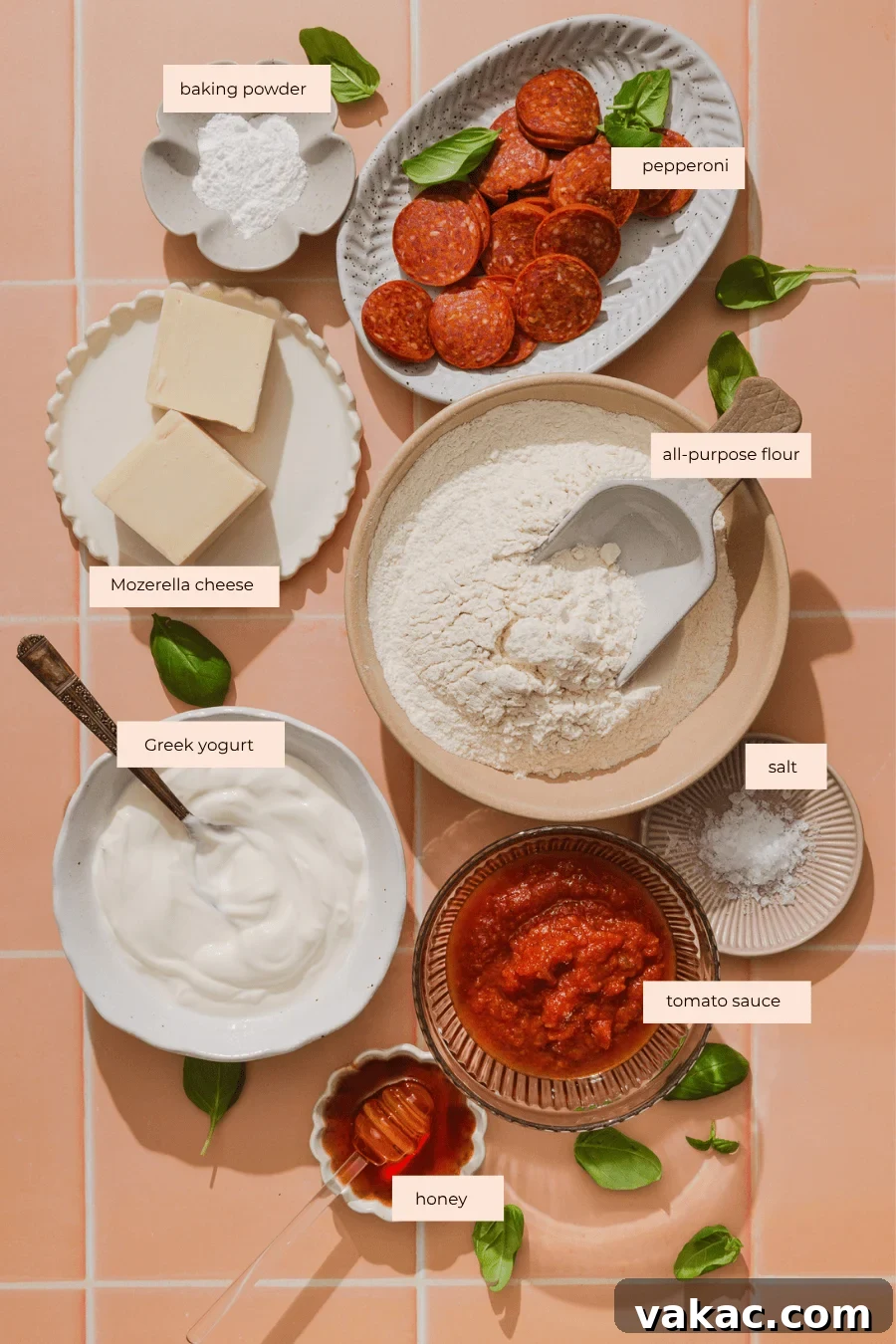
Plain Greek yogurt: Use true Greek yogurt for its thick consistency. Regular yogurt holds too much water and makes dough sticky. Greek yogurt binds the dough, contributes protein, and adds a gentle tang that mimics the flavor depth of a slow-fermented yeast crust.
All-purpose flour + baking powder instead of self-rising flour: Many recipes call for self-rising flour, but most kitchens already have all-purpose flour and baking powder. Combining these two gives the reliable lift and texture you want without needing specialty flour.
Salt: A full teaspoon of salt may sound like a lot, but it’s essential here—pizza dough needs seasoning. Under-seasoned crust tastes flat no matter the toppings.
Tips from the test kitchen
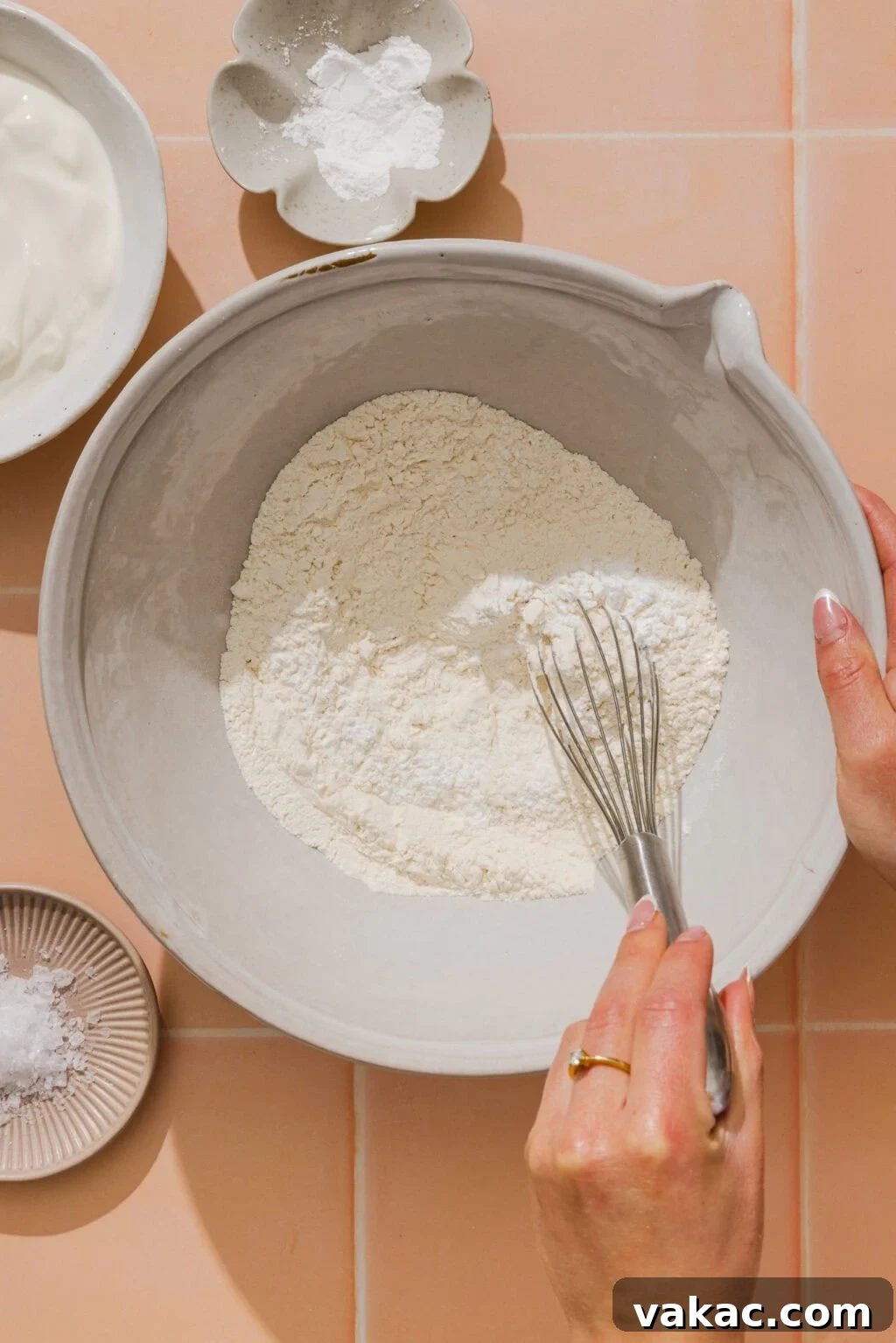
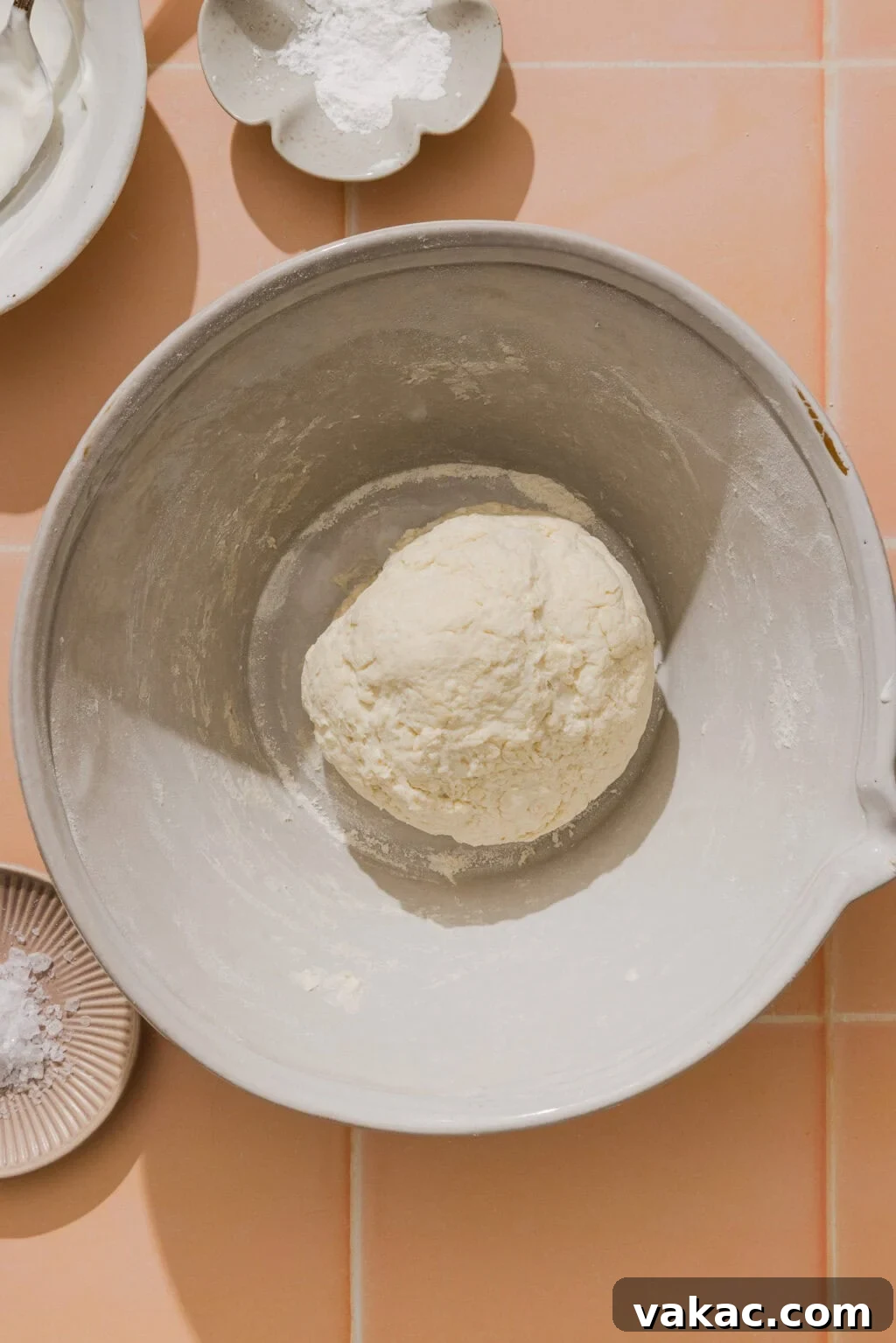
Don’t overmix. The dough will look a bit shaggy and slightly sticky at first. Work it just until the ingredients come together and no loose flour remains. Overworking creates an overly tough crust.
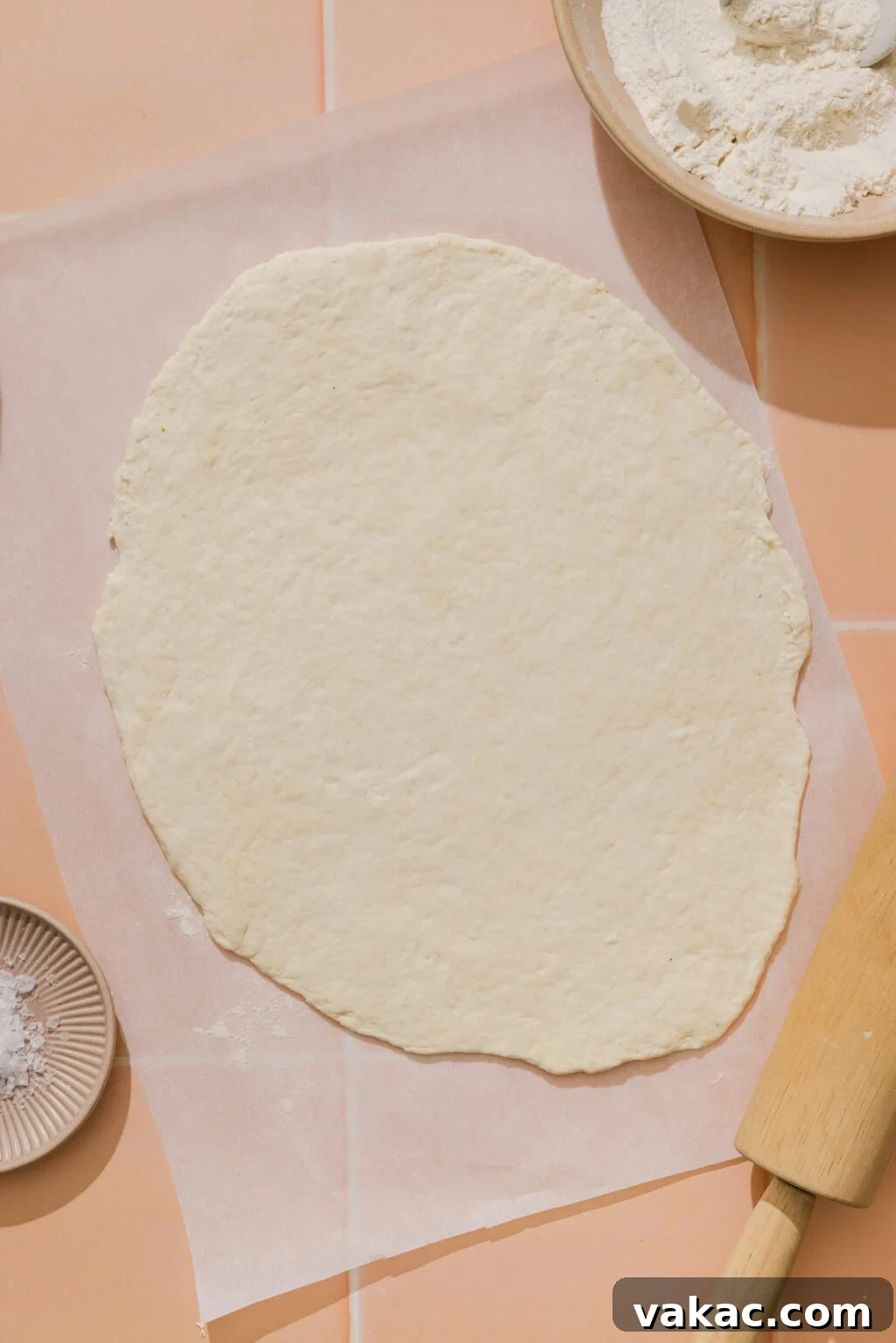
Roll very thin. Aim for just under 1/8 inch—slightly thicker than a flour tortilla. A thin base is the key to a fully cooked bottom and avoids a doughy center.
Edge style: I prefer a thin, crisp edge rather than a pronounced raised crust. If you like a defined rim, leave the dough a touch thicker around the perimeter.
Check the bottom. Oven temperatures vary. Start checking the crust around 15 minutes. The bottom should lift slightly and feel crisp, and the edges should be golden. Using parchment makes it easy to lift a corner and peek.

Step-by-step: Roll out the dough


High-Protein Greek Yogurt Pizza Dough
- Author: Bea Villanea
- Prep Time: 15 minutes
- Cook Time: 15–17 minutes
- Total Time: 30 minutes
- Yield: 4–6 servings
- Category: Appetizer, Baking, Mains
- Method: Baking
- Cuisine: Italian
- Diet: Vegetarian
Description
This soft and chewy Greek yogurt pizza dough is ready in about 15 minutes from start to finish. With just four ingredients—flour, baking powder, salt and Greek yogurt—you get a high-protein crust that’s easy to make and versatile. The recipe yields two medium pizzas, great for sharing or letting each person pick their own toppings.
Ingredients
- 1 ½ cups all-purpose flour, plus 1–2 tablespoons for dusting the surface
- 2 teaspoons baking powder
- 1 teaspoon salt
- 1 cup plain Greek yogurt (full-fat or low-fat, but must be true Greek yogurt)
- Toppings of your choice:
- Try prosciutto, pear, blue cheese and mozzarella, finished with arugula and a drizzle of balsamic after baking.
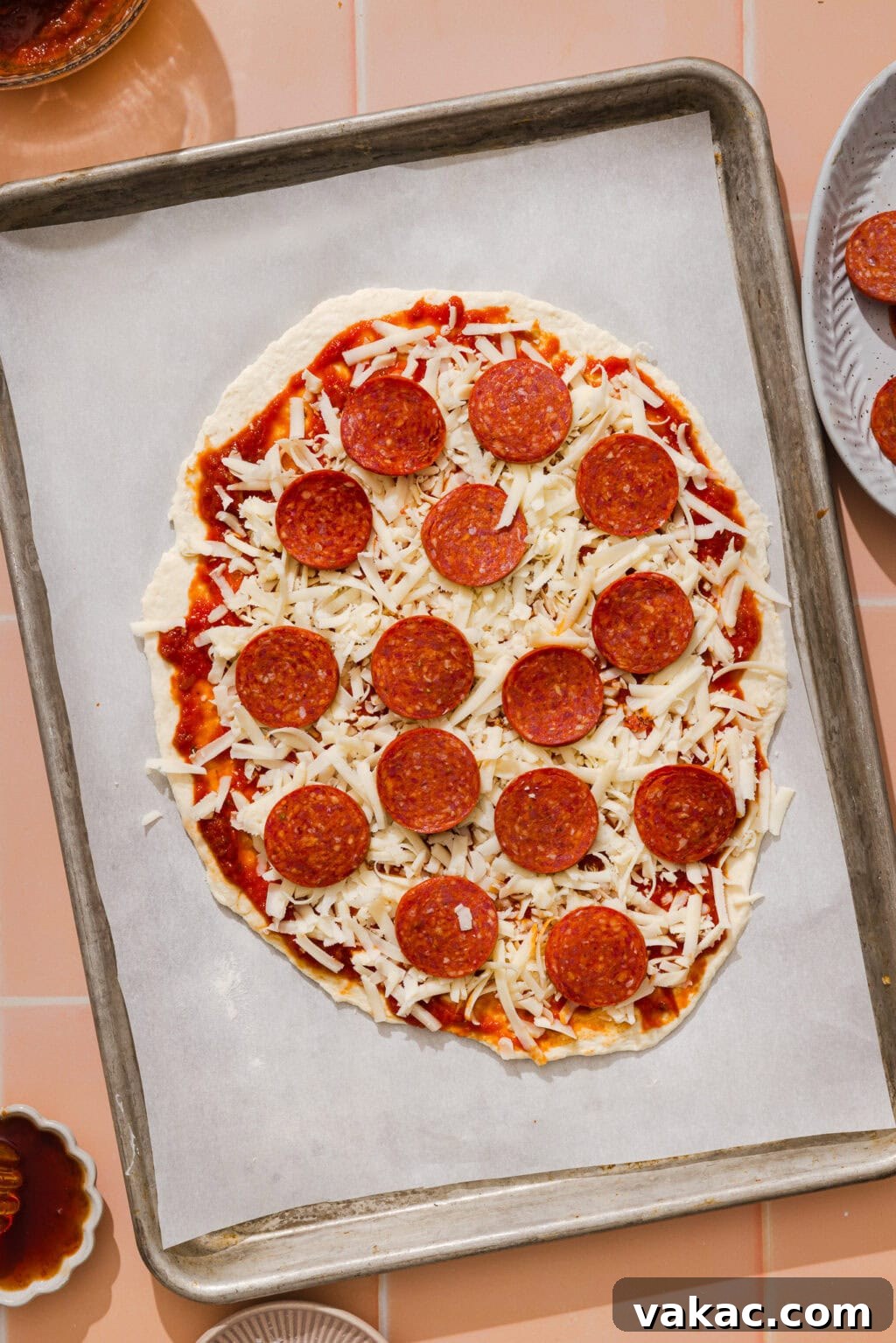
- Or keep it classic with pepperoni and a touch of hot honey.
- Family favorites include ham and pineapple or pepperoni and extra cheese.
Instructions
- Preheat the oven to 400°F (about 200°C). Line two baking sheets with parchment paper and set aside.
- In a large bowl, whisk together the flour, baking powder and salt until evenly combined.
- Add the Greek yogurt to the dry ingredients. Use a fork to start mixing, then use your hands to knead until a cohesive ball of dough forms. Divide the dough into two equal portions.
- Lightly dust a clean, flat surface with 1–2 tablespoons of flour. Place one dough ball in the center and roll it out with a rolling pin until it is just under 1/8 inch thick—slightly thicker than a flour tortilla. Repeat with the second ball, adding flour as needed to prevent sticking.
- Transfer the rolled crusts to the prepared baking sheets, add your desired toppings, and bake for 15–17 minutes. The pizzas are done when the bottom is slightly crisp and the edges are golden.
Notes
Yogurt: Use thick Greek yogurt—not regular or “Greek-style” varieties that retain too much moisture. If the dough is too sticky, knead in an extra tablespoon of flour at a time until it’s workable.
Storage: Keep leftover pizza in an airtight container in the refrigerator for up to five days. Reheat in a conventional oven or toaster oven to restore a crisp bottom—microwaving will make it soggy.