Massaman Beef Curry is one of those recipes we didn't grow up eating, but once it entered our kitchen, it stayed. We remember the first time we made it properly, not rushed, not adjusted for time. It was a weekend, the beef was on the stove early, and the smell of spices kept drifting through the house all afternoon. Everyone kept lifting the lid, asking how much longer, sneaking tastes straight from the pot.
What drew us to Massaman wasn't the heat. It was how calm it felt compared to other curries. Just layers that slowly build as the beef softens and the sauce thickens. We've tried shortcuts before, faster cuts of meat, higher heat, less simmering, and every time we regretted it. This curry tells you clearly when you're not giving it the time it deserves.
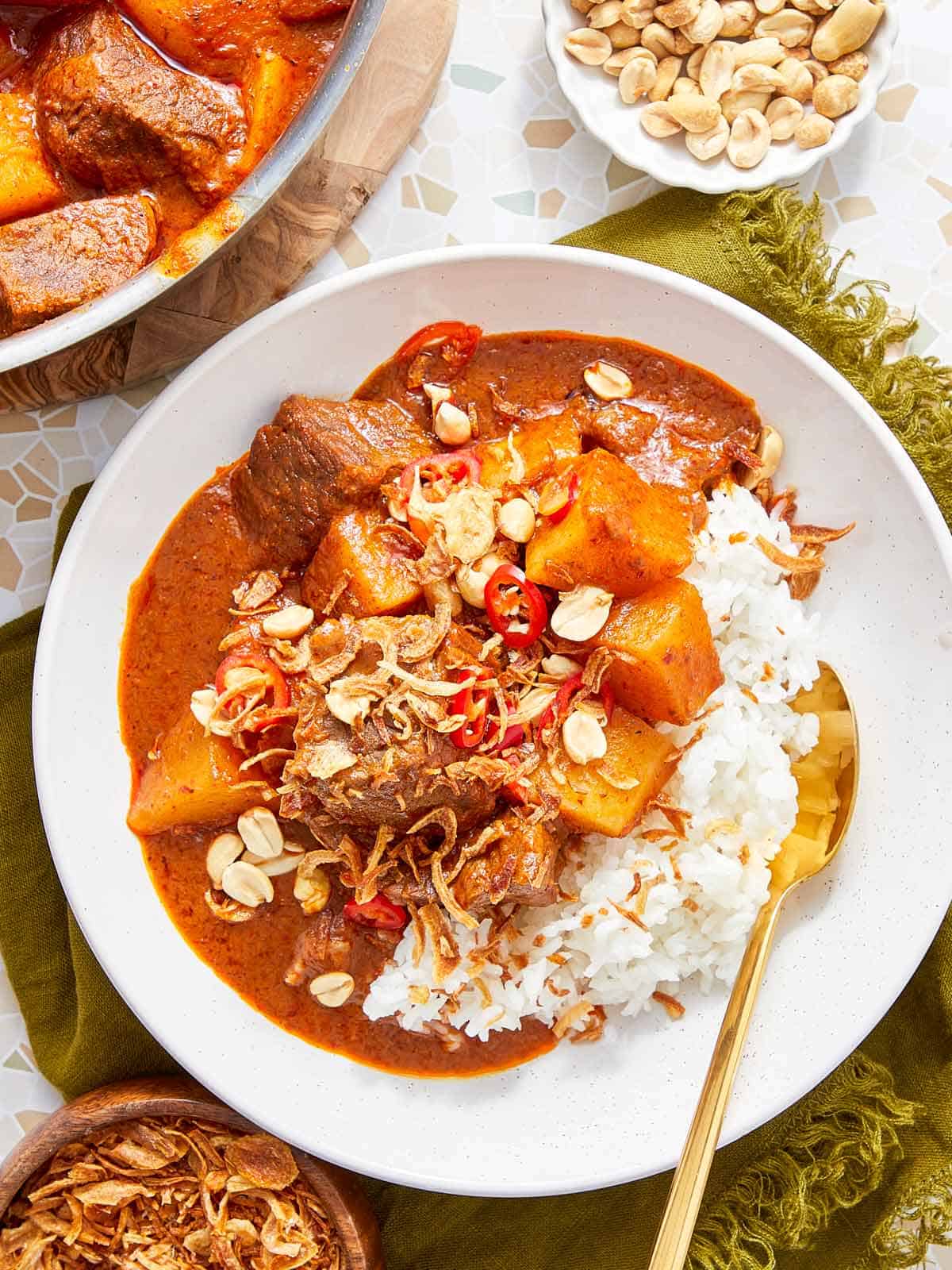
This became one of those dishes we make when we know people will be around for a while. Everyone is eating at different times but dipping into the same pot.
Massaman Beef Curry isn't about spice levels. It's about patience and trust. You let it do its thing, and it gives you a meal that feels finished.
What Makes Massaman Curry Different
What sets Massaman apart for us is how approachable it is for people who usually hesitate with curry. We've made this for family members and coworkers who normally ask “is it spicy?” before even sitting down. This is the curry that makes them relax. No warning needed. They just eat.
Another difference is how predictable it is once you know it. We've cooked this on busy days and on slow days, and it never surprises you in a bad way. The sauce doesn't split, the spices don't turn bitter, and nothing suddenly overpowers the rest. That reliability is huge when you're cooking for other people and don't want to babysit the pot every second.
It also behaves differently compared to curries people order for takeaway. Something like Chicken Tikka Masala is richer right away and demands attention. Massaman doesn't. It sits on the table while conversations keep going. People serve themselves, go back for more, and the pot empties without anyone making a big deal about it.
And unlike lighter curries such as Chicken Green Bean and Butternut Squash Currythis one is meant to be a full meal on its own. We've brought it to casual dinners, reheated it at work, even shared it with friends who showed up late. Which is honestly why we trust this recipe as much as we do.
Ingredients
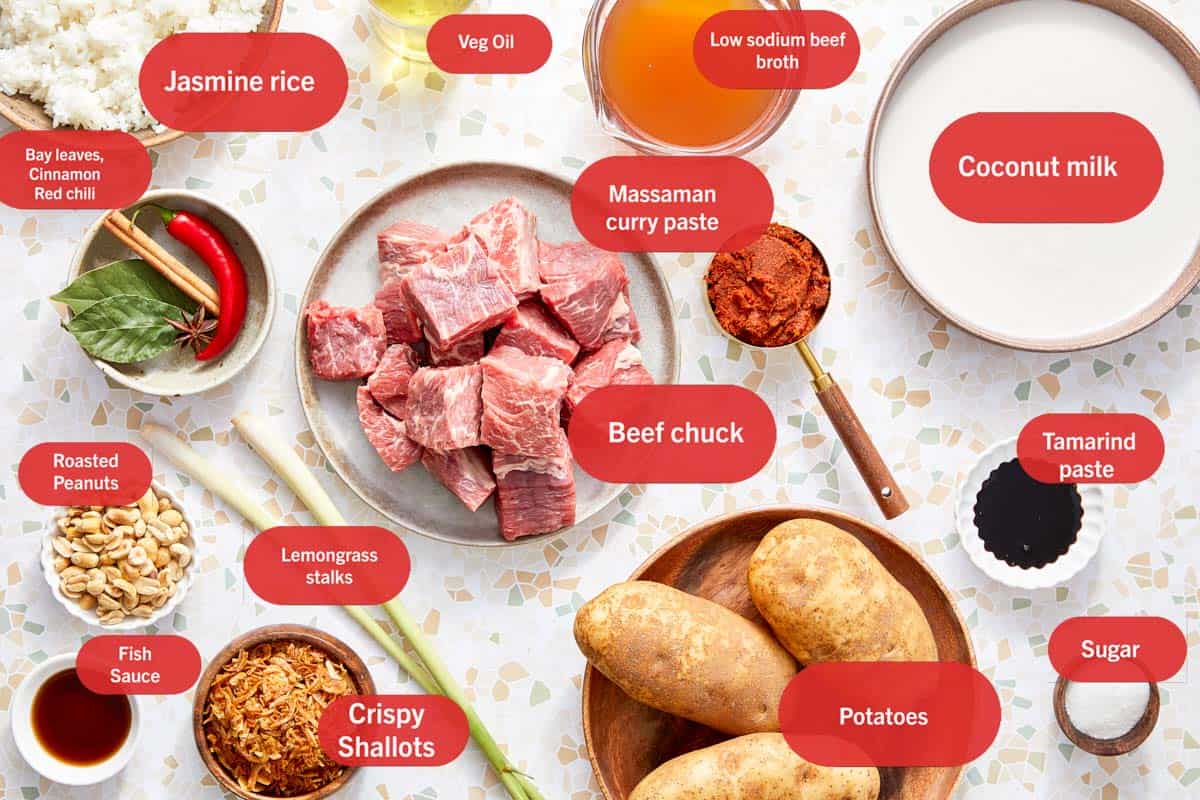
- Beef chuck: This cut earns its place because it survives a long simmer without falling apart or drying out. We've tried leaner cuts when we were in a rush or trying to be “efficient,” and they always end up chewy or bland by the time the sauce is ready. Chuck softens slowly, and that slow breakdown is what gives the curry body. If you're thinking of swapping it, only do so if you're also changing the cooking time. Otherwise, this is the cut that lets you relax and let the pot do the work.
- Massaman curry paste :This isn't about convenience, it's about accuracy. Massaman curry has layers that are hard to fake one spice at a time. The paste already balances warmth, sweetness, and spice, so when you fry it properly at the start, it sets the tone for the entire dish. We've skipped that step before and regretted it. The curry tasted flat, like it never fully woke up. If you want a stronger curry, add more paste, not random extra spices.
- Coconut milk: Full-fat matters here. The sauce needs fat to carry flavor and to smooth out the spice from the curry paste. We've used light coconut milk before and ended up compensating with extra paste, extra simmering, extra everything. It never quite recovers. Coconut milk also protects the beef as it cookskeeping it tender instead of stringy. If you want a thinner sauce, dilute slightly at the end with stock, not by starting with light coconut milk.
- Tamarind paste: This is the ingredient that fixes the “something's missing” moment. Massaman curry is rich by nature, and without acidity it can feel heavy halfway through the bowl. Tamarind adds quiet sharpness without making the curry taste sour. We've tried lime juice and vinegar when we didn't have it, and they stick out too much. Tamarind blends in, which is exactly why it works. Use less than you think at first, then adjust once everything has simmered.
Note: Find the full list of ingredients and measurements in the Recipe Card.
Small swaps and add-ins (that actually make sense)
This curry gives you some flexibility, but it also makes it clear when you push it too far. There are a few adjustments that work, and a few that only exist for those “we're already halfway through cooking” moments.
If you don't have tamarind a small squeeze of lime added right at the end is the only workaround that won't completely throw the dish off. It's not the same, and it won't blend into the sauce the way tamarind does, but used sparingly it can lift the richness enough to finish the bowl. Any more than that and the acidity starts to sit on top instead of becoming part of the curry.
Adding potatoes is one of the smartest ways to stretch the curry when more people show up than planned. They absorb flavor as they cook and make the sauce feel fuller, especially for leftovers the next day. We use this same idea in dishes like Beef Bourguignon and Coq Au Vinwhere the sauce only gets better as everything settles together.
For texture roasted peanuts are worth it. They're not just there to look nice. When everything in the pot is soft, that crunch at the end keeps the curry from feeling heavy. We usually add them right before serving so they don't lose their bite.
When you're adjusting things near the end, having a wide wooden spoon helps. Once the sauce thickens, scraping the bottom as you taste and tweak keeps it from catching and gives you a better sense of the texture you're working with.
On the stove
Short, simple, and so worth it here's the flow from pot to bowl:
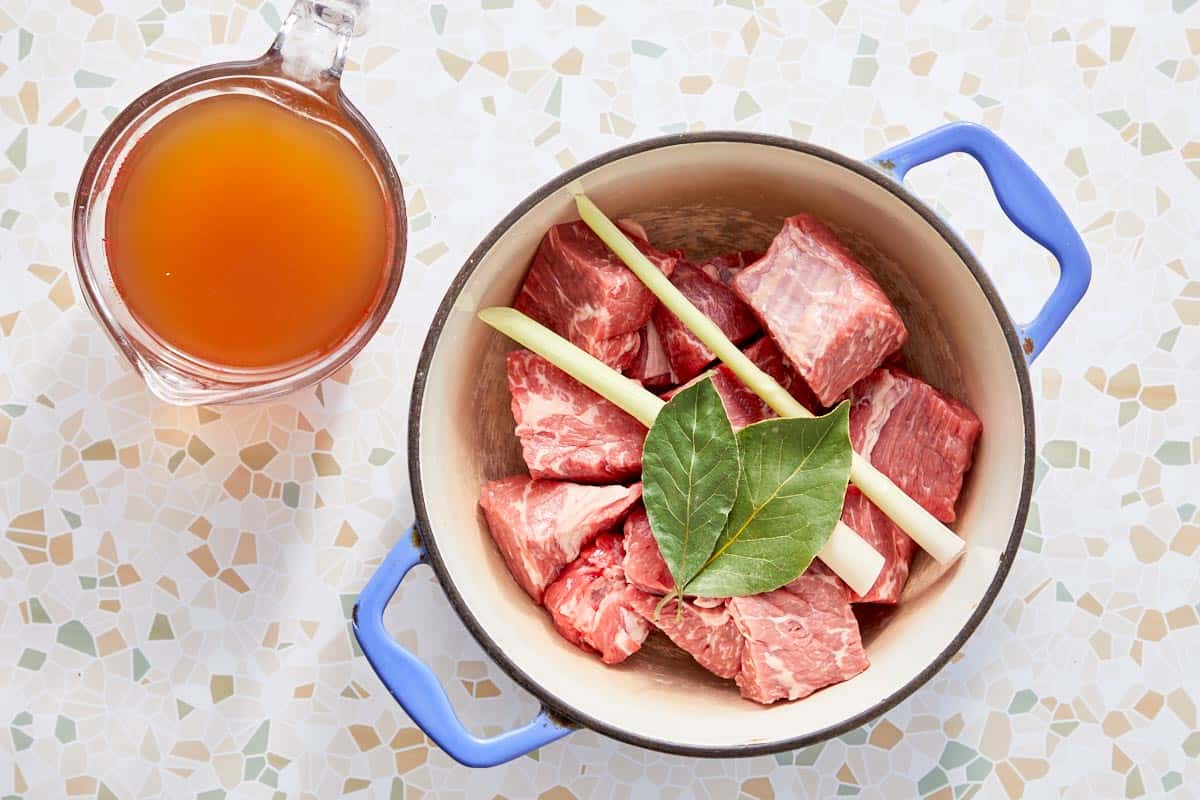
- Cook Beef: Let the beef gently simmer with broth, bay leaves, and lemongrass until it's melt-in-your-mouth tender. Remove it, reduce the broth by half, and toss the aromatics.

- Make Curry: Warm a little oil, cook the curry paste until fragrant, then stir in coconut milk with cinnamon, star anise, and that rich broth.

- Season Sauce: Mix in tamarind, fish sauce, and sugar to balance the flavors.

- Add Potatoes: Drop in the potatoes and let them simmer until almost tender.
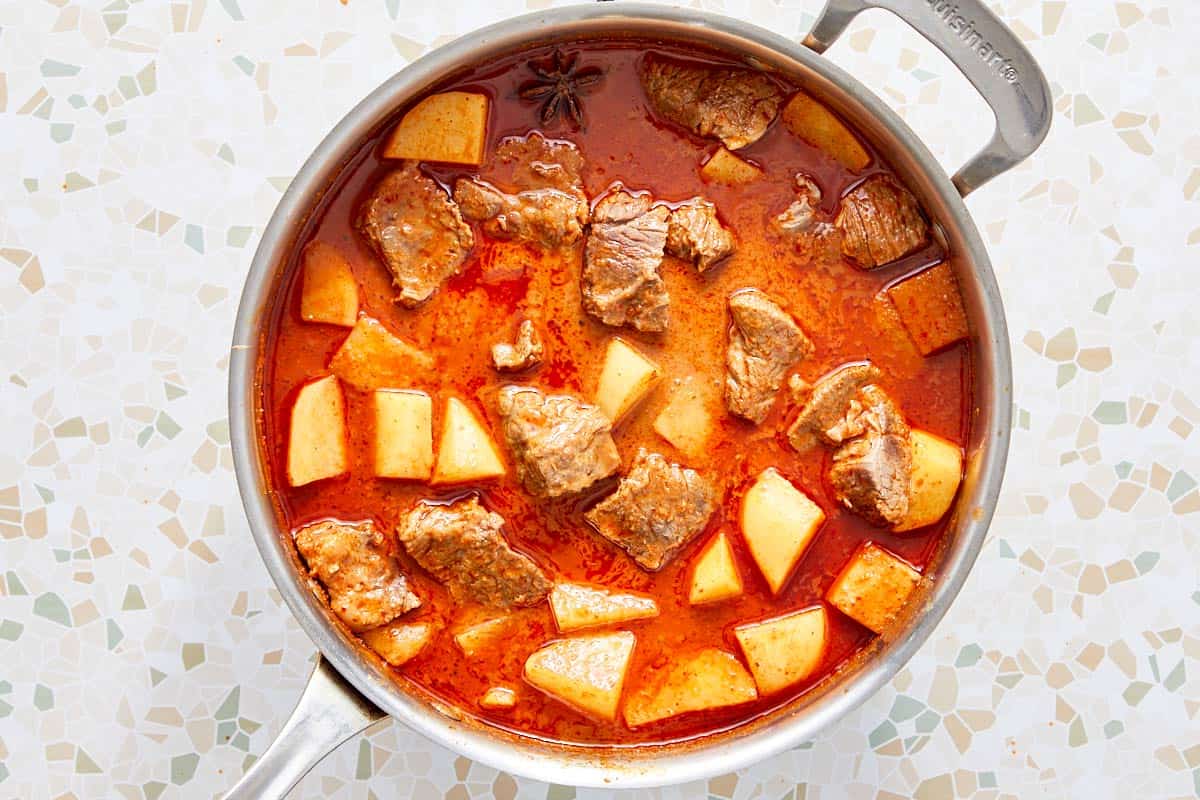
- Add Beef: Return the beef and cook just until everything comes together in a thick, golden sauce.
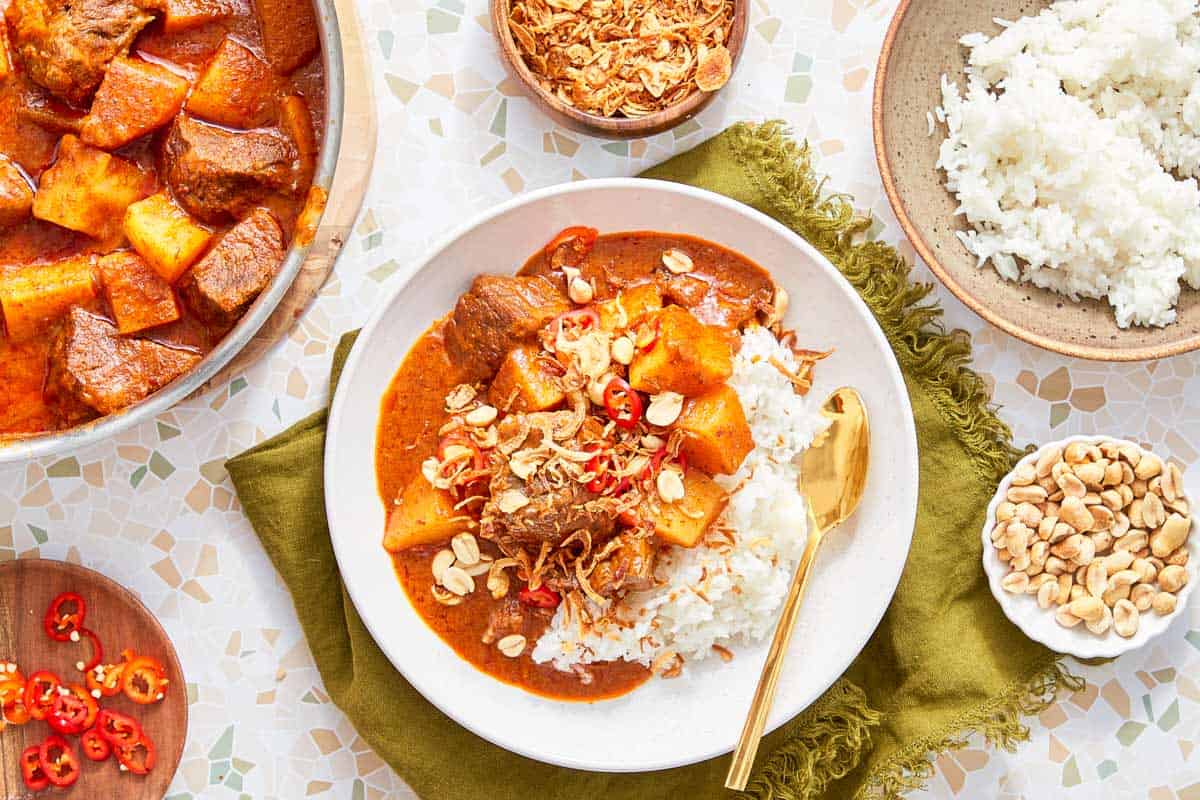
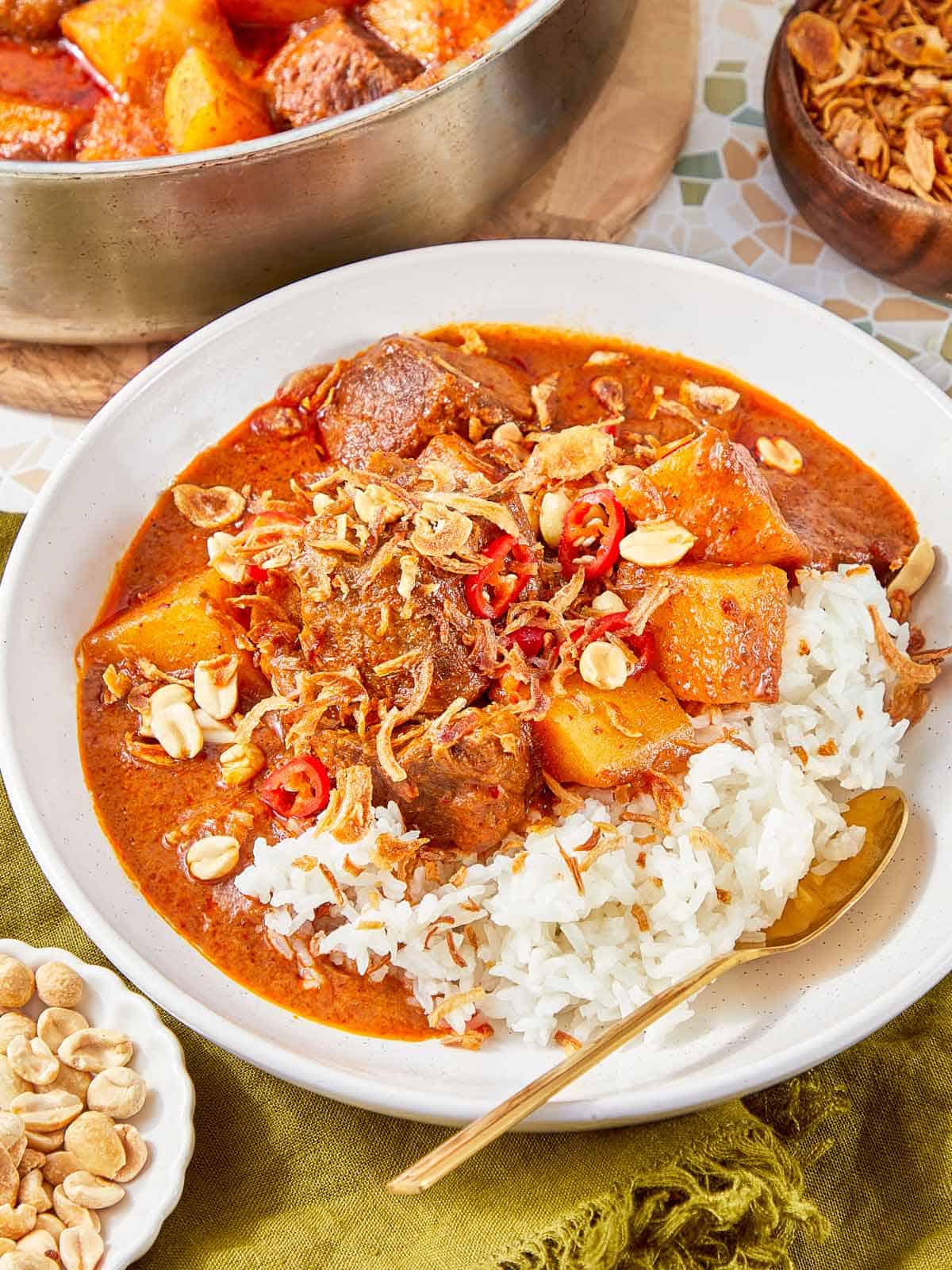
- Finish & Serve: Taste, adjust if needed, and serve hot over jasmine rice with your favorite toppings.
If this Massaman Beef Curry earns a regular spot in your kitchen, there are a few other curries worth adding to the rotation. My Butter Chicken leans rich and creamy, while Coconut Shrimp Curry is a faster option for nights when time is tight but you still want big flavor. And no curry night feels complete without Buttery Garlic Naan Bread on the table to scoop up the sauce. We usually serve this curry over garlic butter rice so nothing goes to waste.
Cook notes
What Cut Of Beef Works Best?Beef chuck is our go-to because it turns tender and juicy after slow cooking. Brisket or short ribs will also work beautifully.
Can we Use Chicken Instead Of Beef?Yes! Chicken thighs work great and will cook much faster, making them an easy weeknight option.
Do we Have To Add Tamarind Paste?It adds that signature tang, but if you can't find it, a squeeze of lime with a touch of brown sugar will give you a similar balance.
See It In Action: Step-By-Step
What you need
- 1.5 lb beef chuck cut into 1.5-inch (4 cm) cubes
- 2 cups low-sodium beef broth
- 2 bay leaves
- 2 lemongrass stalks
- ½ cup massaman curry paste
- ¼ cup vegetable oil
- 14 oz coconut milk 1 can
- 1 cinnamon stick
- 1 star anise
- 1 tsp tamarind paste
- 1 tbsp fish sauce
- 1 tbsp white sugar
- 3 medium potatoes peeled & cubed
- steamed jasmine rice
- 3 tbsp roasted peanuts
- sliced red chili optional
- crispy shallots optional
Method
- Combine beef, broth, bay leaves, and lemongrass in a pot. Bring to boil, then simmer 1.5–2 hrs until tender.
- Remove beef and set aside. Reduce broth to about half, (roughly 10 minutes when boiling). Discard bay leaves and lemongrass.
- Heat oil in a large pan, add curry paste, and cook 3 min until fragrant.
- Stir in coconut milk, cinnamon, star anise, and reserved broth. Simmer 3 min.
- Add tamarind paste, fish sauce, and sugar.
- Add potatoes and simmer 8 min. Return beef and cook 2–3 min until sauce thickens.
- Adjust flavor if needed, thin with water, and serve over rice with peanuts, chilli, and crispy shallots.