
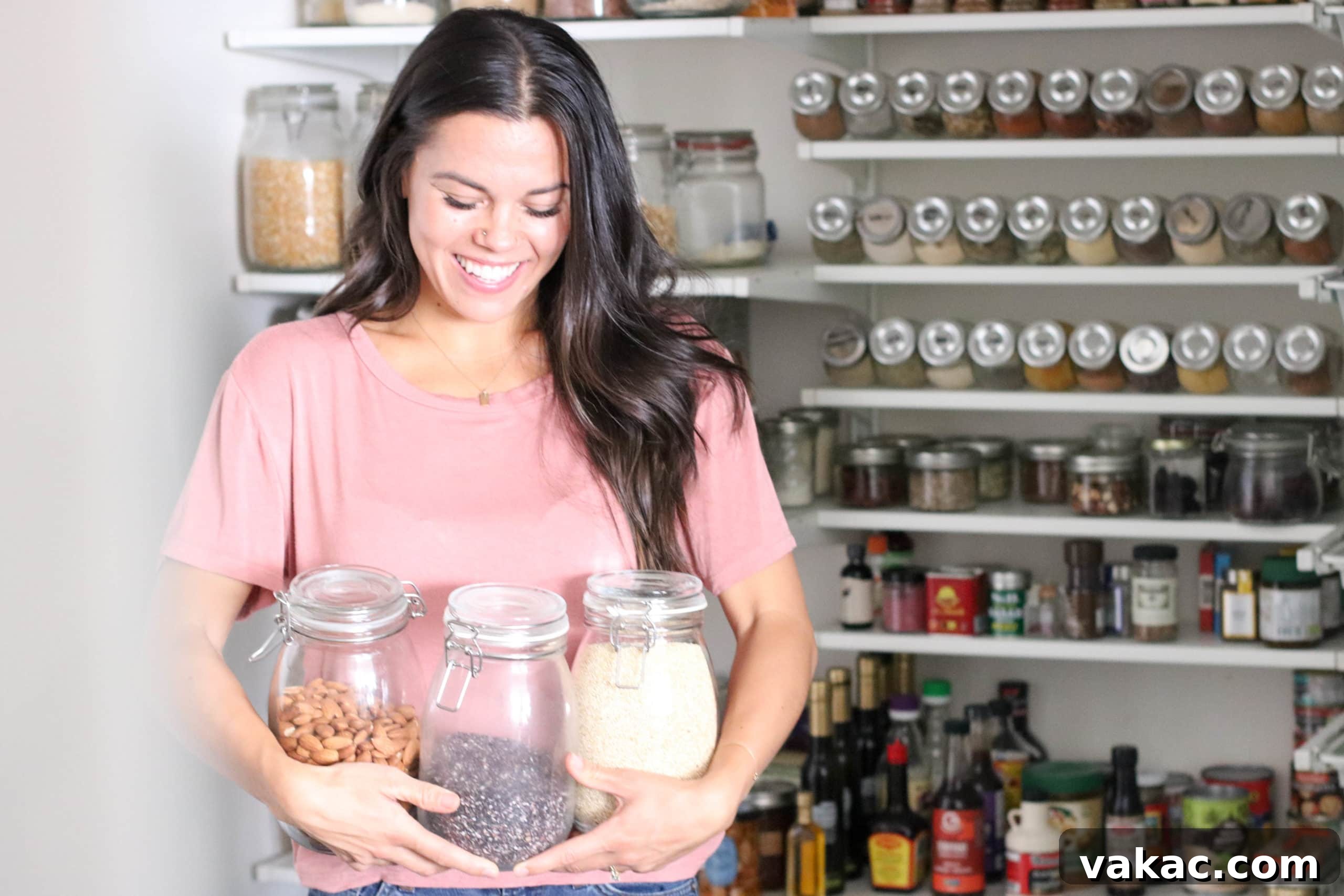
The Ultimate Guide to Stocking Your Healthy Pantry: Essential Staples for Effortless Meals
You’ve asked for it, and here it is: my comprehensive guide to the must-have pantry staples that transform everyday cooking. Imagine a kitchen where healthy, delicious meals come together with minimal effort and no last-minute grocery store dashes. That’s the power of a well-stocked pantry. Keeping a few key essentials on hand isn’t just a convenience; it’s a strategic move that saves you immense time and eliminates the frustration of meal planning roadblocks. With these items readily available, you’ll always have the building blocks to whip up a quick, nutritious meal, freeing up your precious time and energy.
If you prefer a visual tour, click here to watch my pantry walkthrough video. Otherwise, keep reading for a deep dive into my go-to essentials!
My pantry is a reflection of my commitment to healthy eating and efficient meal preparation. While I keep a diverse range of items to ensure options for every craving and occasion, remember that dry and canned goods boast an impressive shelf life, minimizing waste. You certainly don’t need to acquire every single item on this list overnight. I recommend starting with 1-3 essentials from each category that resonate most with your cooking style and dietary needs. From there, you can gradually expand your collection as you discover new recipes and culinary inspirations.
What are your absolute must-have pantry items? Share your secrets and suggestions in the comments below – I’d love to hear from you!
To make your pantry stocking and organizing journey even easier, I’ve created a handy downloadable checklist. This guide includes notes on what I consider core essentials and suggestions for items you can add over time to diversify your meals and culinary experiments.
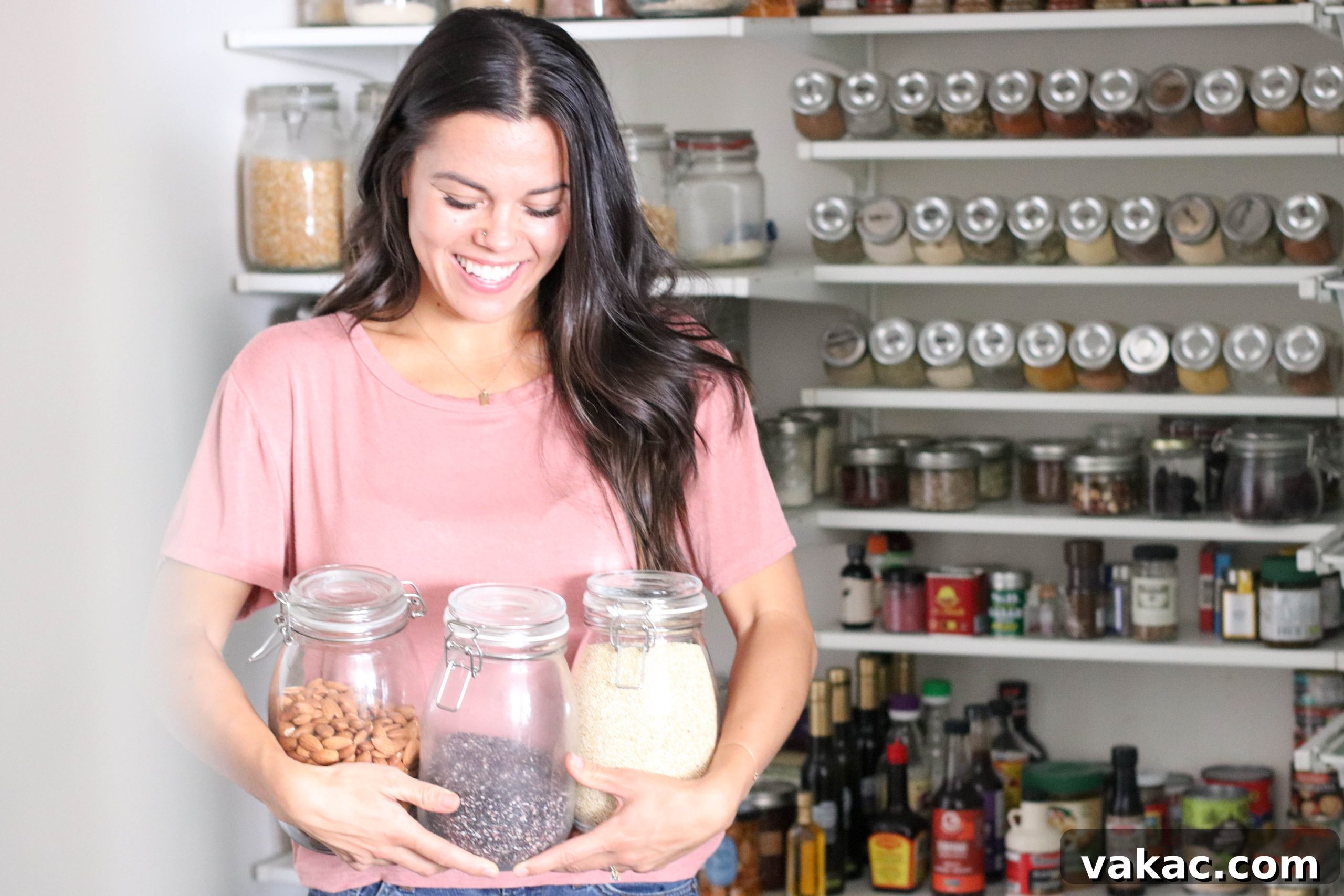
Essential Pantry Categories for Healthy Living
A truly functional pantry is organized by category, making it simple to find what you need and inspiring new meal ideas. Let’s explore the fundamental groups that form the backbone of a healthy kitchen.
Nuts & Seeds: Powerhouses of Nutrition and Texture
Nuts and seeds are miniature nutritional powerhouses, offering a fantastic blend of fiber, protein, and healthy fats. Beyond their impressive nutritional profile, they are indispensable for adding a delightful crunch and rich texture to your meals – a quality I personally find essential for satisfying any dish.
- Almonds: A great source of Vitamin E and magnesium, perfect for snacking, baking, or adding to salads.
- Cashews: Creamy texture, ideal for making dairy-free sauces, stir-fries, or just a quick snack.
- Walnuts: Rich in Omega-3 fatty acids, excellent for brain health. Sprinkle on oatmeal, salads, or use in pesto.
- Pecans: Buttery flavor, fantastic in desserts, savory dishes, or as a crunchy topping.
- Hazelnuts: Distinctive flavor, great for baking, chocolate pairings, or in savory European-inspired dishes.
- Pine Nuts: Essential for pesto, also delicious toasted and sprinkled over pasta or salads.
- Pumpkin Seeds: High in magnesium and zinc, a versatile addition to granola, salads, or roasted vegetables.
- Sunflower Seeds: A budget-friendly source of Vitamin E, great for snacking, bread, or trail mix.
- Sesame Seeds: Adds a nutty flavor and delicate crunch to Asian dishes, bread, or roasted vegetables.
- Flax Seeds: Ground flax seeds are a fantastic source of Omega-3s and fiber, excellent for adding to smoothies, oatmeal, or as an egg substitute in baking.
- Chia Seeds: Incredible source of fiber and Omega-3s, ideal for chia puddings, thickening smoothies, or as an egg replacer.
- Hemp Hearts: Packed with protein and healthy fats, mild nutty flavor, perfect for sprinkling on almost anything.
Tips for Nuts & Seeds: Store in airtight containers in a cool, dark place, or refrigerate/freeze to extend freshness and prevent rancidity, especially for those high in healthy fats like walnuts and flax seeds.
Nut & Seed Butters: Versatility in a Jar
Nut and seed butters offer concentrated nutrition and incredible versatility. They’re not just for sandwiches; they can be the creamy base for sauces, dressings, smoothies, or a quick protein boost.
- Peanut Butter: A classic, rich in protein and healthy fats. Look for natural varieties with minimal ingredients (just peanuts and salt).
- Almond Butter: A popular alternative, offering Vitamin E and a slightly sweeter, milder flavor.
- Cashew Butter: Exceptionally creamy, perfect for making dairy-free sauces or adding richness to smoothies.
- Pumpkin Seed Butter: A great option for those with nut allergies, rich in magnesium and zinc.
- Sun Butter (Sunflower Seed Butter): Another excellent nut-free alternative, widely used for school lunches due to allergy concerns.
- Tahini: Made from ground sesame seeds, essential for hummus, dressings, and savory Middle Eastern cuisine.
Tips for Nut & Seed Butters: Stir well upon opening, especially natural varieties where oil separation is common. Store in a cool, dark pantry or refrigerator after opening.
Whole Grains: The Foundation of Sustained Energy
Beyond the standard rice and quinoa, the world of whole grains offers an exciting array of textures and flavors. These complex carbohydrates provide sustained energy, essential fiber for digestive health, and a host of vitamins and minerals. Don’t be afraid to experiment!
- Barley: Chewy and hearty, great for soups, stews, or as a side dish.
- Couscous: Quick-cooking and light, perfect for salads or as a base for stews.
- Kamut: An ancient grain with a slightly sweet, nutty flavor and firm texture, excellent in grain bowls.
- Millet: Naturally gluten-free, fluffy when cooked, versatile for breakfast porridges or savory pilafs.
- Oats: A breakfast staple, rich in soluble fiber. Use for oatmeal, granola, baking, or as a binder.
- Pasta: A universal favorite, choose whole wheat or legume-based options for added fiber and protein.
- Quinoa: A complete protein and gluten-free, a super versatile grain for salads, side dishes, or breakfast.
- Rice: From brown rice for whole-grain goodness to basmati or jasmine for aromatic appeal, a kitchen essential.
- Spelt: An ancient wheat with a nutty flavor, good for baking or as a side dish.
- Wheatberries: Chewy and nutritious, excellent in salads or as a hearty addition to soups.
Tips for Whole Grains: Elevate their flavor by toasting them lightly in a dry pan before cooking, or replace plain water with vegetable or chicken stock for a richer taste. Coconut milk can also add a delightful creamy dimension to grains like rice.
Spices: The Soul of Your Cooking
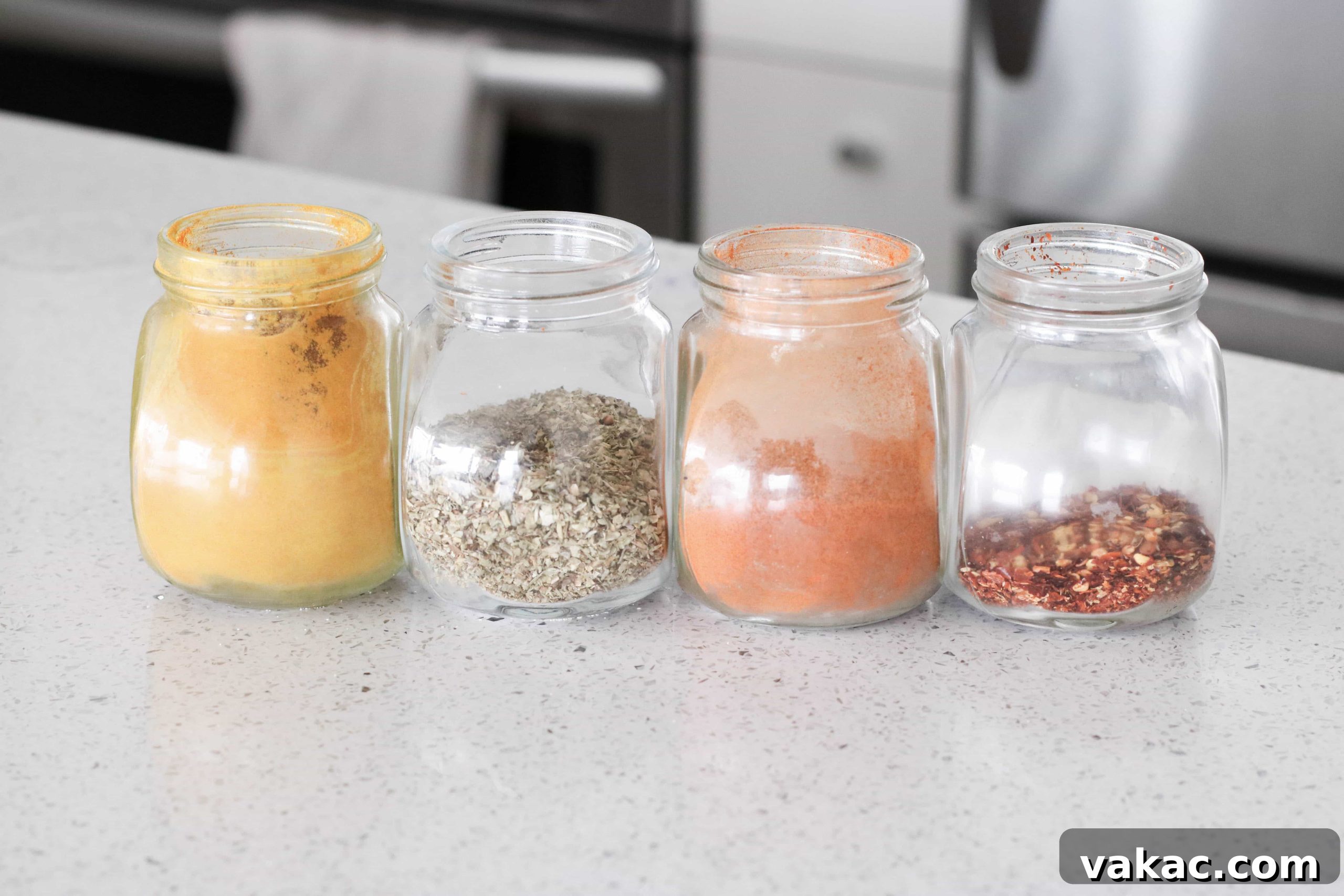
You know my love for spices! They’re not just about adding incredible flavor; many boast significant nutritional benefits, from antioxidant properties to anti-inflammatory compounds, all with little to no extra prep time. A well-stocked spice rack is the secret to transforming simple ingredients into gourmet meals.
- Black Pepper: The universal seasoning, fresh ground is always best.
- Chili Flakes: Adds a touch of heat to pizzas, pasta, or stir-fries.
- Chili Powder: A blend of spices perfect for Mexican-inspired dishes, stews, and rubs.
- Cinnamon: Sweet and warming, great for baking, oatmeal, or even savory dishes like curries.
- Cumin: Earthy and warm, essential for Indian, Mexican, and Middle Eastern cuisine.
- Garlic Powder: Provides garlic flavor without the chopping, useful for rubs, marinades, and seasoning.
- Italian Spice Blend: A convenient mix of herbs like oregano, basil, thyme, and rosemary, perfect for Italian dishes.
- Onion Powder: Similar to garlic powder, adds an umami depth to countless recipes.
- Paprika: Adds color and a sweet or smoky flavor, depending on the variety (sweet, smoked, hot).
- Salt: The most fundamental seasoning, enhancing all other flavors. Keep both fine and coarse varieties.
- Turmeric: Renowned for its anti-inflammatory properties, adds earthy flavor and vibrant color to curries and rice dishes.
Tips for Spices: Store spices in a cool, dark place away from direct sunlight and heat to preserve their potency. Consider buying whole spices and grinding them fresh for the most vibrant flavors.
Stocks & Broths: Building Blocks for Flavor
Stocks and broths are unsung heroes in the kitchen, providing a rich, savory foundation for countless dishes. They’re excellent for adding depth to soups and stews, and I particularly love using them to cook grains, which can dramatically enhance flavor and convert even the most dedicated white rice lovers to brown rice or quinoa!
- Beef Stock: Robust and savory, perfect for heartier stews, gravies, and French onion soup.
- Chicken Stock: A versatile all-rounder, ideal for nearly any soup, sauce, or to cook grains and vegetables.
- Vegetable Stock: A plant-based essential, great for vegetarian dishes, risottos, and lighter soups.
Tips for Stocks & Broths: Opt for low-sodium versions to control the salt content in your dishes. For an extra boost of nutrition and flavor, consider making your own bone broth or vegetable stock.
Canned Goods: Convenience and Nutrition on Demand
Canned foods are the ultimate quick and easy solution to complete a meal, offering both convenience and nutrition. Their long shelf life makes them ideal pantry staples, ensuring you always have ingredients on hand for last-minute meal creations. They are an economical way to add protein, fiber, and vegetables to any dish.
- Beans (e.g., Black Beans, Kidney Beans): Excellent plant-based protein and fiber source for chilis, tacos, salads, or side dishes.
- Coconut Milk: Creamy and dairy-free, essential for curries, soups, smoothies, and rich sauces.
- Corn: Adds sweetness and a pop of color to salads, salsas, stir-fries, or rice dishes.
- Chickpeas: Versatile for hummus, roasted snacks, curries, or added to salads and stews for protein.
- Lentils: Quick-cooking and highly nutritious, perfect for soups, stews, and vegetarian burgers.
- Tomatoes (Diced, Crushed, Whole): The foundation for countless sauces, soups, stews, and casseroles.
- Tomato Paste: Concentrated tomato flavor, perfect for deepening the richness of sauces and braises.
- Tomato Sauce: A ready-to-use base for pasta sauces, pizza, or as a lighter alternative to crushed tomatoes.
Tips for Canned Goods: Always rinse canned beans and lentils thoroughly under cold water to remove excess sodium and improve digestibility.
Dried Goods: Economical and Flavorful Staples
Dried goods, particularly legumes and fruits, are fantastic for budget-conscious cooking and often offer a superior texture and flavor compared to their canned counterparts. While dried legumes require a bit more preparation time, the effort is well worth it, and they can be cooked in large batches for future use.
- Beans (e.g., Black Beans, Pinto Beans): Economical, soak and cook them for the best texture and control over sodium.
- Chickpeas: Perfect for homemade hummus or falafel, offering a fresher taste than canned.
- Lentils (Green, Brown, Red): Red lentils cook quickly without soaking, while green and brown varieties hold their shape well in salads and stews.
- Dried Fruit (e.g., Raisins, Apricots, Dates): Natural sweeteners and chewy additions to oatmeal, trail mix, baking, or as healthy snacks.
Tips for Dried Goods: For dried legumes, plan ahead! Most require soaking overnight before cooking. Cook them in large quantities and freeze portions for quick meal prep throughout the week.
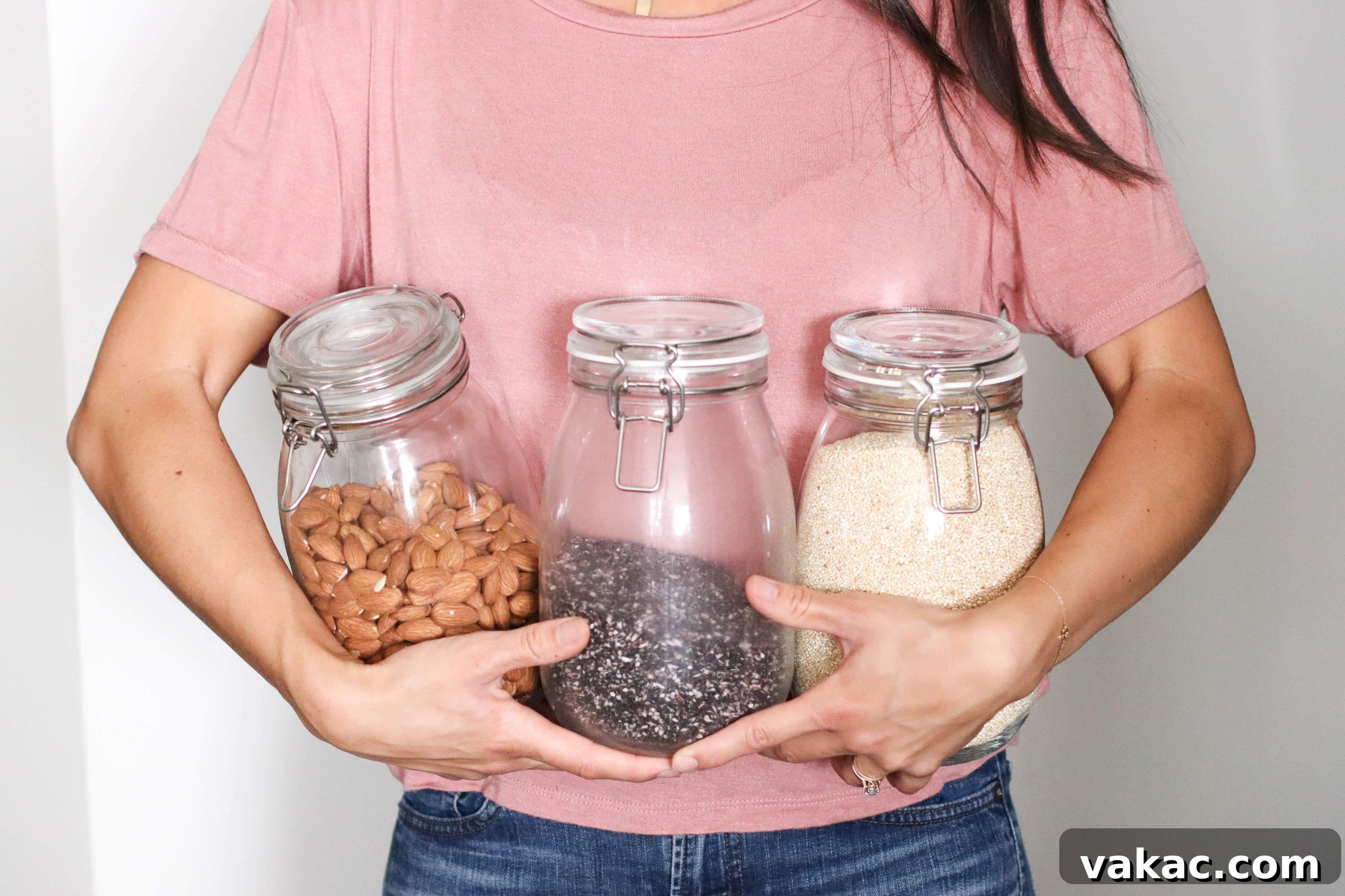
Elevate Your Cooking with a Thoughtfully Stocked Pantry
There you have it – a comprehensive peek into how a well-stocked pantry can transform your culinary experience! This strategic approach truly takes a lot of the stress out of daily cooking and meal planning, empowering you to create delicious, healthy meals effortlessly. I sincerely hope these insights prove incredibly handy for you on your journey to a more organized and efficient kitchen.
Don’t forget to grab your downloadable pantry checklist below to kickstart your pantry makeover!
I would absolutely love to see your newly organized and stocked pantry! Share your photos on Instagram and tag me @lindsaypleskot. If you’d like me to take a look and offer any personalized recommendations, just let me know, and I’ll be happy to provide some guidance!
Happy Organizing and Happy Cooking! 😉
Xo Linds
LIKE THIS GUIDE? SHARE IT WITH SOMEONE YOU KNOW WILL LOVE IT TOO!