

Welcome to the ultimate guide for baking the most irresistibly soft gingerbread cookies you’ll ever taste! Forget dry, crispy, or overly spicy versions – our recipe champions a pillowy-soft interior with delightfully chewy edges, all infused with a perfectly balanced blend of warming holiday spices. These aren’t just cookies; they’re edible embodiments of festive cheer, destined to become a cherished part of your holiday baking traditions. Whether you prefer them elegantly iced with intricate designs, simply dusted with powdered sugar, or enjoyed plain with a cup of hot cocoa, these homemade gingerbread cutout cookies are a guaranteed crowd-pleaser for every gathering.
There’s a special magic in gingerbread, a scent that instantly transports you to cozy winter evenings and joyful celebrations. Our recipe elevates this classic by focusing on texture and nuanced flavor, ensuring each bite is a moment of pure comfort. This is a straightforward, easy-to-follow recipe, suitable for bakers of all skill levels. We’ve included plenty of tips and tricks, including how to achieve that perfect soft texture and a baking time range to accommodate various cookie cutter sizes, minimizing any guesswork. Get ready to fill your home with the sweet aroma of ginger, cinnamon, and molasses!

My ideal gingerbread cookie is tender in the center and subtly chewy around its perimeter, offering a warm spice profile that’s vibrant but never overwhelming. This recipe delivers exactly that – a harmonious blend of sweetness and spice in a melt-in-your-mouth cookie. It’s versatile enough for any cookie cutter you fancy, from classic gingerbread men and women to festive stars, trees, or snowflakes. The beauty of these cookies lies in their adaptability, allowing you to customize their decoration to match your holiday spirit, whether it’s a simple glaze or an elaborate royal icing masterpiece. Prepare to create edible art that tastes as good as it looks!
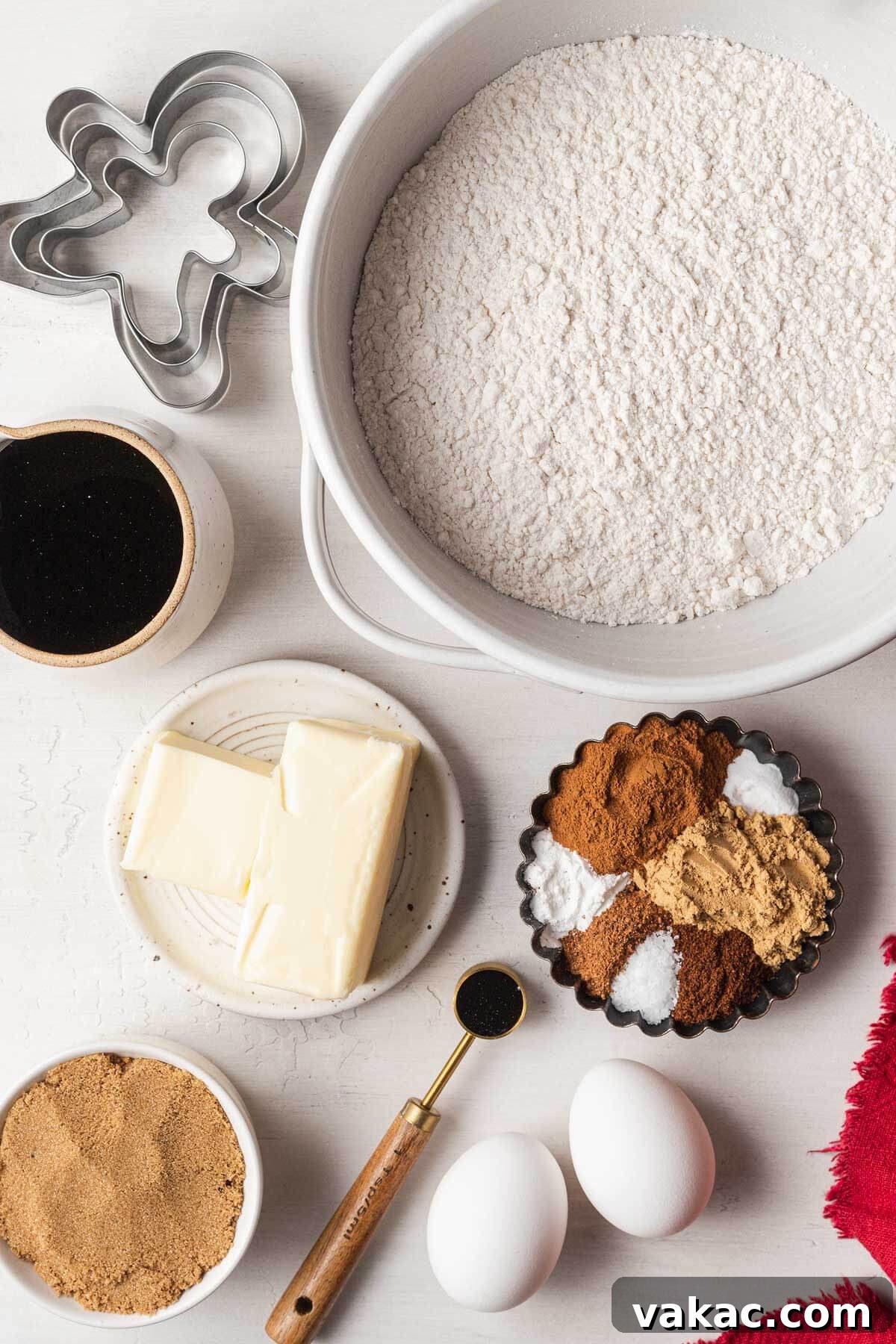
Essential Ingredients for Soft Gingerbread Cookies
Crafting these perfectly soft gingerbread cookies begins with a selection of common pantry staples, transformed into something truly special. While I adore decorating mine with a delicate icing, these cookies are equally delightful served plain, allowing their rich, spiced flavor to shine. Here’s a closer look at the key ingredients you’ll need to achieve that coveted pillowy-soft texture:
- All-Purpose Flour: The structural backbone of our cookies, all-purpose flour helps create their tender crumb. This recipe calls for 4 cups of flour, which typically yields around 30 to 32 standard-sized cookies. Precision in measuring flour is crucial for achieving the perfect texture; always spoon the flour into your measuring cup and then level it off with a straight edge. Avoid scooping directly from the bag, as this can compact the flour and lead to a denser, drier cookie.
- Baking Powder & Baking Soda: This dynamic duo is responsible for the cookies’ signature soft rise and delicate texture. Baking powder contributes to a fluffy interior, while baking soda reacts with the molasses and brown sugar to ensure an even lift and a wonderfully tender chewiness, preventing a flat or overly dense result.
- Warming Spices: The heart and soul of gingerbread, our spice blend features generous amounts of ground cinnamon (1 ½ tablespoons), ground ginger (1 tablespoon), ground cloves, and ground nutmeg. These aren’t typos! The higher spice content is intentionally designed to infuse the substantial amount of flour with deep, complex, and incredibly aromatic flavor that truly stands out. Each spice plays a vital role in creating that classic gingerbread warmth, making these cookies profoundly aromatic and flavorful.
- Unsalted Butter: Softened to room temperature, butter is essential for achieving a smooth, creamy dough and contributing to the cookies’ rich flavor and tender texture. It’s important for the butter to be properly softened (but not melted) so it can cream easily with the sugar, creating air pockets that lead to a light and fluffy cookie. Take it out of the fridge about an hour before you plan to start baking.
- Brown Sugar: This recipe welcomes either light or dark brown sugar, both of which add moisture and a lovely caramel-like depth to the cookies. The molasses content in brown sugar contributes to the cookies’ softness and chewiness. If you find yourself without brown sugar, you can easily create a homemade substitute in just minutes.
- Molasses: A star ingredient in gingerbread, unsulphured molasses is indispensable for its unique rich, earthy sweetness, distinctive flavor, and the gorgeous dark hue it imparts. It also plays a key role in keeping these cookies wonderfully soft and moist, preventing them from drying out during baking. (Note: Blackstrap molasses is too bitter for this recipe; stick to regular unsulphured molasses for the best results.)
- Egg & Extra Egg Yolk: A large room-temperature egg acts as a binder, holding the dough together, while an additional large egg yolk is the secret weapon for an extra boost of tenderness and richness. The fat from the yolk contributes significantly to the cookies’ pillowy texture. Ensure both the egg and egg yolk are at room temperature to blend seamlessly into the dough.
- Pure Vanilla Extract: Two teaspoons of high-quality vanilla extract beautifully enhance and complement the warming spices, adding a layer of sweet, aromatic depth that rounds out the overall flavor profile of the gingerbread.
Crafting Your Perfectly Soft Gingerbread Cookies
Creating these delightful gingerbread cookies is a joyous and relatively simple process, though it does require a crucial chilling period for the dough. This step is non-negotiable for success, as it prevents the cookies from spreading excessively in the oven and helps them retain their beautifully soft and chewy texture. Let’s walk through the steps to bake your best batch yet:
- Prepare Your Dry Ingredients: In a large mixing bowl, combine the all-purpose flour, baking powder, baking soda, ground cinnamon, ground ginger, ground cloves, ground nutmeg, and salt. Whisk them thoroughly to ensure all the leavening agents and spices are evenly distributed. This prevents pockets of unmixed ingredients and guarantees consistent flavor throughout your cookies. Set this mixture aside.
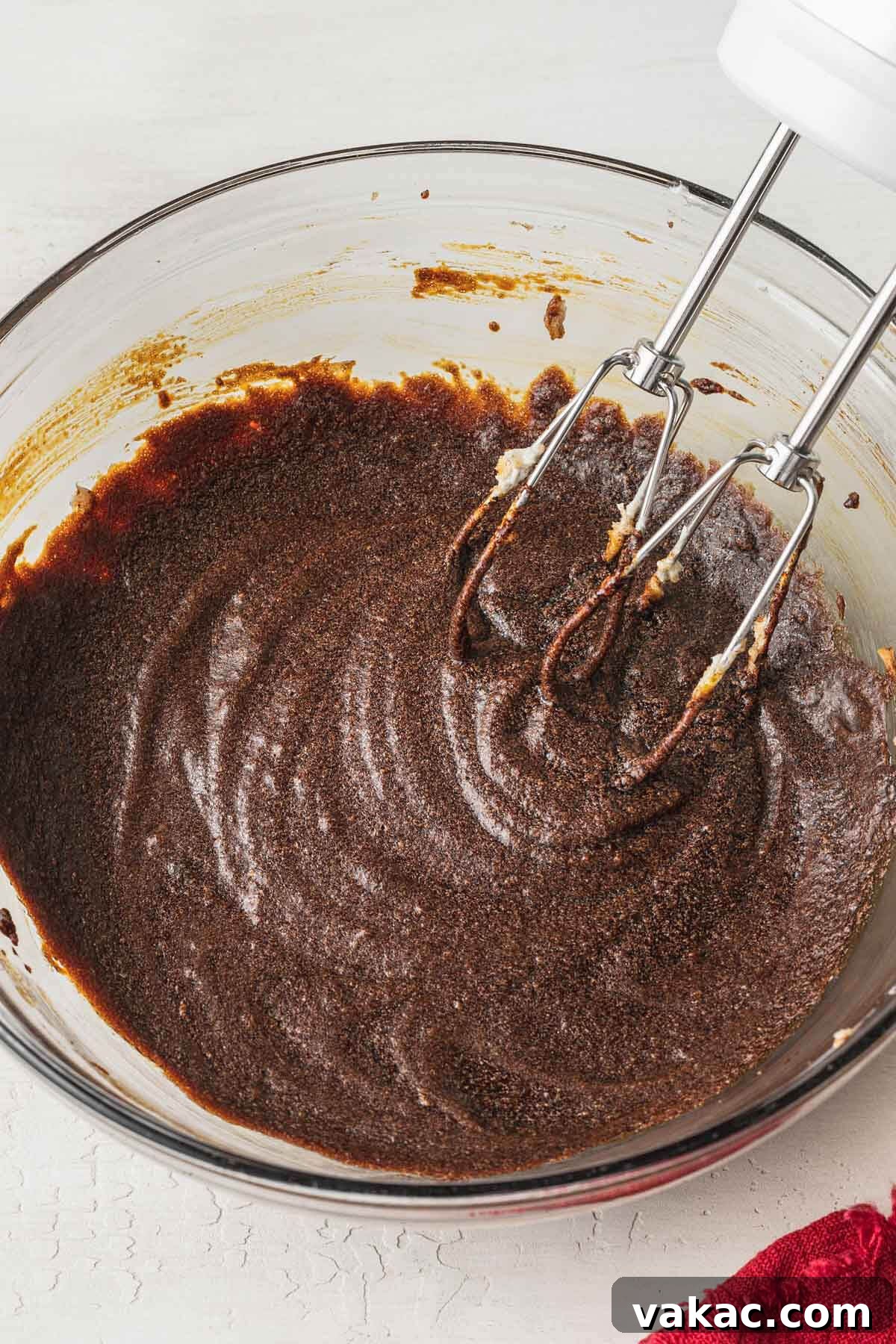
- Cream the Wet Ingredients: Using a stand mixer fitted with the paddle attachment, or a reliable handheld mixer, begin by beating the softened unsalted butter until it’s wonderfully smooth and creamy. Next, add the brown sugar to the butter and continue to beat for another 1 to 2 minutes. This creaming process incorporates air, which is vital for a light cookie. Then, incorporate the rich unsulphured molasses, the large egg, the extra egg yolk, and the pure vanilla extract. Mix until all these wet ingredients are fully combined. Don’t be alarmed if the mixture appears slightly curdled at this stage; this is perfectly normal due to the varying liquid densities. Remember to pause and scrape down the sides of the bowl with a spatula to ensure everything is evenly incorporated.
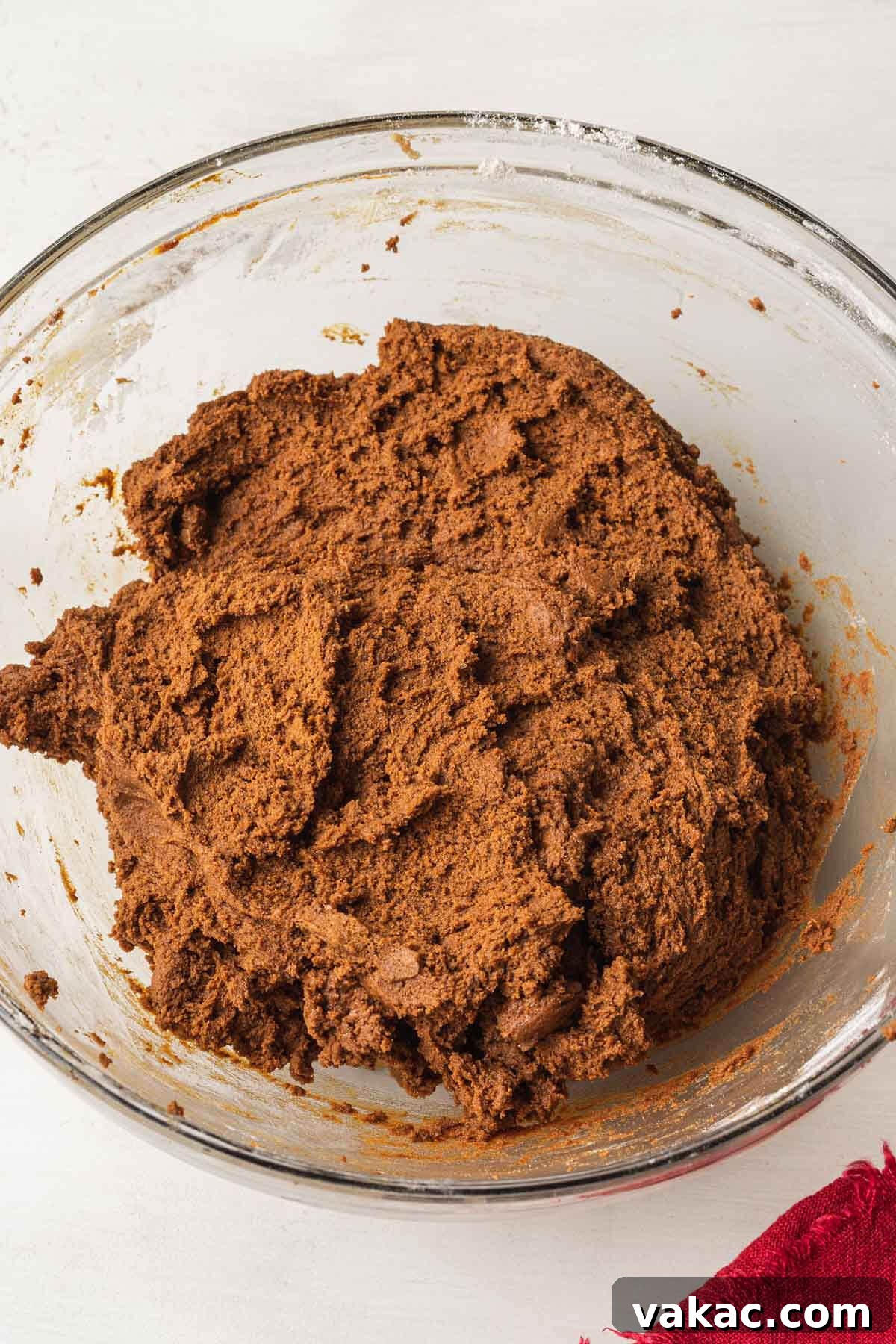
- Gradually Combine Wet and Dry: With your mixer on low speed, gradually add the dry ingredient mixture to the wet ingredients. I recommend adding the dry ingredients in two separate batches. This technique helps prevent overworking the dough, which can develop the gluten too much and result in tough, rather than soft, cookies. Mix only until the flour streaks have just disappeared and a cohesive dough forms.
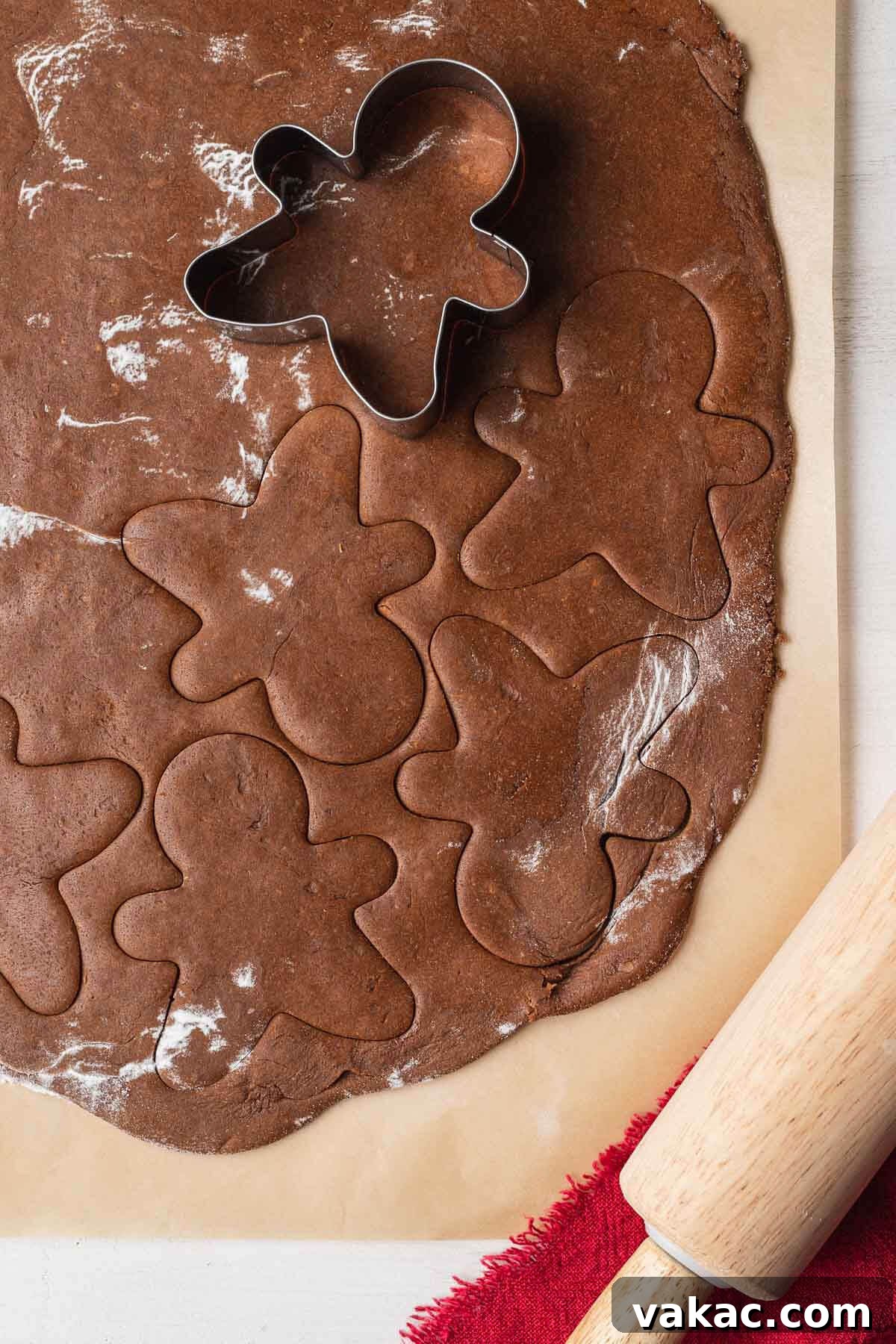
- Roll Out the Dough with Ease: Divide your prepared gingerbread dough in half. Take one half and place it onto a large piece of parchment paper that has been lightly dusted with flour. Flatten the dough slightly with the palm of your hand, then sprinkle a bit more flour over the top. Cover this with another large piece of parchment paper. The dough can be a little sticky, so don’t hesitate to use extra flour as needed to prevent sticking to the parchment or your rolling pin. Using a rolling pin, roll the dough evenly to about ¼-inch thick between the two layers of parchment paper. This method makes rolling much cleaner and easier. Repeat this process with the second half of the dough.
- The Essential Chill Time: Carefully transfer both rolled-out sheets of dough (still between their parchment layers) onto a baking tray. Refrigerate for a minimum of 2 hours. This crucial chilling period allows the butter in the dough to firm up completely, which is key to preventing your cookies from spreading too much during baking and helps them maintain their defined shapes and tender texture. Skipping this step often leads to misshapen, thin cookies.
- Cut Out Your Festive Shapes: Once the dough is thoroughly chilled, remove it from the refrigerator. Peel off the top layer of parchment paper from each sheet. Now, unleash your creativity! Use your preferred cookie cutters to cut out your gingerbread shapes. Carefully place the cut-out cookies about 2 inches apart on baking sheets lined with fresh parchment paper. Don’t let any dough go to waste; gather any scraps, gently re-roll them (dusting with flour as needed), and cut out additional cookies until all the dough is used.

- Bake to Perfection: Preheat your oven to 350°F (180°C). Carefully transfer your baking sheets into the preheated oven. The baking time will vary depending on the size and thickness of your cookies, typically ranging from 8 to 12 minutes. For a softer cookie, I generally aim for about 9 minutes. You’ll know they’re ready when the edges are set and lightly golden, and the centers appear firm to the touch. Avoid overbaking, as this is the primary culprit behind dry, hard gingerbread.
- Cool Completely: Once baked, remove the cookies from the oven and let them cool on the baking sheets for about 5 minutes. This allows them to firm up slightly before you move them. Then, gently transfer the cookies to a wire rack to cool completely. Ensure they are fully cooled before attempting to decorate them.
- Decorate with Joy: The fun truly begins once the cookies are cool! I love piping my favorite easy sugar cookie icing to create charming gingerbread people with smiles, buttons, and decorative accents. You can also use royal icing for more intricate designs, or simply dust them with powdered sugar for an elegant finish.

Frequently Asked Questions About Gingerbread Cookies
Which type of molasses is best for gingerbread cookies?
For these soft and flavorful gingerbread cookies, I strongly recommend using a regular unsulphured molasses. Brands like Grandma’s molasses are excellent choices due to their balanced sweetness and rich, classic flavor. It’s crucial to avoid blackstrap molasses, which is significantly more bitter and intense, and will overpower the delicate balance of flavors in this recipe, resulting in an unpleasant taste.
How long will these soft gingerbread cookies stay fresh?
When stored properly in an airtight container at room temperature, your soft gingerbread cookies, even those beautifully adorned with icing, will retain their freshness and delightful texture for up to one week. To maximize their shelf life and maintain optimal softness, ensure the container is truly airtight.
Can I freeze these gingerbread cookies, either baked or as dough?
Absolutely! These gingerbread cookies are excellent for freezing, making them perfect for holiday meal prep or enjoying throughout the season.
Freezing Baked Cookies: Once the cookies have fully cooled (and if iced, ensure the icing has completely hardened), you can freeze them for 2 to 3 months. For best results, layer them between sheets of parchment paper in an airtight container or freezer bag. Thaw them at room temperature before serving.
Freezing Cookie Dough: The raw cookie dough also freezes exceptionally well. Divide the dough in half, flatten each portion into a disk, and wrap each disk tightly in several layers of plastic wrap. The dough can be frozen for up to three months. To use, simply transfer the wrapped dough to the refrigerator overnight to thaw. If it’s still too firm to roll, let it sit at room temperature for 20-30 minutes. Once rolled, remember to chill the cut-out shapes on the baking sheet for 1 to 2 hours before baking to prevent spreading.
Why did my gingerbread cookies spread too much in the oven?
Cookie spreading is a common issue, and for gingerbread, it’s most often due to the butter in the dough being too warm. If your dough feels soft or sticky after you’ve rolled and cut out your shapes, it’s a clear indicator that the butter has softened too much. To remedy this, simply place the cut-out cookies on their baking sheets back into the refrigerator for an additional 20 to 30 minutes before baking. This will firm up the butter, allowing the cookies to hold their shape beautifully in the oven. Additionally, ensure your oven temperature is accurate; an oven that’s too cool can also contribute to spreading.
Can I make the gingerbread dough ahead of time?
Yes, absolutely! Making the dough ahead of time is a fantastic way to streamline your holiday baking. You can prepare the dough as directed and then wrap the two flattened disks tightly in plastic wrap. Store them in the refrigerator for up to 2-3 days. This extended chill time can actually enhance the flavors of the spices, making your cookies even more delicious. When you’re ready to bake, simply remove the dough from the fridge and follow the rolling, cutting, and baking instructions.

Expert Baking Tips for Perfect Gingerbread Cookies
- Cookie Cutter Size Matters: For this recipe, I used a gingerbread cookie cutter measuring 3.5 inches long and 2.75 inches across, and found that baking them for 9 minutes yielded the ideal soft texture. If you opt for smaller cookies, reduce the baking time by a minute or two; for larger cookies, you may need to add a minute or two. Always watch for the tops to set and edges to be lightly golden.
- Don’t Skimp on the Spices: This recipe intentionally calls for a generous 1 ½ tablespoons of ground cinnamon and a full tablespoon of ground ginger, along with cloves and nutmeg. This isn’t a mistake! Four cups of flour require a robust amount of spice to ensure the gingerbread flavor truly shines through and isn’t lost. These quantities create a beautifully aromatic and perfectly spiced cookie.
- Flour Your Workspace Liberally: Gingerbread dough can be a bit sticky, especially when rolling it out. Don’t be shy with the flour! Lightly dust your parchment paper, the top of the dough, and your rolling pin to prevent sticking. A little extra flour during rolling won’t negatively impact the final cookie texture, but a sticky mess will make the process frustrating.
- Easy Cookie Transfer Trick: If you’re struggling to transfer delicate cut-out cookies from your workspace to the baking sheet, here’s a helpful trick: lightly flour a thin, flat spatula. Gently slide it under the cut-out cookie, and it should lift off easily for a smooth transfer to your parchment-lined baking sheet.
- Bake Ahead for Easy Decorating: Gingerbread cutout cookies store exceptionally well at room temperature. This makes them an excellent candidate for make-ahead holiday baking. Consider baking your batches a day or two before you plan to decorate them. This allows you to spread out the work and enjoy the decorating process without feeling rushed.
- Uniform Thickness is Key: When rolling out your dough, strive for a consistent ¼-inch thickness. This ensures that all your cookies bake evenly. Cookies of varying thickness will bake at different rates, leading to some being perfectly done while others might be underbaked or overbaked.
- Room Temperature Ingredients: Beyond just the butter and eggs, ensure your molasses is also at room temperature. This allows all the wet ingredients to emulsify properly, creating a smooth, homogenous dough that bakes more consistently.
- Don’t Overmix: Once you add the dry ingredients to the wet, mix only until just combined. Overmixing develops gluten, which can lead to tough, dry cookies. Stop as soon as no dry streaks of flour are visible.
More Classic Christmas Cookies to Spark Your Holiday Spirit!
- Classic No-Bake Cookies
- Chocolate Crinkle Cookies
- Soft Molasses Cookies
- Soft Cut-Out Sugar Cookies
- Snowball Cookies
Video Tutorial for Gingerbread Cookies
For a visual guide on how to prepare these delightful gingerbread cookies, you can often find helpful video tutorials online that walk you through each step of the process. Look for videos demonstrating the rolling, cutting, and baking techniques mentioned in this recipe to ensure perfect results.

Gingerbread Cookies
These soft gingerbread cookies, flavored with rich molasses, brown sugar, and a symphony of warming spices, are the perfect holiday treat. Enjoy them plain or topped with a festive icing – everyone will love them!
Recipe Snapshot
- Average Rating: 5 out of 5 stars (Based on 1 rating)
- Prep Time: 1 hour
- Cook Time: 12 minutes
- Chilling Time: 2 hours
- Total Time: 3 hours 12 minutes
Ingredients
Yields: 32 cookies
- 4 cups all-purpose flour (500 grams), spooned and leveled
- 1 ½ teaspoons baking powder
- ½ teaspoon baking soda
- 1 ½ tablespoons ground cinnamon
- 1 tablespoon ground ginger
- 1 teaspoon ground cloves
- 1 teaspoon ground nutmeg
- ½ teaspoon salt
- ¾ cup unsalted butter, softened (170 grams; 1 ½ sticks)
- ¾ cup packed light or dark brown sugar (150 grams)
- ¾ cup unsulphured molasses (230 grams)
- 1 large egg at room temperature
- 1 large egg yolk at room temperature
- 2 teaspoons pure vanilla extract
- Easy Sugar Cookie Icing, for decorating (optional)
Instructions
- In a large mixing bowl, thoroughly whisk together the flour, baking powder, baking soda, cinnamon, ginger, cloves, nutmeg, and salt. Set this dry mixture aside.
- In the bowl of a stand mixer fitted with the paddle attachment (or using a handheld mixer), beat the softened butter until it is smooth and creamy. Add the brown sugar and continue mixing for 1 to 2 minutes, until the mixture is well combined and lightened.
- Mix in the molasses, the large egg, the extra egg yolk, and the vanilla extract. Beat until all ingredients are fully combined, pausing as needed to scrape down the sides of the bowl with a spatula to ensure even incorporation. The mixture may look slightly curdled, which is normal.
- Gradually add the dry ingredients to the wet mixture. Add about half of the dry ingredients first and mix on low speed until just combined. Then, add the remaining half and mix until the flour streaks have almost disappeared and a dough forms. Be careful not to overmix.
- Divide the dough into two equal halves. Take one half and place it onto a large piece of parchment paper. Lightly sprinkle the dough and the parchment with flour. Flatten the dough slightly with your hand, then place another large piece of parchment paper on top. Using a rolling pin, roll the dough evenly to a thickness of ¼-inch between the parchment papers. Don’t be afraid to use a little extra flour if the dough feels sticky.
- Repeat the rolling process with the second half of the cookie dough, using two more pieces of parchment paper. Place both rolled-out sheets of dough (still between parchment) onto a baking sheet and refrigerate for at least 2 hours. This chilling step is essential to prevent spreading.
- Once the dough is chilled, preheat your oven to 350°F (180°C). Line two to three large baking sheets with fresh parchment paper.
- Remove one sheet of chilled cookie dough from the fridge and carefully peel off the top layer of parchment paper. Use your chosen cookie cutters to cut out shapes. Place the cut-out cookies about 2 inches apart on the prepared baking sheets. If cookies are sticking, lightly flour a thin spatula to help transfer them. Gather any dough scraps, gently re-roll them, and cut out more cookies, flouring the surface and dough as needed. Repeat with the other half of the cookie dough.
- Bake the cookies for 8 to 12 minutes. Baking time will depend on the size and thickness of your cookies; for a softer cookie, 9 minutes is often ideal. The cookies are ready when their tops are set and the edges are very lightly golden. Avoid overbaking.
- Allow the freshly baked cookies to cool on the baking sheets for 5 minutes before carefully transferring them to a wire rack to cool completely.
- Once fully cooled, decorate your gingerbread cookies with easy sugar cookie icing, royal icing, or a simple dusting of powdered sugar, if desired.
Notes
- Storage Instructions: These soft gingerbread cookies will stay fresh and delicious for up to one week when stored in an airtight container at room temperature.
- Freezing Instructions: To freeze raw dough, divide it into two disks, wrap each tightly in plastic wrap, and freeze for up to 3 months. Thaw overnight in the refrigerator, then let sit at room temperature for 20-30 minutes if too hard to roll. After rolling, chill the cut-out shapes for 1-2 hours before baking. Baked cookies can also be frozen for 2-3 months after they’ve cooled completely (and icing has hardened). Thaw at room temperature before serving.
Recipe Details
- Cuisine: American
- Course: Dessert
- Author: Danielle Rye
Did you make this recipe? We’d love to see your creations! Mention @livewellbakeoften on Instagram or tag #livewellbakeoften.