
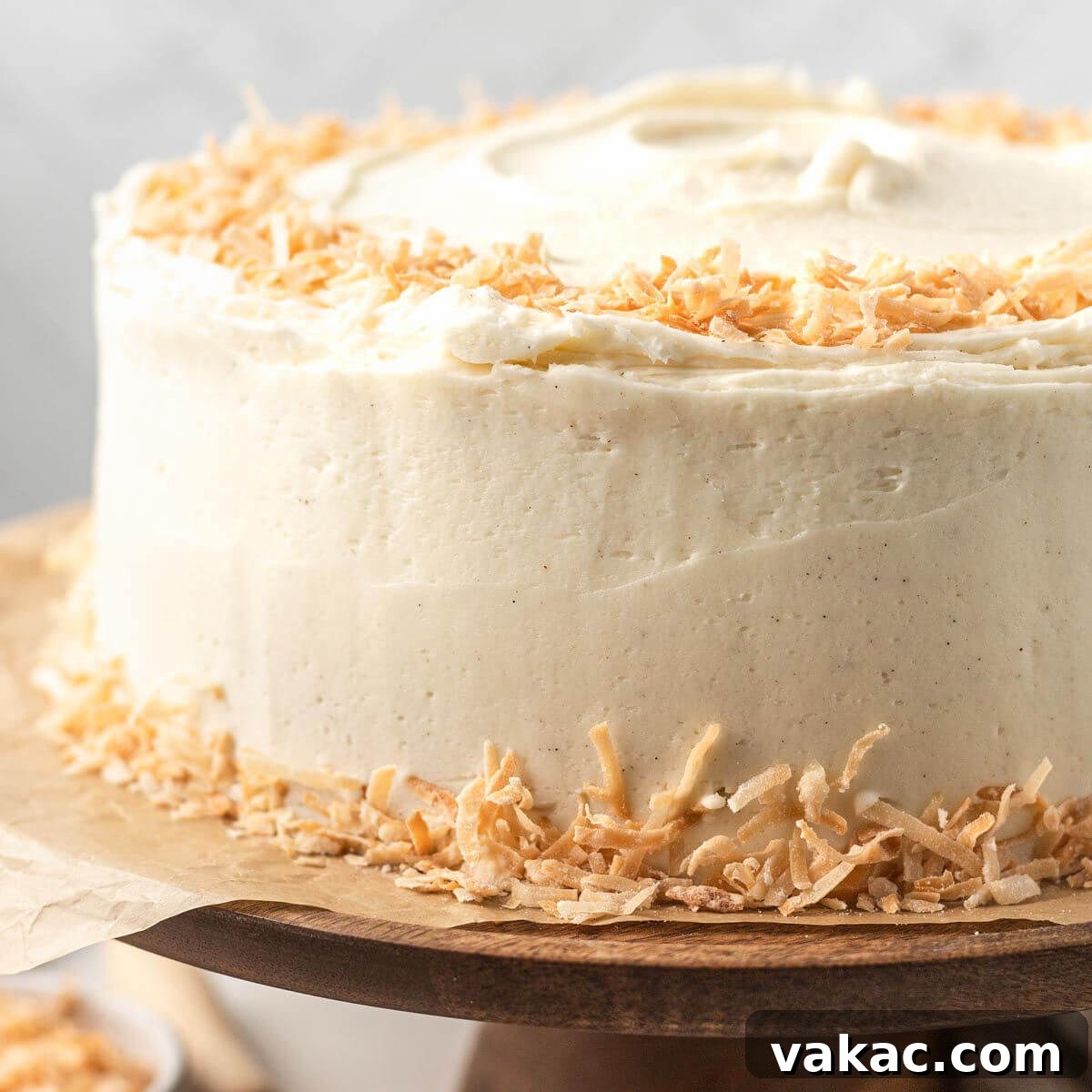
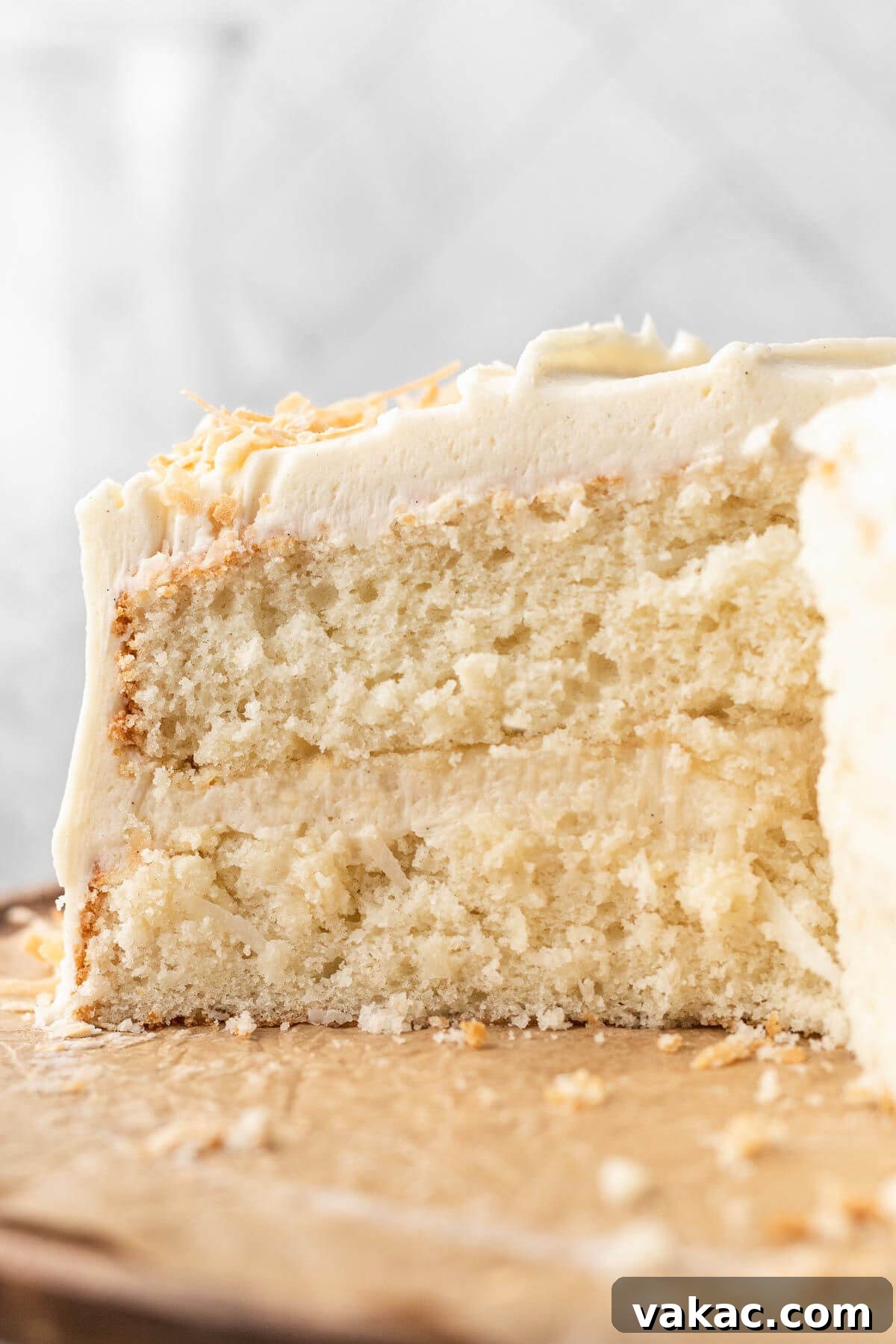
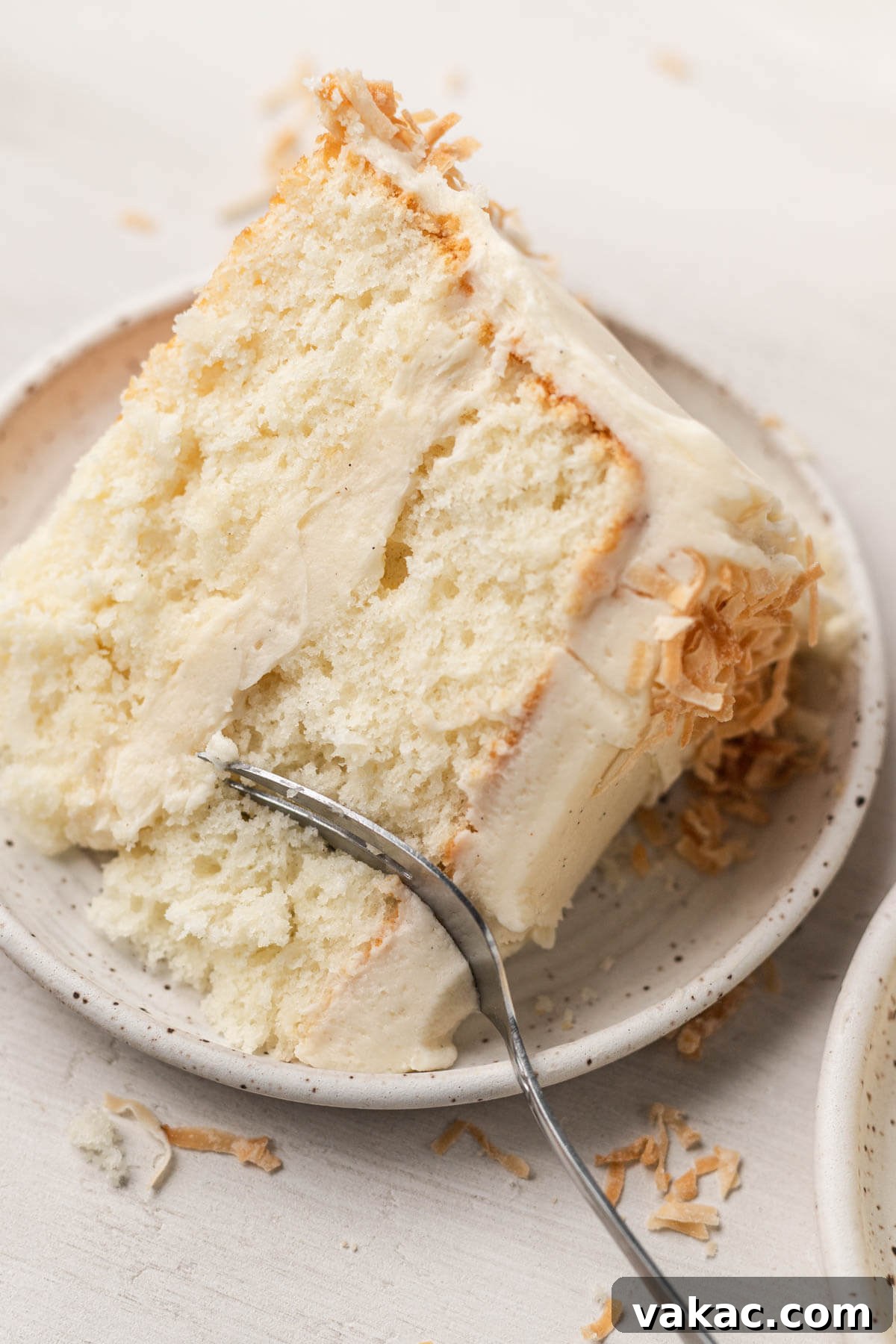
Prepare yourself for an extraordinary culinary experience with what is truly the best coconut cake recipe you’ll ever encounter. This remarkable dessert is a symphony of pure, unadulterated coconut flavor, carefully infused into every component. From the light and airy cake layers, enriched with luscious canned coconut milk, fragrant coconut extract, and tender sweetened shredded coconut, to the crowning glory of a rich, creamy coconut buttercream frosting, this cake is designed to captivate every coconut lover’s heart. Get ready to bake a masterpiece that promises to be the star of any gathering!
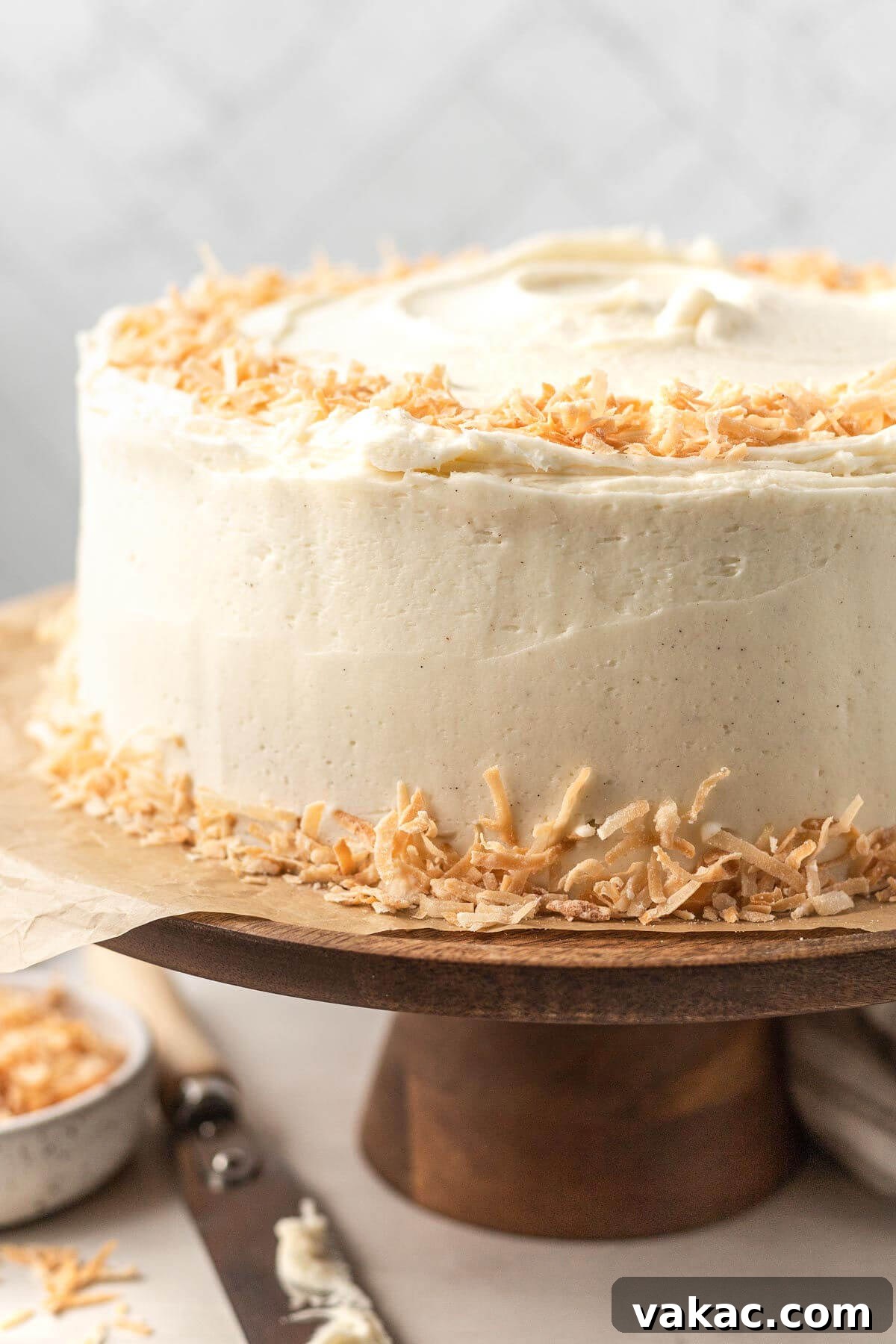
Our commitment to delivering an authentic and intense coconut experience means this layer cake is absolutely bursting with natural flavor. We meticulously craft the cake layers to achieve a sublime lightness and fluffiness, ensuring each bite melts in your mouth. This isn’t achieved by artificial means; instead, we rely on a triple threat of coconut goodness. Full-fat canned coconut milk provides a rich, creamy base, while a generous hint of coconut extract amplifies the tropical notes. Finally, sweetened shredded coconut is incorporated directly into the batter, adding both a delightful chewiness and an extra layer of genuine coconut essence. The result is a profoundly flavorful cake that tastes exactly as coconut should – pure, sweet, and wonderfully aromatic.
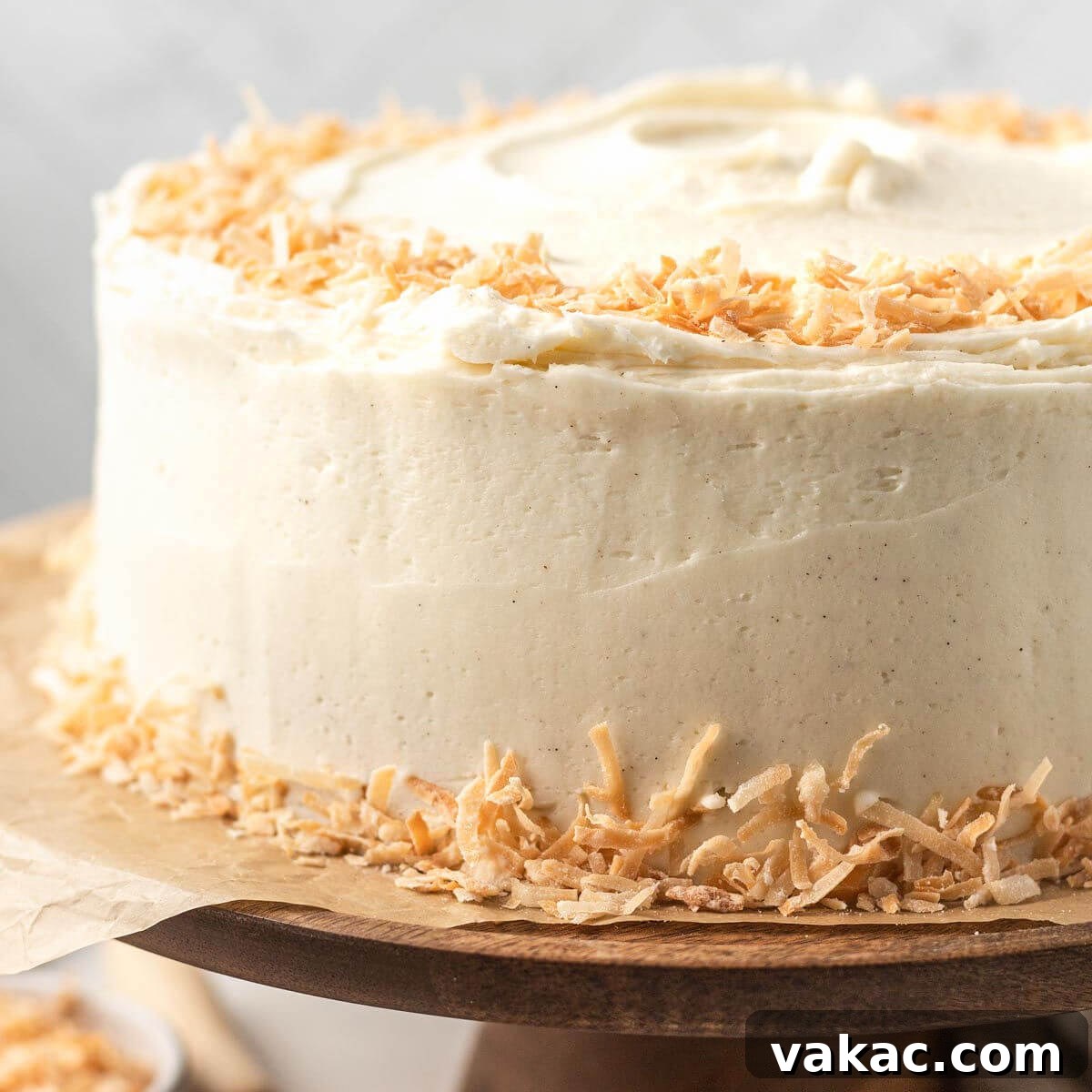
The indulgence doesn’t stop with the cake itself. The accompanying coconut buttercream frosting is equally dedicated to delivering maximum flavor. It combines the velvety texture of butter with the tropical richness of coconut milk and the fragrant kick of coconut extract, creating a frosting that’s both decadently smooth and intensely flavored. To elevate its visual appeal and add an optional but highly recommended textural contrast, we adorn the frosted cake with perfectly toasted coconut flakes. This simple addition introduces a subtle nutty crunch that complements the soft cake and creamy frosting beautifully, transforming a delicious cake into an unforgettable dessert.
Forget about artificial aftertastes or bland imitations. This recipe focuses on high-quality ingredients to produce a sweet, moist, and fluffy layer cake that genuinely celebrates the magnificent flavor of coconut. It’s a guaranteed crowd-pleaser that will have every coconut enthusiast reaching for a second slice.
Essential Ingredients for Your Perfect Coconut Cake
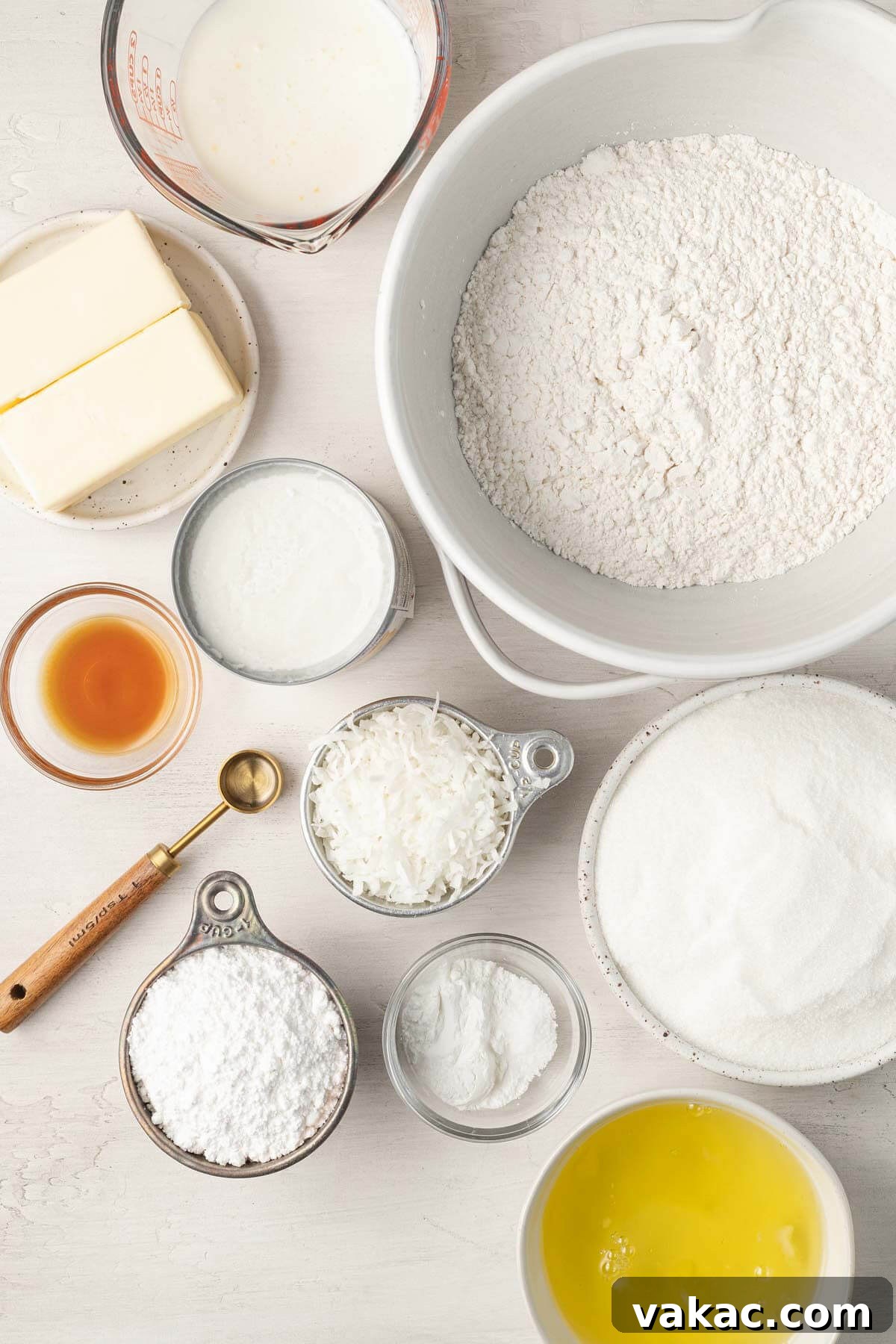
While this homemade coconut cake recipe is surprisingly straightforward to follow, it does call for a few specific ingredients that might not be regular staples in every pantry. However, rest assured that all components are readily available at most major grocery stores. Planning ahead to gather these key items will ensure your baking process is smooth and successful. Here’s a closer look at the crucial ingredients that bring this delightful cake to life:
- Canned Full-Fat Coconut Milk: This is an absolute must for achieving that deep, authentic coconut flavor and rich texture in both the cake and the buttercream. It’s vital to use full-fat canned coconut milk, not the lighter carton varieties often found in the dairy section, as these lack the richness and consistency needed for baking. Before measuring, give the can a good shake or whisk the contents in a bowl, as coconut milk tends to separate into a thick cream layer and a thinner liquid layer when at rest.
- Coconut Extract: To truly amplify the tropical essence, we incorporate a precise amount of coconut extract into both the cake batter and the frosting – specifically, one teaspoon in each. It’s important not to exceed the recommended amount, as a little goes a long way, and the natural flavor from the coconut milk is already quite potent. This extract boosts the overall coconut profile without overpowering it.
- Sweetened Shredded Coconut: While technically optional, we highly recommend including sweetened shredded coconut in the cake batter. This ingredient dramatically enhances the coconut flavor and introduces a wonderful texture that makes each bite more interesting and enjoyable. For those who prefer a less sweet profile, unsweetened shredded coconut can be used as a substitute, offering a similar textural benefit.
- Room Temperature Egg Whites: For the lightest, fluffiest cake texture, using egg whites at room temperature is non-negotiable. Cold egg whites simply won’t whip to their full volume, which is essential for incorporating air into the batter and creating that desirable soft crumb. If you’re short on time, you can quickly bring eggs to room temperature by placing them in a bowl of warm (not hot) water for 5 to 10 minutes before separating the whites from the yolks.
- Cake Flour: This specialized flour has a lower protein content than all-purpose flour, resulting in a significantly softer, more tender cake crumb. It contributes directly to the cake’s light and delicate texture.
- Buttermilk: The acidity in buttermilk reacts with the baking powder, helping the cake rise beautifully and contributing to its tender texture. If you don’t have buttermilk on hand, a simple homemade substitute can be made by adding lemon juice or vinegar to regular milk.
- Unsalted Butter: Ensure your butter is softened to room temperature for both the cake batter and the buttercream. This allows it to cream properly with sugar, creating an emulsified base that holds air, leading to a light cake and smooth frosting.
Crafting Your Delicious Coconut Cake: A Step-by-Step Guide
Creating this stunning coconut layer cake involves a few distinct stages, but the process is quite manageable and incredibly rewarding. We’ll guide you through each step, from preparing the luscious cake batter to baking perfect layers, whipping up the dreamy buttercream, and finally, assembling your show-stopping dessert. Patience and attention to detail at each stage will ensure a truly exceptional outcome.
- Prepare the Cake Pans: Begin by preheating your oven to 350°F (180°C). Grease two 8 or 9-inch round cake pans thoroughly with non-stick cooking spray. For an extra measure of insurance against sticking, cut parchment paper circles to fit the bottoms of the pans and place them inside. This crucial step guarantees that your beautifully baked cake layers will release cleanly from the pans without tearing.
- Combine the Dry Ingredients: In a large mixing bowl, whisk together the cake flour, baking powder, and salt. Whisking ensures these ingredients are evenly distributed, which is essential for a consistent rise and texture throughout the cake. Set this bowl aside.
- Combine the Wet Ingredients: In a separate bowl or a large measuring cup, whisk together the room-temperature buttermilk (or whole milk), full-fat canned coconut milk, pure vanilla extract, and coconut extract until thoroughly combined. Having these ready in advance streamlines the mixing process.
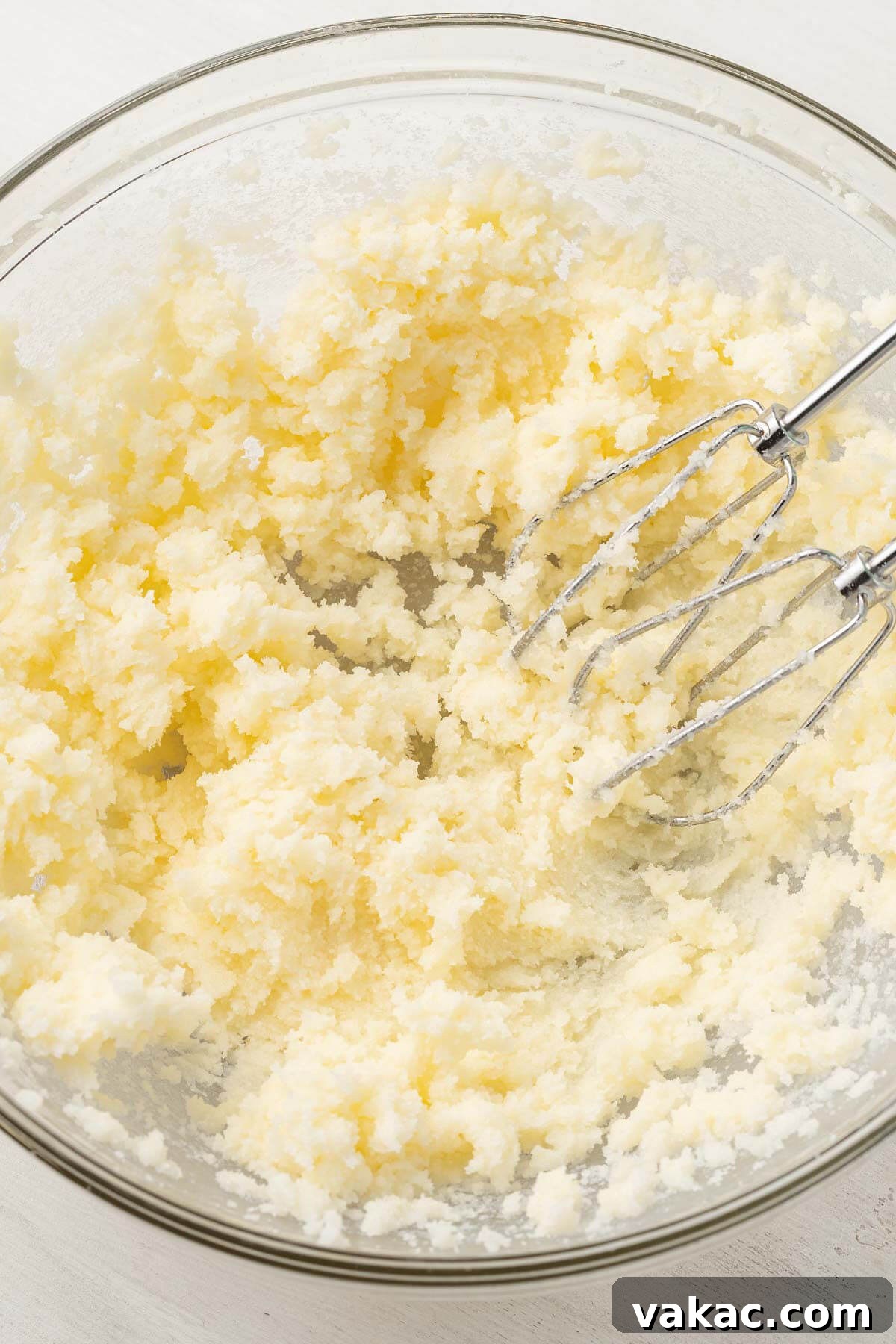
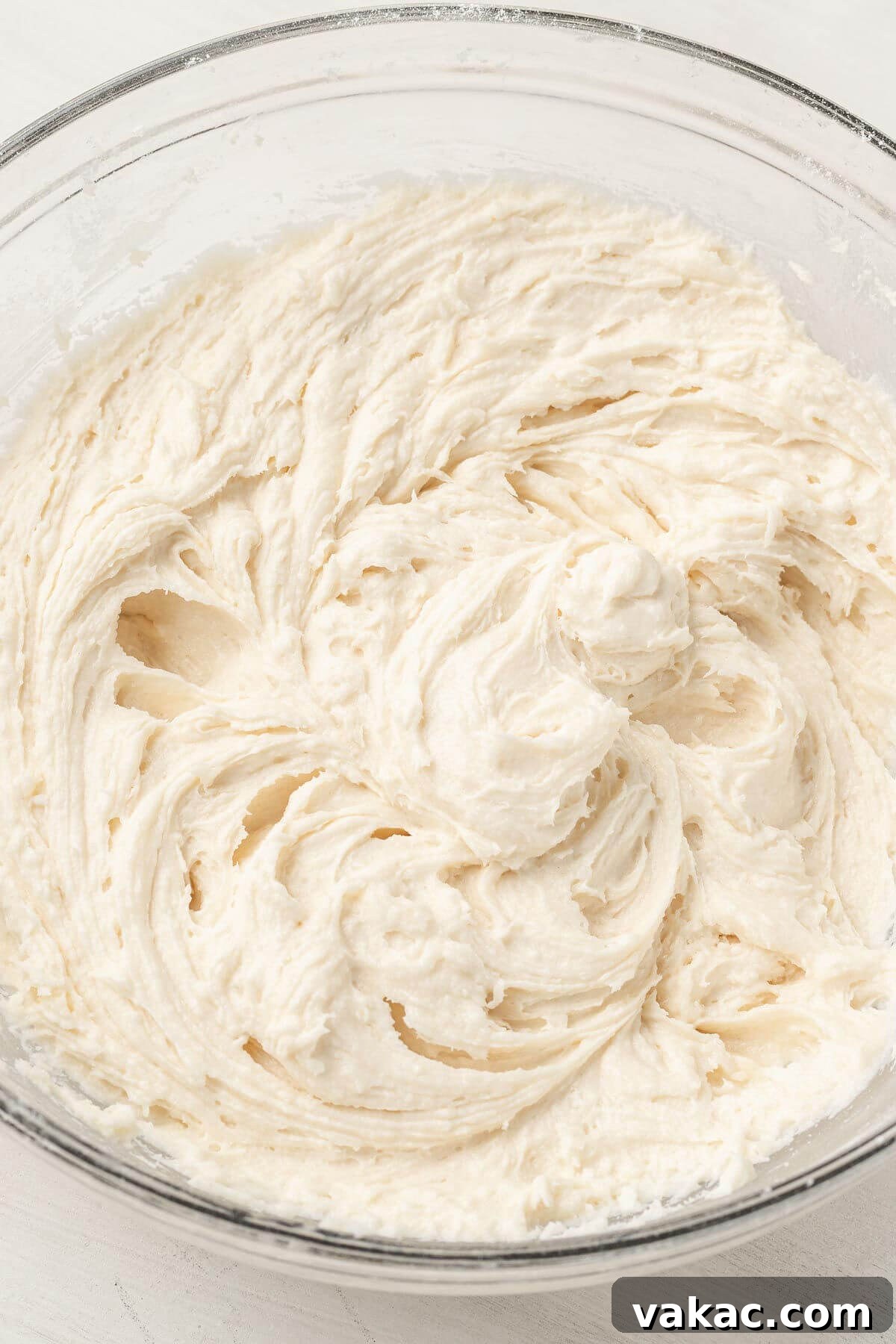
- Cream Together Butter and Sugar: This is a critical step for creating a light and airy cake. Using a stand mixer fitted with the paddle attachment (or a handheld mixer in a large bowl), beat the softened unsalted butter on low speed until it’s smooth and creamy. Gradually add the granulated sugar, increasing the speed to medium-high. Continue beating for a full 4 to 5 minutes until the mixture becomes visibly light in color and incredibly fluffy. This process incorporates air, which contributes to the cake’s tender crumb.
- Incorporate Dry and Wet Ingredients: With the mixer on low speed, begin adding the dry ingredient mixture to the creamed butter and sugar in three alternating additions with the wet ingredient mixture. Always start and end with the dry ingredients. Mix each addition only until it’s just combined, being careful not to overmix the batter. Overmixing can develop the gluten in the flour too much, leading to a tough cake.
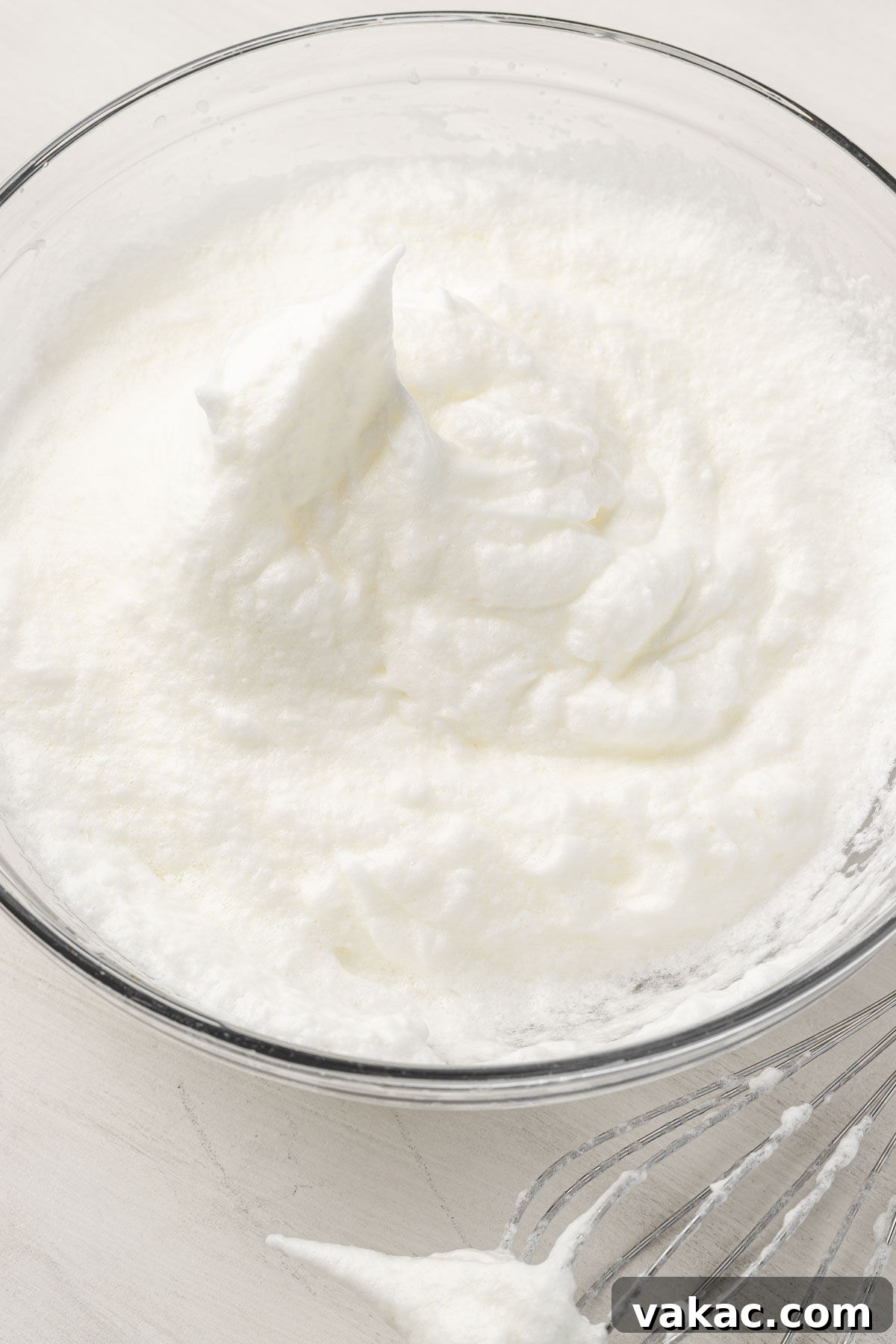
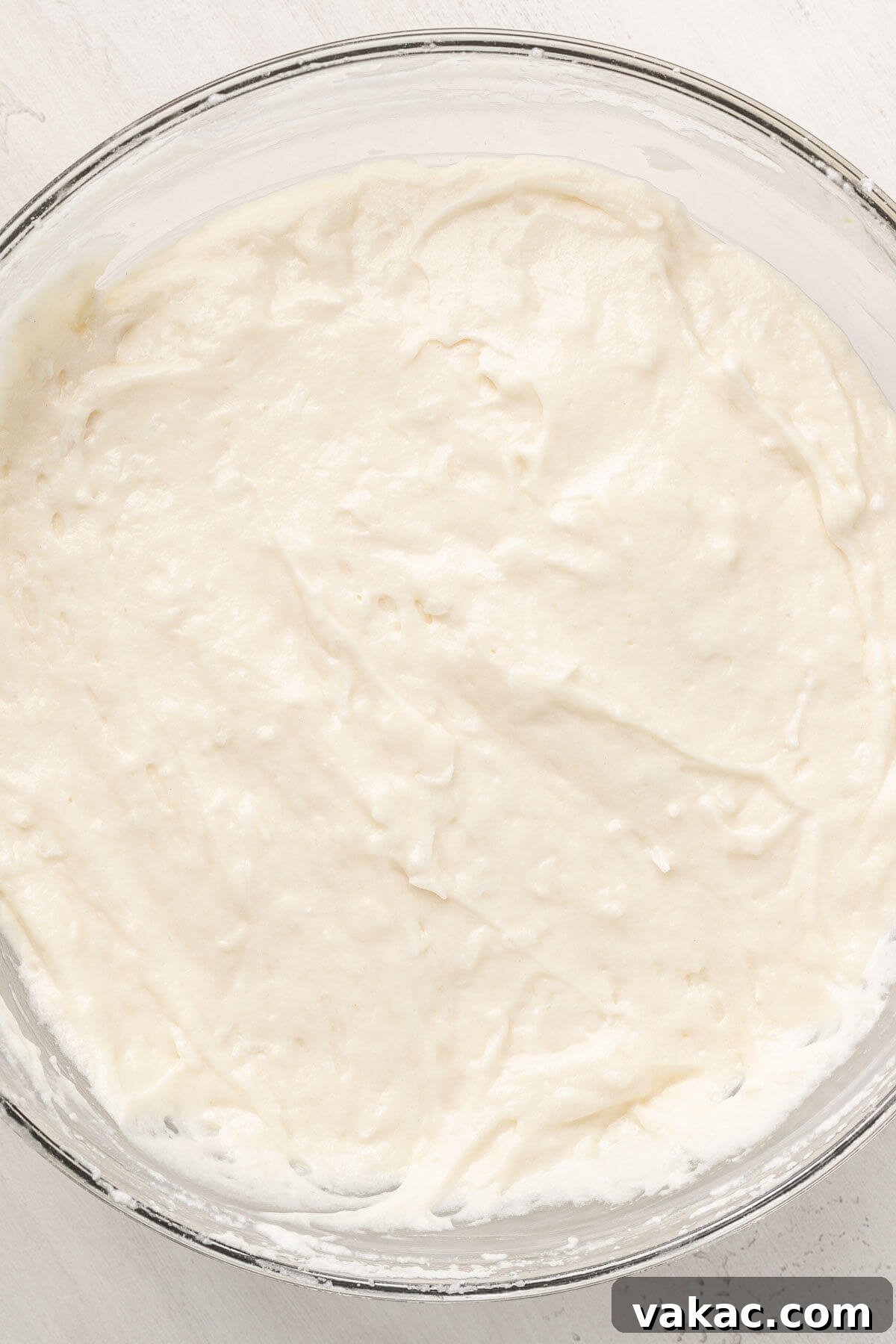
- Beat and Fold in Egg Whites: In a separate, impeccably clean mixing bowl, beat the room-temperature egg whites until they form stiff, glossy peaks. This means when you lift the whisk, the peaks stand firm without drooping. Gently fold half of the beaten egg whites into the cake batter using a rubber spatula, then carefully fold in the remaining half until no streaks of white remain. This delicate folding technique is key to achieving an ultra-light and exceptionally fluffy coconut cake. Finally, gently fold in the optional sweetened shredded coconut.
- Bake the Cake Layers: Divide the prepared cake batter evenly between your two greased and parchment-lined cake pans. Use an offset spatula to spread the batter into an even layer in each pan. Bake for approximately 33 to 38 minutes for 8-inch pans, or 28 to 33 minutes for 9-inch pans. The cakes are done when a toothpick inserted into the center comes out clean.
- Cool Completely: Once baked, remove the cakes from the oven. Allow them to cool in their pans on a wire rack for about 20 minutes. This allows the cakes to set properly and prevents them from breaking. After 20 minutes, carefully invert the cakes onto the wire rack, peel off the parchment paper, and let them cool completely to room temperature. This cooling period is crucial before frosting, as warm cake will melt your beautiful buttercream.
- Prepare the Coconut Buttercream: In the bowl of a stand mixer fitted with the paddle attachment, beat the softened unsalted butter until it is smooth and creamy. Gradually add the powdered sugar in two additions, mixing on low speed until fully incorporated after each addition. Then, add the full-fat canned coconut milk (starting with 3 tablespoons and adding more if needed to reach desired consistency), pure vanilla extract, coconut extract, and a pinch of salt. Continue mixing on low speed until everything is well combined and the frosting is light and fluffy, scraping down the sides of the bowl as necessary to ensure uniform mixing.
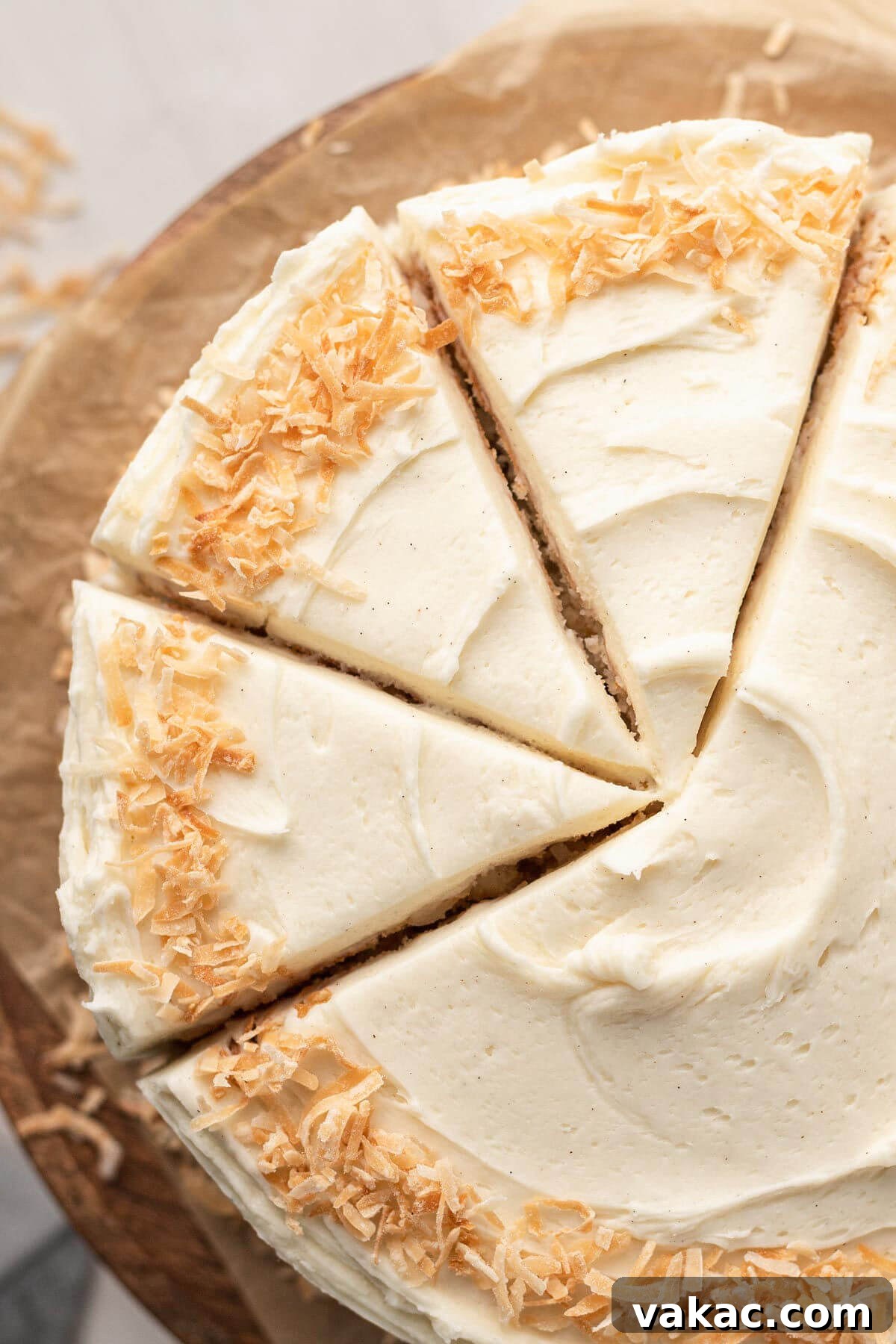
- Assemble the Cake: The most important rule for assembling a beautiful layer cake is to ensure your cake layers are completely cooled. Use a serrated knife or a cake leveler to carefully level the tops of each cake layer, creating flat surfaces for stable stacking. Place a small dollop of buttercream in the center of your serving plate or cake stand; this acts as an adhesive to keep the cake from shifting. Place the first cake layer on top. Spread about 1 cup of coconut buttercream evenly over this layer. Carefully place the second cake layer upside down on top of the frosted layer – this creates a perfectly flat top surface. Use the remaining frosting to generously cover the top and sides of the cake. For an elegant finish, consider decorating with toasted coconut flakes.
Smart Substitutions for Your Coconut Cake
Life in the kitchen often calls for flexibility! Thankfully, this coconut cake recipe is quite forgiving, allowing for a few ingredient substitutions without compromising the exceptional taste or texture of the final product. Here are some common swaps you can confidently make:
- Cake Flour Alternative: If you don’t typically keep cake flour in your pantry, don’t let that deter you! You can easily create a DIY cake flour substitute in just a few minutes using all-purpose flour and cornstarch. This quick trick ensures you still achieve that delicate crumb.
- Buttermilk Replacement: No buttermilk? No problem! A simple homemade buttermilk substitute can be made by adding a tablespoon of lemon juice or white vinegar to a cup of regular milk and letting it sit for 5-10 minutes until it slightly curdles. Alternatively, you can substitute the buttermilk in the cake batter with an equal amount of whole milk, though the buttermilk will lend a slightly richer flavor and more tender texture.
- Sweetened Shredded Coconut Options: The sweetened shredded coconut adds a lovely texture and flavor boost to the cake. If you prefer to reduce the sweetness or simply don’t have it, feel free to omit it entirely from the cake batter. For a less sweet profile, unsweetened shredded coconut can be used as a direct replacement.
- Coconut Milk in Buttercream: While canned full-fat coconut milk is essential for the cake batter’s signature flavor, it can be substituted in the buttercream frosting. If you prefer a more traditional buttercream or don’t have enough coconut milk, an equal amount of heavy cream can be used to achieve the desired consistency and richness.
Storage & Freezing Instructions for Your Coconut Cake
Proper storage is key to enjoying your magnificent coconut cake for days to come. Whether you plan to savor it immediately or save some for later, these guidelines will help maintain its freshness and delightful texture:
- At Room Temperature: This cake, once frosted, can be safely stored in an airtight container at cool room temperature for up to two days. Keep it away from direct sunlight or heat sources.
- In the Refrigerator: For extended freshness, transfer the cake to an airtight container and store it in the refrigerator for up to 4 days. Before serving, it’s best to allow the cake to come to room temperature for about 30-60 minutes. This softens the buttercream and cake layers, enhancing their flavor and texture.
- Freezing Cake Layers and Frosting: If you’re planning ahead or have leftovers, both the unfrosted cake layers and the buttercream frosting freeze exceptionally well for up to 3 months. Wrap individual cake layers tightly in several layers of plastic wrap, then an additional layer of aluminum foil, to prevent freezer burn. Store the buttercream in a large, heavy-duty freezer bag, pressing out all excess air. When you’re ready to assemble, simply thaw the cake layers and frosting at room temperature overnight, then proceed with frosting as usual.
- Freezing Slices: For convenient single servings, wrap individual slices of frosted cake tightly in plastic wrap, then place them in a freezer-safe bag or container. These can be frozen for 2 to 3 months. To enjoy, simply thaw a slice at room temperature for an hour or two before indulging.
Expert Baking Tips for Coconut Cake Success
Achieving a perfectly moist, fluffy, and flavorful coconut cake is easier than you think with these expert tips:
- Measure Flour Accurately: When measuring cake flour, always use the “spoon and level” method. Gently spoon the flour into your measuring cup until it overflows, then level it off with a straight edge (like the back of a knife). Scooping flour directly from the container compacts it, leading to too much flour and a dry, dense cake.
- Ensure Room Temperature Ingredients: This is arguably one of the most crucial tips for baking success. Make sure all cold ingredients—butter, buttermilk (or milk), coconut milk, and egg whites—are at room temperature. Room temperature ingredients emulsify more effectively, creating a smoother batter that holds more air, which translates to a lighter, more evenly textured cake.
- Separate Egg Whites Carefully: Even a tiny speck of egg yolk can prevent egg whites from whipping to stiff peaks. To avoid this common pitfall, crack each egg into a separate small bowl first. If a yolk breaks, you’ve only contaminated one egg white, which can then be discarded or saved for another use, without ruining the entire batch.
- Gentle Folding is Key: After beating the egg whites, gently fold them into the cake batter. This means incorporating them lightly and carefully, using a rubber spatula to preserve the air you’ve just whipped into them. Over-mixing at this stage will deflate the egg whites, resulting in a less airy and fluffy cake.
- Toasted Coconut for Garnish: While optional, decorating your finished cake with toasted coconut flakes adds a beautiful visual touch and a wonderful nutty flavor and crunch. You can easily toast coconut in a dry skillet over medium-low heat, stirring frequently until golden brown, or spread on a baking sheet and bake at 300°F (150°C) for 5-10 minutes. Find a detailed tutorial on how to toast coconut here.
More Irresistible Coconut and Dessert Recipes!
If you’re a fan of coconut, or simply love a good homemade dessert, you’ll adore these other delightful recipes from our collection:
- Chewy Coconut Macaroons
- Creamy Coconut Cream Pie
- Classic Italian Cream Cake
- Decadent German Chocolate Cake
- Easy Magic Cookie Bars
Coconut Cake
A truly unforgettable coconut cake featuring light layers, rich coconut flavor, and a dreamy buttercream.
Prep Time: 1 hr | Cook Time: 35 mins | Cooling Time: 2 hrs | Total Time: 3 hrs 35 mins
Servings: 8 slices
Ingredients
For the cake:
- 2 ¾ cups cake flour (310 grams)
- 1 tablespoon baking powder
- ½ teaspoon salt
- ½ cup buttermilk or whole milk, at room temperature (120 ml)
- ½ cup canned full-fat coconut milk, at room temperature (120 ml)
- 2 teaspoons pure vanilla extract
- 1 teaspoon coconut extract
- 1 cup unsalted butter, softened to room temperature (230 grams; 2 sticks)
- 1 ¾ cups granulated sugar (350 grams)
- 5 large egg whites, at room temperature
- ½ cup sweetened shredded coconut, optional (50 grams)
For the coconut buttercream:
- 1 ½ cups unsalted butter, softened (340 grams; 3 sticks)
- 4 ½ cups powdered sugar (540 grams)
- 3 to 4 tablespoons canned full-fat coconut milk or heavy cream (45 to 60 ml)
- 2 teaspoons pure vanilla extract
- 1 teaspoon coconut extract
- ⅛ teaspoon salt
Instructions
- To make the coconut cake: Preheat the oven to 350°F (180°C). Spray two 8 or 9-inch round cake pans with nonstick cooking spray, line the bottom of each pan with parchment paper, and set aside.
- In a large mixing bowl, whisk the cake flour, baking powder, and salt together until well combined. Set aside.
- Combine the buttermilk, coconut milk, vanilla extract, and coconut extract in a large mixing bowl or measuring cup and stir until well combined. Set aside.
- In the bowl of a stand mixer fitted with the paddle attachment or in a large mixing bowl using a handheld mixer, beat the butter on low speed until smooth. Then slowly mix in the granulated sugar. Once all of the sugar is added, increase to medium speed and continue mixing for another 4 to 5 minutes or until the mixture is light and fluffy.
- Add the dry ingredients to the creamed butter and sugar in three additions, alternating with the buttermilk mixture (begin and end with the dry ingredients) on low speed. Mix in each addition until just combined, making sure not to overmix the batter.
- In a separate clean mixing bowl, beat the egg whites to stiff peaks. Fold half of the egg whites into the batter, then fold in the remaining egg whites until just combined. Gently fold the shredded coconut into the batter.
- Divide the cake batter evenly between the two prepared cake pans and spread around into one even layer.
- For 8-inch cake pans, bake for 33 to 38 minutes. For 9-inch cake pans, bake for 28 to 33 minutes or until a toothpick inserted into the center of the cakes comes out clean. Remove from the oven and allow to cool in the pans for about 20 minutes, then remove the cakes from the pans and transfer to a wire rack to cool completely.
- To make the coconut buttercream: In the bowl of a stand mixer fitted with the paddle attachment or in a large mixing bowl using a handheld mixer, beat the butter until smooth.
- Mix in half of the powdered sugar on low speed. Then mix in the remaining half of the powdered sugar until fully combined.
- Add the coconut milk or heavy cream (start with 3 tablespoons and add a little more if needed), vanilla extract, coconut extract, and salt, and continue mixing on low speed until everything is well combined, stopping to scrape down the sides of the bowl as needed.
- To assemble the cake: Level the tops of each cake with a knife or cake leveler.
- Add a tablespoon of buttercream to the center of a cardboard cake round, a large plate, or a cake stand to help the cake stick to the surface and not move around.
- Place the first layer of cake onto your work surface. Scoop about 1 cup of frosting onto the first layer of cake and spread it around into one even layer.
- Place the second cake layer upside down on top of the frosted cake layer.
- Use the remaining frosting to frost the top and sides of the cake. Decorate with toasted coconut, if desired.
Notes
- Storage Instructions: This cake can be stored in an airtight container at room temperature for up to two days or in the fridge for up to four days. Allow to come to room temperature before serving.
- Freezing Instructions: Cake layers and frosting will also freeze well for up to 3 months. Wrap the cake layers tightly with plastic wrap and store the frosting in a large freezer bag. When you’re ready to assemble the cake, bring everything to room temperature and frost the cake. You may also wrap slices of the cake tightly with plastic wrap and freeze for 2 to 3 months. Bring to room temperature before serving.
- Canned Coconut Milk: Make sure to use full-fat canned coconut milk and not the kind in a carton. Coconut milk can separate in the can, so it helps to shake your coconut milk first or whisk it together in a bowl before measuring it out.
- Cake flour: If you don’t keep cake flour on hand, you can use my homemade cake flour substitute.
- Buttermilk: You can make a buttermilk substitute with just milk and either vinegar or lemon juice. Or you can substitute the buttermilk in the cake batter with an equal amount of whole milk.
Cuisine: American | Course: Dessert | Author: Danielle Rye
We hope this detailed guide empowers you to create the most incredible coconut cake right in your own kitchen. This recipe is more than just a dessert; it’s an experience, a celebration of rich, tropical flavors and a testament to the joy of homemade baking. Share this delightful cake with your loved ones, and prepare for rave reviews!