

If you’ve ever found yourself pondering, “Why am I constantly craving carbs and sugar?” or questioning, “Am I addicted to food?” – rest assured, you are far from alone in these thoughts! As experienced dietitians, we frequently encounter clients grappling with these exact concerns, often accompanied by feelings of guilt after eating. This sentiment is deeply rooted in diet culture, which often unfairly labels us as ‘weak’ or lacking willpower if we succumb to a craving.

Instead of succumbing to shame over having certain cravings, we empower our clients to view these body signals as invaluable tools for self-reflection. By observing them without judgment, we can begin to understand the underlying causes – whether it’s understanding the different types of hunger, identifying emotional triggers for eating, or recognizing potential gaps in our self-care routine. This insightful approach helps us to truly understand what our body and mind genuinely need in a given moment, fostering a more compassionate and informed relationship with food.
Prepare to embark on a comprehensive journey into the world of carbohydrates. Our goal is to equip you with knowledge and strategies so you can feel empowered and confident, rather than stressed or overwhelmed, when carb cravings arise!
Ready to Transform Your Relationship with Food?
Dive deeper into understanding not just what you eat, but *why* you eat. Explore your feelings around food, identify patterns that influence your choices, and embark on a transformative journey towards genuine food freedom today!
Understanding Carbohydrates: Fueling Your Body and Why You Crave Them
Before we delve into the various reasons behind your carb cravings, let’s establish a foundational understanding of what carbohydrates truly are. Many of us harbor deep-seated food rules and anxieties surrounding carbs, often unknowingly. These fears frequently stem from the pervasive demonization of carbohydrates across mainstream media, from self-proclaimed nutrition ‘experts,’ and even from well-meaning family and friends. However, from a dietitian’s perspective, carbohydrates are not to be feared; they should be embraced and celebrated as an essential component of a healthy diet. Here’s precisely why.
Carbohydrates stand as one of the three vital macronutrients—alongside protein and fat—that our bodies require to function optimally and thrive. They are our body’s most efficient and preferred energy source, as they are readily broken down into glucose. Our brain, central nervous system, and red blood cells rely almost exclusively on glucose for their fuel. Unlike muscles or other organs, these critical systems cannot store glucose for later use, necessitating a consistent supply from our dietary intake. Furthermore, adequate carbohydrate consumption plays a crucial role in supporting proper muscle growth and maintenance, aiding digestion and hydration, and can even positively influence our mood and improve sleep patterns.
Ally Choo, Registered Dietitian
Considering the multitude of indispensable functions carbohydrates perform within our bodies, it’s hardly surprising that our brains and bodies instinctively crave them. These cravings are natural signals, not signs of weakness. However, pinpointing the precise root cause of these desires isn’t always straightforward. Below, we explore some of the primary reasons you might find yourself craving carbohydrates:
The Impact of Restriction: Physical and Mental
It might come as a surprise, but restriction can manifest in both physical and mental forms. When we physically restrict our food intake, particularly from carbohydrates, our body initiates a complex cascade of biological survival mechanisms designed to drive us to eat more. For instance, studies show an increase in the hunger hormone ghrelin and the neurotransmitter neuropeptide Y in response to food deprivation. These biochemical changes dramatically heighten our appetite and intensify our drive to seek out and crave carbs. This often culminates in eating episodes that can feel uncontrollable and deeply unsettling, leading to a cycle of guilt and further restriction.
Beyond physical deprivation, mental restriction also significantly amplifies our obsession with food. Mental restriction often takes the form of ‘pseudo-permission,’ where you allow yourself to consume foods deemed ‘forbidden’ or ‘unhealthy’ only if you compensate for them. This might involve vigorous exercise or consuming less the following day to atone for the guilt. While you physically eat the food, the underlying mental rules and conditions create a profound sense of emotional deprivation, ensuring the cravings return with even greater intensity.
Unbalanced Blood Sugars: The Rollercoaster Effect
Experiencing significant spikes and subsequent crashes in your blood sugar levels is a common trigger for intense carbohydrate cravings. Why does this happen? Our bodies are constantly striving for homeostasis – a state of stable internal conditions crucial for optimal functioning. When our blood sugars plummet too low, a primal ‘caveman brain’ effect kicks in. This evolutionary response prompts an urgent search for immediate energy, leading you to impulsively raid the pantry or fridge for quick sources like candy, chips, or other fast-acting carbohydrate foods. Common culprits behind chaotic blood sugar levels include going extended periods without eating, consuming carbohydrates in isolation without balancing them with protein and/or fat, or consistent under-fueling throughout your day.
Stress: Our Body’s Primitive Response
Let’s face it, navigating adulthood in the modern world is challenging. Between parenting responsibilities, pursuing career ambitions, maintaining a household, managing finances, and prioritizing personal well-being, it’s easy to feel constantly overwhelmed. Add the complexities of global events, and it’s no wonder many of us experience chronic stress. Our bodies are fundamentally wired for survival. When we perceive a threat or feel unsafe (even if it’s just psychological stress), our brain signals a need for fast energy, such as bread, pasta, and cakes, to be stored for potential future crises. While this ancient survival mechanism effectively sustained humans for millennia, it can become problematic in our contemporary, often sedentary lives.
Regulating Mood and Coping with Emotions
The intake of carbohydrates is directly linked to the release of serotonin in the brain, often referred to as the ‘feel-good’ neurotransmitter. Serotonin is a vital chemical compound that helps to elevate mood, counteract feelings of depression, and promote alertness and well-being when we are awake. Consequently, we may notice a significant increase in our carb cravings when experiencing unpleasant emotions such as boredom, feelings of overwhelm, or both emotional and physical exhaustion. Eating for emotional reasons is an entirely normal human behavior; however, it can become problematic if it evolves into your sole or primary coping mechanism. We delve into this topic with greater depth in our post about boredom and emotional eating here.
Learned Behavior and Habit Formation
Given that carbohydrates are intrinsically linked to feelings of pleasure and comfort, using them as a reward can easily become a learned behavior over time. In his influential book, ‘The Power of Habit,’ Charles Duhigg elucidates the three fundamental components of a habit loop: the cue, the routine, and the reward. As creatures of habit, it’s perfectly understandable that using carbs to ‘treat ourselves’ can quickly solidify into a deeply ingrained pattern. A typical habit loop might unfold like this: you arrive at the movie theater (the cue), you automatically head to the concession stand and purchase a large popcorn, irrespective of your actual hunger level or how you feel (the routine), and your reward is the satisfying, buttery, carbohydrate-rich snack.
Ready to Transform Your Relationship with Food?
Explore not just what you eat but why you eat, how you feel when you eat and any patterns that affect how you feel or impact any choices you make and start your journey to food freedom today!
Are Carb Cravings Inherently “Bad”? Shifting Your Perspective
Absolutely not! In our weight-centric society, cravings often receive undue criticism and are frequently misconstrued as indicators of personal weakness or a lack of self-control. However, any craving, particularly for carbohydrates, can be reframed as an incredibly effective tool for profound self-reflection. It offers a valuable opportunity to pause and assess our current physical, emotional, and mental states. Noticing intense cravings can provide us with a wealth of information, helping us to pinpoint if a specific aspect of our self-care is currently lacking – whether it’s adequate sleep, managing our mood, ensuring sufficient physical nourishment, fostering social connections, or simply allowing for moments of rest. This period of reflection also serves as an excellent opportunity to explore why you’re eating and to understand the different types of hunger. By doing so, you can delve into the true root cause of the craving and honor it in the most supportive and loving way possible, as we will discuss in more detail below.
Empowering Strategies: What to Do When a Carb Craving Arises
Did you know that you might be experiencing three distinct types of hunger on any given day? These are commonly categorized as stomach hunger (physical), heart hunger (emotional), and mouth hunger (taste-driven). When an intense carb craving emerges, one of the most effective first steps you can take is to approach it with curiosity and initially assume physical hunger. Take a moment to reflect: When and what did you last eat? Did you skip a meal or intentionally restrict carbohydrates earlier in the day? This self-assessment is crucial for deciphering the true nature of what you’re feeling. It is paramount to rule out physical hunger, because ignoring or delaying genuine physiological hunger will almost invariably lead to more intense, urgent, and often unstoppable cravings later on.
Once physical hunger has been thoughtfully ruled out, performing a mental and emotional scan can be highly beneficial. This helps you determine if your desire to eat is driven by a specific sensory aspect of the food (mouth hunger) or if you are attempting to fulfill an emotional need with food (heart hunger). By consciously integrating mindfulness—which means developing self-awareness without judgment—and practicing self-compassion, you will be better equipped to honor each type of hunger in a way that truly serves your well-being.
Avoid the ‘Eat Around’ Phenomenon
The ‘Eat Around’ scenario is a common pitfall. This occurs when you crave something specific, like salty and savory chips, but attempt to suppress or ignore that craving. Instead, you might reach for a ‘healthier’ alternative: perhaps celery sticks, then a handful of cashews, followed by a slice of low-fat cheese with tomatoes. This cycle continues, leading you to graze through your entire kitchen, only to eventually circle back and eat the very chips you initially desired. The reason this happens is simple: when we ignore, delay, or deprive ourselves of a genuine craving, it often results in consuming significantly more food overall, feeling deeply unsatisfied, and ultimately returning to the precise foods we wanted in the first place. Mindfully eating foods that are truly satisfying is a cornerstone principle, which is why Discovering the Satisfaction Factor is one of the core Intuitive Eating principles.
Cultivate an Environment of Abundance
Ensure your home and pantry are stocked with an ample supply of foods you genuinely enjoy and prefer. Research consistently demonstrates that when we have consistent access to preferred foods, it effectively helps to diminish a scarcity mindset. This sends a powerful signal to our brains that nourishment is continuously available, fostering a sense of security around food. It’s important to note, however, that if you have experienced or are currently facing food insecurity, navigating this shift will be more intricate and may require additional support and guidance from trusted professionals.
Embrace Mindfulness with the 3 T’s: Turn off, Tune in, and Take 10
When we are perpetually distracted, our connection to our body’s innate intuition and hunger signals significantly weakens. This disconnection often transforms eating into a mindless snacking episode, leaving us unsure if we genuinely enjoyed the food, or even how much we consumed. This is precisely why we advocate for incorporating the 3 T’s into your eating routine:
Turn off distractions: Silence the TV, put away your phone, pause podcasts or the radio. Create a calm environment focused solely on your meal.
Tune in to your body: What is your current hunger level? Utilize a hunger and fullness scale to help you become more familiar with the subtle nuances of different hunger levels. Pay attention to how the food looks, smells, and tastes.
Take 10 minutes: Aim to dedicate at least ten minutes to mindfully savoring and enjoying your meal. During this time, allow yourself to enjoy a portion of the food you’re craving. Revel in the satisfaction it brings, consciously let go of any accompanying guilt, and then gently move on with your day!
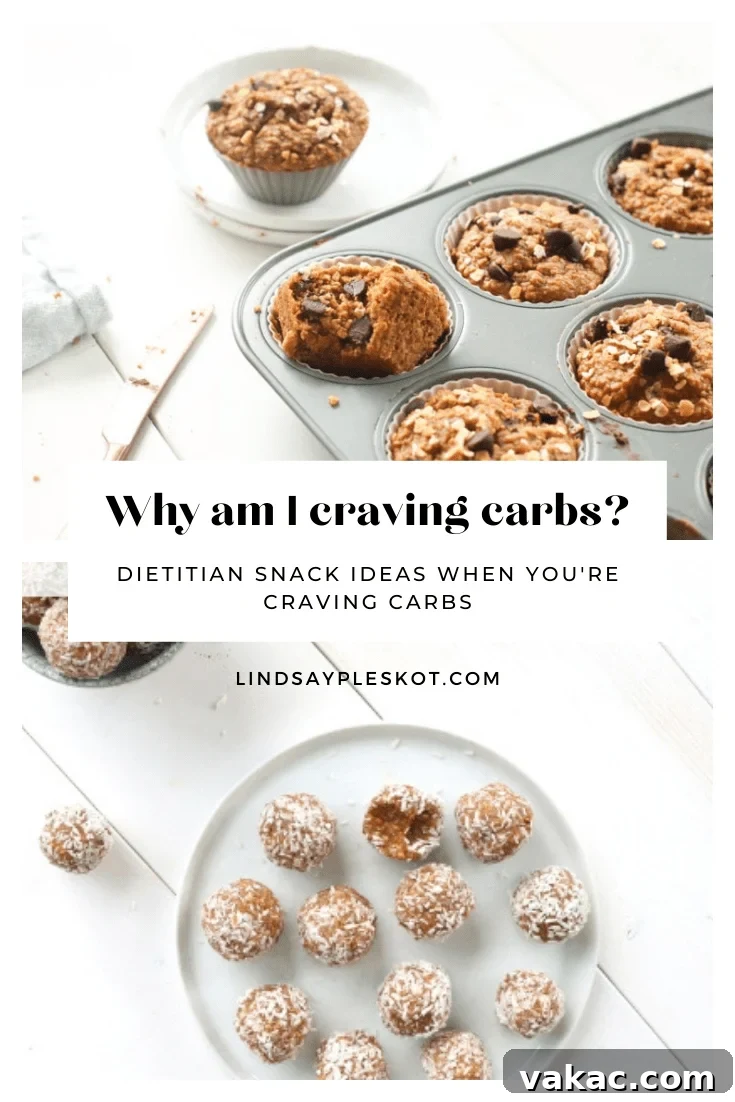
What to Eat When You’re Craving Carbs: The Power of Satisfaction
The most effective way to address and satisfy a craving? It’s simple: eat what you’re actually craving!
When you allow yourself to eat the food you truly desire, you satisfy both the physical and psychological components of the craving. To help you do this in a balanced and nourishing way, here is a curated list of some of our favorite well-balanced meals and snack ideas. These options thoughtfully incorporate carbohydrates, ensuring that they not only satisfy your craving but also provide sustained energy, essential nutrition, and, of course, deliciousness.
- Salted Caramel Energy Balls: A perfect blend of quick energy and satisfying sweetness.
- California Bruschetta: Fresh, flavorful, and a great way to enjoy whole-grain carbs with healthy fats.
- Chocolate Baked Oats: A comforting, fiber-rich breakfast or snack that feels like a treat.
- Baked Mushroom Risotto: A savory, wholesome meal that satisfies a craving for rich, carb-based comfort food.
- Nourishing Oat Flour Pumpkin Muffins: Delicious and wholesome, packed with fiber to keep you feeling full.
- Soft & Crispy Oatmeal Almond Butter Cookies: A satisfying sweet treat that offers both carbs and healthy fats.
For added convenience and to ensure you always have a satisfying option readily available, I’ve also compiled these 15+ quick and easy meal prep snacks. Having these prepared options on hand can significantly reduce the likelihood of uncontrolled cravings taking over.
Debunking Common Misconceptions About Carbohydrates
The narrative surrounding carbohydrates is often clouded by widespread misinformation. Let’s address two of the most prevalent and damaging myths that contribute to carb fears and disordered eating patterns.
Myth 1: Carbohydrates are Addictive
While the concept of ‘food addiction’ has garnered considerable media attention and sparked much speculation, the scientific evidence supporting its existence as a clinical addiction, similar to drug addiction, does not hold up under scrutiny. The ‘food addiction’ hypothesis emerged from observations that both substance use and the consumption of certain foods can activate dopamine pathways and reward centers within the brain. However, there are numerous reasons beyond addiction that adequately explain why food is inherently rewarding. For instance, studies have demonstrated that listening to music, experiencing the feeling of falling in love, or even playing engaging video games also illuminate dopamine centers in the brain. Yet, it would be difficult to construct a compelling argument for, say, a ‘music addiction’ in the same clinical sense.
Furthermore, many ‘food addiction’ studies suffer from significant limitations and methodological flaws, with a substantial portion being conducted on rats. Interestingly, research involving food-restricted rats consistently shows that they will overeat sugar. In stark contrast, control rats in the same studies, who had regular and unrestricted access to food, did not exhibit this pattern of overeating sugar. What these crucial studies suggest is that food restriction itself may heighten the rewarding aspect of food and drive overconsumption, but this phenomenon cannot accurately be labeled as food addiction. Lastly, a powerful piece of evidence against the Food Addiction Theory is that studies often show eating previously ‘forbidden foods’ actually decreases bingeing behavior. This directly contradicts the theory, which would predict that consuming the ‘addicting substance’ (the forbidden food) would logically result in increased binge eating.
Myth 2: Low-Carbohydrate Diets Lead to Sustainable Weight Loss
While initially reducing carbohydrate intake might lead to some rapid weight loss, this effect is often misleading and rarely sustainable in the long term. The initial weight reduction observed on low-carb diets is primarily attributable to several factors: significant fluid loss (carbohydrates bind to water in the body, so reducing them leads to water excretion), a general reduction in overall energy intake, and unfortunately, often the loss of lean muscle tissue. Research consistently suggests that this initial weight loss is typically not maintained and frequently results in rebound weight gain over time. Beyond the issue of sustainability, engaging in chronic dieting and weight cycling—the repeated process of losing and regaining weight—has been unequivocally shown to be detrimental to both our physical and mental health. This cycle can disrupt metabolism, increase body fat percentage, and foster a negative relationship with food and body image, ultimately undermining long-term well-being.
Now Over to You: Share Your Thoughts!
- Do you frequently find yourself craving carbohydrates?
- What are your personal thoughts and experiences regarding carbohydrates and their role in your diet?
We’d love to hear your insights! Please share your thoughts and experiences with us in the comments section below. And if you found this post informative and helpful, consider passing it along to a friend or family member who could also benefit from understanding their carb cravings better!