
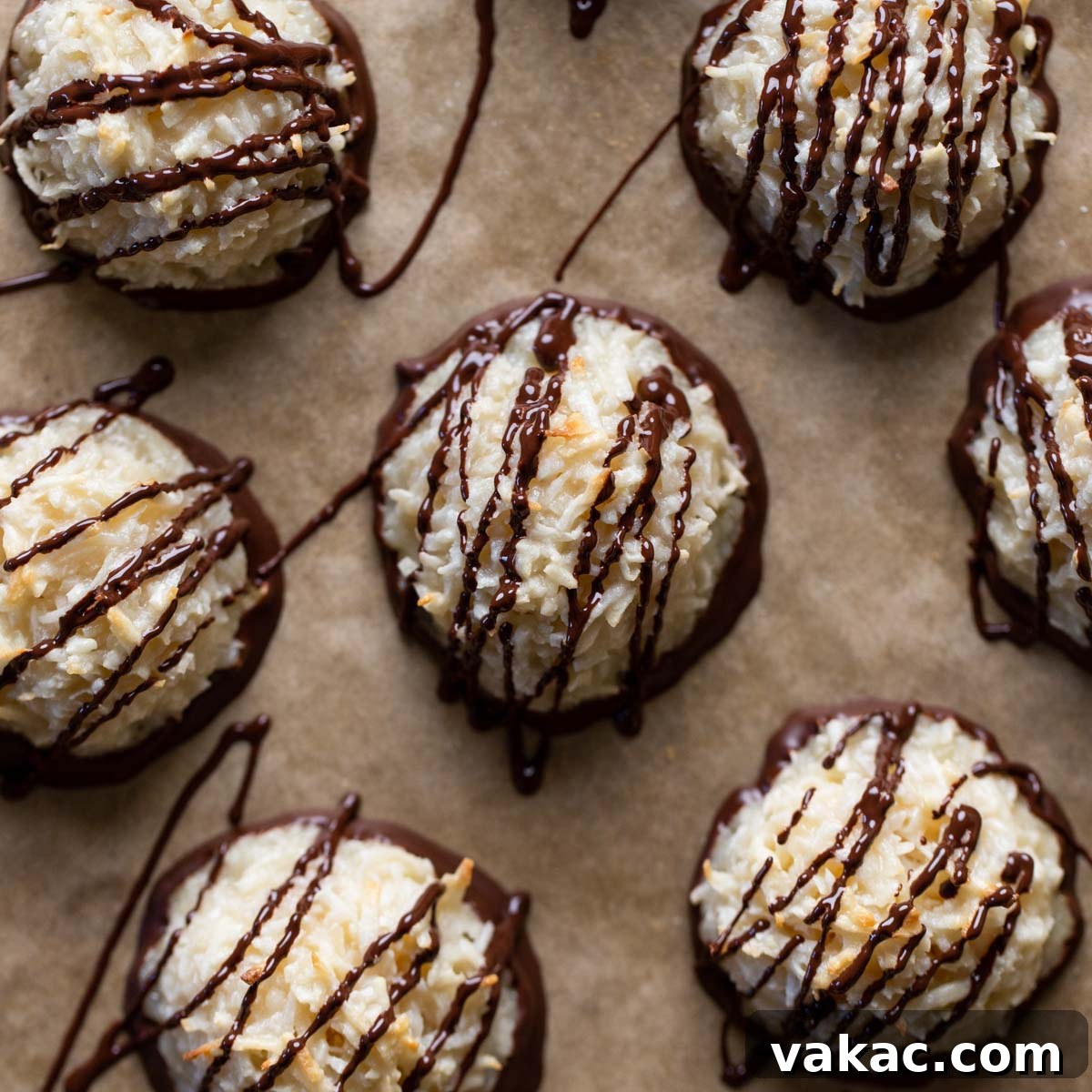
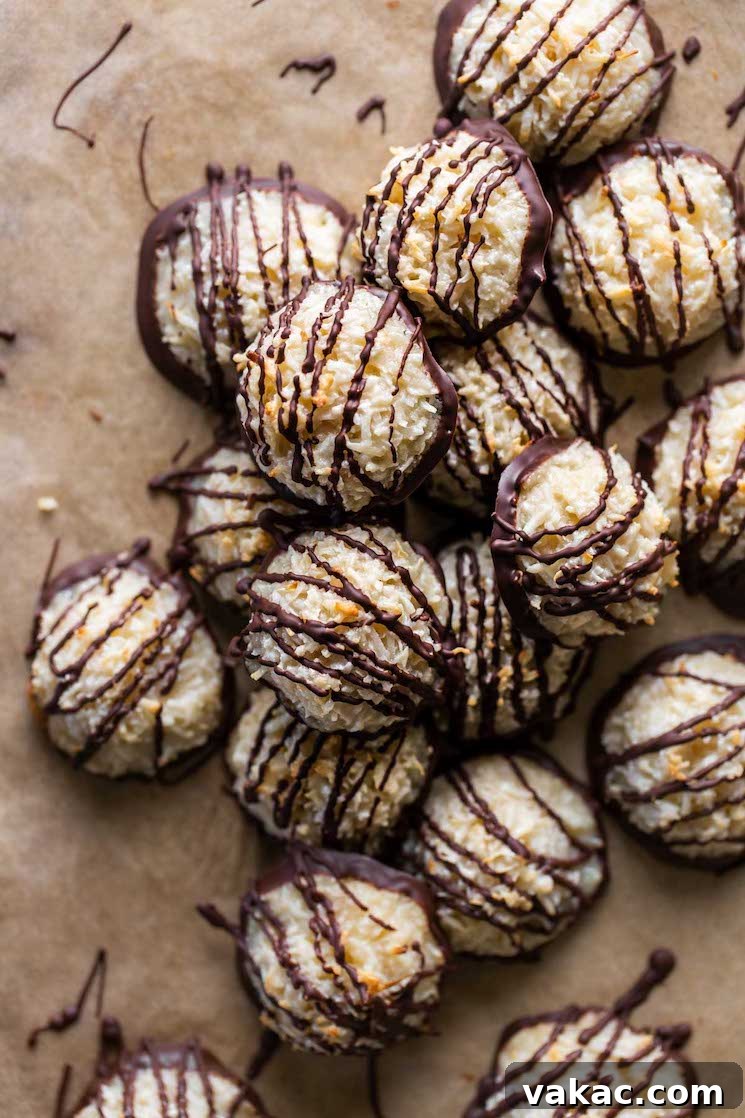
Welcome to the delightful world of homemade coconut macaroons! These aren’t your delicate French macarons, but rather their rustic, chewy, and equally beloved cousins. Made with just a handful of simple ingredients, these classic confections are renowned for their irresistible golden-brown exterior, wonderfully moist and chewy interior, and rich, tropical coconut flavor. Whether you enjoy them plain, allowing the pure coconut essence to shine, or elevate them with a luxurious coating of melted chocolate, these macaroons are guaranteed to become a cherished treat in your baking repertoire. Their simplicity makes them an ideal project for bakers of all skill levels, offering a rewarding experience from start to finish.
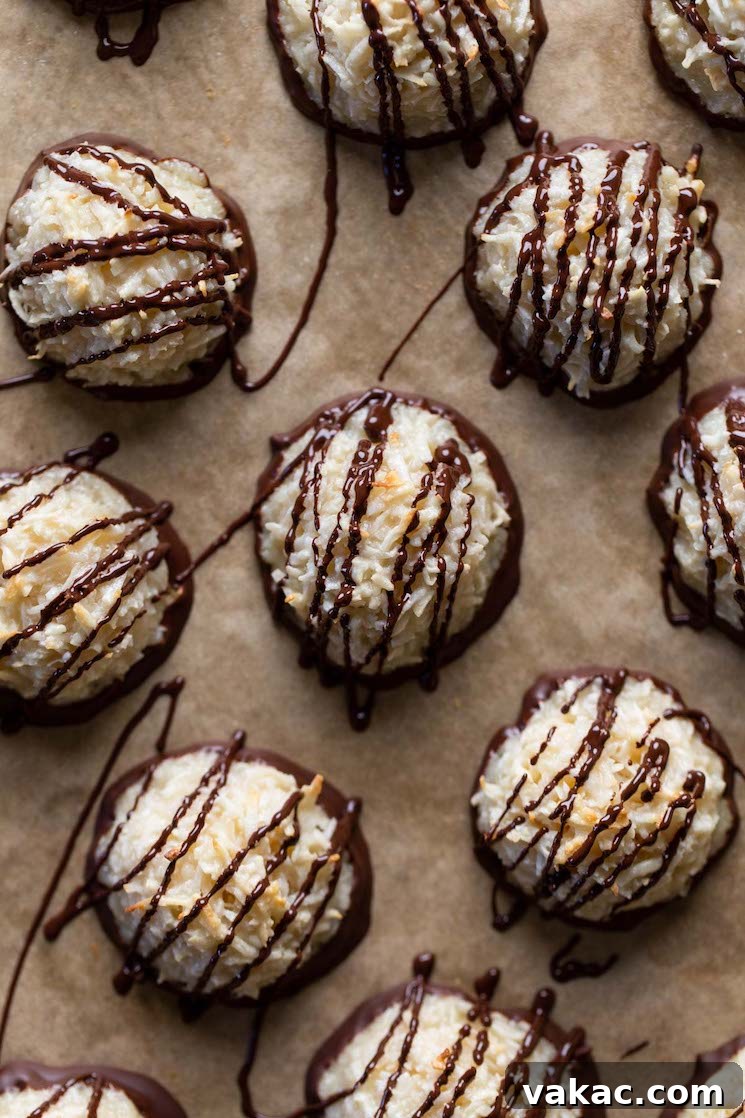
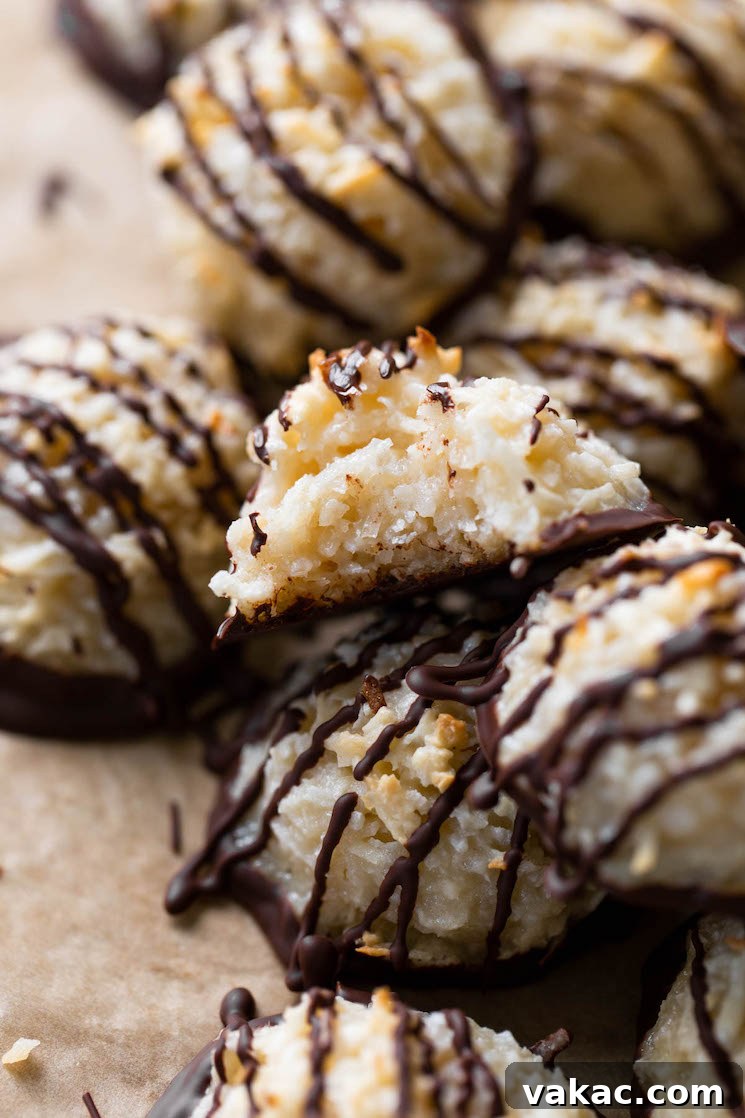
For those new to the world of macaroons, it’s important to clarify a common distinction. While both are sweet, delightful cookies, the coconut macaroon is distinct from the French *macaron*. French macarons are delicate, meringue-based sandwich cookies with a crisp shell and soft, chewy interior, typically filled with ganache or buttercream. Coconut macaroons, on the other hand, are hearty mounds of sweetened shredded coconut, bound together and baked to perfection. They are characterized by their naturally uneven, craggy appearance and an intensely satisfying chewiness. In this recipe, we embrace their inherent charm and enhance them with a delightful dip in semi-sweet chocolate, adding an extra layer of decadence that perfectly complements the sweet coconut.
The addition of chocolate is entirely optional, but trust us when we say the combination of rich, slightly bitter semi-sweet chocolate with sweet, aromatic coconut is a match made in dessert heaven. The contrast in textures and flavors creates a truly unforgettable bite. However, if you prefer a purer coconut experience, feel free to skip the chocolate coating. The beauty of this recipe lies in its versatility and ease. With only six basic ingredients, you’ll be amazed at how quickly you can whip up a batch of these bakery-worthy treats. The most challenging part? Patience – waiting for the chocolate-dipped macaroons to chill in the fridge until the chocolate sets! But every moment of anticipation is well worth it for these delectable cookies.
Essential Ingredients for Irresistible Coconut Macaroons
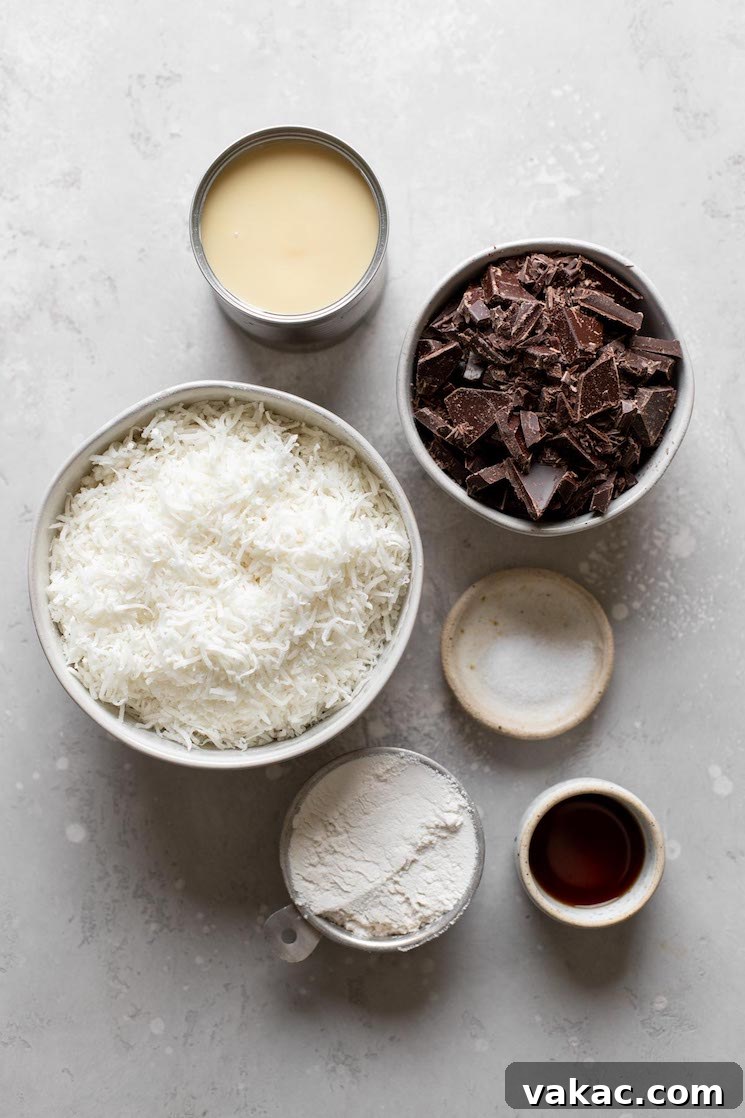
Creating truly exceptional coconut macaroons begins with selecting high-quality ingredients. Our recipe calls for a remarkably short list, highlighting the importance of each component in achieving the perfect balance of flavor and texture. Here’s a detailed look at what you’ll need to gather:
- Sweetened Shredded Coconut: This is the star of our show, providing the signature flavor and texture. You’ll find it readily available in the baking aisle of any supermarket. It’s crucial to use *sweetened* shredded coconut, as it contains enough moisture and sugar to bind the macaroons properly and give them their characteristic sweetness and chew. Avoid unsweetened coconut flakes or desiccated coconut, as they will result in a much drier macaroon with a different flavor profile that won’t hold together as well. The sweetness in this type of coconut contributes significantly to the overall taste, making it an irreplaceable element.
- All-Purpose Flour: While some traditional macaroon recipes omit flour, we find that a small amount of all-purpose flour significantly enhances the structure and texture of these cookies. It acts as a binder, helping to hold the coconut mixture together, and contributes to a beautifully crisp exterior while maintaining a moist and chewy interior. This ensures your macaroons are robust enough to handle dipping in chocolate and less prone to crumbling. If you need to make them gluten-free, you can experiment with a gluten-free all-purpose blend, but be aware the texture might vary slightly. For best results, spoon and level your flour to ensure accurate measurement, preventing overly dense or dry cookies.
- Salt: A pinch of salt might seem insignificant, but it plays a vital role in balancing the sweetness of the coconut and condensed milk. It brightens the flavors, preventing the macaroons from being cloyingly sweet and enhancing the depth of the coconut and vanilla. Don’t skip this ingredient, as it truly elevates the overall taste.
- Sweetened Condensed Milk: This ingredient is the magical glue that holds our macaroons together and provides a substantial portion of their rich sweetness and moisture. Sweetened condensed milk is thick, creamy, and intensely sweet, having been cooked down to remove most of its water content and then heavily sweetened. It’s absolutely essential for the classic chewy texture of these macaroons. Be very careful not to confuse it with *evaporated milk*, which is unsweetened and much runnier; using evaporated milk will lead to a complete recipe failure, as your macaroons will not set or taste correctly.
- Pure Vanilla Extract: For the most vibrant and comforting flavor, opt for pure vanilla extract. It adds a wonderful aromatic depth that complements the coconut beautifully. While imitation vanilla can be used in a pinch, pure vanilla extract will provide a far superior taste experience, making your macaroons truly special. A good quality vanilla extract can make all the difference in highlighting the natural sweetness and richness of the other ingredients.
- Semi-Sweet Chocolate: This is the optional, yet highly recommended, finishing touch that transforms simple coconut macaroons into an elegant dessert. Semi-sweet chocolate provides a lovely counterpoint to the sweetness of the macaroons, creating a balanced flavor profile. We typically recommend using 8 ounces for dipping the bottoms and an additional 2 to 4 ounces for drizzling over the top, allowing for creative presentation. For the best melting and dipping consistency, use a good quality semi-sweet chocolate bar, roughly chopped, rather than chocolate chips, which often contain stabilizers that can make them difficult to melt smoothly. You can adjust the amount based on how much chocolate coating you desire.
Crafting Your Perfect Coconut Macaroons: A Step-by-Step Guide
Making these delightful coconut macaroons is a straightforward process, but a few key techniques will ensure they turn out perfectly every time. Follow these detailed steps to create beautiful, chewy, and flavorful treats:
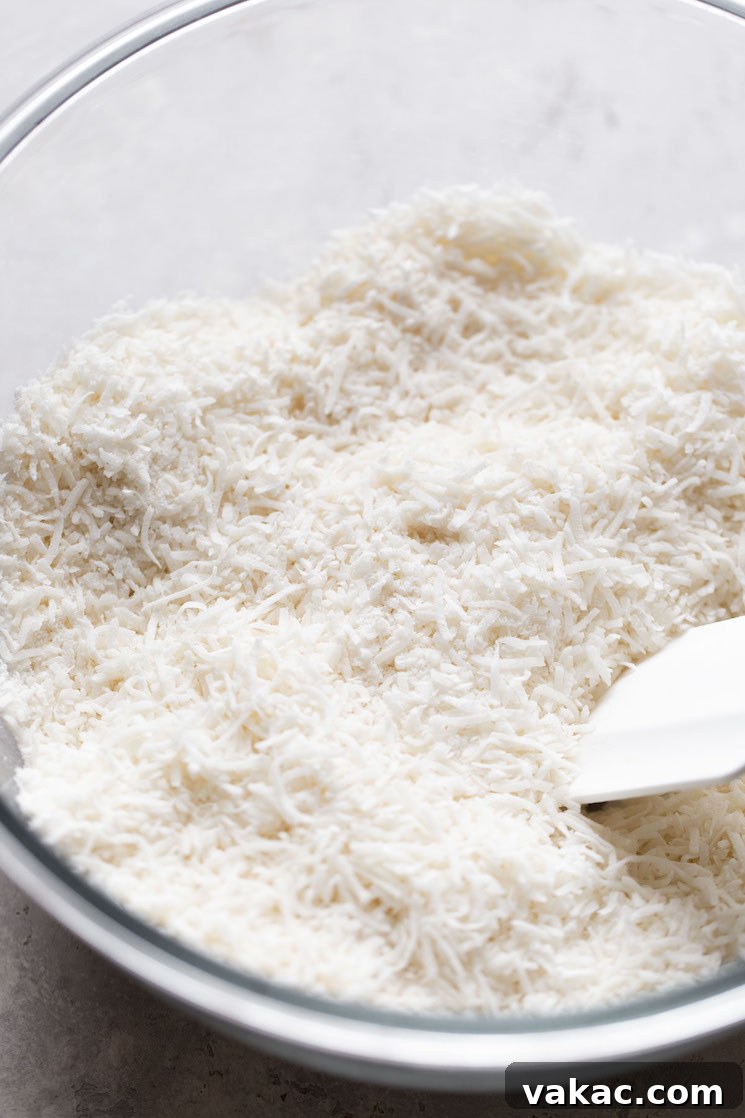
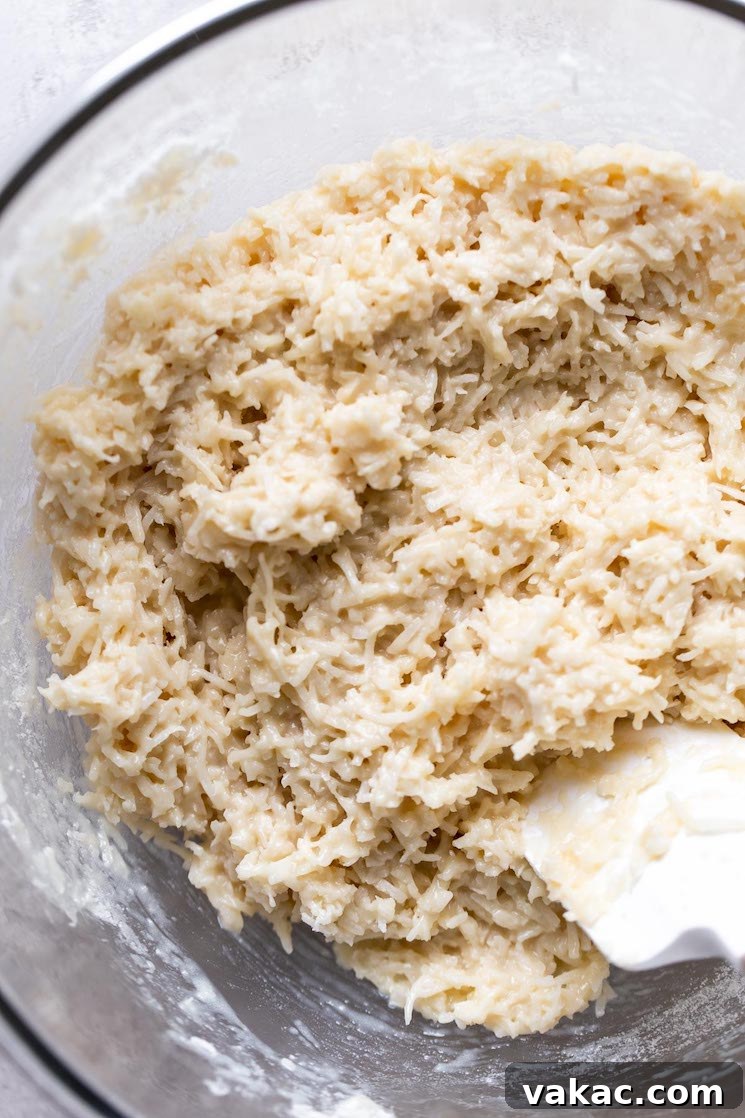
- Preheat Oven and Prepare Baking Sheets: Begin by preheating your oven to 350°F (177°C). While the oven heats, line two large baking sheets with parchment paper or silicone baking mats. This crucial step prevents the macaroons from sticking and ensures easy removal after baking. Set these prepared sheets aside.
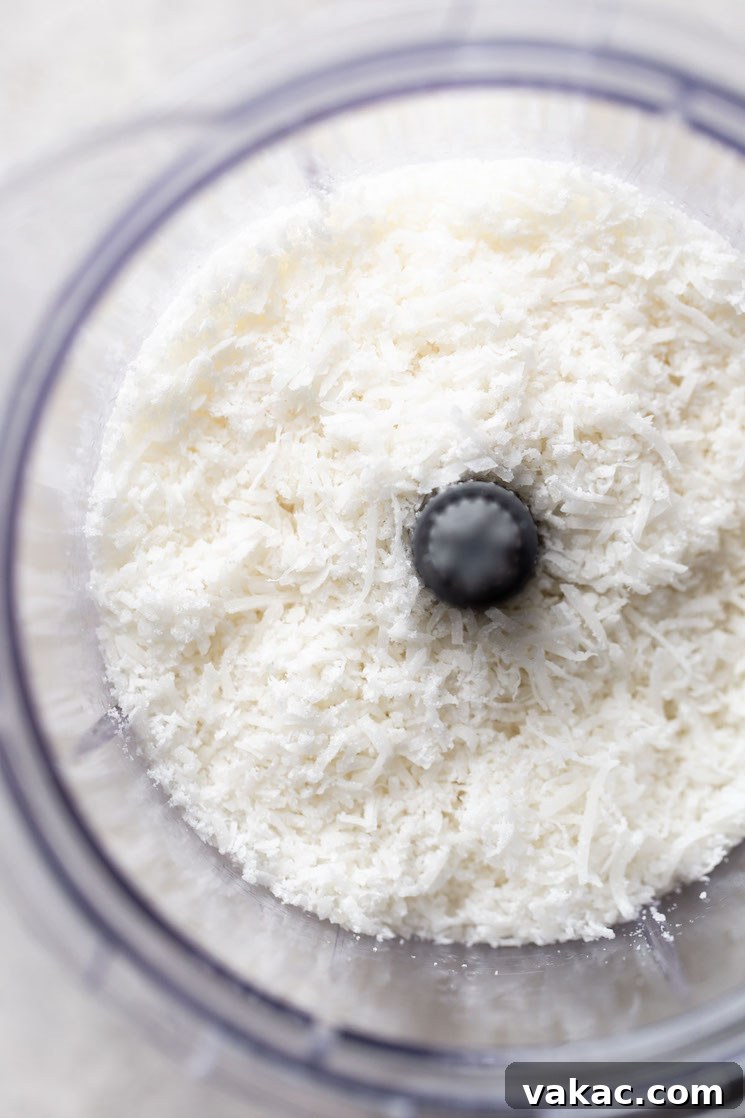
- Process the Coconut (Optional but Recommended): For macaroons with a more uniform texture and easier shaping, we highly recommend a quick pulse of the sweetened shredded coconut in a food processor. Pulse 8 to 10 times, just enough to break down the longer strands slightly without turning it into a paste. This step makes the mixture less unwieldy and helps in forming perfectly round, compact cookies that won’t have stray coconut pieces burning during baking. If you prefer a more rustic, shaggy texture, you can skip this step.
- Combine Dry Ingredients: In a large mixing bowl, combine the pulsed coconut (or unprocessed, if preferred), the measured all-purpose flour, and the salt. Mix these ingredients thoroughly until they are well combined. This ensures even distribution of the flour and salt throughout the coconut mixture.
- Add Wet Ingredients: Pour in the sweetened condensed milk and the pure vanilla extract. Using a sturdy rubber spatula or a wooden spoon, mix everything together until all the ingredients are fully combined and a sticky, cohesive dough forms. Ensure there are no pockets of dry flour at the bottom of the bowl. The mixture will be quite thick and sticky, which is exactly what you want.
- Scoop and Shape the Macaroons: Using a 1.5-tablespoon cookie scoop (or a similar size to achieve uniform cookies), drop mounds of the coconut mixture onto your prepared baking sheets, leaving a couple of inches between each macaroon to allow for slight spreading. Now, for the shaping: lightly dampen your hands with water. This prevents the sticky coconut mixture from adhering to your fingers. Gently compress and shape each scooped mound into a round ball or a small dome. Pay attention to any coconut strands sticking out, and tuck them in to prevent them from burning in the oven. The goal is a compact, uniform shape.
- Bake to Golden Perfection: Place the baking sheets in the preheated oven. Bake for approximately 12 to 15 minutes, or until the bottoms of the macaroons are lightly golden brown and the edges appear set and slightly crisp. The tops may remain lighter, which is perfectly fine. Keep a close eye on them during the last few minutes of baking, as they can go from perfectly golden to over-baked quickly.
- Cool the Macaroons: Once baked, remove the baking sheets from the oven. Allow the macaroons to cool on the baking sheets for about 10 minutes. This helps them firm up before handling. After 10 minutes, carefully transfer them to a wire rack to cool completely. It’s crucial that the macaroons are entirely cool before moving on to the chocolate dipping step, otherwise, the chocolate won’t set properly.
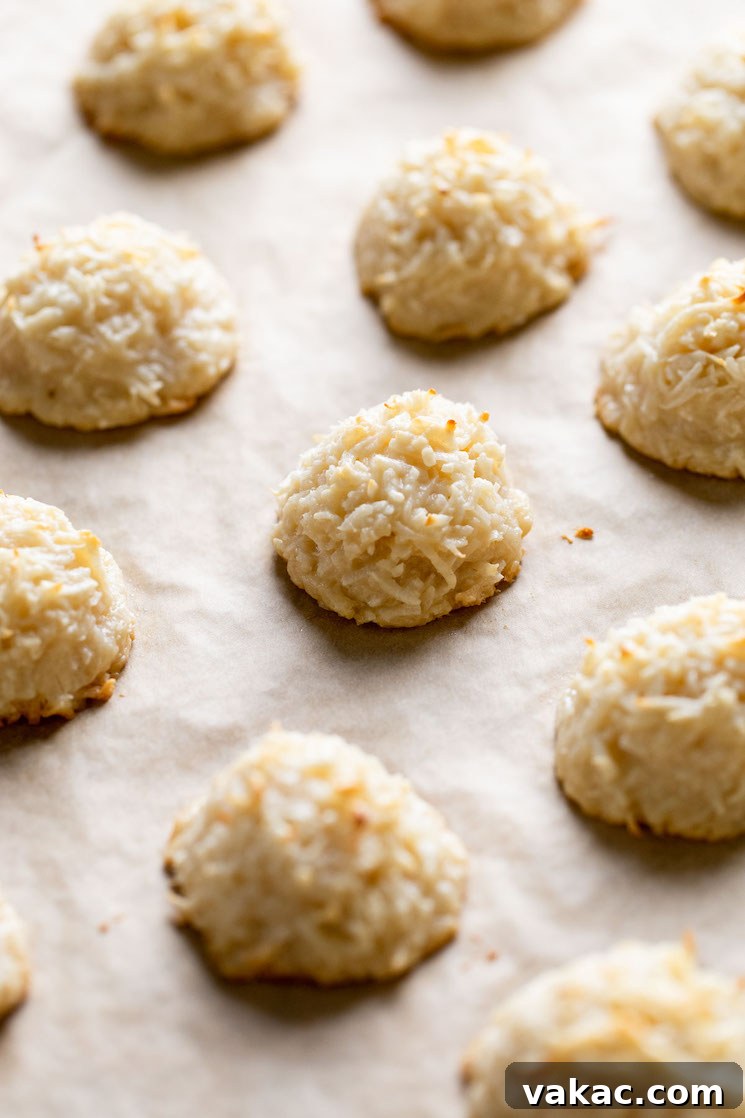
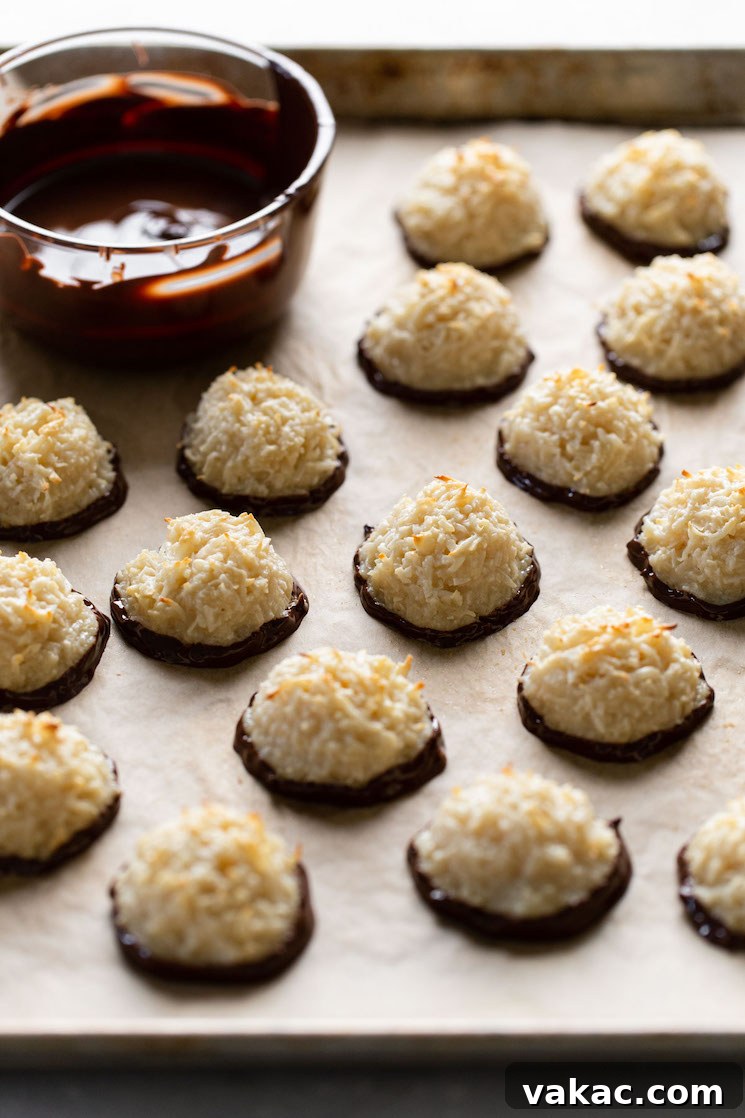
- Prepare for Chocolate Dipping: While the macaroons cool, prepare a separate clean baking sheet lined with fresh parchment paper. This will be where your chocolate-dipped macaroons will rest and set.
- Melt the Chocolate: Add your roughly chopped semi-sweet chocolate to a microwave-safe bowl. Microwave the chocolate in short 20 to 30-second intervals, stirring thoroughly after each interval. Continue this process until the chocolate is completely melted and beautifully smooth. Stirring frequently helps prevent scorching and ensures an even melt. Alternatively, you can use a double boiler method for melting.
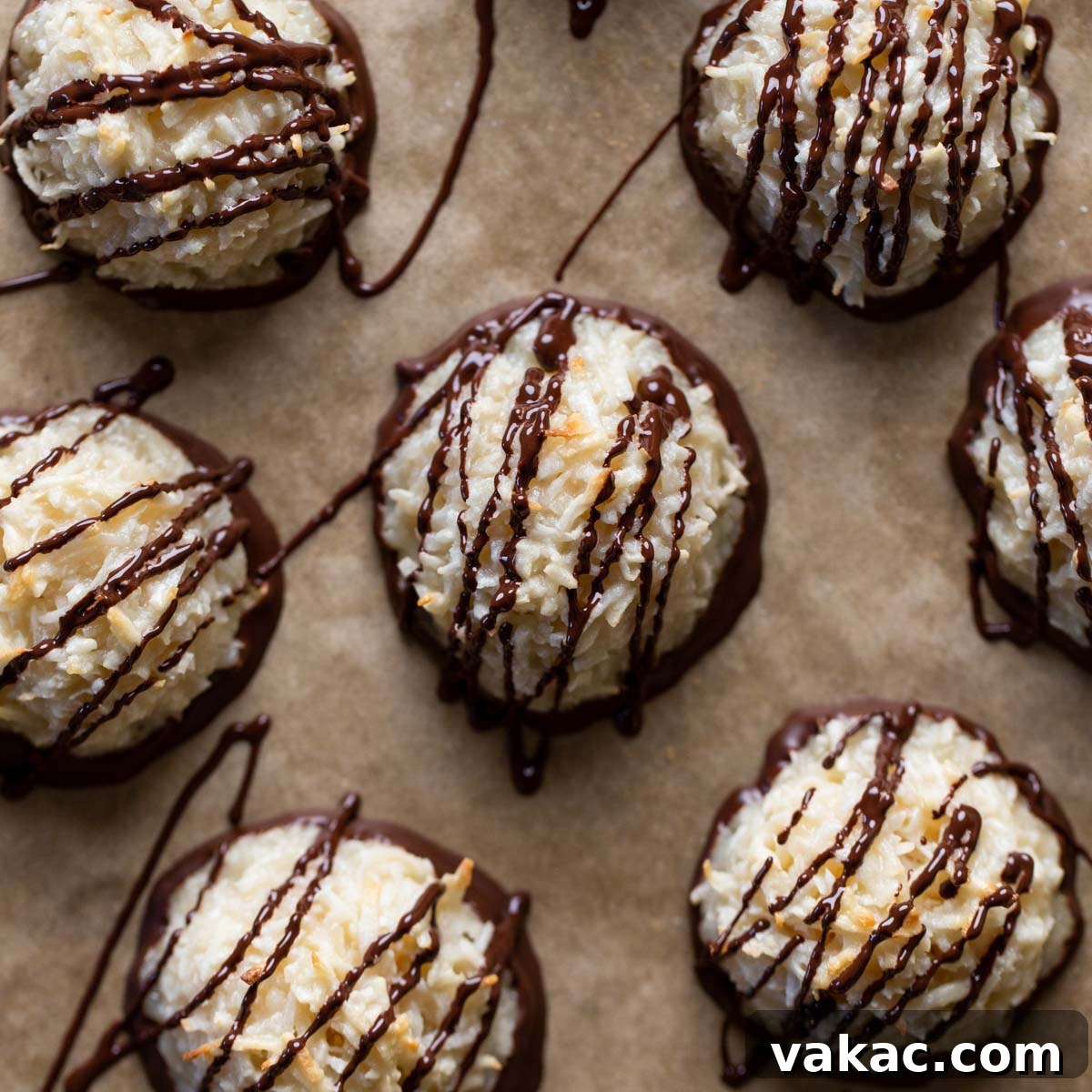
- Dip and Drizzle: Once the macaroons are cool and the chocolate is melted, carefully dip the bottom of each macaroon cookie into the luscious melted chocolate. Allow any excess chocolate to drip off for a clean finish. Place the dipped macaroons onto your prepared parchment paper-lined baking sheet. If you have any leftover melted chocolate, get creative! Use a spoon or a fork to drizzle it artfully over the tops of the macaroons for an extra decorative touch and an added layer of chocolatey goodness.
- Chill to Set: Transfer the baking sheet with the chocolate-dipped macaroons to the refrigerator. Chill them for at least 30 minutes, or until the chocolate has completely hardened and set. This step is essential for achieving a firm, non-messy chocolate coating. Once set, your magnificent chocolate coconut macaroons are ready to be devoured!
Pro Tips for Flawless Coconut Macaroons
Achieving bakery-quality coconut macaroons is easier than you think, especially with a few expert tips:
- Refining Coconut Texture: As mentioned in the instructions, a quick pulse of the sweetened shredded coconut in a food processor is a game-changer. By breaking down the longer strands slightly, you create a more manageable mixture that’s easier to shape into perfectly round, compact macaroons. This also helps prevent individual coconut pieces from sticking out and potentially burning during baking, ensuring an even golden finish.
- Choosing the Right Chocolate for Dipping: When it comes to melting chocolate for dipping, opt for a high-quality chocolate bar (such as baking chocolate or couverture chocolate) rather than standard chocolate chips. Chocolate chips are often formulated with stabilizers that make them retain their shape during baking, which can also make them resistant to melting smoothly. They can become clumpy, seize, or even burn when microwaved. A good quality chocolate bar, finely chopped, will melt into a much smoother, more fluid consistency, ideal for a beautiful, even coating.
- Tailoring Sweetness with Chocolate Choice: Our recipe suggests semi-sweet chocolate, which provides a lovely balance against the inherent sweetness of the macaroons. However, feel free to customize based on your preference. If you have a serious sweet tooth, milk chocolate will add an extra layer of sweetness and creaminess. For those who prefer a more intense chocolate experience and a sharper contrast, dark chocolate (70% cocoa or higher) works wonderfully and adds a sophisticated edge.
- Uniformity is Key: Using a cookie scoop (1.5 tablespoons is ideal for this recipe) is excellent for ensuring all your macaroons are roughly the same size. This not only makes for a prettier presentation but also ensures they bake evenly.
- Damp Hands for Shaping: The coconut mixture is inherently sticky due to the sweetened condensed milk. Dampening your hands with a little water before shaping each macaroon will prevent the mixture from sticking to your fingers, making the process much cleaner and easier.
- Cooling Completely: Ensure your macaroons are *completely* cooled before attempting to dip them in chocolate. If they are even slightly warm, the chocolate will melt upon contact and won’t set properly, resulting in a messy finish.
- Patience with Chocolate Setting: Don’t rush the chilling process after dipping. Refrigerating the macaroons until the chocolate is fully hardened is essential for a clean, non-sticky coating. This ensures the chocolate sets beautifully and provides that satisfying snap when you bite into it.
Variations & Creative Customizations
While classic coconut macaroons are delicious on their own, there are many ways to get creative and customize them to your taste:
- Citrus Zest: Add 1-2 teaspoons of finely grated orange or lemon zest to the coconut mixture along with the vanilla extract. The bright, fragrant citrus notes pair exceptionally well with coconut and chocolate.
- Almond Extract: Replace half of the vanilla extract with almond extract for a marzipan-like flavor that beautifully complements the coconut. Start with 1/2 teaspoon of almond extract and adjust to taste.
- Coffee Infusion: Add 1 teaspoon of espresso powder or instant coffee granules to the melted chocolate for a mocha-coconut twist. The coffee enhances the chocolate flavor without being overpowering.
- Nutty Crunch: Before baking, press a whole almond or a few chopped pecans into the top of each macaroon for an added layer of texture and flavor.
- Candy Cane Crunch: For a festive touch, especially around the holidays, sprinkle crushed candy canes over the wet chocolate coating before it sets.
- White Chocolate Drizzle: Instead of dipping in dark or semi-sweet chocolate, you could use white chocolate for dipping or simply drizzle it over the baked macaroons for a visually striking contrast.
- Tropical Twist: Add a tablespoon of finely diced dried mango or pineapple to the coconut mixture for an extra burst of tropical flavor.
Frequently Asked Questions About Coconut Macaroons
Can I Use Evaporated Milk Instead of Sweetened Condensed Milk?
Absolutely not! This is a common misconception, and it’s vital to understand the difference. Evaporated milk is simply milk that has had about 60% of its water content removed, and it is unsweetened. Sweetened condensed milk, on the other hand, is evaporated milk with a significant amount of sugar added, and it has a much thicker, syrupy consistency. Substituting evaporated milk for sweetened condensed milk in this recipe will result in a runny, unsweetened mixture that will not bind properly and your macaroons will not set. Always double-check your labels to ensure you are using sweetened condensed milk.
Do Coconut Macaroons Need to Be Refrigerated?
No, these delicious coconut macaroons do not strictly require refrigeration for basic storage. You can store them in an airtight container at room temperature for up to 5 days, and they will maintain their freshness and delightful chewiness. However, if your macaroons are dipped in chocolate, storing them in the refrigerator can help keep the chocolate firm, especially in warmer climates. If refrigerated, allow them to come to room temperature for about 15-20 minutes before serving for the best texture and flavor.
Can I Freeze Coconut Macaroons?
Yes, these macaroons freeze exceptionally well, making them perfect for meal prep or enjoying a batch over a longer period. You can freeze them with or without the chocolate coating. To freeze, arrange the cooled macaroons in a single layer on a baking sheet and freeze until solid (this prevents them from sticking together). Once frozen, transfer them to a freezer-safe bag or an airtight container, separating layers with parchment paper if stacking. They can be stored in the freezer for up to three months. When you’re ready to enjoy them, simply thaw them to room temperature before serving. Their texture will remain wonderfully chewy.
Can I Omit the Flour from This Recipe?
While some traditional macaroon recipes are flourless, our recipe incorporates a small amount of flour for a specific reason: it helps create a denser, more structured macaroon that retains its crispness on the outside and a superior chewiness inside. However, if you need to omit the flour (perhaps for a gluten-free option, though this recipe is not entirely gluten-free due to other ingredients often containing gluten, e.g., vanilla), you certainly can. If you choose to leave out the flour, we recommend making two adjustments: first, reduce the amount of sweetened condensed milk to just 3/4 cup to maintain a manageable consistency, as the flour typically absorbs some moisture. Second, increase the baking time by 2 to 3 minutes, as the macaroons might take slightly longer to set without the flour’s binding properties. Be aware that without flour, the cookies might be a bit less dense and tend to soften more quickly after a day or so, but they will still be delicious!
Why You’ll Adore This Coconut Macaroon Recipe
These coconut macaroons are more than just a simple cookie; they are a delightful blend of simplicity, tradition, and irresistible flavor. Here’s why you’ll fall in love with them:
- Effortless Elegance: With only six staple ingredients and minimal fuss, these macaroons deliver an impressive result that looks and tastes like it came from a gourmet bakery.
- Perfect Texture Harmony: Experience the satisfying contrast of a lightly crisp, golden-brown exterior giving way to a moist, intensely chewy, and sweet coconut interior.
- Versatile Treat: Whether you’re craving a classic coconut treat or a decadent chocolate-dipped delight, this recipe offers flexibility. They are perfect for holiday platters, afternoon tea, or simply as an everyday indulgence.
- Crowd-Pleaser: The timeless appeal of coconut and chocolate makes these macaroons a universal favorite, guaranteed to vanish quickly at any gathering.
- Make-Ahead Friendly: They store well at room temperature and freeze beautifully, allowing you to prepare them in advance and enjoy them whenever a craving strikes.
Ready to bring a taste of tropical bliss into your home? These easy, chewy, and utterly delicious chocolate coconut macaroons are waiting to be made!
More Easy Cookie Recipes to Satisfy Your Sweet Cravings!
- White Chocolate Macadamia Nut Cookies
- Lemon Cookies
- Oatmeal Chocolate Chip Cookies
- Monster Cookies
- Soft and Chewy Sugar Cookies
Coconut Macaroons Recipe Card
Coconut Macaroons
These coconut macaroons are made with five simple ingredients. Enjoy them plain, or dip them in melted chocolate!
Cook Time: 15 mins
Chilling Time: 30 mins
Total Time: 1 hr 20 mins
Ingredients
Servings: 24 cookies
- 1 (14-ounce package) sweetened shredded coconut
- ½ cup (65 grams) all-purpose flour (spooned & leveled)
- ¼ teaspoon salt
- 1 (14-ounce can) sweetened condensed milk
- 1 ½ teaspoons pure vanilla extract
- 8 to 12 ounces semi-sweet chocolate (roughly chopped)
Instructions
- Preheat the oven to 350°F (177°C). Line two large baking sheets with parchment paper or silicone baking mats and set aside.
- Pulse the coconut in a food processor 8 to 10 times to break it up a little.
- Add the coconut, flour, and salt to a large mixing bowl and mix until well combined. Add the sweetened condensed milk and pure vanilla extract and continue mixing until fully combined.
- Using a 1.5 tablespoon cookie scoop, scoop the mixture onto the prepared baking sheets.
- With damp hands, form each macaroon into a round ball.
- Bake for 12 to 15 minutes or until the bottoms of the macaroons are lightly browned and they are set.
- Remove from the oven and allow to cool for 10 minutes on the baking sheets, then transfer to a wire rack to cool completely.
- Line a separate large baking sheet with parchment paper.
- Once the macaroons have cooled, add the chopped chocolate to a microwave-safe bowl. Microwave in 20 to 30 second increments, stirring well after each increment, until completely melted and smooth.
- Dip the bottoms of each macaroon into the melted chocolate, allowing any excess chocolate to drip off, and place onto the prepared baking sheet. Drizzle any excess chocolate over the top of the macaroons, then refrigerate for 30 minutes or until the chocolate has hardened.
Notes
Storage Instructions: Macaroons may be stored in an airtight container at room temperature for up to 5 days.
Freezing Instructions: These will freeze well for up to 3 months, thaw to room temperature before serving.
Flour: The flour creates a denser macaroon that remains crisp on the outside, but you can leave it out if needed. If you do omit the flour, I recommend reducing the sweetened condensed milk to just 3/4 cup and increasing the baking time by 2 to 3 minutes.
Semi-Sweet Chocolate: This is completely optional and can be omitted for plain coconut macaroons. I typically use 8-ounces of chocolate for dipping the bottoms of the macaroons and an additional 2 to 4-ounces for drizzling on top.
Course: Dessert
Author: Danielle Rye