
The intricate dance between what we eat and how we perceive our moral worth has intensified dramatically in recent decades. Driven largely by pervasive diet culture, we’ve been steered down a perilous path, where food items are rigidly categorized as “good” or “bad,” subtly (and sometimes overtly) linking our self-esteem and value as individuals to our dietary choices. This dangerous narrative has unfortunately become deeply ingrained in our collective consciousness. However, it’s imperative that we challenge these deeply harmful labels and cultivate a refreshed, healthier perspective on our relationship with food. This comprehensive guide will illuminate the concept of food morality, dissect why this “good versus bad” food dichotomy is detrimental, and offer six practical, dietitian-approved strategies to help you achieve genuine peace and ease with food.
Have you ever found yourself categorizing foods, perhaps silently in your mind or even aloud, as “good” or “bad”? It might manifest as that quiet internal debate when you’re deciding between a scoop of ice cream and a bowl of fruit for dessert. Or perhaps it surfaces more overtly, like at a celebratory family dinner, where you reach for a slice of decadent chocolate cake with a comment such as, “I know I’m being bad, but I’ll just make up for it tomorrow!”
If these scenarios resonate with you, rest assured, you are far from alone in this experience. As an intuitive eating dietitian, I have observed and personally navigated the profound effects of how diet culture meticulously conditions us to accept a moral hierarchy around food. This culture relentlessly promotes labels such as “clean eating” (implying other foods are inherently dirty or impure?), “the perfect food,” or “the healthiest option,” creating immense confusion and anxiety. The inevitable result? Overwhelm about what we “should” or “shouldn’t” eat, pervasive feelings of guilt after eating any of these so-called “bad” foods, and the distressing sensation of being a “bad person” if we lack the perceived “willpower” to resist them. This struggle is remarkably common within our Make Food Feel Good community and has frequently served as a significant catalyst for the development of disordered eating behaviors and a fractured relationship with food.
However, I am here to share an empowering truth: it is absolutely possible to cultivate a truly fulfilling and positive relationship with food, one where you are no longer burdened by guilt and stress over every single food decision. For over a decade, I’ve witnessed this transformation firsthand with hundreds of clients. But to achieve this profound shift, we must consciously and deliberately sever the damaging connection between our moral compass and the foods we consume.
Understanding the “Good” vs. “Bad” Food Dichotomy
Diet culture has insidiously entrenched the notion that some foods possess an inherent goodness, while others are inherently bad or detrimental. This simplistic, black-and-white framework for labeling food not only drastically oversimplifies the profound complexity of nutrition but also exerts a significant toll on our mental and emotional well-being. It prevents us from seeing food for what it truly is: a source of energy, pleasure, and connection, rather than a moral test.
Within the lexicon of diet culture, the term “good food” is typically applied to items deemed more nutrient-dense or those that neatly align with current restrictive diet trends, such as low-calorie, low-fat, or high-protein foods. When we elevate certain foods to this “good” status, we inadvertently place them on an unrealistic pedestal. This sets us up for deep disappointment, or worse, intense guilt after eating anything society arbitrarily deems “bad.” This rigid categorization fails to acknowledge the spectrum of health and the nuanced needs of individual bodies.
Labeling food as “good” or “bad” is a gross oversimplification of nutritional science. It completely disregards the fundamental truth that our bodies thrive on a diverse array of nutrients derived from a wide variety of foods—and yes, this absolutely includes carbohydrates, fats, and even occasional treats! These inflexible food rules can severely restrict our dietary choices, leading to monotony and, more critically, profound emotional and mental distress. When our food choices are constantly entangled with our emotions, forging a truly healthy and sustainable relationship with food becomes incredibly challenging, ultimately diminishing our overall quality of life.
The consequences of this moralistic approach are far-reaching. We can find ourselves spending countless hours agonizing over what we have or haven’t eaten, an obsession that can paradoxically trigger increased emotional eating. Alternatively, we might actively avoid social gatherings or important life moments to sidestep certain “forbidden” foods, or because our minds are so consumed by mentally tallying calories and planning compensatory actions for perceived dietary transgressions. This constant internal monologue steals our presence and joy.
Ultimately, these “good” and “bad” labels are entirely subjective, arbitrary, and often culturally biased. What one individual considers a “bad” or “unhealthy” food might be a vital staple, a comfort food, or a culturally significant item for someone else – a perspective that also highlights critical issues of food equity and accessibility. While food undeniably possesses an incredible capacity to physically nourish us, it also plays an essential role in bringing joy, satisfaction, and connection to our lives. By consciously letting go of these rigid, judgmental labels, we begin to genuinely appreciate food for its multifaceted true nature: a source of sustenance, pleasure, cultural expression, and communal bonding.
Diving Deep Into Food Morality: Beyond the Plate
Food morality is the deeply ingrained belief system that our inherent worth and value as human beings are inextricably linked to the foods we consume. Within this framework, we are deemed “good” when we successfully adhere to a prescribed “healthy” diet, and conversely, we are branded “bad” when we inevitably deviate from these often-restrictive eating rules. It represents a highly judgmental approach to eating, one that assigns a moral hierarchy to food itself, leading us to become emotionally entangled and often distressed by our food choices. This isn’t just about nutrition; it’s about self-judgment and societal pressure.
For decades, food morality has been tirelessly reinforced by diet culture. Its omnipresence and deep societal embedding often mean we fail to even recognize its subtle influence. It frequently compels us to abide by arbitrary food rules, not because these rules genuinely make us feel our best, but because we’ve been conditioned to believe that non-compliance renders us “not good enough” or lacking in discipline.
Here are just a few common examples of prevalent food rules that actively perpetuate food morality:
is bad for me. This narrative frequently targets essential macronutrients like carbs, sugars, fats, or even nutritious starchy vegetables. - I should only eat between 10 AM and 7 PM (a common rule from intermittent fasting, taken to an extreme).
- I shouldn’t have this piece of cake, even if I genuinely desire it.
- I can only eat 1200 calories a day, regardless of my activity level or hunger cues.
- I need to work out rigorously if I eat these chips as a form of penance.
- I need to do a detox or cleanse to be truly healthy or “clean.”
The fundamental flaw with this binary, all-or-nothing thinking is its complete disregard for our individuality and the multifaceted impact of food, extending far beyond mere physical effects to encompass our mental and emotional well-being. This way of thinking systematically disconnects us from our innate body cues – our natural hunger and fullness signals – leading instead to persistent food guilt, the development of disordered eating patterns, negative body image, and a consuming preoccupation with food and weight. When we can successfully liberate ourselves from these self-imposed “rules” and the harsh judgments we place upon ourselves, we open the door to a more intuitive, flexible way of eating that truly nourishes us – body, mind, and soul. Discover how to achieve this transformation here.
Ready to Transform Your Relationship with Food?
Embark on a journey to truly understand not just what you eat, but *why* you eat it. Explore how you genuinely feel during and after eating, and identify any recurring patterns that influence your feelings or choices. Start your journey to absolute food freedom and peace today!
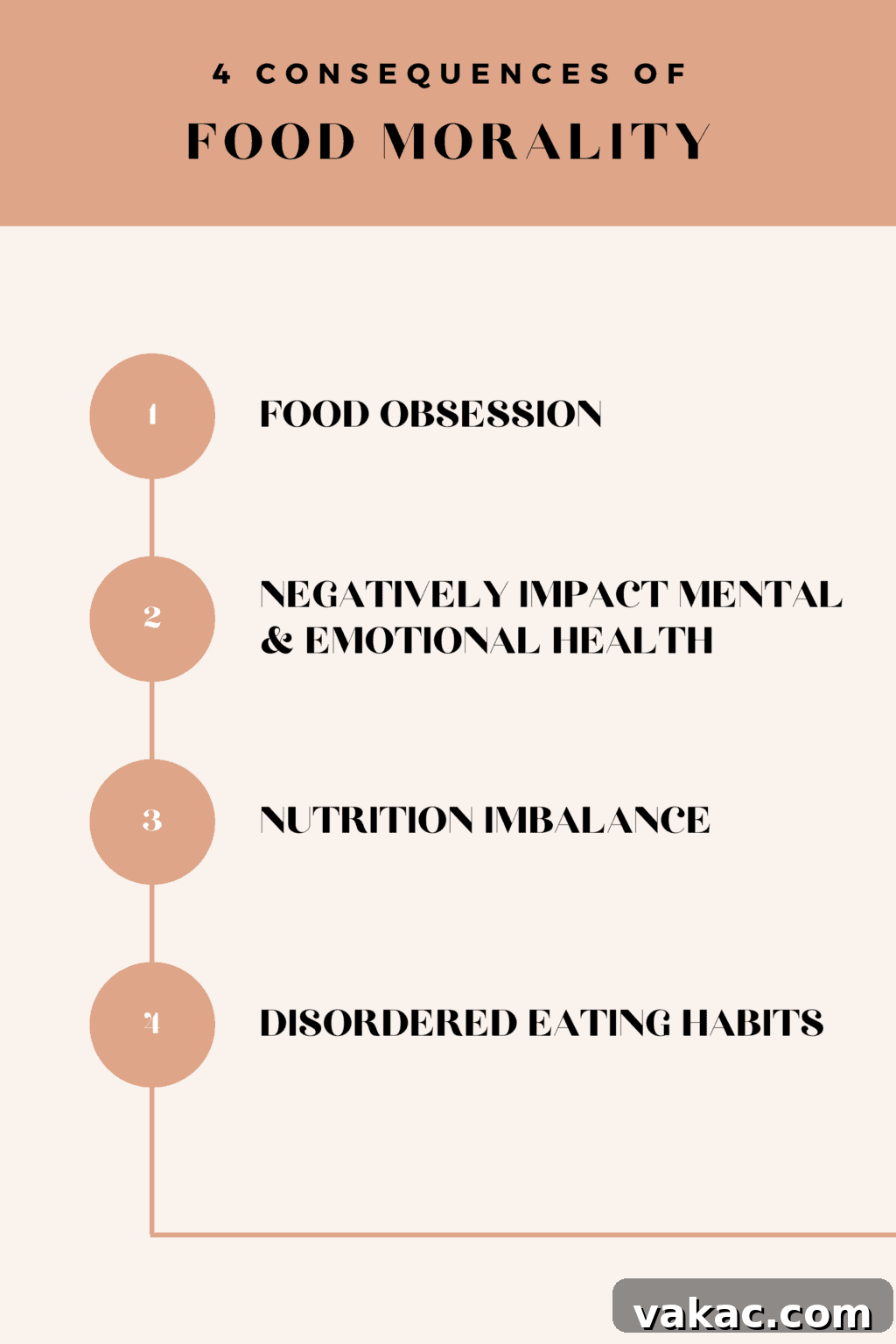
The Real-Life Consequences of Food Morality
The impact of food morality extends far beyond just our plates, infiltrating various aspects of our physical, mental, and emotional health. Understanding these consequences is the first step toward breaking free from this restrictive mindset.
Food Obsession
Relying on a rigid food hierarchy to dictate what you “should” and “shouldn’t” eat can inevitably lead to a debilitating food obsession. This constant preoccupation with consuming “morally good” foods often manifests as overly restrictive diets, an incessant over-analysis of food labels, and ultimately, a profound sense of confusion and overwhelm surrounding basic nutrition. This relentless mental energy expended on food not only causes immense psychological distress but can also negatively impact our physical health due to the chronic stress it induces. The joy of eating transforms into a constant battleground of rules and regulations.
Negatively Impact Mental and Emotional Health
Food morality is a significant driver of anxiety, guilt, and shame. It transforms everyday activities, from simple grocery shopping to deciding on dinner, into highly stressful endeavors. These pervasive feelings of guilt and the mental restriction imposed around food can easily perpetuate a destructive binge-restrict cycle, or create feelings of being utterly “out of control” around food, further eroding our mental state. Because food morality explicitly links our sense of self-worth to our dietary choices, we may begin to internalize the belief that eating “bad” foods makes us inherently “bad people,” severely damaging our self-esteem and overall mental well-being. This can lead to social isolation as individuals avoid situations where “bad” foods might be present.
Nutrition Imbalance
The arbitrary labeling of foods as good or bad is a common precursor to significant nutritional imbalances. This often results in the overconsumption of “good” foods while simultaneously neglecting other essential nutrients that our bodies crucially need, which might be found in those very “bad” foods. A classic example is the demonization of both carbohydrates and fats, which are vital macronutrients required not just for basic survival, but for optimal energy levels, hormonal balance, and overall well-being. This imbalance is frequently observed in highly restrictive diets like keto, paleo, or even more extreme examples such as fruitarianism. Following such diets without critically questioning whether they truly serve our holistic health needs, or adequately considering the nutritional repercussions of eliminating entire food groups, can lead to chronic deficiencies in essential vitamins, minerals, and macronutrients, thereby gravely impacting our long-term health and vitality.
Disordered Eating Habits
Perhaps one of the most severe consequences, food morality frequently culminates in a deeply fractured relationship with food. When we designate certain foods as “bad,” we inherently feel guilt when we consume them, which in turn fuels an intense desire to restrict them. However, restriction—even purely mental restriction—paradoxically amplifies our desire and cravings for these very foods. It’s basic psychology: we inherently want what we perceive we cannot have. This often leads to increased cravings, which can then trigger episodes of overeating or even binge-eating. This is then followed by renewed guilt, and the cycle of restriction begins all over again, creating a relentless binge-restrict pattern that proves incredibly difficult to break without professional intervention.
6 Practical Steps Towards a Food-Neutral Life
Let’s be realistic – shifting your language and mindset around food won’t happen instantaneously. It’s a journey, not a sprint. However, I want to equip you with six actionable steps you can begin implementing today to release the grip of food morality and start perceiving food for what it truly is: simply food, nothing more, nothing less.
- Cultivate Awareness with a Food Journal
As a seasoned dietitian, this tool stands out as one of my most cherished and effective. It’s crucial to understand that this is emphatically *not* a food tracker or a calorie counter. Instead, it’s a powerful introspective tool designed to help you explore not just *what* you eat, but more importantly, *why* you eat it, *how* you feel emotionally and physically when you eat, and any recurring patterns that impact your feelings or influence your choices. Use this journal for a full week, committing to making no conscious changes to your eating habits during this period. Simply observe your thoughts, feelings, and physical sensations without judgment or guilt, and note what emerges. While this might sound challenging initially, I promise that the invaluable insights you gather will serve as a guiding star for fostering long-term, sustainable changes in your relationship with food.
- Consciously Let Go of Restrictive Food Rules
On paper, this step might appear deceptively simple, but in practice, it can be incredibly difficult. I understand; I’ve personally navigated this challenge and supported many others through it. Yet, the act of letting go of rigid food rules is the essential first step toward reconnecting with the innate intuitive eater that each of us is born as. To begin this process, review your food journal. Diligently identify and then actively challenge any rigid food rules you’ve adopted. Ask yourself critical questions: Where did these rules originate? Do they genuinely serve your overall well-being and health today? Often, these rules stem from external sources and past experiences rather than your body’s current needs.
- Actively Reframe Your Thoughts About Food
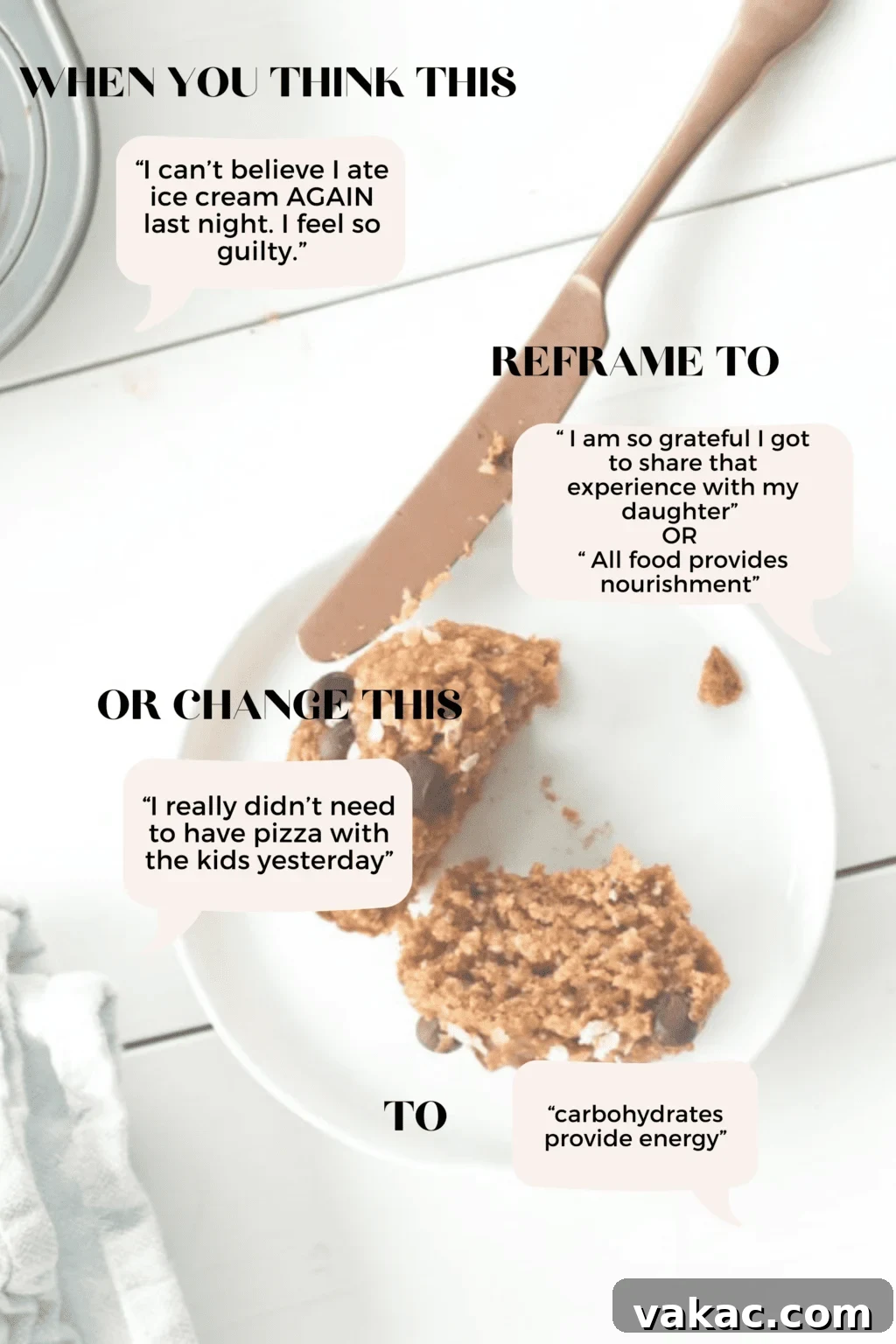
As you reflect on the entries in your food journal, pay close attention to the thoughts that emerge, particularly those that are steeped in food morality. These thoughts might manifest as:
- “I can’t believe I ate ice cream AGAIN last night. I feel so guilty.”
- “I shouldn’t have had those carbohydrates with dinner.”
- “I really didn’t need to have pizza with the kids yesterday.”
Now, challenge yourself to reframe these thoughts, stripping away the moral judgment. Consider these powerful reframes:
- “I ate ice cream.” This is a simple, neutral fact. It wasn’t inherently “good” or “bad”; it simply happened. This approach helps to neutralize the food, taking it off its exalted pedestal, which empowers you to make future intentional decisions rather than emotionally-driven ones.
- “Carbohydrates provide energy,” or “All food provides nourishment,” or even, “I am grateful for the energy those carbs provided me, allowing me to fully enjoy activities with my family or maintain focus at work.” Carbs are not your enemy; they are the body’s preferred and most efficient source of energy.
- “I am grateful for the precious memory I created with my daughter over that ice cream yesterday.” Food offers more than just physical nourishment; it nourishes the soul. Some of my most cherished childhood memories revolve around shared meals and treats. When you stop obsessing about food and simply allow yourself to enjoy it in the moment, you grant yourself the invaluable gift of presence. Who wouldn’t desire that profound sense of mindfulness and connection?
- Grant Yourself Unconditional Permission to Eat All Foods
Embracing the freedom to eat and genuinely enjoy all foods is a profoundly liberating experience. This step is about internalizing the understanding that no food is truly “off-limits,” and there are no forbidden fruits in a healthy relationship with eating. Instead of operating from a place of restriction, learn to ask yourself: “What would truly taste good right now? What would feel good in my body? What would be genuinely satisfying?” Making your food decisions based on what feels right – for your mind, body, and soul – allows you to reconnect with your body’s wisdom and foster those innate intuitive eating skills we are all born with. This unconditional permission also effectively takes these “forbidden” foods off their pedestal, neutralizing their allure and significantly decreasing that obsessive urge to “have them right now!” When we know we can have a food anytime we truly desire it, we become empowered to make intentional decisions, saying both “yes” and “no” when each choice is the most loving and self-compassionate decision for us in that specific moment.
- Actively Reject Diet Culture’s Messages
It is crucial to recognize the overwhelming influence that diet culture wields in promoting and perpetuating food morality. Make a conscious effort to challenge its insidious messages and actively seek out resources and communities that champion a more balanced, compassionate, and evidence-based approach to eating. This proactive rejection of diet culture is one of the foundational principles of intuitive eating, and it can be incredibly challenging, especially given its pervasive nature. It’s a multi-billion dollar industry, after all – that’s an enormous amount of marketing power constantly directed your way, designed to make you feel inadequate. If you find yourself struggling with this, take time to reflect deeply on your personal history with dieting. Look inwards and honestly ask yourself: “Did that diet genuinely work for me in the long term (i.e., am I still following it consistently today)? Did I achieve the sustainable results I truly desired, or were they merely temporary?” Your personal experience is a powerful indicator of diet culture’s efficacy (or lack thereof).
- Seek Out and Embrace Support
Navigating this profound journey of transforming your relationship with food can be quite challenging and often stirs up a wide spectrum of emotions. Whether you choose to seek support from trusted loved ones, or from qualified professionals such as registered dietitians or therapists specializing in eating disorders and intuitive eating, there is absolutely no shame in facing these hurdles and seeking assistance. In fact, it’s a sign of strength and self-care. It can be incredibly empowering and validating to open up about your experiences and struggles around food. Sharing your journey and receiving professional guidance not only provides you with valuable tools and strategies but also makes the path ahead feel significantly less intimidating and lonely. Remember, you don’t have to navigate this complex journey by yourself.