
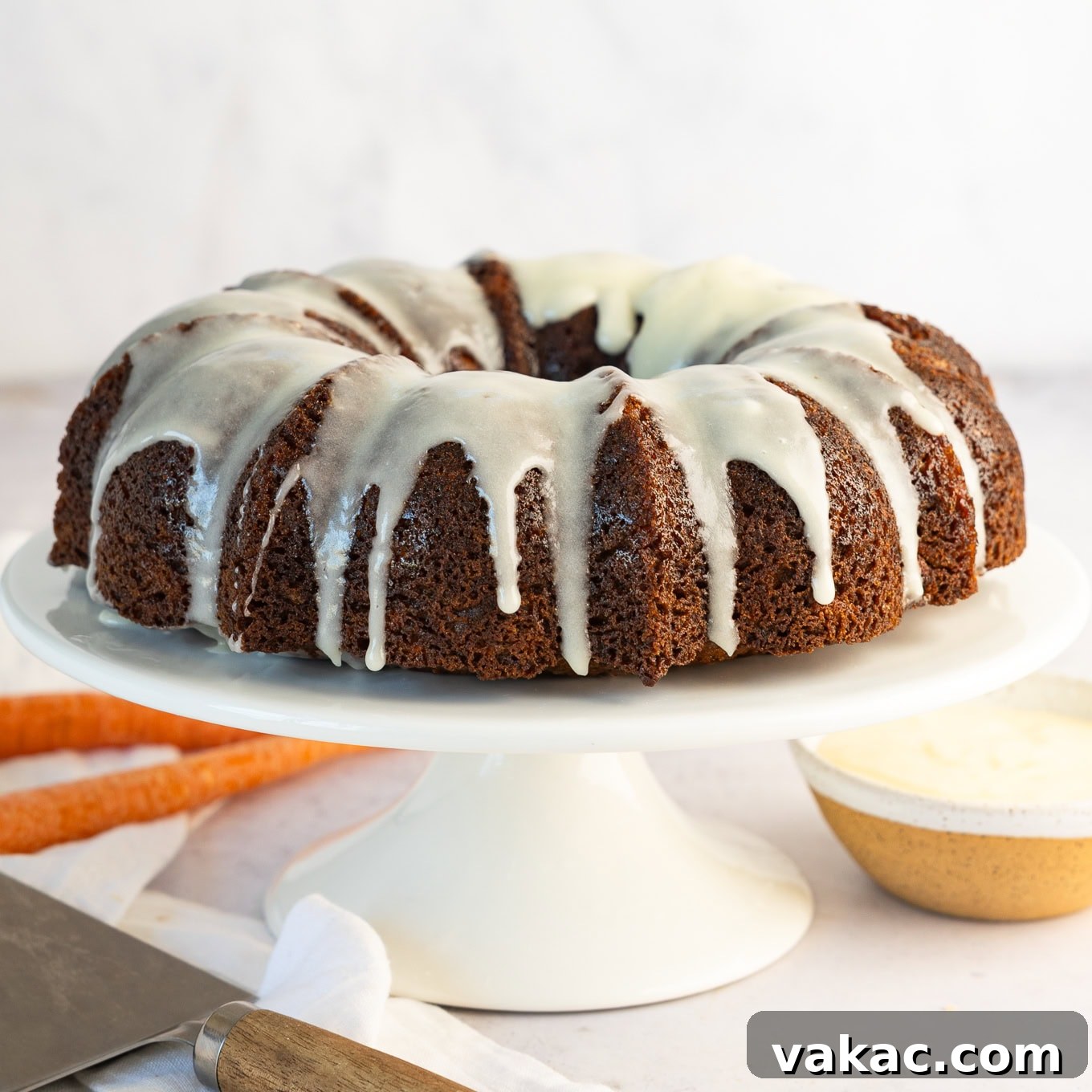
There’s nothing quite like the comforting aroma and rich flavor of a homemade carrot cake. But what if you could enjoy all the delightful spices, the incredible moistness, and the classic cream cheese frosting without the fuss of stacking and elaborately decorating multiple layers? Enter the Carrot Bundt Cake – a truly elegant yet effortlessly simple dessert that promises to be a showstopper at any gathering. This recipe celebrates the heart and soul of traditional spiced carrot cake, delivering the same beloved textures and taste in a beautiful, easy-to-make bundt form.
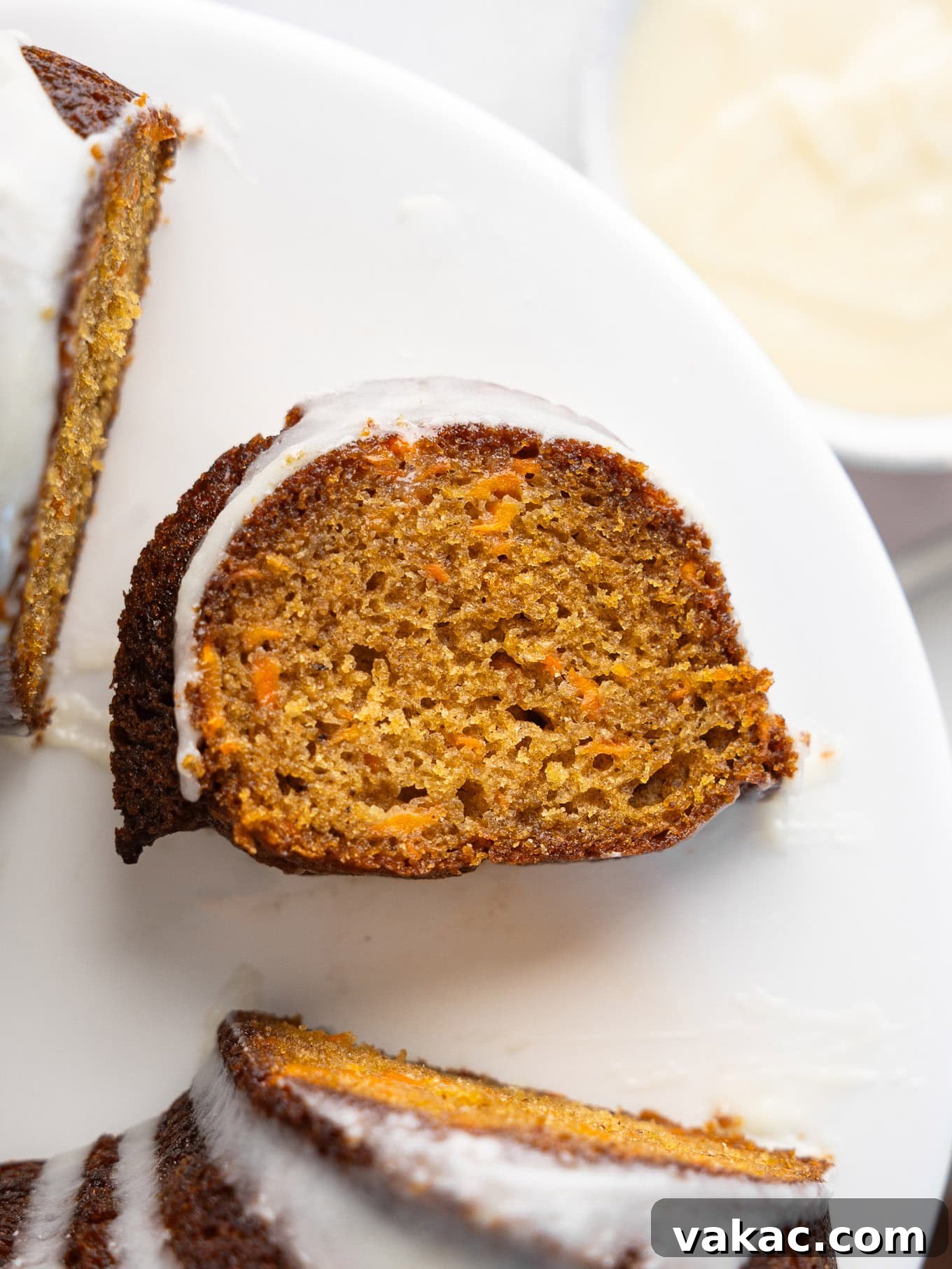
For home bakers, the appeal of a bundt cake is undeniable. It transforms a simple batter into a visually stunning dessert with minimal effort. The intricate designs of a bundt pan do all the heavy lifting, eliminating the need for intricate frosting techniques or elaborate decorations. This particular carrot bundt cake is a testament to that convenience. It’s a streamlined version of many classic carrot cake recipes, specifically designed for ease and guaranteed moistness. We’ve fine-tuned the sugar content slightly and opted for a luscious, pourable cream cheese icing that complements the cake’s rich flavors perfectly, making it an ideal choice for bakers of all skill levels.
The beauty of this recipe lies not only in its stunning presentation but also in its simplicity. With a prep time of just about 20 minutes, you can have a magnificent cake ready for the oven, leaving you more time to enjoy your special moments. Its crowd-pleasing appeal makes it the perfect dessert for any occasion, from casual family dinners to more festive celebrations like spring brunches, Easter, Mother’s Day, or even an autumn harvest feast. This cake is sure to impress everyone who takes a bite.
Discover the Recipe: Watch the Baking Process
A video showcasing the step-by-step preparation of this delicious carrot bundt cake will be available here soon! In the meantime, follow the detailed instructions below.
Ingredient Spotlight & Smart Substitutions
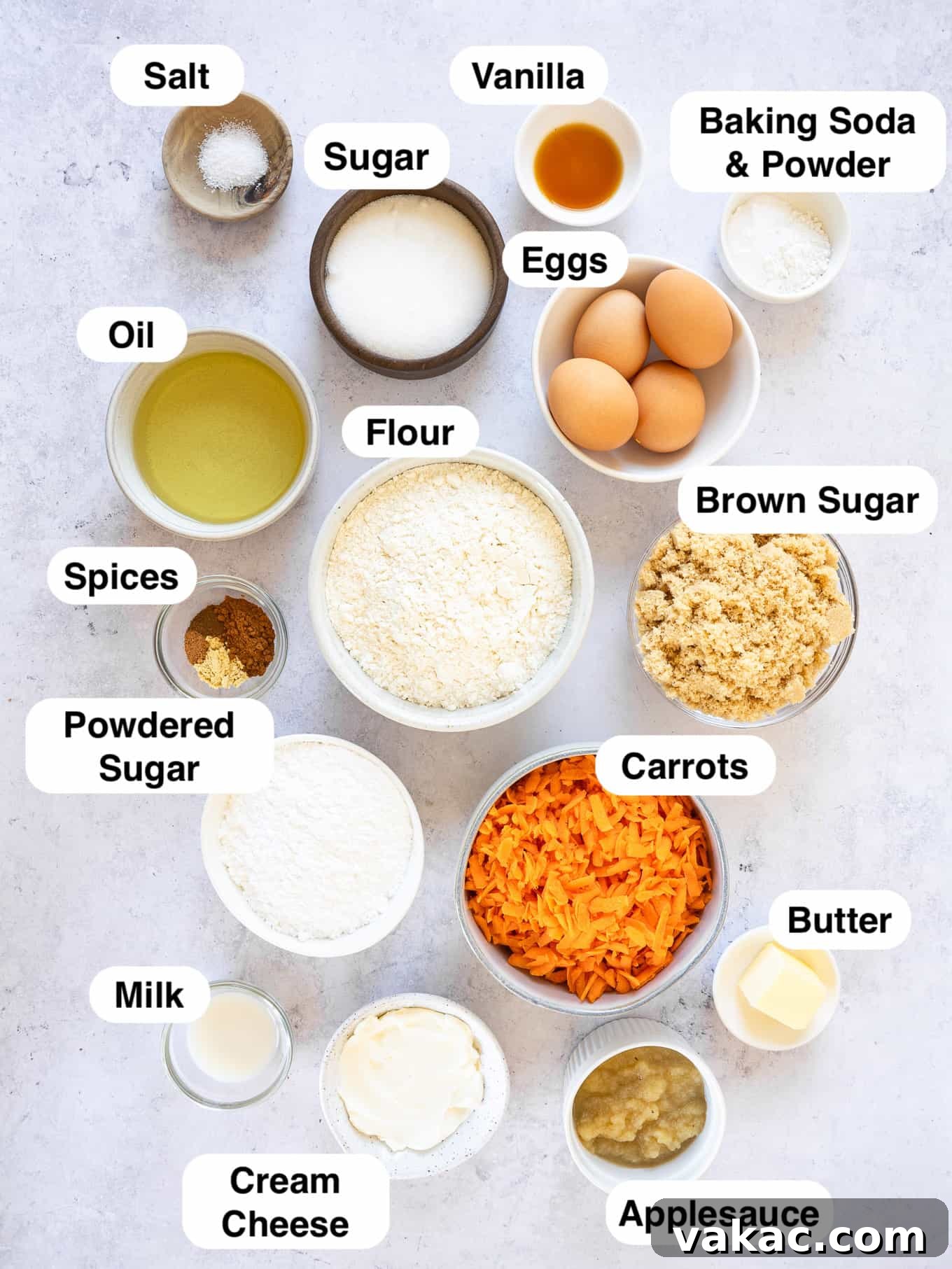
Crafting the perfect carrot bundt cake begins with understanding your ingredients. Here’s a closer look at some key components and how to ensure the best results:
Carrots: The Heart of the Cake
The quality of your carrots directly impacts the texture and flavor of your cake. Always opt for freshly grated carrots for this recipe. Store-bought pre-shredded carrots, while convenient, tend to be drier and coarser, leading to a less moist and flavorful cake. For the ideal texture, use the largest holes on your cheese grater. This creates substantial carrot strands that hold their moisture and contribute beautifully to the cake’s structure without disappearing into the batter or making it overly wet. Aim for about 3 cups of lightly packed grated carrots for the perfect balance.
Cream Cheese: For the Icing Perfection
For the quintessential cream cheese icing, the type of cream cheese matters. You’ll need about 2 ounces (a quarter of a standard block) of full-fat, brick-style cream cheese. This variety offers the rich, tangy flavor and firm texture necessary for a luscious, yet pourable, icing. Steer clear of the spreadable cream cheese sold in tubs, as it contains stabilizers and has a higher water content, which will result in a thin, runny icing that won’t set properly on your cake.
Applesauce: The Unsung Hero of Moisture
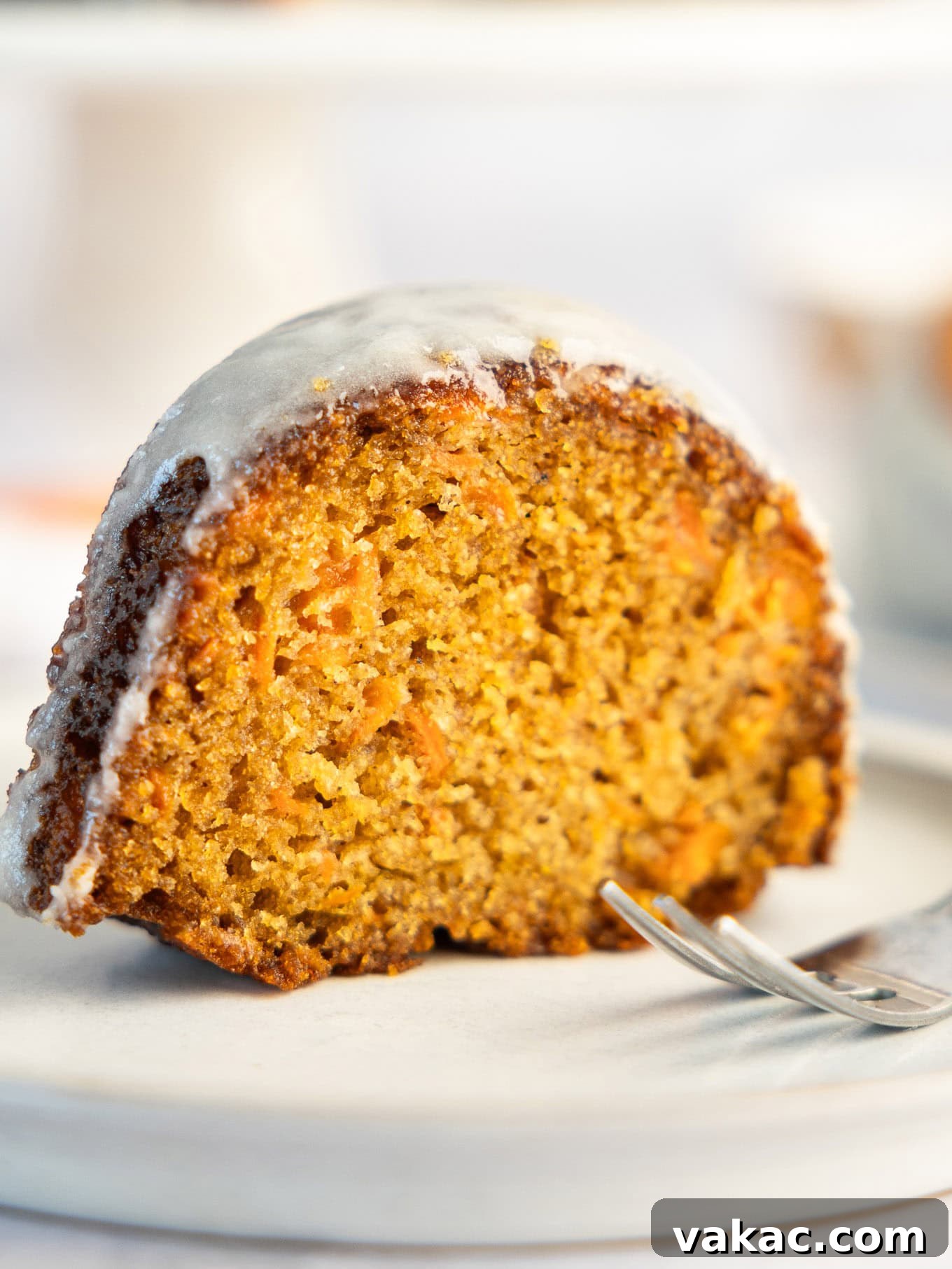
Our secret weapon for an incredibly moist carrot cake that remains wonderfully light and never greasy is unsweetened applesauce. It adds natural sweetness and a significant moisture boost without the heavy feel that excess oil or butter can sometimes impart. Unsweetened is preferred to control the overall sugar level, but if only sweetened is available, it will still work perfectly. Should you find yourself without applesauce, fret not! Excellent substitutes include ½ cup of plain Greek yogurt or sour cream for a similar tangy richness, or one 8-ounce can of crushed pineapple (well-drained to avoid adding too much liquid).
Oil: Ensuring a Tender Crumb
The choice of oil plays a crucial role in the cake’s tender crumb. It’s best to use a neutral-flavored oil such as canola oil, vegetable oil, or avocado oil. These oils contribute moisture without imparting any distinct flavors that might compete with the warm spices of the carrot cake. If you prefer to use coconut oil, ensure all your other ingredients are at room temperature. Coconut oil solidifies when it comes into contact with cold ingredients, which can lead to an uneven batter and an undesirable texture in the final cake. Always melt and cool coconut oil slightly before incorporating it into the wet ingredients.
Spices: The Soul of Carrot Cake
The warm spice blend is what truly defines a carrot cake. This recipe uses a classic combination of ground cinnamon, ginger, nutmeg, and cloves. Ensure your spices are fresh for the most vibrant flavor. Stale spices lose their potency, resulting in a less aromatic and flavorful cake. You can easily test the freshness of your spices by smelling them; they should have a strong, pleasant aroma.
Mastering the Moist Bundt Cake: Essential Baking Tips
Achieving a perfectly moist and tender carrot bundt cake is simpler than you think with a few key techniques. These tips will help you avoid common baking pitfalls and ensure your cake is nothing short of spectacular:
- Measure Flour with Precision: The “Spoon & Level” Method. Flour measurement is arguably one of the most critical steps for a moist cake. Never scoop flour directly from the container with your measuring cup, as this compacts the flour, resulting in up to 25% more flour than intended. Excess flour leads to a dry, dense, and tough cake. Instead, gently spoon the flour into your measuring cup until it’s overflowing, then use the straight edge of a butter knife or a flat spatula to level it off. This ensures you get the precise amount needed for that desirable tender crumb.
- Embrace the Magic of Brown Sugar. This recipe intentionally calls for a higher proportion of brown sugar compared to granulated sugar, and for good reason. Brown sugar, with its molasses content, is hygroscopic, meaning it attracts and retains moisture. This not only contributes to the cake’s rich flavor and golden hue but also significantly enhances its moistness and tenderness. Furthermore, the acidity in brown sugar reacts with baking soda, aiding in the cake’s rise and creating a lighter texture. If you’re out of brown sugar, you can easily create a substitute by combining granulated sugar with a touch of molasses.
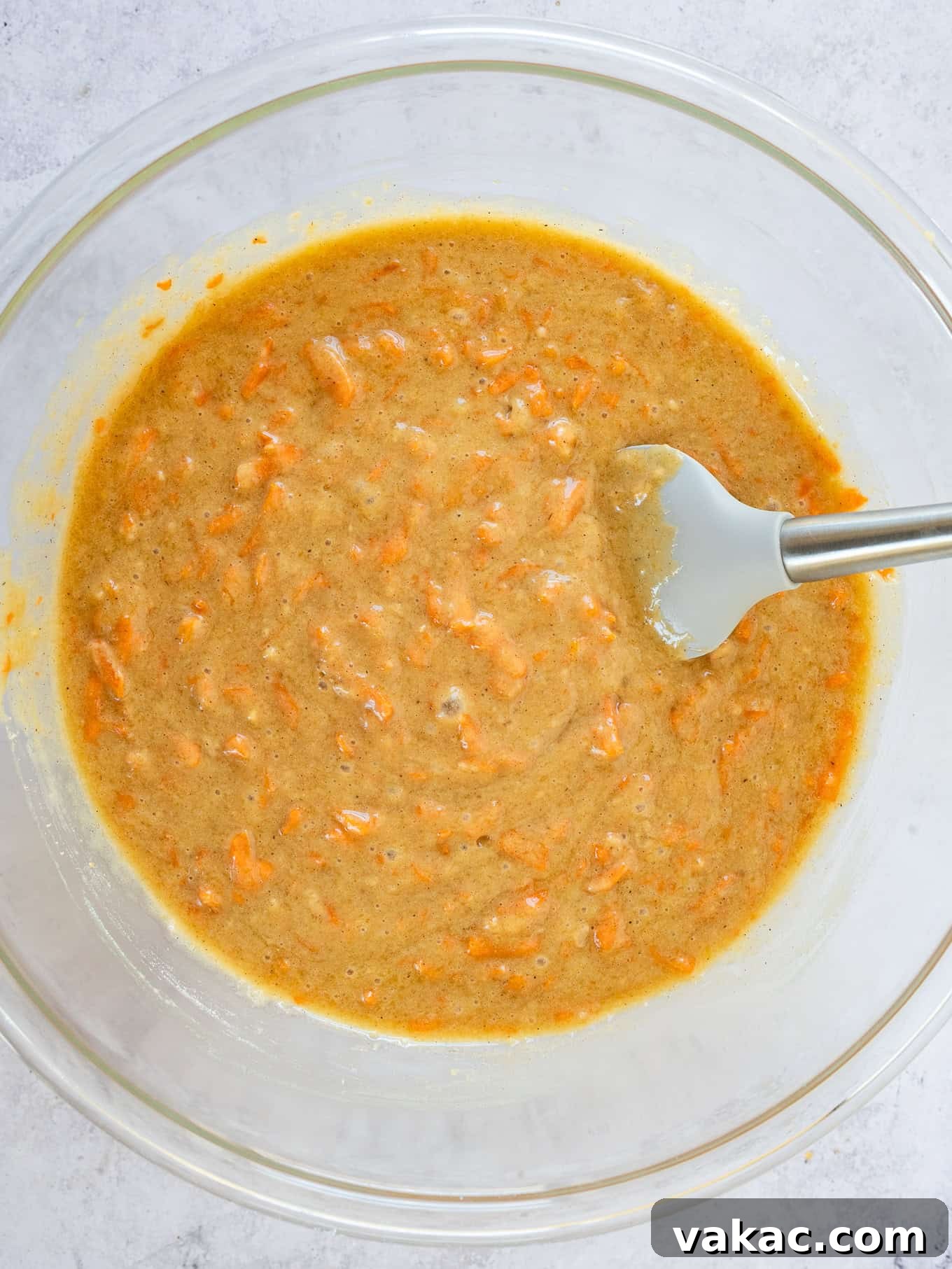
- The Golden Rule: Avoid Overmixing the Batter. Once you’ve added the dry ingredients to the wet ingredients, mix only until they are just combined and no streaks of flour remain. Overmixing the batter develops the gluten in the flour excessively, which can result in a cake that is tough, chewy, or even gummy. A gentle hand and a rubber spatula are your best friends in this step to ensure a delicate and tender crumb.
- Bake to Perfection, But Don’t Overbake! Overbaking is the quickest route to a dry cake. Begin checking your cake at the lower end of the suggested baking time. Look for a beautiful golden-brown top that appears set. The most reliable test is to insert a toothpick or a thin wooden skewer into the deepest part of the cake. If it comes out clean with no wet batter attached, your cake is done. If the top begins to brown too quickly before the center is cooked, loosely tent the pan with aluminum foil to shield it and allow the inside to finish baking without burning the crust.
- Start with Room Temperature Ingredients. For optimal emulsification and a smooth, uniform batter, ensure your eggs, applesauce, and any dairy (like the cream cheese for the icing) are at room temperature. This allows them to blend more evenly with other ingredients, creating a consistent batter that bakes more uniformly and yields a finer crumb.
- Cooling with Patience. The cooling process is just as important as the baking. While it’s tempting to rush, allowing the cake to cool for the recommended time in the pan before inverting prevents it from breaking or sticking. Transitioning to a wire rack for complete cooling ensures proper air circulation, preventing condensation and a soggy bottom.
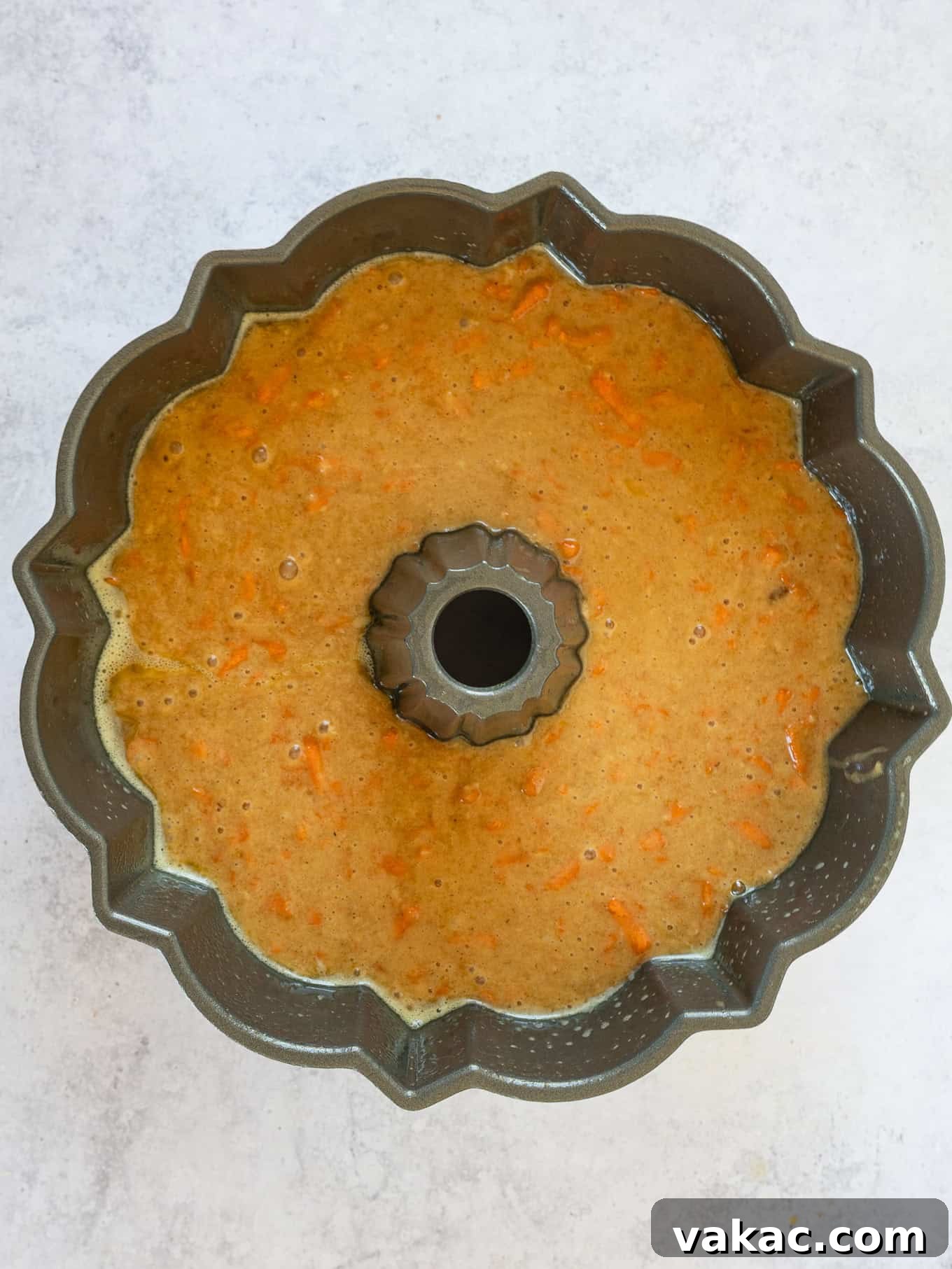
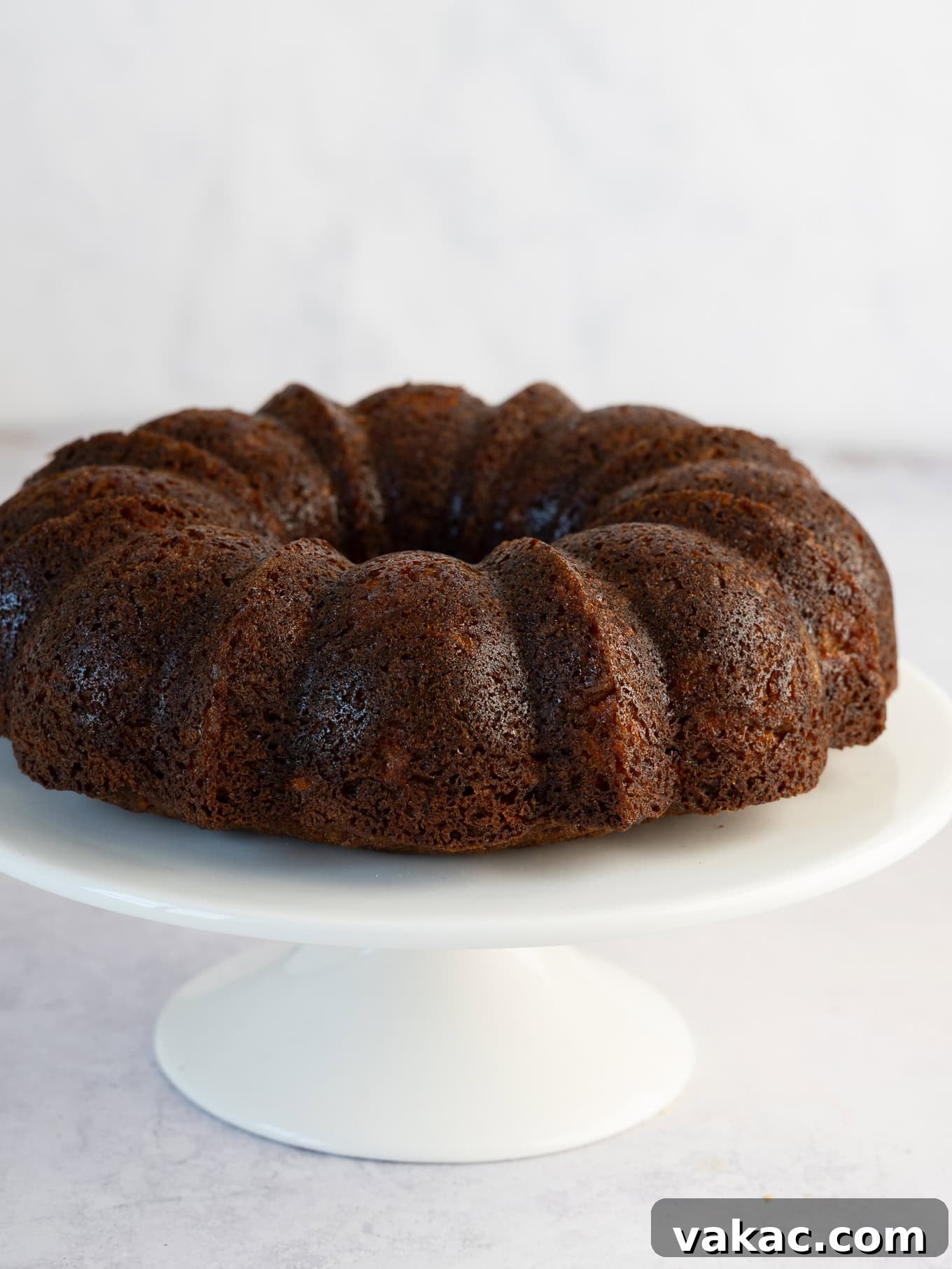
Effortless Release: Preventing Your Bundt Cake from Sticking
The elaborate grooves and designs of a bundt pan are what give these cakes their signature beauty, but they can also be a magnet for sticking if not properly prepared. There’s nothing more disheartening than a beautifully baked cake that refuses to release cleanly from the pan. Here’s how to ensure a flawless bundt cake every time:
- Invest in a Quality Non-Stick Bundt Pan: While older metal bundt pans can work, a modern non-stick bundt pan offers a significant advantage. Its specialized coating helps the cake release much more easily. Look for a light-colored pan, as darker pans can sometimes cause the cake’s crust to over-brown or even burn before the interior is fully cooked.
- Generous Greasing is Non-Negotiable: Don’t skimp on the non-stick spray! Every nook, cranny, and crevice of your bundt pan needs to be thoroughly coated. Use a high-quality non-stick cooking spray that contains flour, or apply a thin, even layer of melted butter or shortening with a pastry brush, then dust it lightly with all-purpose flour, tapping out any excess. This dual-layer of protection creates a barrier that your cake batter won’t be able to cling to. Ensure the entire surface, especially the center tube and any intricate patterns, is covered.
- The 20-Minute Cooling Rule is Key: Once your cake comes out of the oven, it’s crucial to let it cool in the pan for exactly 20 minutes on a wire rack. This allows the cake to slightly pull away from the sides of the pan as it contracts. If you try to invert it too soon, the cake is too fragile and might tear; if you leave it in too long, the cooling sugars can act like glue, making it stick.
- Gentle Loosening Before Inverting: After the 20-minute cooling period, if you suspect any parts might still be clinging, carefully slide a thin, flexible butter knife or an offset spatula between the cake and the pan along the outer and inner edges. Wiggle it gently to ensure the cake is fully detached.
- The Confident Inversion: Place a wire cooling rack directly over the top of the bundt pan. With a firm grip on both the pan and the rack, confidently flip them over together. Give the pan a gentle tap or two on the counter if needed. The cake should slide out cleanly. Allow it to cool completely on the wire rack before applying any icing.
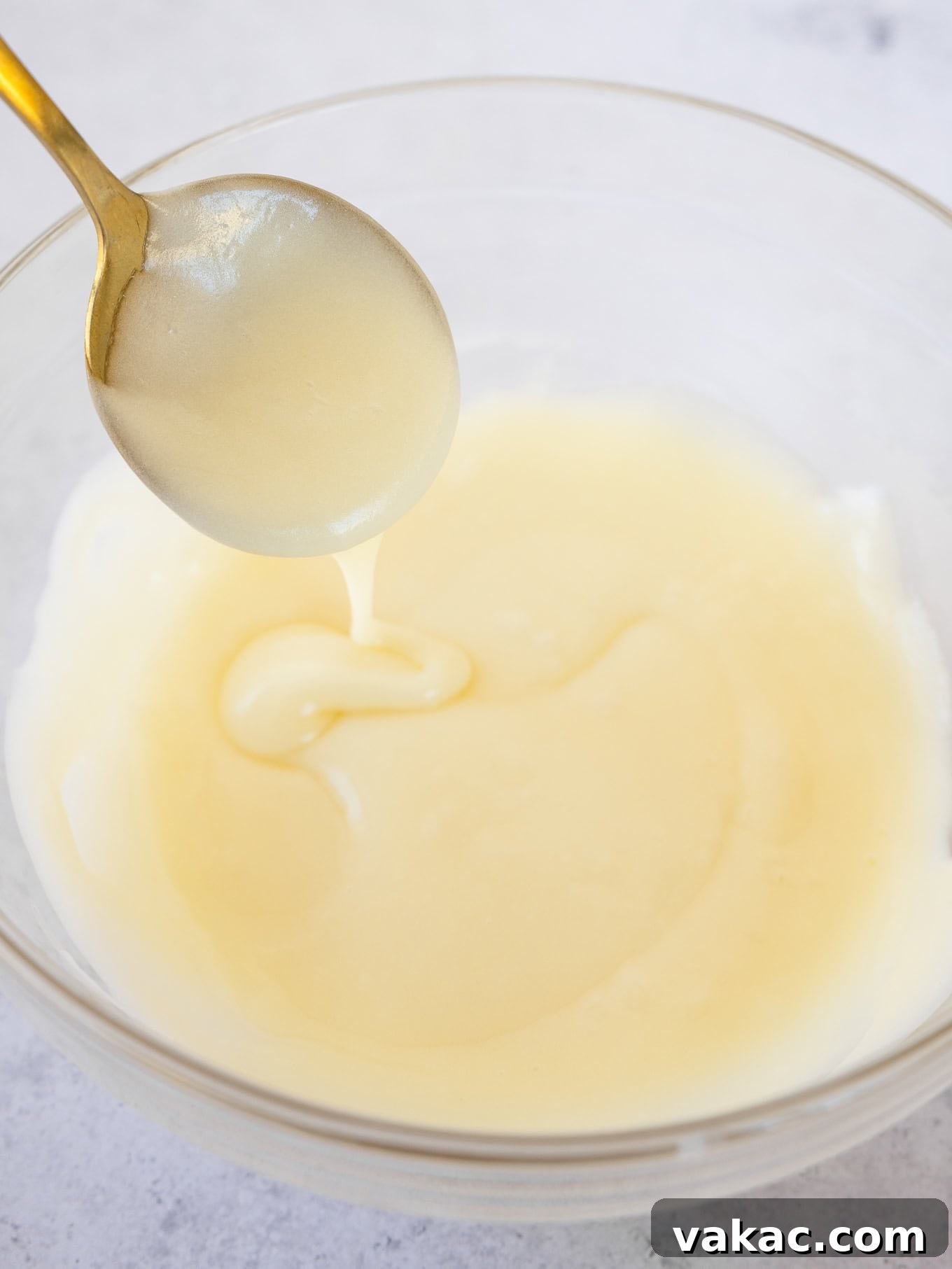
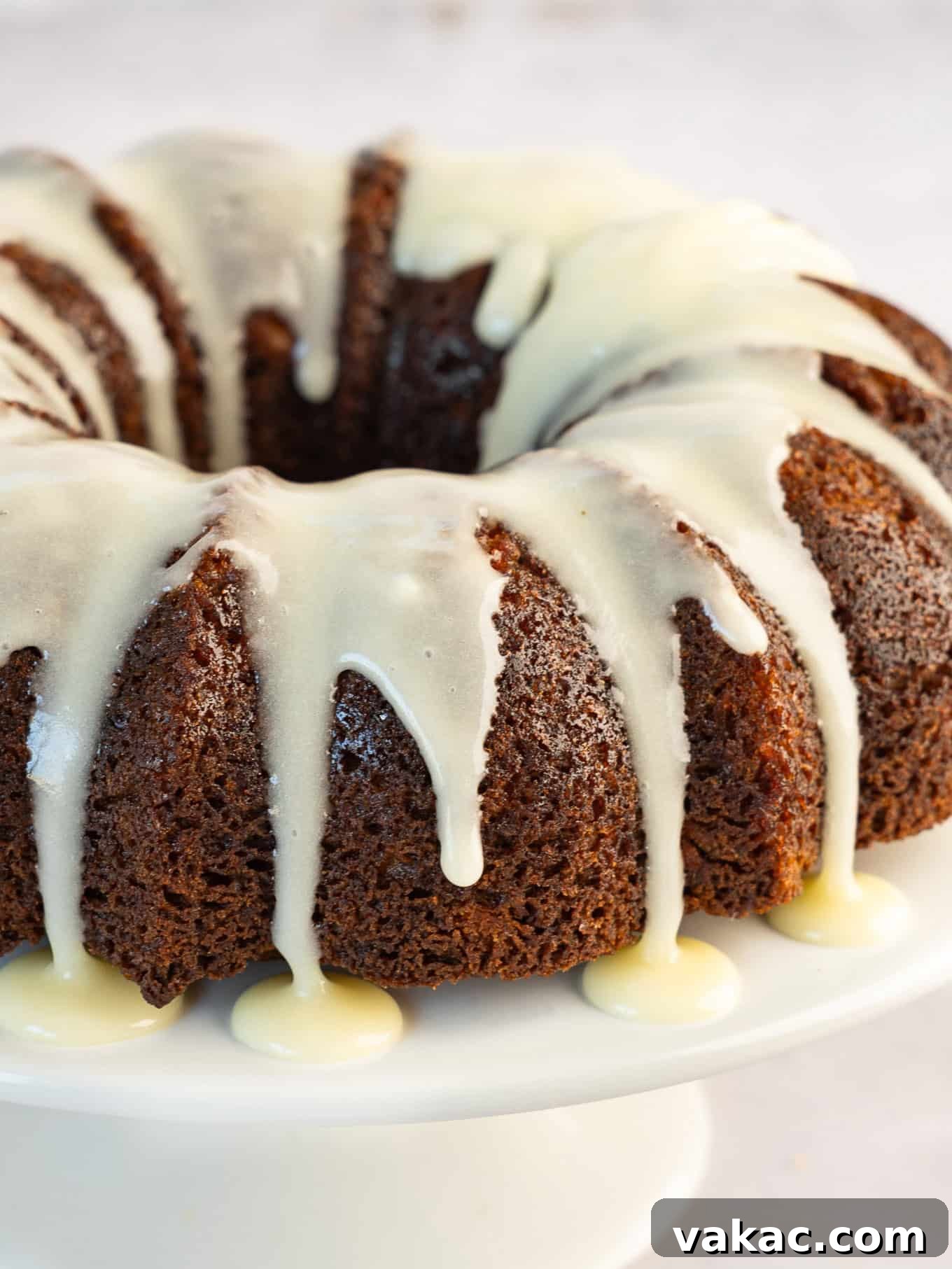
Topping Your Carrot Bundt Cake: Icing & Glaze Options
While the bundt pan does most of the decorative work, the right topping elevates the cake from simple to sublime. We’ve chosen a versatile cream cheese icing that’s both classic and convenient, but you have options!
Classic Cream Cheese Icing: The Perfect Complement
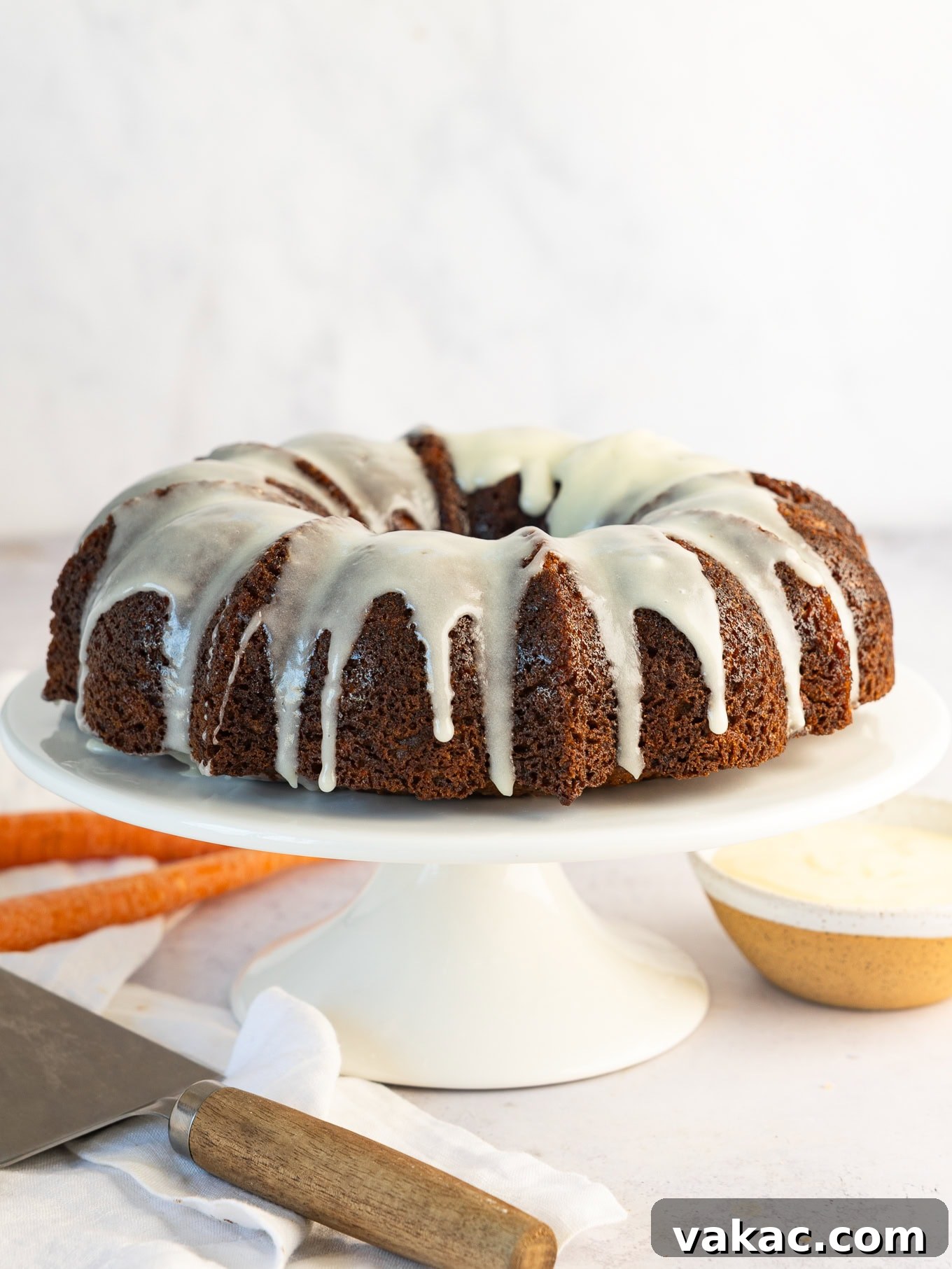
For this carrot bundt cake, we’ve opted for a simple, pourable cream cheese icing. It’s incredibly easy to make, eliminating the need for piping bags or intricate spreading. The tangy sweetness of cream cheese is the quintessential pairing for spiced carrot cake, creating a harmonious balance of flavors. Its pourable consistency allows it to beautifully cascade over the bundt cake’s crevices, highlighting its intricate design without extra effort. The only consideration with this luscious topping is that it requires refrigeration if the cake isn’t consumed within a few hours, due to the dairy content in the cream cheese and butter.
Exploring Alternative Glazes: No-Refrigeration Required
If you prefer an icing that doesn’t require refrigeration, or simply want to experiment with different flavor profiles, consider these delightful alternatives:
- Maple Cinnamon Glaze: A warm and inviting option that would beautifully enhance the spices in the carrot cake. It’s typically made with powdered sugar, maple syrup, a touch of milk, and cinnamon, offering a slightly different, equally delicious sweetness. This glaze sets up well and usually doesn’t need refrigeration, making it great for potlucks or outdoor gatherings.
- Simple Vanilla Glaze: For a versatile and universally loved option, a straightforward vanilla glaze is always a winner. Comprising powdered sugar, milk (or water), and pure vanilla extract, it provides a clean, sweet finish that lets the carrot cake’s natural flavors shine. This type of glaze also tends to be shelf-stable at room temperature for a day or two.
No matter which topping you choose, ensure your cake is completely cool before applying the icing or glaze to prevent it from melting and soaking into the cake.
Customizing Your Carrot Bundt Cake: Add-Ins and Variations
While this recipe stands deliciously on its own, carrot cake is famously versatile. Feel free to personalize your bundt cake with your favorite additions to make it truly your own!
Embrace Nuts or Raisins
If you’re a fan of a “loaded” carrot cake, you’re welcome to incorporate your favorite mix-ins. You can add up to 1 cup of chopped walnuts or pecans and/or ½ cup of raisins. For best results and to prevent them from sinking to the bottom of the cake during baking, lightly toss your nuts and/or raisins with a tablespoon of the all-purpose flour before folding them into the batter as the very last step. This light dusting helps them suspend evenly throughout the cake.
Other Delightful Additions
- Shredded Coconut: For a tropical twist, add ½ to 1 cup of unsweetened shredded coconut to the batter.
- Pineapple Chunks: If you love the extra moisture and tang, add a small 8-ounce can of crushed pineapple (well-drained) or finely diced pineapple chunks (about ½ cup). Ensure they are very well-drained to avoid adding too much moisture to the batter.
- Orange or Lemon Zest: A teaspoon or two of fresh orange or lemon zest can brighten the flavors of the cake beautifully, adding a subtle citrusy note that complements the spices.
Choosing the Ideal Bundt Pan for Baking Success
The right bundt pan can make a significant difference in the appearance and baking consistency of your carrot bundt cake. Here’s what to look for:
- Capacity Matters: Always use a bundt pan with a 12-cup capacity. This recipe is specifically designed for this size, ensuring the batter fills the pan appropriately without overflowing or resulting in a cake that’s too small for the pan’s design.
- Opt for Light-Colored Pans: A light-colored metal bundt pan is highly recommended. Darker pans absorb more heat, which can lead to over-browning or even burning of the cake’s exterior before the interior is fully cooked. Light-colored pans promote more even heat distribution and a perfectly golden crust.
- Non-Stick for Peace of Mind: While proper greasing techniques are essential regardless of the pan, a good non-stick coating provides an extra layer of assurance that your beautifully baked cake will release cleanly and effortlessly, preserving all those intricate details.
- Consider the Design: Bundt pans come in a myriad of stunning designs. Choose one that you love! The design will become the natural decoration for your cake, making it look impressive with minimal effort on your part.
I sincerely hope you and your loved ones enjoy this simple yet spectacular carrot bundt cake as much as mine does! It’s a recipe designed to bring joy and deliciousness to your table with minimal stress. If you bake this cake, please don’t hesitate to share your experience. Leave a comment below and let me know how it turned out and what special occasions you shared it for. Happy baking!
Carrot Bundt Cake Recipe
45 mins
50 mins
1 hr 35 mins
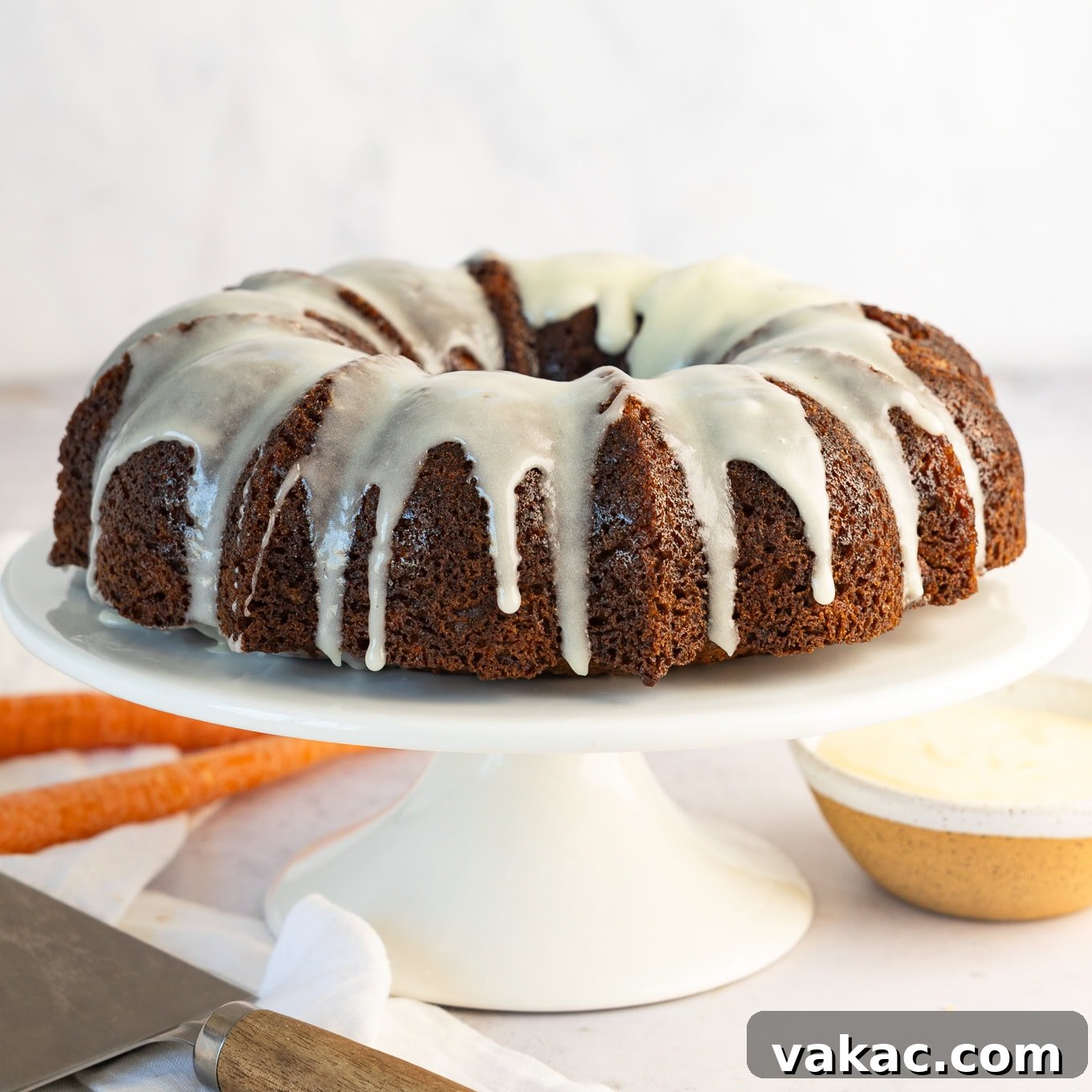
Baking carrot cake in a bundt pan creates an effortlessly beautiful, moist cake that’s perfect for occasions like Easter and Mother’s Day!
Pin Recipe
Leave a Review
Ingredients
12 slices
Carrot Bundt Cake
- 2 cups all-purpose flour (spooned & leveled, 250 grams)
- 2 teaspoons baking powder
- 1 teaspoon baking soda
- 1 ½ teaspoons ground cinnamon
- ½ teaspoon ground ginger
- ¼ teaspoon ground nutmeg
- ¼ teaspoon ground cloves
- ½ teaspoon salt
- 1 ¼ cups packed light brown sugar (250 grams)
- ½ cup granulated sugar (100 grams)
- ¾ cup canola or vegetable oil (180 ml)
- ½ cup unsweetened applesauce (125 grams)
- 4 large eggs at room temperature
- 1 teaspoon pure vanilla extract
- 3 cups lightly packed grated carrots (300 grams; using the larger side of a cheese grater)
Cream Cheese Icing
- 2 ounces brick-style cream cheese softened (57 grams)
- 2 tablespoons unsalted butter softened (28 grams)
- 1 cup powdered sugar (120 grams)
- 1 tablespoon milk (15 ml)
- ½ teaspoon pure vanilla extract
Instructions
-
To make the carrot cake: Preheat the oven to 350°F (177°C).
-
In a large mixing bowl, whisk together the flour, baking powder, baking soda, cinnamon, ginger, nutmeg, cloves, and salt until well combined. Set aside.
-
In a separate large mixing bowl, whisk together the brown sugar, granulated sugar, oil, applesauce, eggs, and vanilla extract until fully combined. Add the grated carrots to the wet ingredients and mix until well combined.
-
Pour the dry ingredients into the wet ingredients and mix with a whisk or rubber spatula until just combined, making sure not to over mix the batter.
-
Spray a 10-inch (12 cup) bundt pan generously with nonstick cooking spray.
-
Pour the cake batter into the prepared bundt pan and smooth it out.
-
Bake for 45 to 50 minutes or until a toothpick or skewer inserted all the way into the cake comes out clean. If needed, cover loosely with foil for the last 10 to 15 minutes of baking time to prevent excess browning.
-
Remove from the oven and allow to cool in the pan on a wire cooling rack for 20 minutes. Slide a butter knife down the sides of the cake to loosen any parts that may be stuck, then carefully invert the cake on top of a cooling rack and allow to cool completely to room temperature.
-
To make the cream cheese icing: Add the cream cheese and butter to a large mixing bowl. Using a hand-held mixer, beat the cream cheese and butter until smooth.
-
Add half of the powdered sugar and mix until well combined, then add the remaining half of the powdered sugar and mix until fully combined.
-
Add the milk and vanilla extract and continue mixing until fully combined, stopping to scrape down the sides of the bowl as needed.
-
To make the frosting pourable, gently warm the bowl of cream cheese frosting in the microwave in 10-second increments, stirring well after each one, until the frosting is thin and pourable (this typically takes about 20 seconds total).
-
Pour the icing all over the top of the bundt cake. Allow to set before slicing and serving.
Notes
Storage Instructions: Cake may be stored in an airtight container in the fridge for up to 4 days.
Freezing Instructions: Cake will freeze well for 2 to 3 months. Thaw to room temperature before serving.
Did you make this recipe?
Mention @livewellbakeoften on Instagram or tag #livewellbakeoften.