

Counting calories often presents itself as a straightforward path to health and weight management, a tempting illusion of control in a world that craves certainty. Yet, this rigid approach frequently diverts our attention from our body’s innate wisdom, compelling us to rely on external rules rather than trusting our own profound internal signals. The practice of meticulously tracking every bite can diminish the joy of eating, disrupt genuine connection with food and loved ones, and exert a detrimental influence on our relationship with food, our mental well-being, and even our metabolic health.
As an intuitive eating dietitian, my goal is to empower you with comprehensive, evidence-based information, enabling you to make informed decisions about your nutritional journey. This article will delve deeply into the psychological and societal reasons behind calorie counting, explore the compelling arguments for why you might choose to step away from this practice, and provide five practical, actionable steps to help you overcome obsessive calorie tracking. We’ll also dismantle several common calorie-related myths that perpetuate restrictive eating patterns.

The human brain is intrinsically wired to seek certainty and predictability. In a complex and often unpredictable world, finding comfort in knowing what to expect is a fundamental psychological need. This innate desire for control explains why many individuals gravitate towards calorie counting. The meticulous tracking of calories can offer a profound, albeit false, sense of security. It creates the illusion that as long as we adhere to a predetermined caloric limit, we can stave off unwanted outcomes, particularly concerning weight and health.
This pursuit of numerical precision can also foster a feeling of daily accomplishment. Many of us engage “willpower,” diligent label reading, and calorie-tracking applications, convinced that these actions are essential for maintaining our “wellness.” This mindset is deeply rooted in prevalent diet culture messaging, which pervasively propagates the oversimplified notion that weight loss is merely a matter of “calories in vs. calories out.” It suggests that strict counting and cutting calories are the definitive pathways to achieving and sustaining health. But is this widely accepted narrative truly accurate? Let’s critically examine the evidence.
Ready to Transform Your Relationship with Food?
Embark on a journey to true food freedom. This guide helps you explore not just what you eat, but the deeper reasons behind your choices, your emotional responses to food, and the patterns that influence your overall well-being. Start cultivating a healthier, more intuitive connection with food today!
Understanding the Allure: Why We Count Calories
From our earliest educational experiences, we are conditioned to seek and value “the right answer.” Whether excelling in a spelling bee or acing a math test, the validation of getting things “correct” often shapes our sense of worth and accomplishment. This ingrained mentality extends beyond academics and frequently infiltrates our relationship with food. In a society saturated with conflicting diet culture messages – constantly dictating “right” and “wrong” ways to eat, often changing with every new trend – it’s easy to feel overwhelmed and confused. In this climate, many individuals understandably turn to calorie counting as a perceived antidote, believing it offers a definitive framework and a tangible sense of control amidst the chaos.
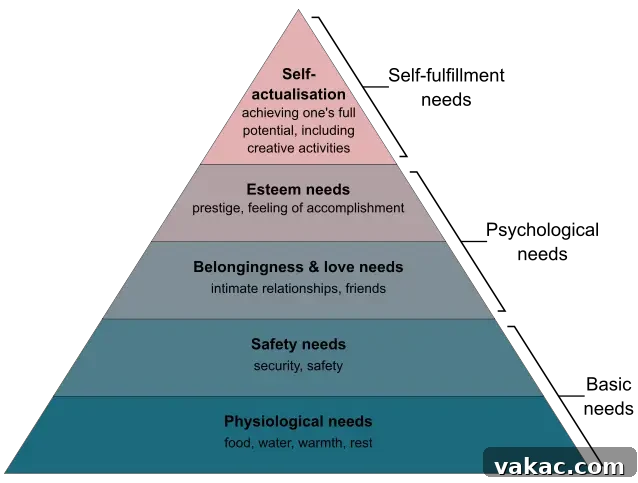
As previously discussed, humans possess a fundamental need for certainty and predictability in their lives. This need is directly linked to our sense of safety and security, which, as depicted in Maslow’s Hierarchy of Needs (illustrated above), occupies the second tier, just above our most basic physiological requirements like food, water, warmth, and rest. According to Maslow’s model, higher-level needs can only be addressed once lower-level needs are adequately satisfied. When we consider the societal landscape, rife with pervasive weight stigma, fat phobia, and the often-unseen advantages of thin privilege (for a deeper dive into these critical concepts, refer here), it becomes evident that the underlying drive behind the pursuit of weight loss is often not purely about health. Instead, it frequently stems from a profound desire for social acceptance, safety, and belonging within our communities. In this context, calorie counting emerges as a seemingly effective, yet ultimately deceptive, method to gain a perceived sense of control over these fundamental safety needs.
What’s one readily available, yet ultimately misguided, strategy to gain a false sense of control when our intrinsic safety needs are challenged? It is, unequivocally, calorie counting.
Why You Should Consider Stopping Calorie Counting
Despite the persistent messages from diet culture suggesting that calorie counting leads to effortless, sustainable weight loss, this perspective is fundamentally flawed. Here’s a detailed look at why this approach is often counterproductive and difficult to maintain long-term:
1. You Cannot Outsmart Your Biology
Many individuals recount experiences of using online calorie calculators or tracking apps that recommend daily calorie limits ranging typically between 1200 and 1500 kcal for adult individuals. This is a remarkably low intake, especially when considering that a toddler often requires around 1200 kcal for proper growth and development. Such restrictive calorie targets are not only unrealistic but actively work against your body’s survival mechanisms. So, what happens when you attempt to restrict your intake to these extreme levels?
- Your Survival Mechanism Activates:
- While you might observe initial weight loss, this is a temporary effect. Human bodies have evolved over millions of years with sophisticated adaptive mechanisms to survive periods of famine. When caloric intake is severely restricted, a cascade of biological responses is triggered to increase your drive to eat. These include: an elevated production of ghrelin, the primary hunger hormone, which significantly boosts your appetite; an increased release of Neuropeptide Y, a neurotransmitter that specifically heightens your craving for carbohydrates; and a substantial decrease in leptin, the satiety hormone, leading to reduced feelings of fullness and satisfaction after eating. Your body is quite literally fighting to keep you alive, overriding any conscious efforts to restrict.
If you have ever felt like a personal failure because you couldn’t adhere to a low-calorie diet plan for an extended period, understand that it was never a failure of your willpower! It was your body’s intelligent biology protecting you.
- Negative Impact on Your Metabolism:
- In direct response to perceived dietary restriction, your body interprets this as a state of semi-starvation and takes protective measures. It will actively lower its basal metabolic rate by up to 40% to conserve energy. This adaptive thermogenesis means your body burns fewer calories at rest, making it harder to achieve or maintain a calorie deficit. Once you cease dieting, the body, still in “famine recovery” mode, often stores extra fat to better prepare for any future periods of restriction. This crucial physiological response explains why research consistently demonstrates that dieting is a strong predictor of long-term weight gain, with studies showing that a significant majority—up to two-thirds of individuals who diet—ultimately regain more weight than they initially lost.
- Calorie Restriction Leads to Rebound Eating and Binge Cycles:
- These powerful compensatory mechanisms, driven by biological urges, frequently culminate in periods of rebound eating or even binge eating. These episodes, in turn, often trigger intense feelings of guilt, shame, and inadequacy, perpetuating a destructive diet cycle. Each subsequent attempt to diet becomes more challenging, as your body grows more adept at surviving “famine,” manifesting as increased difficulty in losing weight, regardless of your efforts. It may feel as though your body is actively sabotaging your weight loss goals, but in reality, it is diligently working to ensure your survival and safety. If these experiences resonate with you, exploring resources on How to stop feeling guilty after eating and How to have a healthy relationship with food can provide valuable guidance.
2. Disconnects You From Your Body’s Innate Wisdom
Despite the simplistic advice often peddled by fitness influencers, our bodies are far from mechanical. Your metabolism is an intricate system, influenced by a myriad of unique factors including your activity level, lifestage (e.g., pregnancy, menopause), sex, age, stress levels, and genetic predisposition. Given this profound individual variability, the notion that you require the *exact same* amount of calories every single day is illogical and detached from biological reality.
This rigid, external approach can compel you to eat when you are not physically hungry simply because you have “calories left” in your daily budget, or conversely, to restrict food despite intense hunger because you’ve exceeded your “allotment.” The more we surrender to external dieting rules, the further we drift from our intrinsic ability to listen to and understand our body’s authentic needs. The vital question then becomes: How do we truly know what is *enough*? The answer lies in re-learning to listen to our bodies and fostering deep, unwavering body trust. We’ll explore how to cultivate this crucial connection in the steps that follow.
3. Prevents You from Being Present and Enjoying Life
The constant mental burden of budgeting, monitoring, and meticulously tracking your calories demands an immense amount of cognitive energy. This relentless focus on numbers pulls you away from the present moment, trapping you in your own head. Imagine trying to engage meaningfully in a conversation or a social gathering while simultaneously performing mental math to log every ingredient of your meal – it’s exhausting and profoundly distracting.
While adhering to rigid rules might initially provide a sense of structure and the comforting illusion that you are “doing everything right,” this approach often comes at a steep cost. It frequently steals the joy from simple, everyday moments, erodes genuine connection with yourself and your loved ones, and ultimately causes you to miss out on the rich, meaningful experiences that make up life. True nourishment extends beyond caloric intake; it encompasses pleasure, connection, and mindful engagement with your food and your environment.
Ready to Transform Your Relationship with Food?
Unlock a healthier relationship with what you eat. This resource empowers you to understand the “why” behind your eating habits, how food impacts your feelings, and to identify patterns that influence your choices. Begin your journey toward lasting food freedom today!
5 Tangible Steps to Stop Obsessively Counting Calories
So, how do we definitively release the grip of calorie counting? The core of this transformation lies in fulfilling our fundamental needs for safety and security not through external metrics, but by cultivating profound trust in ourselves and our bodies. This journey can feel challenging, especially if you’re deeply entrenched in diet culture, and often benefits from supportive guidance. To help you begin, here are five practical steps to empower you to stop counting calories for good:
- Let Go of External Calorie Trackers and Rigid Rules:
This crucial first step involves consciously disengaging from all external tools and directives that dictate how much you “should” eat. This includes eliminating calorie-tracking applications (such as MyFitnessPal), point systems, food diaries, and advice from so-called “nutrition experts” who prescribe specific calorie targets. As we’ve extensively discussed, the only truly accurate way to discern the appropriate amount of food for your unique body is by diligently *listening* to its intrinsic signals and needs, not by adhering to arbitrary external numbers. Trust your body, not an app.
Note: If you are actively recovering from an eating disorder, particularly during a renourishment phase, specific caloric recommendations from your treatment team may be medically necessary. Always consult with your healthcare professionals for personalized guidance in such circumstances.
- Reconnect with Your Inner Hunger and Fullness Signals:
Contrary to the pervasive myths perpetuated by the weight loss industry, your body already possesses a sophisticated, built-in internal “thermostat” – the hypothalamus – designed to regulate your nutritional intake. Your body inherently strives for homeostasis, a state of steady internal conditions, because it functions optimally within specific physiological ranges. This principle is evident across various biological systems, from blood sugar regulation to pH levels and blood pressure; everything is meticulously controlled. It logically follows that your body would also possess an innate mechanism fiercely working to maintain a healthy set weight range unique to you.
Your hypothalamus continuously receives real-time information from your fat cells, digestive tract, and chemical messengers influenced by your activity levels, sleep patterns, and emotional states. In response, it generates intricate chemical and nerve signals that finely tune your appetite and metabolism. While we are not consciously aware of these minute chemical shifts, they profoundly influence our behavior, guiding us either toward or away from eating. They also shape how food tastes, the quantity of food required to feel genuinely satisfied, and the intensity of our cravings. Instead of battling your biology, your body will naturally communicate what is truly “enough.” To cultivate this essential body trust and learn to interpret these signals effectively, consider learning how to use the hunger-fullness scale and working alongside a compassionate, trusted professional.
- Take a Deliberate Break from Reading Nutrition Labels:
Actively challenge yourself to resist the ingrained habit of immediately scanning the nutrition facts table whenever you pick up a food item. Instead, redirect your focus to the sensory experience of the food: how it tastes, its texture, its aroma, and most importantly, whether you genuinely enjoy it. If the urge to check labels feels overwhelming, a helpful tactic is to physically cross out the calorie counts on food labels within your home pantry. This visual disruption can aid in breaking the ingrained habit. If you’ve been counting calories for years, you likely have many food calorie counts memorized; that’s perfectly normal. With consistent practice, you will gradually forge new neural pathways that prioritize enjoyment, satisfaction, and your body’s internal cues over numerical values.
- Recognize and Replace Your Inner Critic with a More Compassionate Voice:
It’s completely normal and understandable if you find yourself struggling with some of the concepts discussed here. These ideas often directly contradict decades of pervasive diet culture messaging. If breaking the habit of calorie counting feels challenging, know that this is a common experience, and it is truly okay. Instead of succumbing to self-judgment, consciously work to replace your inner critic with a voice of self-compassion and understanding. When we intentionally reframe our internal dialogue and thoughts, this shift profoundly influences how we feel emotionally, which in turn significantly impacts our behaviors and choices. Be patient and kind to yourself throughout this process.
- Embrace “Feel-Good” Nutrition:
Shift your focus from rigid rules and numbers to a more intuitive and enjoyable approach. Before eating, ask yourself genuinely: “What would truly taste good right now?” “What would make my body feel nourished and energized?” and “What would be genuinely satisfying?” By consciously bringing mindfulness, pleasure, and satisfaction into your daily eating decisions, you will progressively build confidence in your body’s ability to guide you. This internal trust will ultimately empower you to permanently ditch calorie counting in favor of a sustainable, joyful relationship with food. If you’re seeking inspiration for nourishing meals that prioritize satisfaction, explore this round-up of 15+ well-balanced meal ideas.
Ready to Transform Your Relationship with Food?
Are you ready to truly understand your eating habits? Our comprehensive guide helps you explore the fundamental aspects of your food relationship: what you eat, why you eat it, how it makes you feel, and the underlying patterns influencing your choices. Begin your journey to profound food freedom and intuitive eating today!
Debunking Common Calorie Myths
Many beliefs surrounding calories are deeply ingrained but lack scientific backing. Let’s bust some of these pervasive myths:
Myth 1: It’s a Scientific Fact That Everyone Needs to Eat 2000 kcal/day – False!
While the 2000-calorie daily recommendation is ubiquitous, one might assume it’s founded on rigorous scientific research. However, this assumption is incorrect. As meticulously detailed in Marion Nestle and Malden Nesheim’s insightful book, ‘Why Calories Count: From Science to Politics,’ the 2000-calorie standard actually originated from data collected in a 1990 survey by the United States Department of Agriculture (USDA). In this survey, participants *self-reported* their caloric intakes, which ranged from approximately 1600 to 3000 kcal per day. From this unvalidated and self-reported data, a standard of 2000 kcal was arbitrarily adopted. Given the well-documented tendency for underreporting of food intake in nutritional self-report studies, it is highly probable that this 2000 kcal limit is a significant underestimate of what the average North American person genuinely needs for optimal health and functioning. Your individual calorie needs are far more nuanced than a single, universal number.
Myth 2: Calorie Counts on Nutrition Facts Tables Are 100% Accurate – False!
The science of food and its caloric value is far from simple and exact. In reality, regulatory bodies like Health Canada permit a substantial margin of error—up to 20%—on the calorie counts listed on nutrition labels. This means that a sandwich you consume for lunch, labeled as 700 calories, could legitimately contain anywhere between 560 to 840 calories. This wide variability highlights the inherent imprecision of relying solely on these numbers. It underscores why rigidly adhering to reported calorie counts is an exercise in futility and further reinforces the need to tune into your body’s dynamic needs rather than fixed external figures.
Myth 3: Counting Macros Is Fundamentally Different from Counting Calories – False!
While macro counting (tracking grams of protein, carbohydrates, and fats) appears to be a more sophisticated approach than simply counting total calories, its underlying principle remains the same. It is still a tool rooted in external control and restriction, rather than fostering trust in your own internal wisdom. By focusing on numerical targets for macronutrients, you are once again disconnecting from your body’s intuitive cues—its hunger, fullness, and satisfaction signals—and relying on an external system to dictate your eating. Ultimately, it serves to reinforce the belief that you cannot trust your body to guide its own nourishment.
Now Over to You
We hope this exploration has offered new perspectives and valuable insights into the complexities of calorie counting and the liberating potential of intuitive eating.
- Did any of the information presented about calorie counting surprise you?
- Are there any lingering questions or topics related to calorie counting that we didn’t address?
Please share your thoughts and questions in the comments section below! Your experiences and insights are invaluable. And if you found this post helpful, consider sharing it with a friend or family member who might also benefit from understanding why letting go of calorie counting can be a profound step towards food freedom and a healthier relationship with their body.