
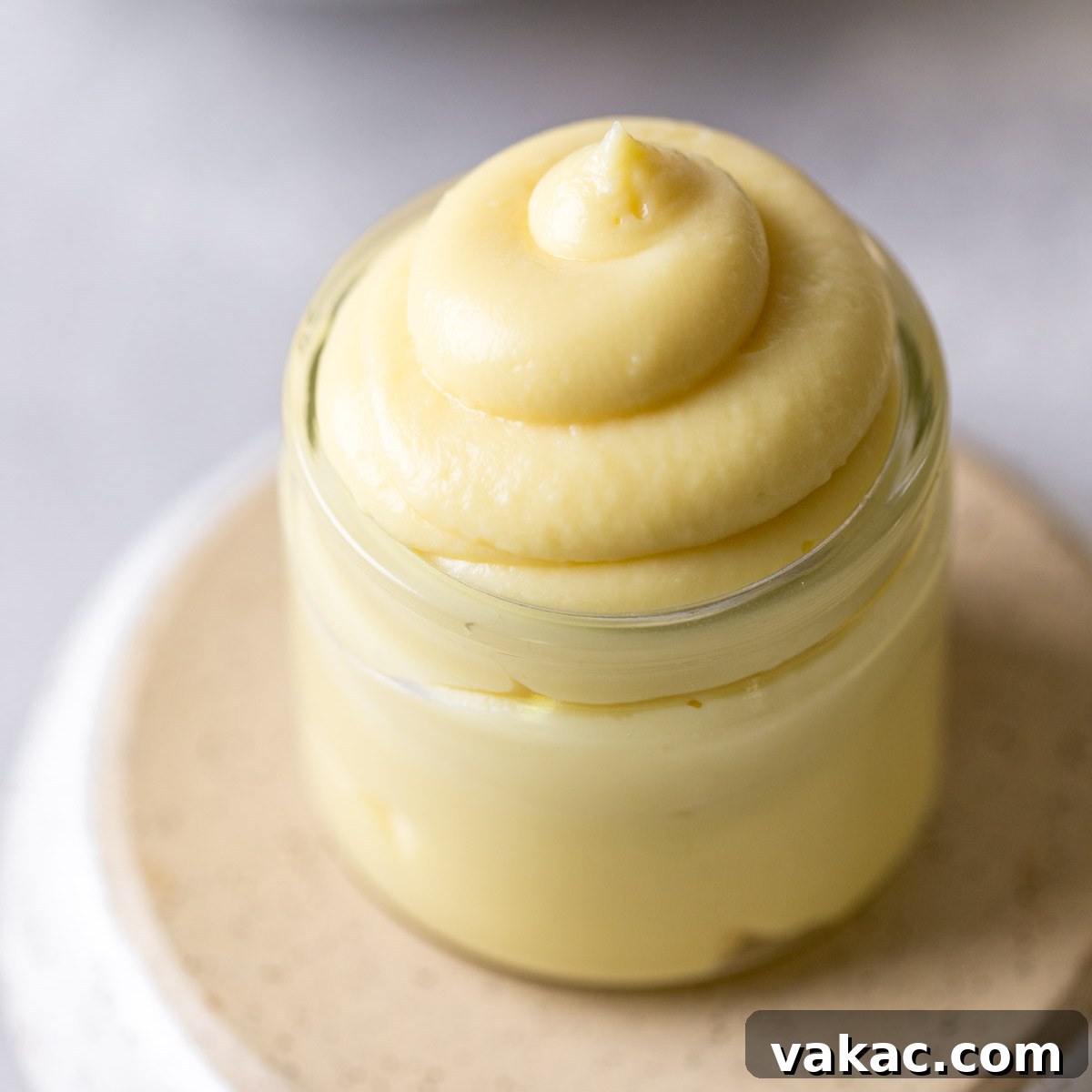
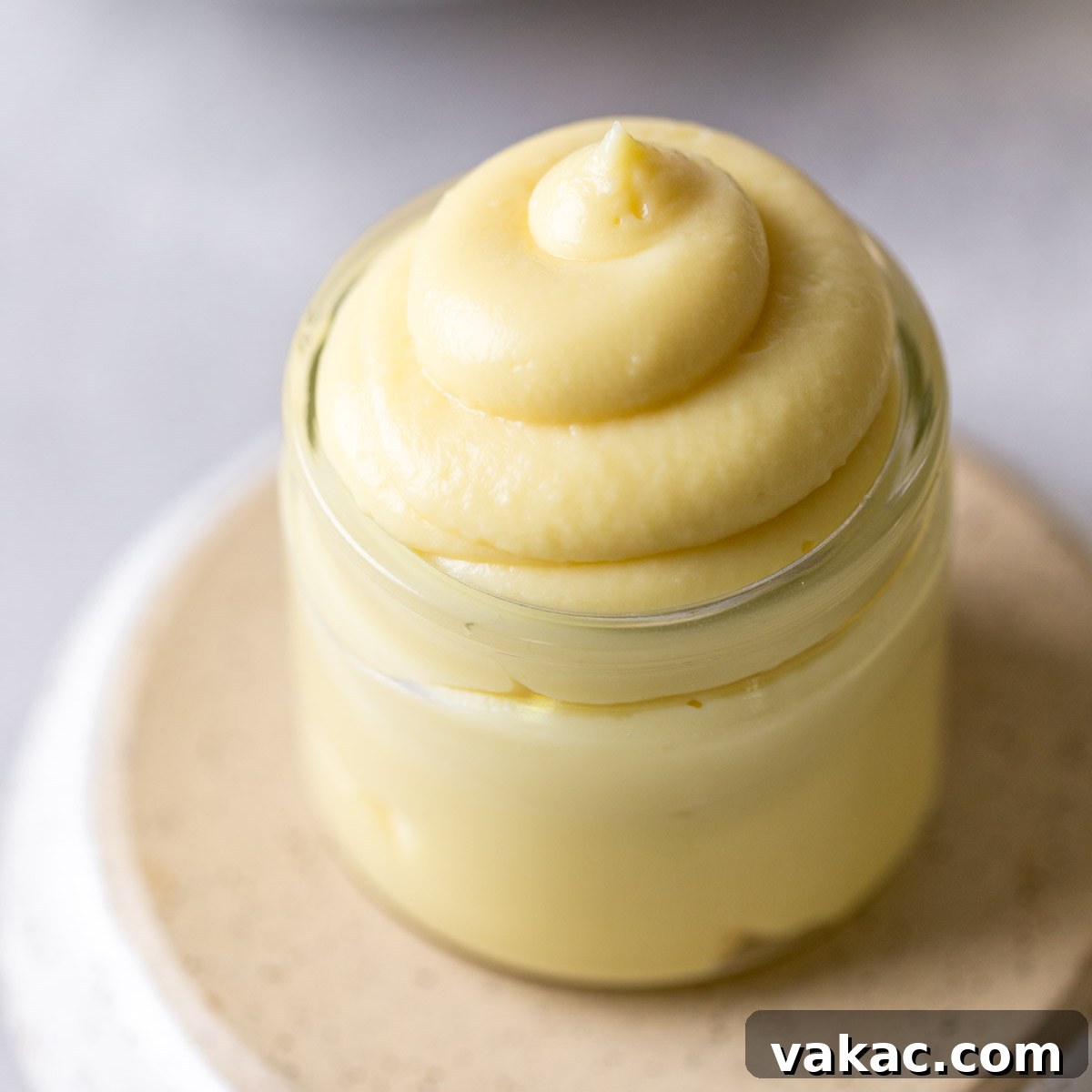
Welcome to the essential guide for mastering one of the most foundational and versatile preparations in the world of baking: Pastry Cream. Known elegantly in French as crème pâtissière, this rich, thick custard is the backbone of countless beloved desserts, from delicate cream puffs to elaborate tarts and celebratory cakes. If you’ve ever savored a dessert with a luscious, creamy filling, chances are you’ve experienced the magic of pastry cream. This recipe provides an easy-to-follow method to create a perfectly smooth, divinely flavored vanilla pastry cream that will elevate your baking endeavors and earn you a permanent spot in your culinary repertoire.
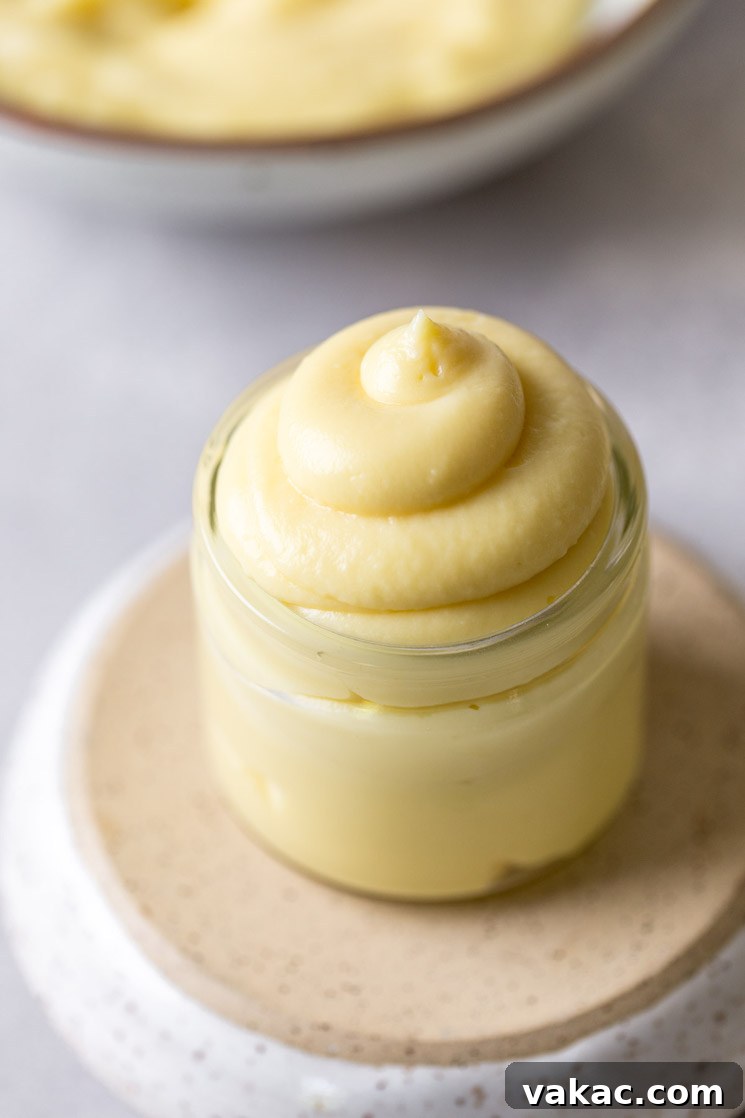
What is Pastry Cream (Crème Pâtissière)?
Pastry cream is a classic French custard known for its thick, velvety texture and incredible versatility. Unlike thinner custards, pastry cream is specifically designed to be robust enough to hold its shape when piped into pastries, yet smooth and luxurious on the palate. Its French name, crème pâtissière, directly translates to “pastry cream,” highlighting its primary role in patisserie. While it shares core ingredients with other custards—milk, egg yolks, and sugar—the addition of a starch, typically cornstarch (or cornflour in some regions), is what gives it its characteristic firmness and stability. This makes it an indispensable filling for a wide array of baked goods, offering both exquisite flavor and structural integrity.
You’ve likely encountered this delightful filling in many forms, even if you didn’t recognize its name. It’s the luscious heart of cream puffs and éclairs, the smooth base for fruit tarts, a decadent layer in cakes, and a delightful surprise in donuts or mille-feuille. Mastering homemade pastry cream, while requiring a bit of patience and attention to detail, is surprisingly simple once you understand the technique. Be aware that this recipe requires advance preparation, as the pastry cream needs ample time to chill and set in the refrigerator, typically two to three hours, before it can be used. This cooling period is crucial for achieving the perfect consistency and allowing the flavors to meld beautifully.
Why Master Pastry Cream?
For any aspiring or seasoned baker, mastering pastry cream is a pivotal step. It’s not merely a recipe; it’s a fundamental technique that unlocks a world of dessert possibilities. Once you can confidently prepare a batch of silky-smooth crème pâtissière, you’ll find yourself effortlessly creating a variety of classic and innovative treats. Its stability makes it ideal for piping and layering, while its rich, creamy texture provides a perfect contrast to crisp pastry shells or soft cakes. Moreover, pastry cream serves as an excellent base for flavor experimentation, allowing you to venture beyond classic vanilla into exciting variations like chocolate, coffee, citrus, or fruit-infused creams. This foundational skill will empower you to tackle more complex recipes and impress with your homemade delights.
Essential Ingredients for the Best Crème Pâtissière
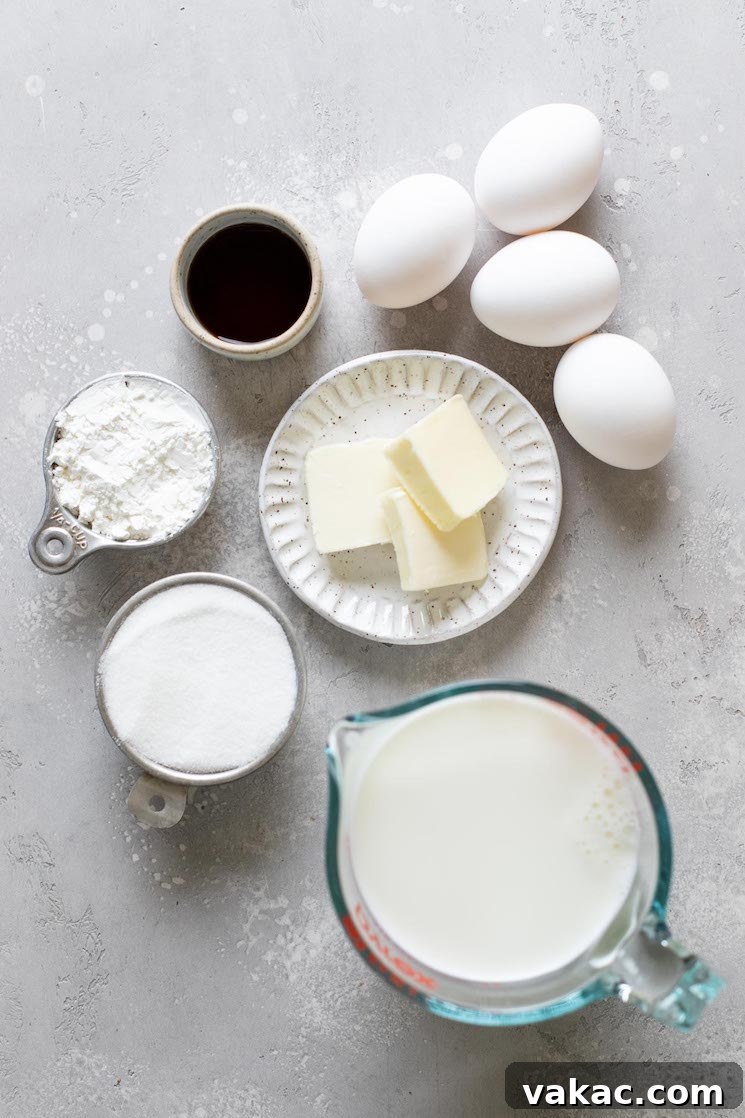
The beauty of pastry cream lies in its relatively simple ingredient list, yet each component plays a crucial role in achieving that perfect texture and flavor. For this guide, we’ll focus on a standard vanilla pastry cream, which serves as an excellent foundation for any future flavor explorations. Here’s a deeper look into the ingredients and their significance:
- Granulated Sugar: Beyond simply sweetening the pastry cream, sugar contributes to its smooth texture. When whisked with cornstarch, it helps prevent lumps and ensures a consistent melt during cooking. It also helps in tempering the egg yolks, protecting them from scrambling when hot liquids are added.
- Cornstarch: Often called cornflour in many countries, cornstarch is the primary thickening agent in this recipe. Its fine texture creates a smoother, glossier cream compared to flour, which can sometimes result in a duller finish or a slightly floury taste if not cooked thoroughly. Cornstarch is vital for giving the pastry cream its characteristic thick, pipeable consistency, making it perfect for fillings.
- Whole Milk: The richness and creaminess of your pastry cream are heavily influenced by the type of milk you use. Whole milk is highly recommended due to its higher fat content, which yields a more luxurious, flavorful, and stable custard. Skim or low-fat milk varieties will result in a thinner, less rich cream that lacks the desired mouthfeel.
- Egg Yolks: The heart of any good custard, egg yolks provide richness, color, and act as an emulsifier, contributing to the cream’s smooth texture. This recipe specifically calls for only the yolks, as the whites would make the custard too firm and less silky. Don’t let those leftover egg whites go to waste; they can be used in other recipes like meringues or a delightful white cake.
- Pure Vanilla Extract: For an authentic and vibrant vanilla flavor, pure vanilla extract is non-negotiable. Imitation vanilla simply cannot replicate the complex aromatic notes that pure vanilla provides. For an even more intense vanilla experience and beautiful speckles, you can substitute pure vanilla extract with an equal amount of vanilla bean paste or scrape the seeds from half a vanilla bean directly into the milk as it heats.
- Unsalted Butter: Added at the end of the cooking process, unsalted butter enriches the pastry cream, giving it a beautifully smooth, glossy finish and an even more decadent mouthfeel. Using unsalted butter is crucial in baking as it allows you to control the overall salt content of your recipe, preventing unwanted flavor variations that can occur with salted butters, which differ widely in sodium levels between brands.
How to Make Silky-Smooth Pastry Cream
Crafting perfect pastry cream involves a series of straightforward steps designed to create a lump-free, thick, and flavorful custard. Follow these instructions carefully to achieve professional-quality results every time.
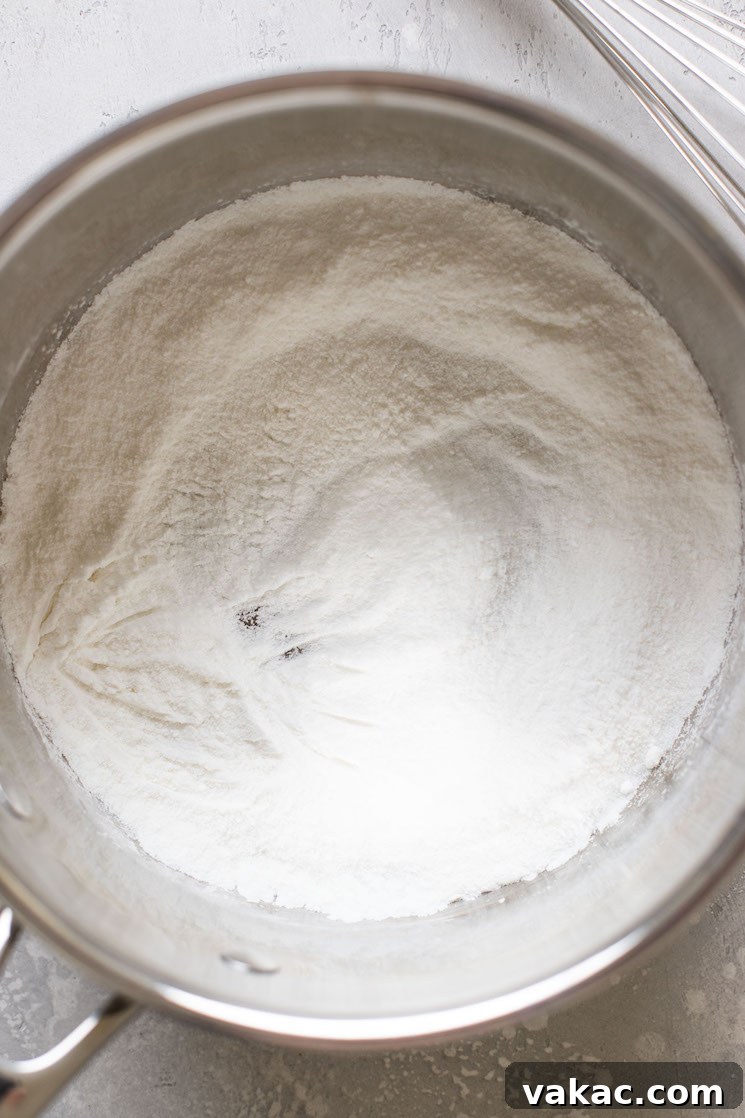
- Prepare the Dry Ingredients: Begin by combining the granulated sugar and cornstarch in a large, heavy-bottomed saucepan. Whisk these two ingredients together thoroughly until they are well combined. This crucial first step ensures that the cornstarch is evenly dispersed and prevents it from clumping when the liquid is added, guaranteeing a smooth final pastry cream.
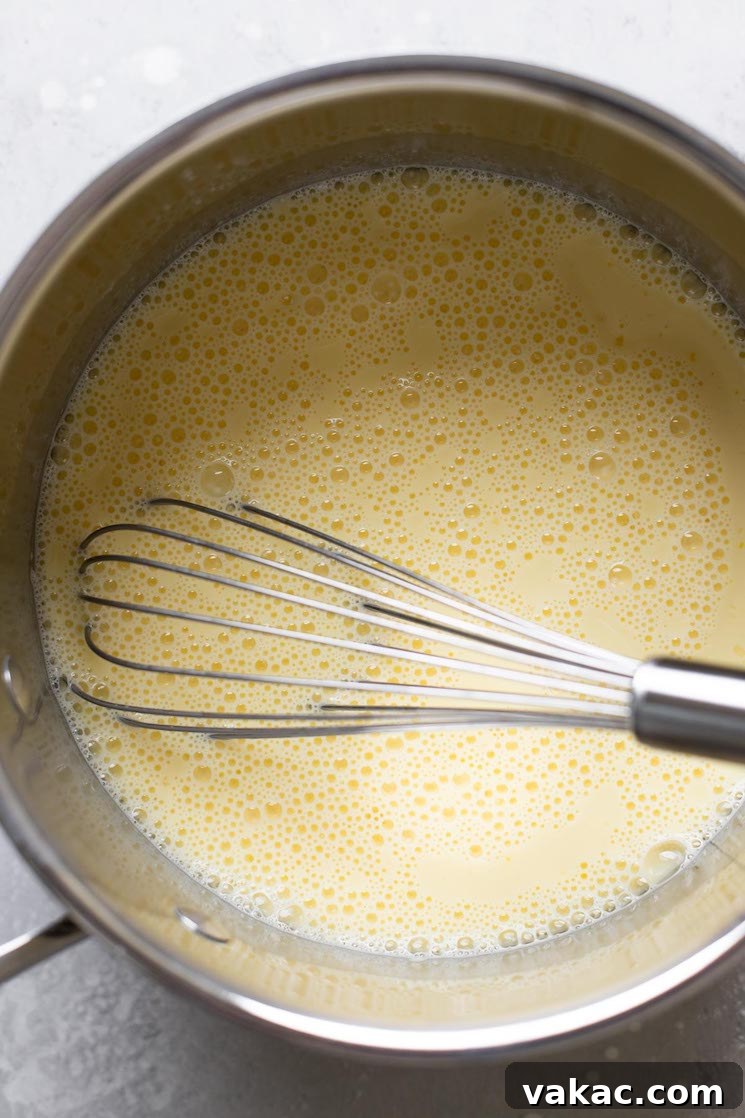
- Combine Wet Ingredients: In a separate medium-sized bowl, whisk together the egg yolks and whole milk until they are fully incorporated and a uniform yellow color. The continuous whisking ensures that the yolks are broken down and mixed completely with the milk.
- Integrate and Heat: Slowly pour the egg yolk and milk mixture into the saucepan containing the sugar and cornstarch. Whisk continuously as you pour to ensure a smooth, homogeneous mixture with no dry spots. Place the saucepan over medium heat. This is where patience and constant attention are key.
- Cook to Perfection: Bring the mixture to a boil, stirring continuously with a whisk or a rubber spatula. It’s highly recommended to use a rubber spatula to regularly scrape the bottom and sides of the pan. This prevents the mixture from sticking, scorching, or developing lumps. As the mixture heats, you’ll notice it gradually thickening. Once it reaches a boil, continue to boil and stir for exactly one minute. This minute of boiling ensures that the cornstarch fully activates and thickens the cream to its desired consistency, eliminating any starchy taste. The mixture should be noticeably thick and pudding-like at this stage.
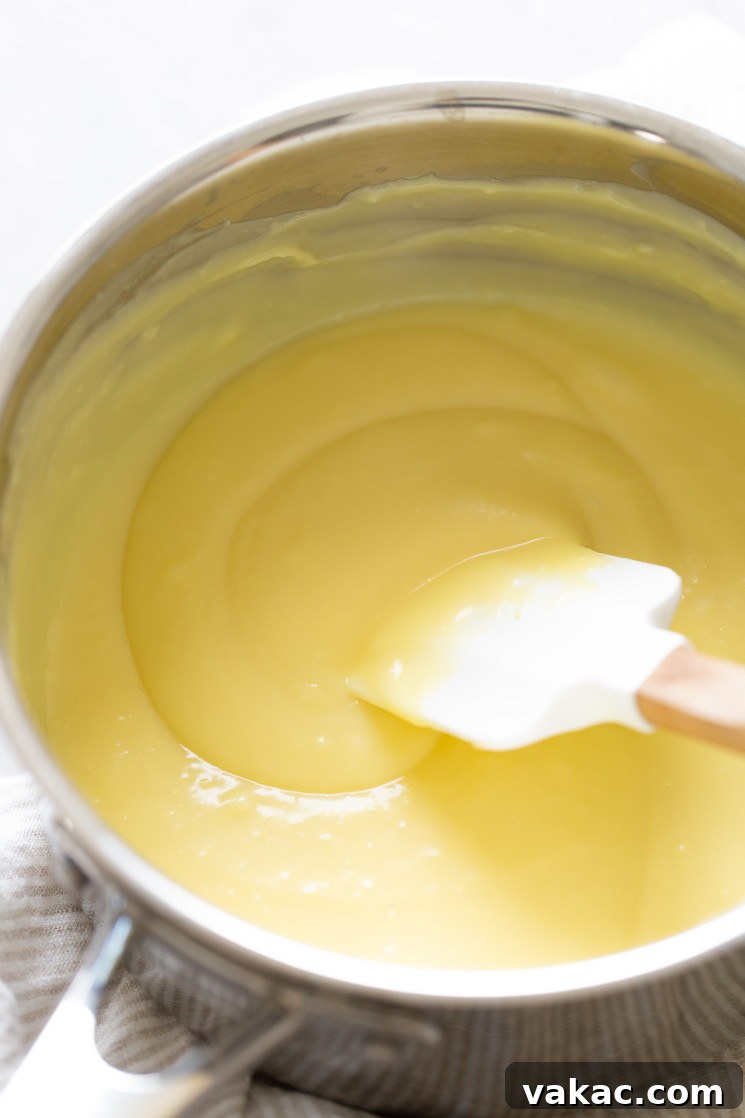
- Finish with Flavor and Fat: Immediately remove the saucepan from the heat after the one-minute boil. Stir in the unsalted butter, one tablespoon at a time, until it is fully melted and incorporated, adding richness and gloss. Then, stir in the pure vanilla extract. Adding the vanilla after removing from the heat is important, as high heat can diminish its delicate flavor, preserving its aromatic potency.
- Strain for Silkiness: For the smoothest possible pastry cream, pour the hot mixture through a fine-mesh strainer into a clean, heat-proof bowl. This step catches any small lumps of egg that might have formed or any bits of scorched milk from the bottom of the pan, ensuring a perfectly silky texture.
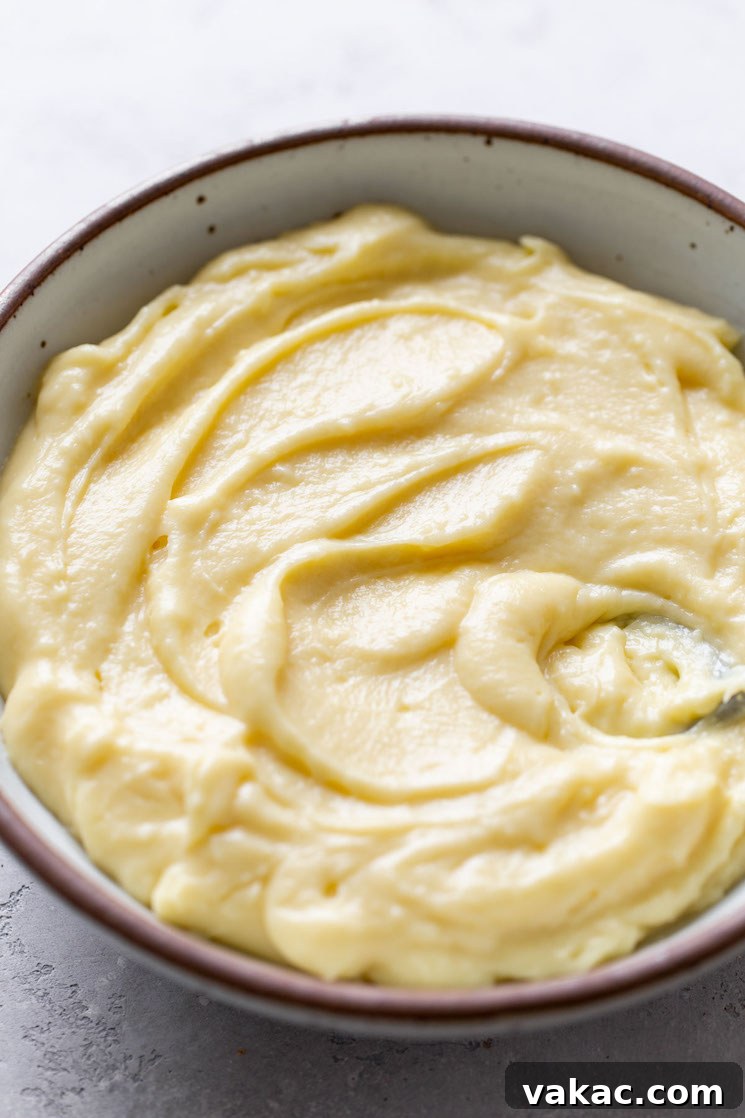
- Chill Properly: Cover the surface of the pastry cream directly with a piece of plastic wrap. This is a critical step to prevent a “skin” from forming as it cools, which can result in a lumpy texture. Refrigerate the covered pastry cream for at least two to three hours, or until it is thoroughly chilled and set. The chilling process allows the cream to fully thicken and its flavors to meld.
- The Final Whisk: Once completely chilled and ready to use, the pastry cream will be quite firm and thick. Before using it as a filling, give it a vigorous whisk until it becomes smooth, creamy, and easily pipeable again. This whisking revitalizes its texture, making it light and consistent.
Can I Make Pastry Cream in Advance?
Absolutely! Pastry cream is an ideal component to prepare ahead of time, especially when you’re embarking on multi-step desserts like classic cream puffs, elegant éclairs, or layered cakes. Its make-ahead nature allows you to break down complex baking projects into manageable stages, reducing stress on the day of serving.
Once prepared, strained, and properly covered with plastic wrap directly on its surface (to prevent a skin from forming), your homemade pastry cream can be stored in an airtight container in the refrigerator for up to five days. This extended shelf life makes it incredibly convenient for meal prep or for simply having a versatile filling ready whenever a baking inspiration strikes. Just remember that before using, it will need a good whisking to restore its smooth, creamy consistency, as it tends to firm up considerably when chilled.
Tips for Perfect Pastry Cream
- Fat Content Matters: Always opt for full-fat milk and regular unsalted butter. The fat content is crucial for achieving that rich, creamy texture and stability that defines excellent pastry cream.
- Stir Constantly: While cooking the mixture on the stove, continuous stirring is non-negotiable. Use a whisk for general stirring and a rubber spatula to scrape the bottom and sides of the saucepan frequently. This vigilance prevents scorching and ensures a lump-free result.
- Prevent a Skin: Immediately after cooking and straining, cover the pastry cream with plastic wrap, pressing it directly onto the surface. This creates a barrier against air, preventing a rubbery skin from forming as it cools and chills.
- No Freezing: Pastry cream, particularly those thickened with cornstarch, does not freeze well. The texture tends to become grainy and watery upon thawing due to the breakdown of the starch molecules. It’s best enjoyed fresh or within its refrigerated shelf life.
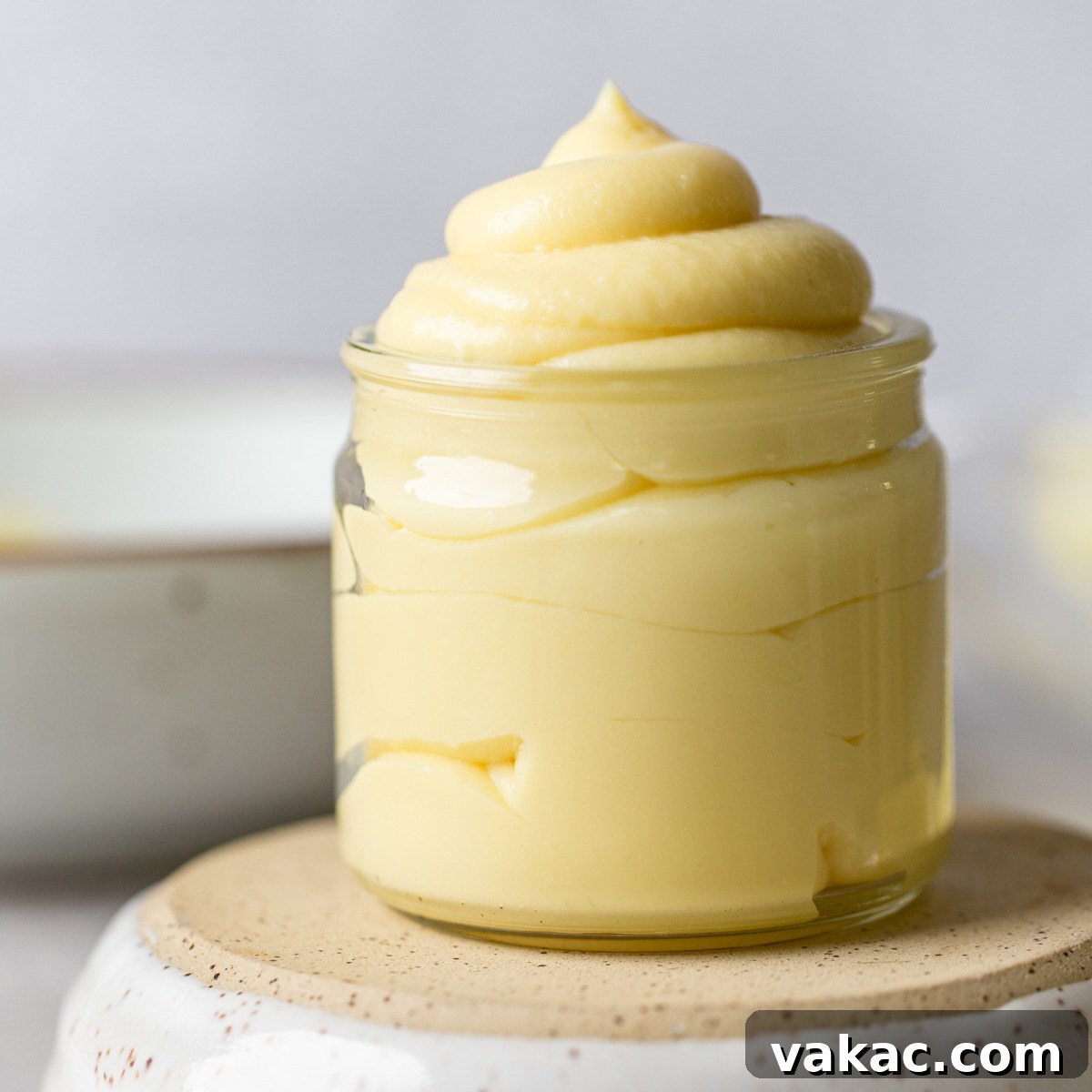
- Whisk Before Use: After chilling, the pastry cream will be quite firm. Before piping or spreading, give it a thorough whisking to bring it back to a smooth, luscious, and spreadable consistency.
Troubleshooting Common Pastry Cream Issues
Even with careful attention, sometimes things don’t go exactly as planned. Here are solutions to common pastry cream problems:
- Lumpy Pastry Cream: This often happens if the cornstarch and sugar weren’t fully whisked together initially, or if the mixture wasn’t stirred enough during cooking. The best fix is to strain the hot pastry cream through a fine-mesh sieve, pressing any lumps through with a spatula.
- Pastry Cream is Too Thin: If your cream isn’t thickening enough, it likely hasn’t been cooked long enough or reached a full boil for the recommended minute. Return it to medium heat, whisking constantly, and boil for another minute. Ensure you’re using whole milk for adequate fat content.
- Pastry Cream is Too Thick: This can occur if it was overcooked, or if too much cornstarch was used. A slightly too-thick cream can often be remedied by whisking in a small amount of cold milk or cream (1-2 tablespoons at a time) until the desired consistency is achieved.
- Scorched Bottom: If you notice a burnt smell or taste, it’s usually due to insufficient stirring, allowing the cream to stick to the bottom of the pan. Unfortunately, there’s no real fix for a scorched taste. Next time, use a heavy-bottomed saucepan and stir continuously, especially scraping the bottom and sides.
- Eggy Flavor: An overpowering eggy flavor usually indicates the cream wasn’t cooked properly to temper the yolks or was overcooked, leading to a scrambled egg taste. Ensure even heating and don’t skip the straining step.
More Basic Baking Techniques to Master!
Once you’ve conquered pastry cream, explore these other essential baking skills:
- Classic Chocolate Ganache
- Homemade Whipped Cream
- Vanilla Buttercream Frosting
- Cream Cheese Frosting
- Chocolate Buttercream Frosting
Video Tutorial
A video tutorial for making pastry cream can often provide visual clarity on consistency and technique. While we can’t embed the interactive video player directly, we encourage you to seek out visual guides to complement these written instructions for an even better baking experience.
Vanilla Pastry Cream
20 mins
10 mins
2 hrs
2 hrs 30 mins
Pin Recipe
Leave a Review
Ingredients
2 1/4 cups
- ½ cup (100 grams) granulated sugar
- ¼ cup (32 grams) cornstarch (or cornflour)
- 2 cups (480 ml) whole milk
- 4 large egg yolks
- 3 tablespoons (45 grams) unsalted butter , sliced into tablespoon-sized pieces
- 2 teaspoons pure vanilla extract
Instructions
-
In a large saucepan, whisk together the sugar and cornstarch until well combined. Set aside.
-
In a separate large mixing bowl, whisk together the milk and egg yolks until fully combined. Slowly pour the wet ingredients into the saucepan with the sugar and cornstarch mixture and whisk until fully combined.
-
Place the saucepan over medium heat and bring to a boil stirring continuously (I suggest using a rubber spatula to scrape around the bottom and sides of the pan a few times). Allow to boil for one minute, the mixture should be pretty thick at this point. Remove from the heat and stir in the butter, one tablespoon at a time, then stir in the vanilla extract.
-
Strain the mixture through a fine-mesh strainer into a heat-proof bowl. Cover with plastic wrap, placing the plastic wrap directly on the surface of the custard, and refrigerate until chilled, about 2 to 3 hours.
-
Once the mixture is thoroughly chilled and you are ready to use it, whisk it until it’s smooth.
Notes
Milk: I recommend using whole milk for this recipe, anything with a lower fat content won’t provide the same rich and creamy texture.
Vanilla Extract: Be sure to use pure vanilla extract for the best flavor. You may also use an equal amount of vanilla bean paste if you prefer.
Did you make this recipe?
Mention @livewellbakeoften on Instagram or tag #livewellbakeoften.