
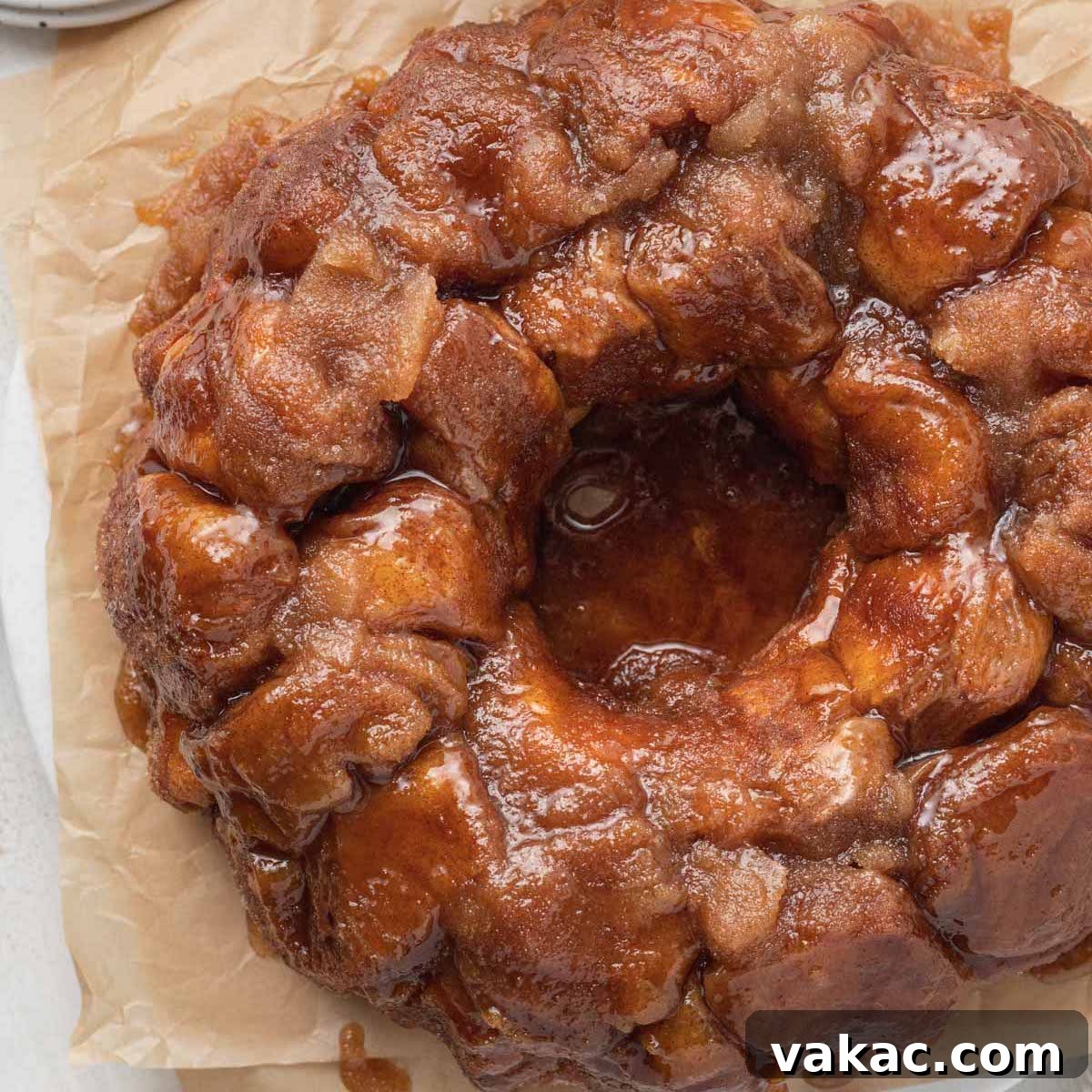
The Ultimate Guide to Homemade Monkey Bread: A Gooey, Pull-Apart Delight from Scratch
Forget the pre-made shortcuts! This comprehensive guide will show you how to create the most irresistibly gooey, pull-apart monkey bread completely from scratch. Infused with rich butter, warm milk, and coated in a decadent caramel sauce, this homemade version promises a truly unforgettable breakfast, brunch, or dessert experience.
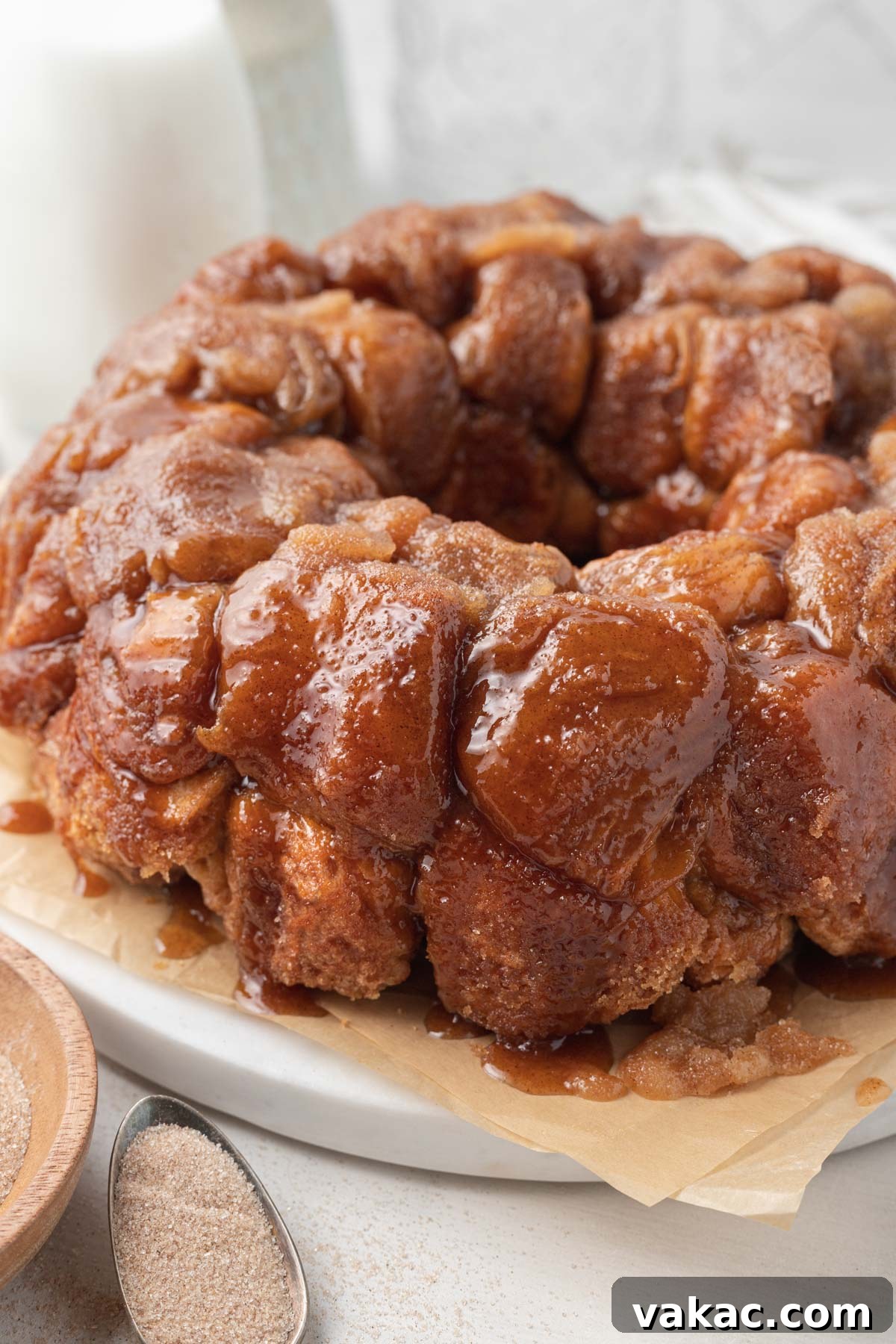
Monkey bread, often hailed as a communal sweet treat, is a gloriously sticky, ooey-gooey creation designed to be savored with your hands. While many recipes opt for the convenience of canned biscuits, elevating this classic to a homemade masterpiece is an endeavor well worth the effort. Our recipe focuses on crafting a simple yet profoundly flavorful enriched dough from its foundational ingredients: butter, whole milk, a fresh egg, and just a hint of sugar. This commitment to scratch-made dough guarantees a superior texture and depth of flavor that canned alternatives simply cannot replicate.
Each small ball of this tender dough is lovingly coated in a fragrant cinnamon sugar mixture before being artfully arranged in a bundt pan. It’s then lavishly drenched in a homemade caramel sauce, destined for a golden bake. While making monkey bread from scratch does require a little more attention and prep work, the process is straightforward and incredibly rewarding. Plus, it’s an ideal candidate for make-ahead prep, allowing you to wake up to a warm, delicious breakfast with minimal morning fuss.
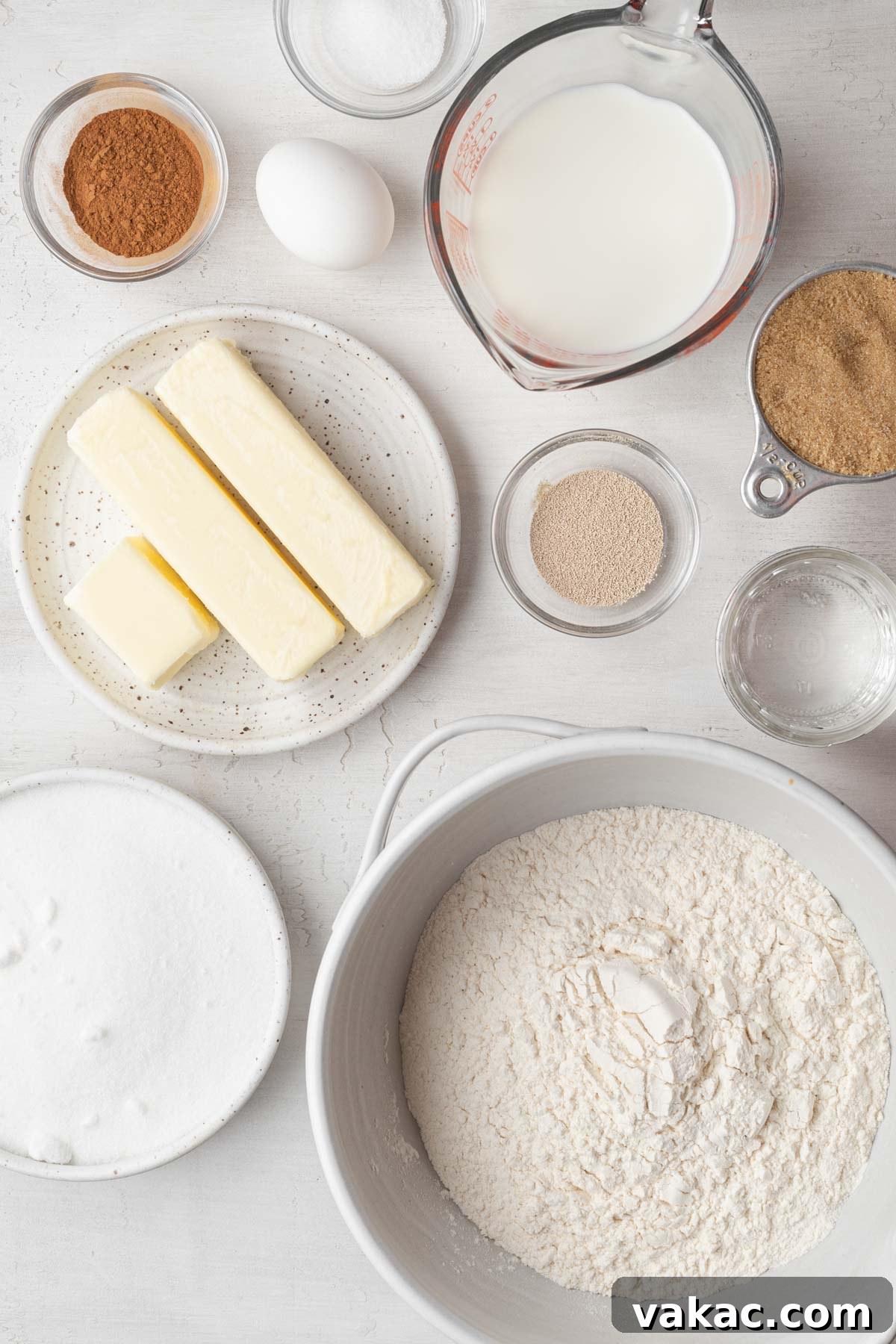
Essential Ingredients for Your Homemade Monkey Bread
Our scratch-made monkey bread comprises three delectable components: the tender bread dough, the aromatic cinnamon sugar coating, and the luscious caramel sauce. Every element is crafted from simple, high-quality ingredients, ensuring a symphony of flavors in every bite. Here’s a closer look at the star ingredients and their pivotal roles:
- Warm Water: The foundation for activating your yeast. It’s crucial to heat the water to approximately 110ºF (43°C). Exceeding this temperature risks deactivating the yeast, which means your dough won’t rise. Using a thermometer is highly recommended for accuracy.
- Active Dry Yeast: We favor active dry yeast for its reliability and consistent results, making it a pantry staple for many bakers. This yeast needs to be “proofed” in warm water to ensure it’s alive and ready to leaven your dough.
- Whole Milk: This ingredient is vital for adding moisture, richness, and an incredible depth of flavor to the dough. While whole milk is preferred for its higher fat content, you can certainly use 2%, 1%, or even skim milk as alternatives, though the richness might slightly vary. Scalding the milk, a step we’ll detail later, is also key for a soft, fluffy texture.
- Salt: Often underestimated in sweet recipes, salt plays a critical role. With 1 and 1/4 teaspoons in the dough, it not only enhances the overall flavor profile but also helps to balance the sweetness from the cinnamon sugar coating and the caramel sauce. Furthermore, salt helps to control yeast activity and strengthen the gluten structure, leading to better dough elasticity.
- Light Brown Sugar: A powerhouse of flavor, particularly in our caramel sauce. Its moist, fine crystals and molasses content impart a distinctive richness and a beautiful, deep caramel hue. If you find yourself without brown sugar, a simple trick is to make your own by combining granulated sugar with a touch of molasses.
- Unsalted Butter: Used generously in the dough, cinnamon sugar coating, and caramel sauce, butter contributes unparalleled richness, tenderness, and flavor. Using unsalted butter allows you to control the overall salt content in the recipe.
- Large Egg: The egg enriches the dough, providing structure, moisture, and contributing to the golden-brown crust. It also adds a lovely tenderness to the final product.
- All-Purpose Flour: The primary structural component of our dough. The recipe calls for 4 to 5 cups, emphasizing the importance of “spooned and leveled” measurement to avoid adding too much flour, which can result in a dense, dry bread.
- Granulated Sugar: A key component of the dough and the delightful cinnamon sugar coating.
- Ground Cinnamon: The quintessential spice that gives monkey bread its signature warmth and aromatic appeal.
Crafting Homemade Monkey Bread: A Step-by-Step Guide
Embarking on the journey of homemade monkey bread begins with the meticulous preparation of the dough, followed by careful assembly and baking. Follow these steps for a perfect result:
1. Proofing the Yeast: The First Essential Step
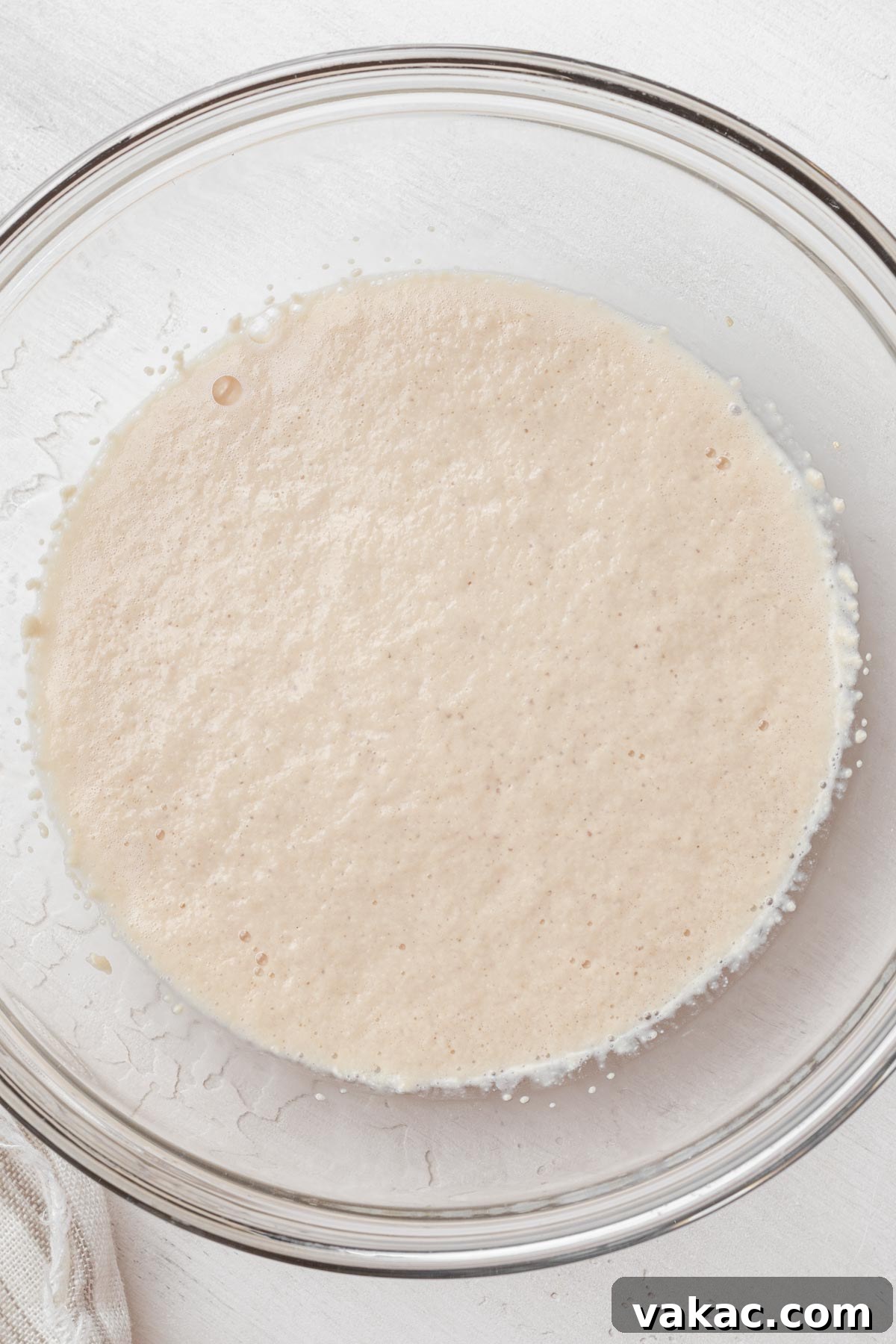
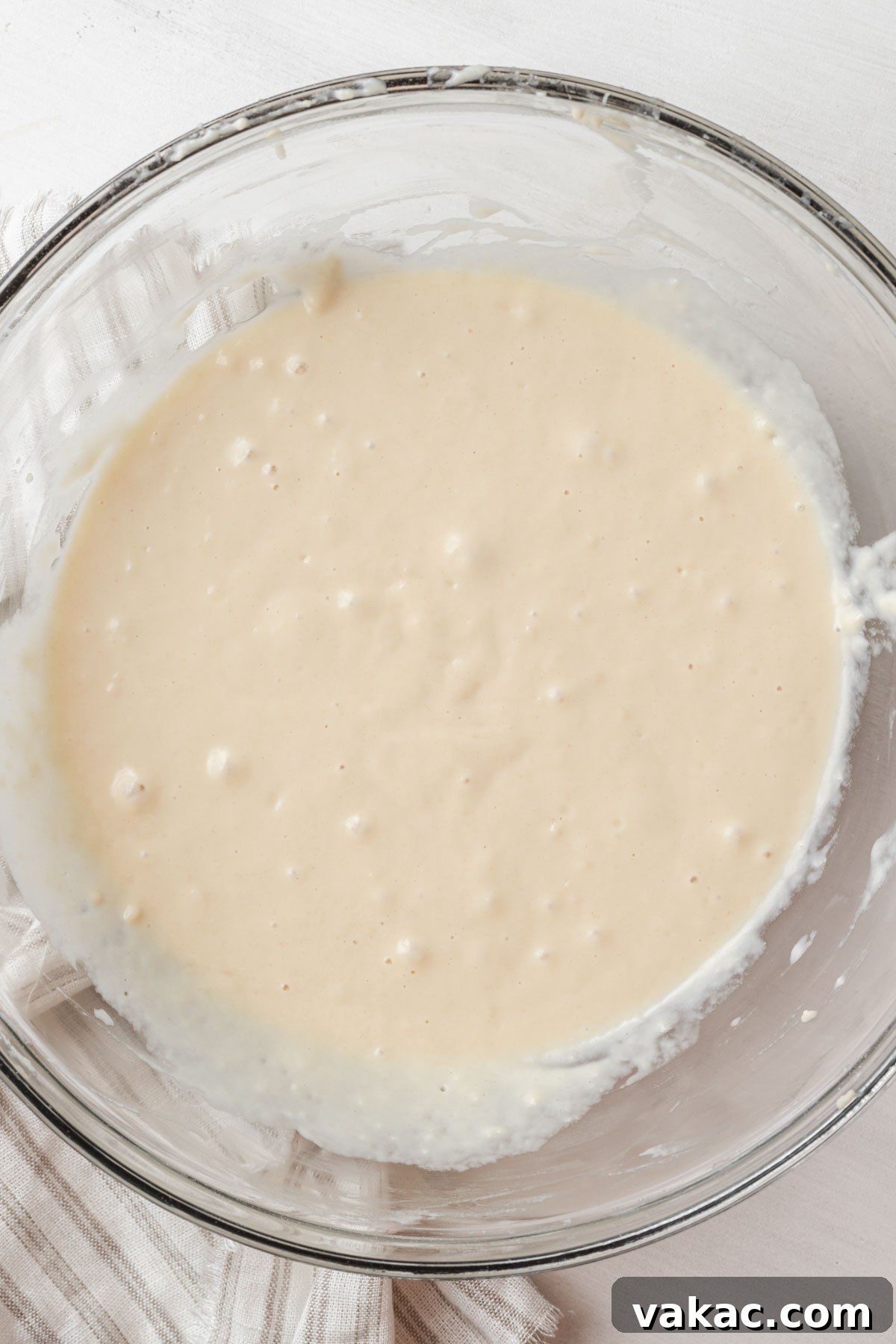
Before mixing the dough, you must proof the yeast to ensure it’s active and will properly leaven your bread. Combine the warm water (110°F to 115°F or 43°C to 46°C) with a teaspoon of granulated sugar and sprinkle the active dry yeast on top. Stir gently and allow it to sit for 5 to 10 minutes. A foamy layer on the surface indicates active yeast, ready to work its magic. If no foam appears, your yeast may be expired, or the water temperature was incorrect; you’ll need to discard it and start again with fresh yeast and properly warmed water. An instant-read thermometer is your best friend here.
2. Preparing the Monkey Bread Dough
Once your yeast is proofed, you’re ready to bring the dough together:
- Combine Dry and Wet Bases: In a large heat-proof mixing bowl (or the bowl of a stand mixer), add the remaining 5 tablespoons of granulated sugar, the 3 tablespoons of room temperature unsalted butter, and 1 ¼ teaspoons of salt. Set this aside.
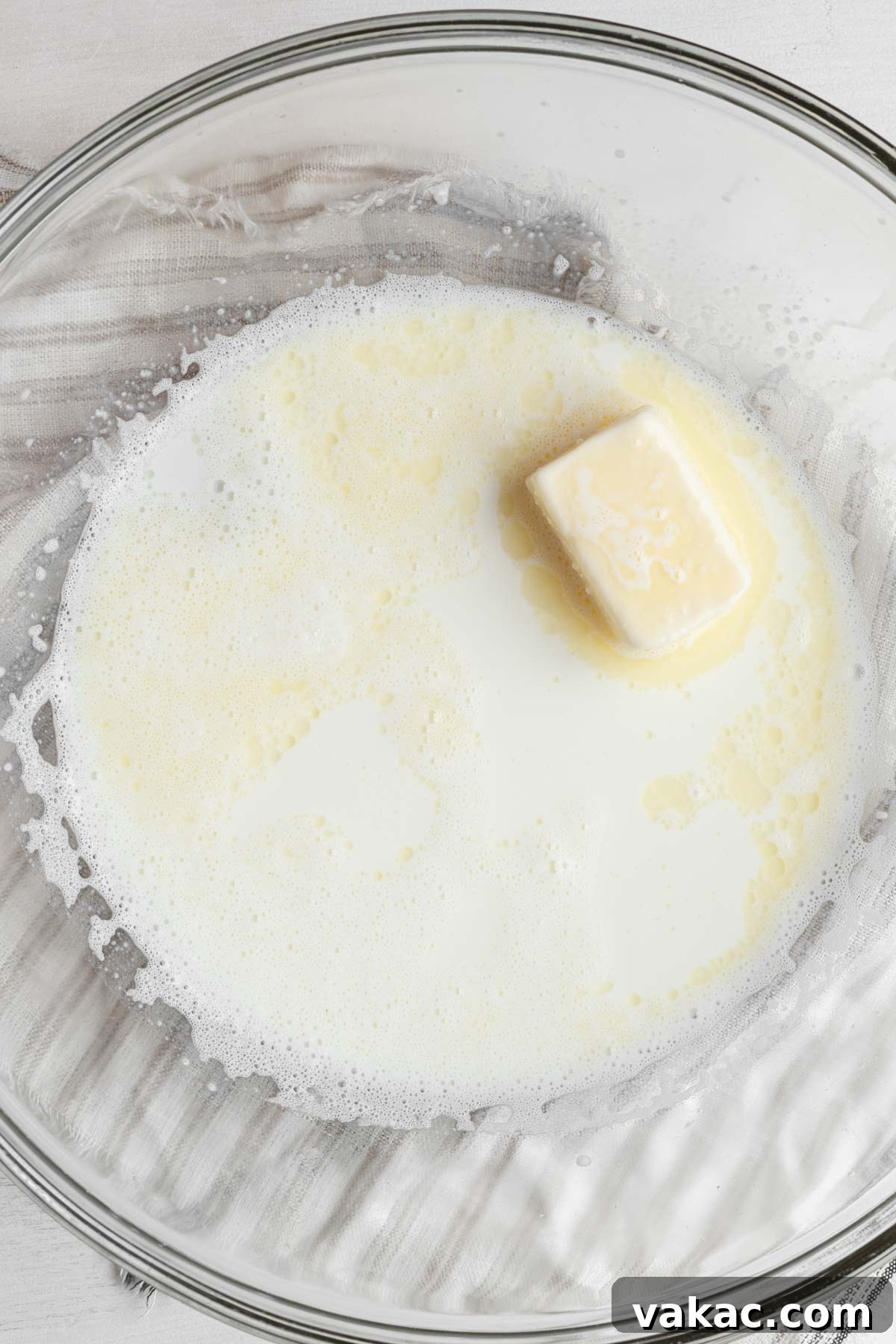
- Scald the Milk: Pour 1 cup of whole milk into a small saucepan and heat it over medium heat, stirring frequently to prevent scorching. Heat until it’s almost boiling, signified by steam and small bubbles forming around the edges. This process, known as scalding, deactivates enzymes that can inhibit gluten development, resulting in a softer, fluffier bread.
- Melt and Cool: Immediately pour the hot, scalded milk over the butter, sugar, and salt mixture in your mixing bowl. Whisk until the butter is completely melted and all ingredients are well combined. Let this mixture cool to about 110°F (43°C), ensuring it’s not too hot when the yeast is added.
- Initial Flour Integration: Once the milk mixture has cooled, gradually stir in 2 cups of all-purpose flour. You can do this by hand with a sturdy spoon or using a stand mixer fitted with a dough hook attachment on low speed.
- Add Yeast and Egg: Incorporate the proofed yeast mixture into the flour mixture, mixing until fully combined. Then, add the large egg and continue mixing until it’s seamlessly incorporated into the developing dough.
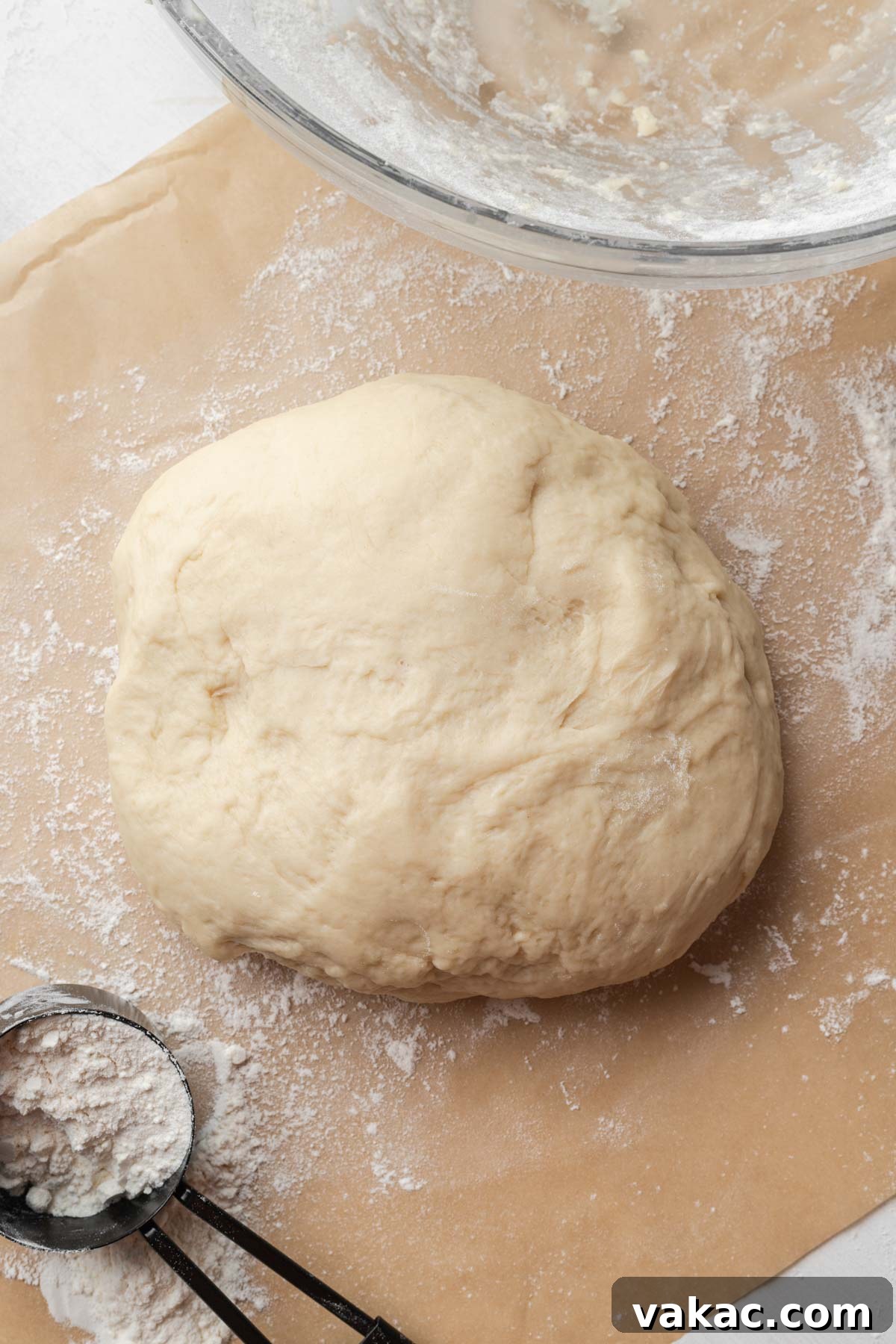
- Adding Remaining Flour and Kneading: Gradually mix in another 2 cups of flour. Continue adding small amounts (1-2 tablespoons at a time) as needed until the dough comes together and is manageable, no longer excessively sticky. Transfer the dough to a lightly floured surface or continue with your stand mixer. Knead the dough for 5 to 10 minutes. The dough is ready when it is smooth, elastic, and springs back when gently pressed with your finger.
3. The First Rise: Developing Flavor and Texture
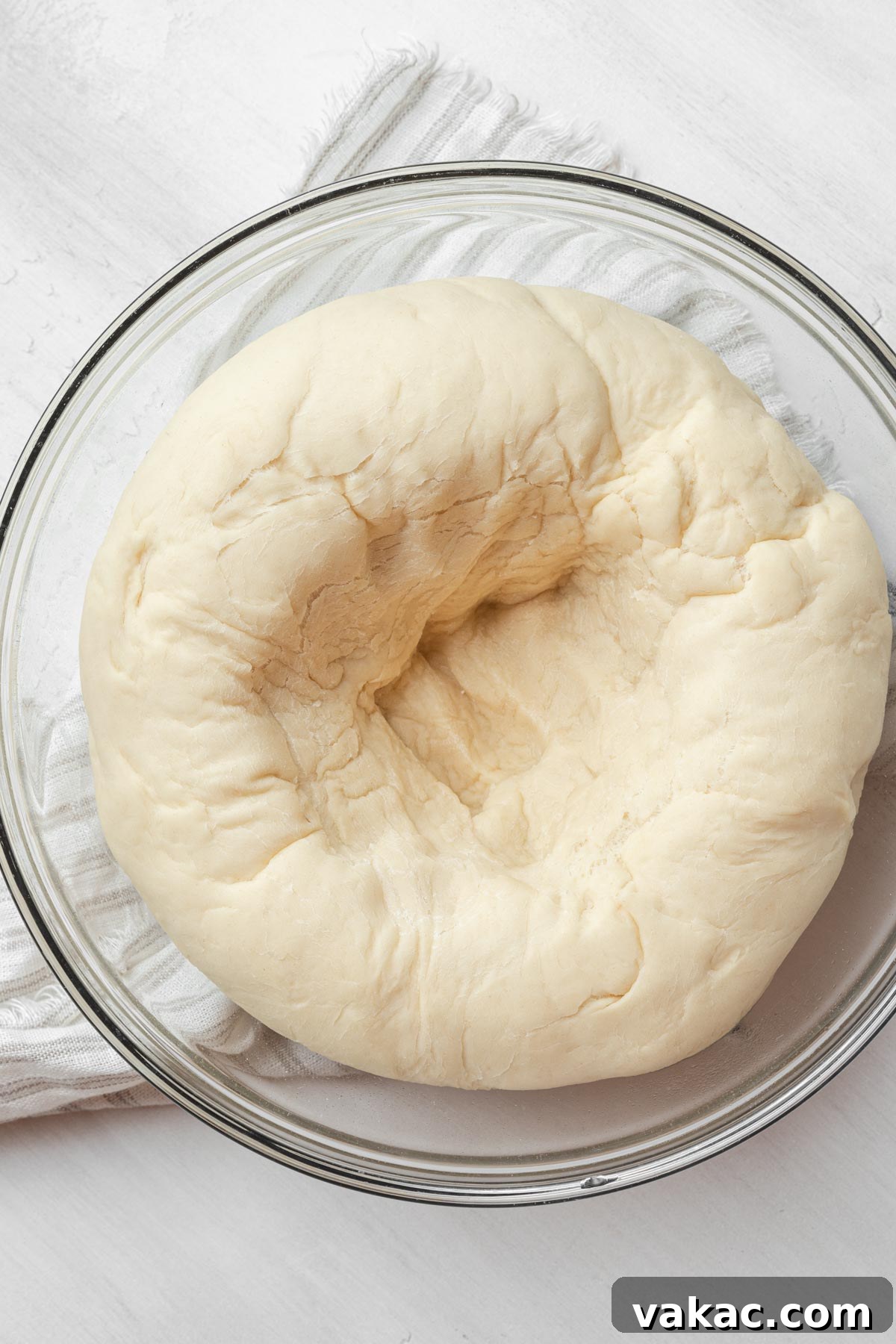
Shape the kneaded dough into a smooth ball and place it in a clean, lightly greased bowl. Cover the bowl with plastic wrap or a damp kitchen towel. Allow the dough to rise in a warm place for approximately one hour, or until it has doubled in size. A consistently warm environment is key for optimal rising. You can create a warm spot by placing the bowl on a heating pad set to its lowest setting, with a dish towel between the pad and the bowl.
4. Assembling Your Gooey Monkey Bread
After the first rise, it’s time for the fun part: assembling the bread into its iconic pull-apart form.
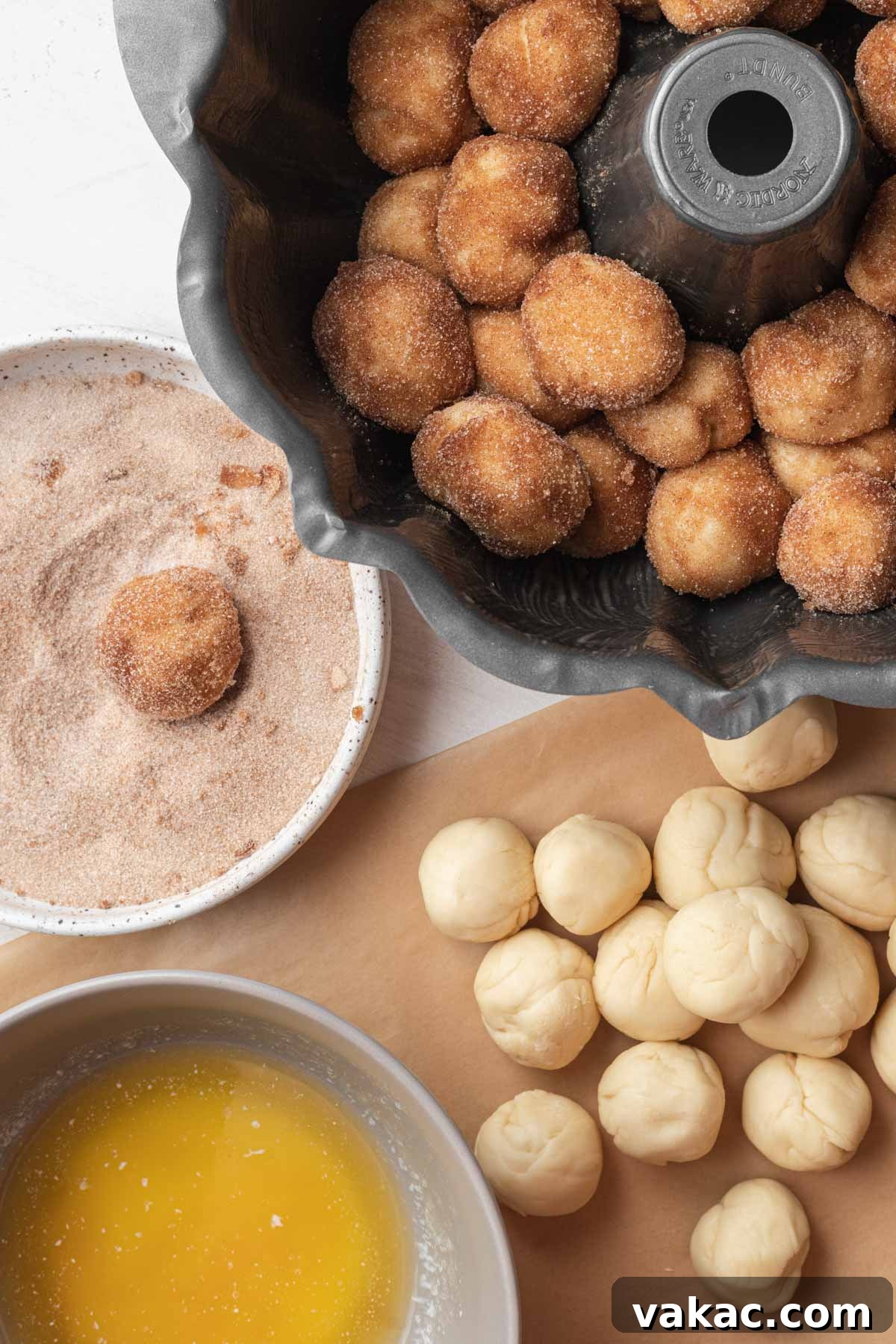
- Prepare the Cinnamon Sugar Coating: Melt ½ cup of unsalted butter in a microwave-safe bowl or a small saucepan. In a separate bowl, whisk together 1 cup of granulated sugar and 1 tablespoon of ground cinnamon until well combined.
- Divide the Dough: Gently punch down the risen dough to release any trapped air. On a lightly floured surface, pat the dough into a square shape. Cut this square into 8 equal pieces, then cut each of those 8 pieces into 6 smaller, roughly equal pieces. You should end up with about 48 pieces of dough. Roll each piece into a neat little ball.
- Prepare the Bundt Pan: Generously coat a 12-cup bundt pan with non-stick cooking spray or butter. This crucial step prevents the sticky caramel from adhering to the pan, ensuring easy removal later.
- Coat and Layer: Dip each dough ball into the melted butter, ensuring it’s fully coated. Then, roll the butter-coated ball in the cinnamon sugar mixture until evenly covered. Place each coated ball into the prepared bundt pan, layering them randomly.
- The Second Rise: Once all the dough balls are arranged in the bundt pan, cover the pan with a damp towel or plastic wrap. Let it rise for another 30 minutes in a warm place. This second rise contributes to a light, airy texture. Meanwhile, preheat your oven to 350°F (180°C).
5. The Caramel Drench and Baking Perfection
The final touches bring all the flavors together for a truly irresistible bake:
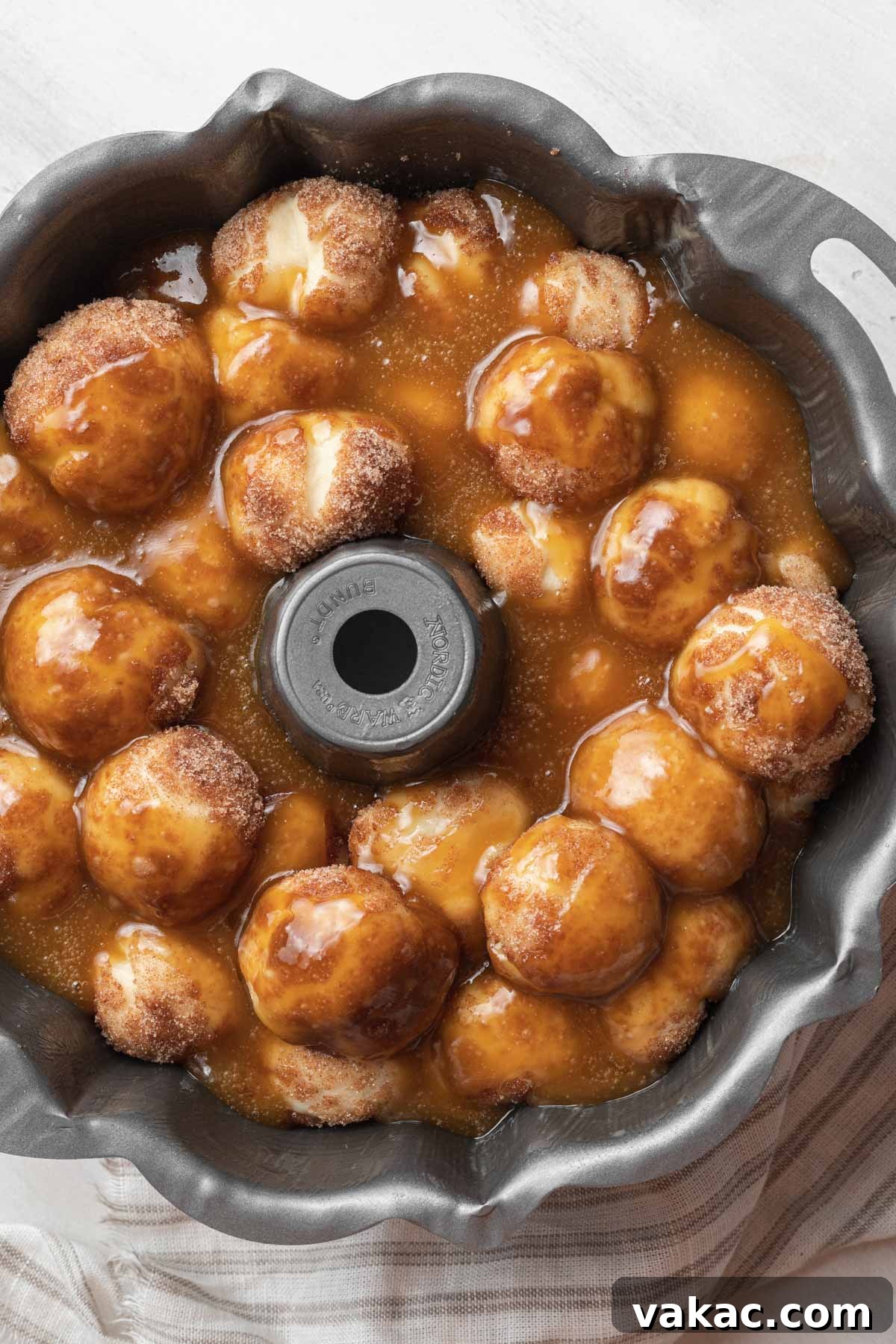
- Create the Caramel Sauce: In a small saucepan, combine ½ cup of sliced unsalted butter and ½ cup of packed light brown sugar. Place over medium heat, stirring frequently, until the mixture comes to a full boil. The boiling ensures the sugar dissolves completely and the sauce thickens appropriately.
- Pour and Bake: Immediately remove the boiling caramel mixture from the heat and carefully pour it evenly over the assembled monkey bread dough in the bundt pan. Ensure the caramel seeps into all the nooks and crannies for maximum gooeyness.
- Bake to Golden: Bake in the preheated oven for 30 to 45 minutes. To prevent excessive browning on top, loosely cover or tent the pan with aluminum foil if needed. It’s also a good idea to place a parchment paper-lined baking tray on the bottom oven rack to catch any potential caramel drips.
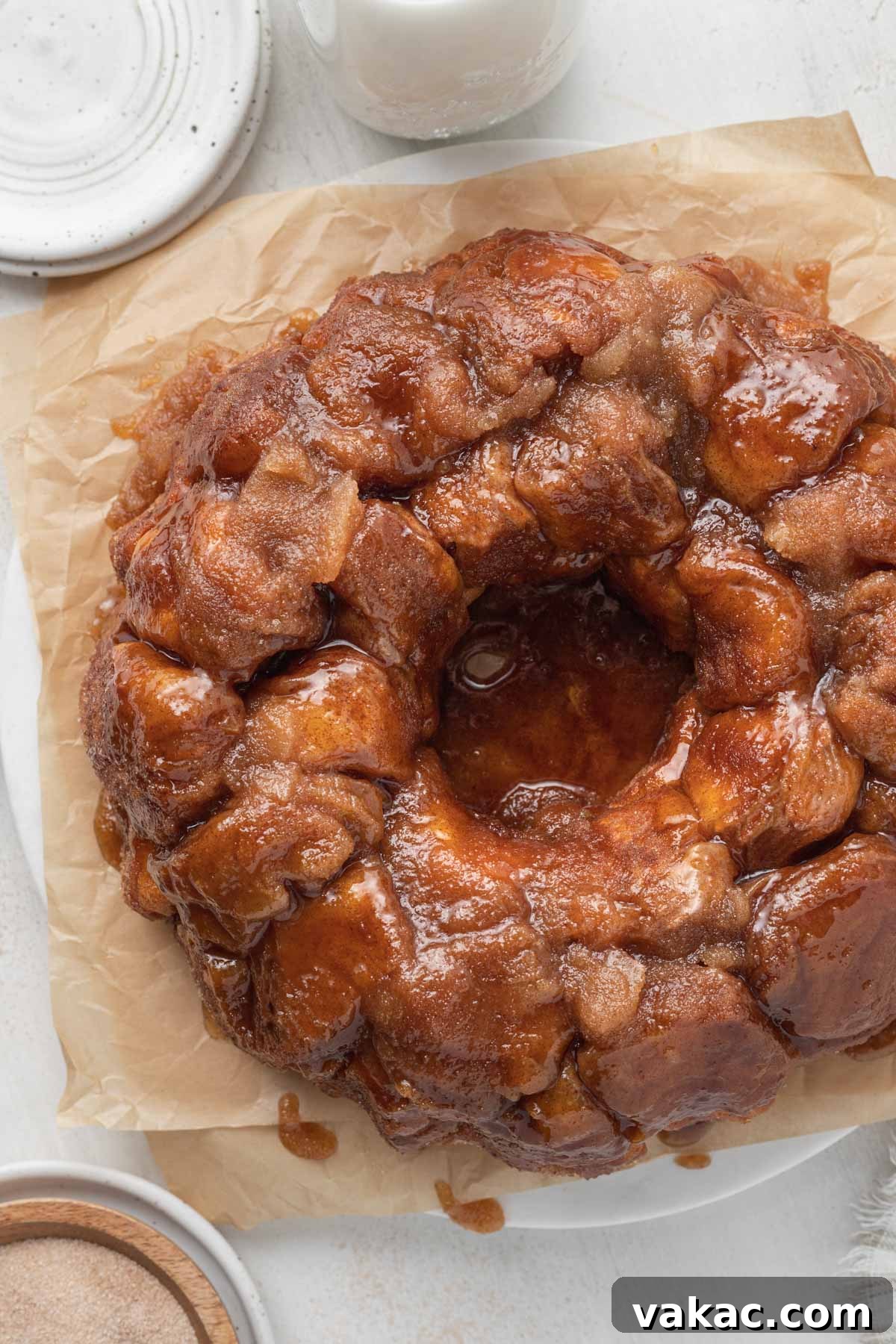
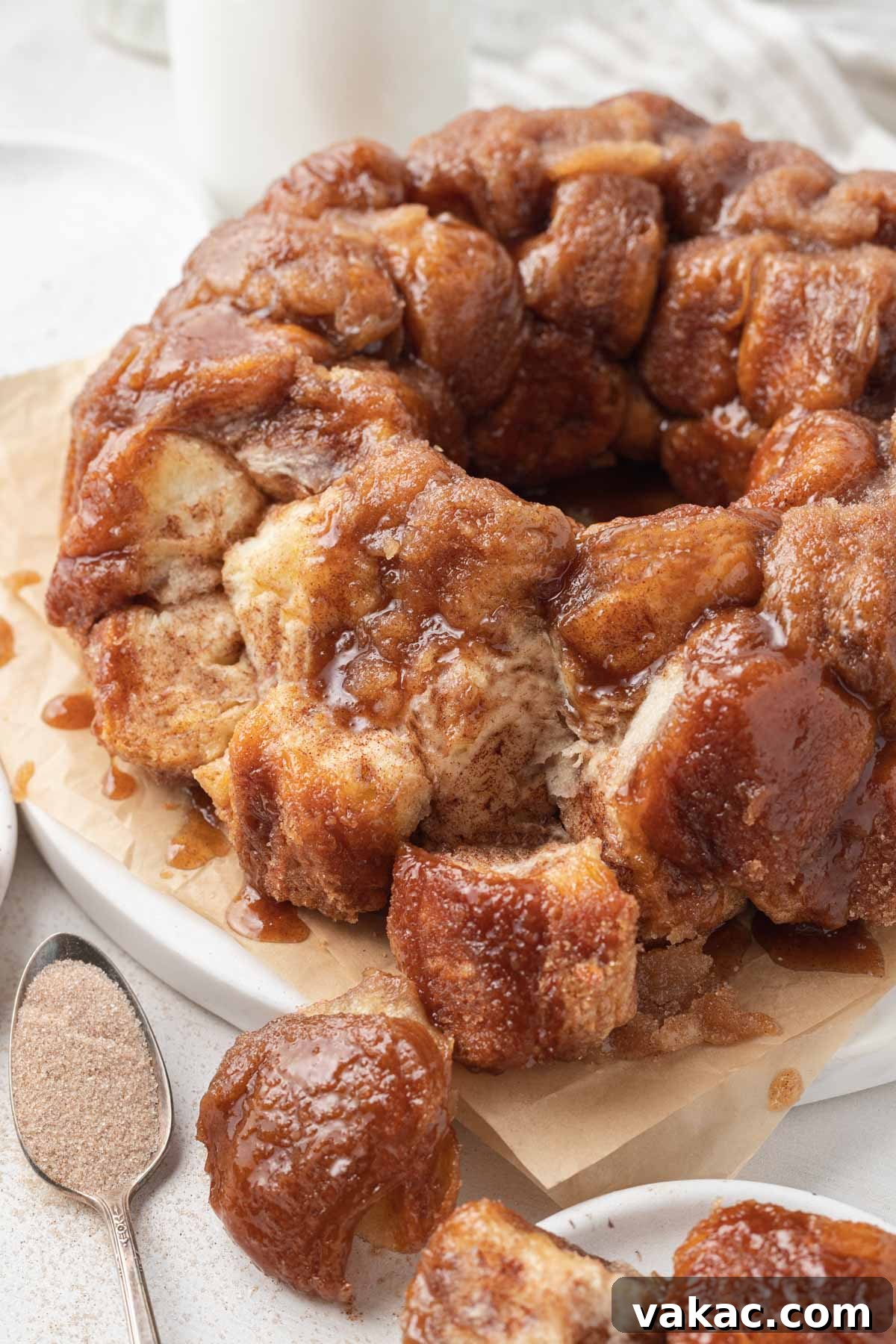
- Cool and Serve: Once baked, remove the monkey bread from the oven and allow it to cool in the pan for 5 to 10 minutes. This cooling period is crucial for the caramel to set slightly and for the bread to firm up, making it easier to invert. Use a butter knife to gently loosen any stuck edges, then carefully flip the bundt pan onto a large serving plate. A gentle shimmy or tap on the pan might be necessary to help release the bread entirely. Serve warm and enjoy pulling apart the sticky, sweet pieces!
Frequently Asked Questions About Monkey Bread
Can Monkey Bread Be Prepared in Advance?
Absolutely! Monkey bread is a fantastic make-ahead option, perfect for holiday mornings or busy weekends. To prepare it in advance, follow the recipe through the end of the first dough rise (after step 6 in the instructions). Once the dough has doubled in size, gently punch it down and cut it into the 48 pieces as directed. At this point, tightly cover the dough balls with plastic wrap and refrigerate them overnight. The next day, simply proceed with coating the dough balls in butter and cinnamon sugar, assembling them in the bundt pan, and allowing for the second rise before baking. This method allows you to complete most of the prep the day before, ensuring fresh-baked goodness with minimal effort in the morning.
Can Instant Dry Yeast Be Used Instead of Active Dry Yeast?
Yes, you can certainly substitute instant dry yeast for active dry yeast in this recipe. Use an equal amount. Keep in mind that instant dry yeast is formulated to activate more quickly and vigorously than active dry yeast, which means your dough may rise faster. Monitor the dough closely during both rising periods and adjust the rising times slightly if needed to prevent over-proofing. Over-proofed dough can sometimes collapse or have a yeasty, alcoholic flavor. If using instant yeast, you don’t necessarily need to proof it in water first; you can often mix it directly with the dry ingredients, but following the recipe’s proofing step won’t harm it and still serves as a good activity check.
Expert Baking Tips for the Best Monkey Bread
- Temperature is Key for Yeast: Always use an instant-read thermometer to check your water temperature when proofing yeast. Water that is too hot (above 120°F/49°C) will kill the yeast, preventing your dough from rising. Water that is too cold (below 100°F/38°C) will not activate the yeast effectively, leading to a slow or incomplete rise. Aim for 110°F-115°F (43°C-46°C).
- Verify Yeast Activity: If your yeast does not produce a foamy layer on top after 5 to 10 minutes, it is no longer active. Discard it and start fresh with new yeast to avoid disappointment.
- Don’t Skip Scalding the Milk: While it might seem like an extra step, scalding the milk is crucial for the optimal texture of your monkey bread. Heating the milk denatures proteins that can inhibit gluten development and yeast activity. This results in a significantly softer, fluffier, and higher-rising bread. Ensure the milk cools down to the correct temperature before adding it to the yeast mixture.
- Generously Grease Your Bundt Pan: This tip cannot be emphasized enough! Monkey bread is notoriously sticky due to its caramel coating. A liberal application of non-stick cooking spray or butter to every curve and crevice of your bundt pan will make the inversion process much smoother and prevent your delicious creation from getting stuck.
- Prevent Caramel Overflow: When baking, the caramel sauce can sometimes bubble over the edges of the bundt pan, creating a sticky mess in your oven. To proactively manage this, place a baking sheet lined with parchment paper or foil on the rack below your bundt pan. This will catch any spills and make cleanup a breeze.
- Consider Variations: Feel free to customize your monkey bread! You can add chopped nuts (pecans or walnuts work beautifully) to the bundt pan along with the dough balls. Chocolate chips, dried cranberries, or a hint of orange zest can also add delightful twists to the classic recipe.
More Irresistible Caramel Dessert Recipes to Try!
- Salted Caramel Brownie Bites
- Classic Caramel Popcorn
- Decadent Homemade Salted Caramel Sauce
- Caramel-Stuffed Snickerdoodles
- Luxurious Millionaire Shortbread
Recipe Video (Placeholder)
A video tutorial demonstrating each step of this homemade monkey bread recipe would typically be placed here, guiding you visually through the process to ensure perfect results.
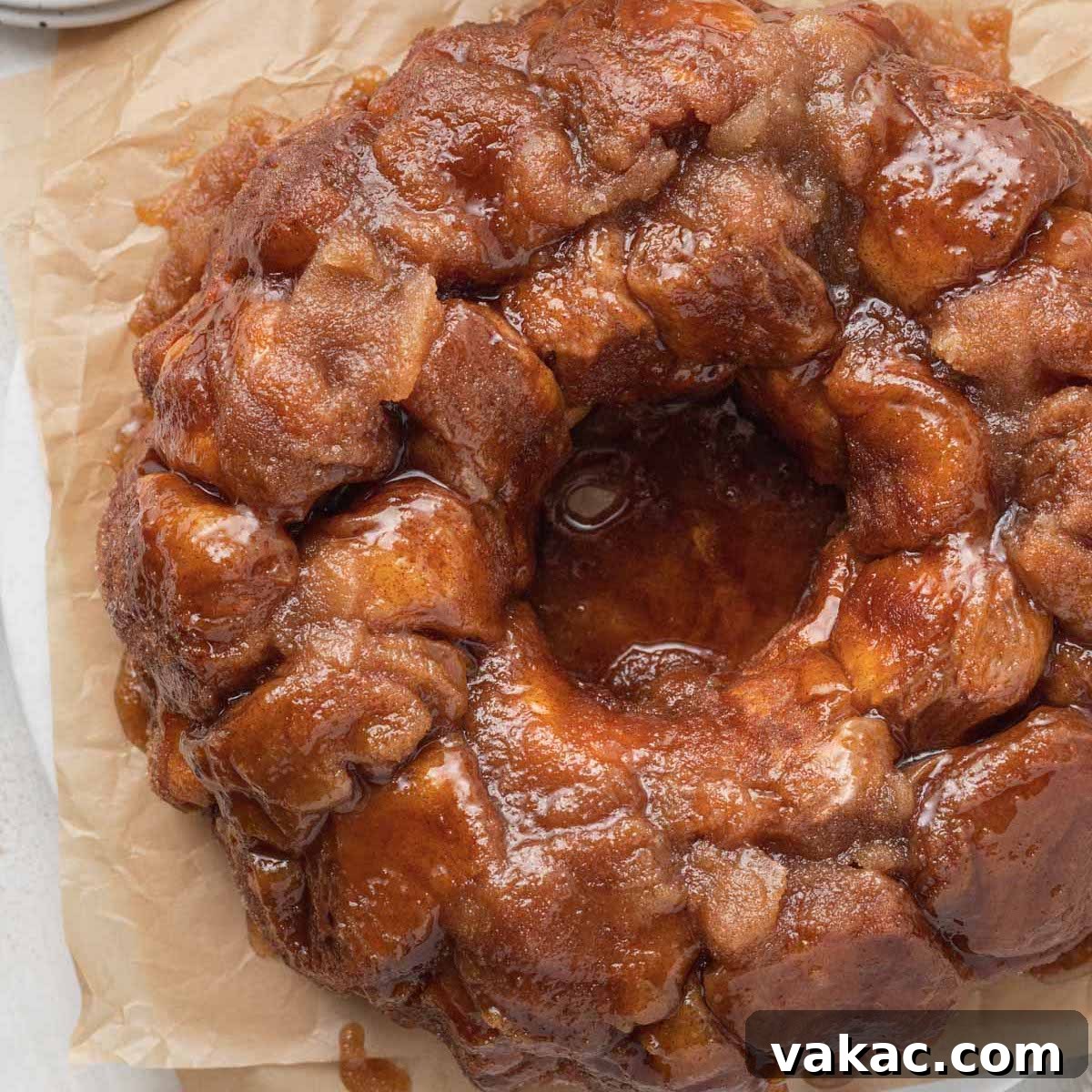
Homemade Monkey Bread
Average Rating: 5 out of 5 stars (from 2 ratings)
Prep Time: 1 hr 10 mins
Cook Time: 45 mins
Rising Time: 1 hr 30 mins
Total Time: 3 hrs 25 mins
Monkey bread is a pull-apart bread that’s coated in a gooey caramel sauce. Instead of using canned biscuits, this recipe makes the monkey bread dough completely from scratch for superior flavor and texture.
Pin Recipe
Ingredients
Servings: 8 servings
Monkey Bread Dough
- ¼ cup warm water (110°F-115°F) plus 1 teaspoon granulated sugar
- 1 (0.25-ounce) package active dry yeast (2 ¼ teaspoons or 7 grams)
- 5 tablespoons granulated sugar (62 grams)
- 3 tablespoons unsalted butter at room temperature (45 grams)
- 1 ¼ teaspoons salt
- 1 cup whole milk (240 ml)
- 1 large egg at room temperature
- 4 to 5 cups all-purpose flour spooned & leveled (500-625 grams)
Cinnamon Sugar Coating
- ½ cup unsalted butter (115 grams)
- 1 cup granulated sugar (200 grams)
- 1 Tablespoon ground cinnamon
Caramel Sauce
- ½ cup unsalted butter sliced (115 grams)
- ½ cup packed light brown sugar (100 grams)
Instructions
- To make the monkey bread dough: Whisk the warm water and the teaspoon of sugar together until the sugar is dissolved. Sprinkle the yeast on top and gently stir it into the water. Set aside for 5 to 10 minutes or until the yeast is foamy.
- Add the 5 tablespoons of granulated sugar, butter, and salt to a heat-proof mixing bowl or the bowl of a stand mixer. Set aside.
- Pour the milk into a small saucepan and place it over medium heat, stirring often. The milk will start to steam and bubble around the edges. Once the milk starts to bubble, right before it comes to a boil, remove it from the heat.
- Pour the scalded milk on top of the sugar, butter, and salt and whisk until well combined. Set aside and allow to cool until it’s warm and no longer hot (about 110°F or 43°C).
- Once the scalded milk mixture has cooled, mix in 2 cups (250 grams) of flour by hand or using the dough hook attachment on a stand mixer. Add the yeast mixture and mix until well combined, then mix in the egg.
- Mix in 2 more cups (250 grams) of flour until fully combined, then mix in 1 to 2 tablespoons of flour at a time until the dough is easy to handle. Knead the dough by hand on a lightly floured surface or using the dough hook on a stand mixer on low speed for 5 to 10 minutes until the dough is smooth and elastic, adding a little extra flour if needed.
- Once the dough is kneaded, form it into a ball and place it into a lightly greased bowl. Cover and allow to rise in a warm place for about 1 hour or until doubled in size.
- To make the cinnamon sugar coating: Melt the stick of butter in a microwave safe bowl in the microwave or in a small pot over medium-low heat. Set aside, allowing to cool slightly.
- In a separate mixing bowl, stir together the granulated sugar and ground cinnamon.
- To assemble the monkey bread: Gently punch down the risen dough to release any excess air. Pat the dough into a square, then cut the square into 8 equal size pieces. Cut each piece into 6 pieces and roll each one into a ball, you should end up with 48 pieces.
- Grease a 12 cup bundt pan with a generous amount of non-stick cooking spray or butter. Set aside.
- Dip each ball of dough in the melted butter, then roll in the cinnamon sugar mixture. Place each coated ball into the bundt pan during this process.
- Cover the pan with a damp towel or plastic wrap and allow to rise for another 30 minutes.
- Preheat the oven to 350°F (180°C) while the dough is rising.
- To make the caramel sauce: Combine the sliced stick of butter and brown sugar in a small saucepan. Place over medium heat, stirring often until the mixture comes to a boil.
- Once the mixture is boiling, remove it from the heat and pour it all over the top of the monkey bread.
- Bake in the center rack of the oven for 30 to 45 minutes. Cover loosely or tent with aluminum foil if the dough starts to brown too much. Place a tray underneath (on the bottom oven rack) lined with parchment paper to catch any spills since the sugar can bubble over.
- Remove from the oven and allow to cool for 5 to 10 minutes. Use a butter knife to loosen any stuck parts of the monkey bread from around the edges of the pan. Then, carefully flip the pan onto a serving plate. If needed, use something heavy to bang the pan to help loosen the monkey bread. Shimmy the pan to see if the monkey bread starts to release and repeat with tapping the pan until it’s easy to lift up.
Notes
Storage Instructions: Monkey bread is best served the day it’s baked for ultimate freshness and gooeyness. Leftovers can be wrapped tightly and stored in the refrigerator for up to 4 days. To enjoy refrigerated monkey bread, simply reheat it in the microwave for a few seconds until warm and soft.
Freezing Instructions: To extend the life of your monkey bread, once it has cooled completely, you can wrap it tightly in plastic wrap and then in aluminum foil, and freeze it for up to 3 months. To thaw, transfer the frozen bread to the refrigerator overnight, or leave it on the counter for several hours until fully defrosted before reheating.
Cuisine: American
Course: Dessert
Author: Danielle Rye
Did you make this recipe?
Mention @livewellbakeoften on Instagram or tag #livewellbakeoften.
This recipe is lovingly adapted from my popular homemade cinnamon rolls and monkey bread muffins, bringing together the best elements for a truly incredible experience.