

In our fast-paced world, it’s all too common to find ourselves reaching for comfort food after a long, stressful day or turning to snacks when boredom strikes. Emotional eating is a widespread experience, often leaving us feeling overwhelmed, stuck, and out of control. It’s a coping mechanism many of us resort to, but it can also prevent us from truly understanding and addressing our underlying needs.
This comprehensive guide, brought to you by our intuitive eating dietitian, Ally Choo, delves deep into the nuances of emotional eating. We’ll explore its definition, identify when it might become problematic, distinguish between various types of hunger, recognize the key signs of emotional hunger, and provide four actionable steps to address it mindfully and kindly. Our goal is to empower you to cultivate a healthier, more compassionate relationship with food and your emotions.

Food is undeniably more than just fuel for our bodies; it holds profound emotional, social, and cultural significance. Throughout history and across diverse cultures, food has been a central element in connecting people, celebrating milestones, and offering comfort during difficult times. This inherent emotional connection to food is entirely normal and, in many ways, a beautiful aspect of human experience.
However, when food becomes our primary or sole coping mechanism for navigating emotions, without pausing to understand what we’re truly feeling or what our deeper needs might be, it can lead to a sense of chaos, stagnation, and a perceived loss of control. If you find yourself frequently “eating your feelings” and experiencing guilt or frustration afterward, know that you are not alone, and there are effective strategies to help you break free from this cycle.
Let’s embark on this journey to understand and transform your relationship with emotional eating.
Understanding Emotional Eating: More Than Just Hunger
As human beings, we are inherently emotional creatures; our feelings shape our experiences and interactions, including our relationship with food. Emotional eating occurs when we consume food for reasons unrelated to genuine physical hunger, primarily driven by our emotional state. These emotions can span a wide spectrum: from pleasant feelings like excitement, joy, or celebration, to neutral states such as boredom or procrastination, or even unpleasant emotions like stress, anxiety, sadness, loneliness, or anger.
It’s crucial to understand that all emotions, even those that feel uncomfortable, serve a vital purpose. They act as signals, informing us about our internal state and how we truly feel about a situation, thereby influencing our behaviors. When we emotionally eat, we often seek to alter or escape these emotional signals, even if only temporarily.
Ready to Transform Your Relationship with Food?
Embark on a transformative journey to food freedom. This guide will help you explore not just what you eat, but the deeper reasons behind your eating patterns, how food makes you feel, and any recurring behaviors that impact your well-being and choices. Start building a healthier, more intuitive connection with your body today!
The Core Issue with Emotional Eating: Seeking Deeper Solutions
While engaging in emotional eating occasionally is a perfectly normal human behavior and can provide momentary comfort or distraction, it becomes problematic when it transitions from being *one* coping tool to becoming your *only* or dominant coping mechanism. Food, in these instances, offers a fleeting sense of relief or a temporary escape from uncomfortable emotions.
The fundamental issue is that food does not address the root cause of the emotion itself. It’s akin to putting a bandage on a deeper wound without truly treating it. While you might feel better in the immediate aftermath of eating, the underlying emotional trigger remains unresolved. This often leads to a cycle where the original emotion resurfaces, sometimes intensified by feelings of guilt, shame, or physical discomfort from overeating. In the long run, relying solely on food to manage emotions can leave you feeling worse than before, burdened not only by the initial emotional challenge but also by the negative aftermath of the eating experience.
Distinguishing Types of Hunger: Physical vs. Emotional Hunger
Many people are surprised to learn that hunger isn’t a singular sensation. Recognizing the different types of hunger is a crucial step in developing a more mindful approach to eating. This concept, popularized by programs like Craving Change, helps us differentiate between genuine physical needs and emotionally driven urges.
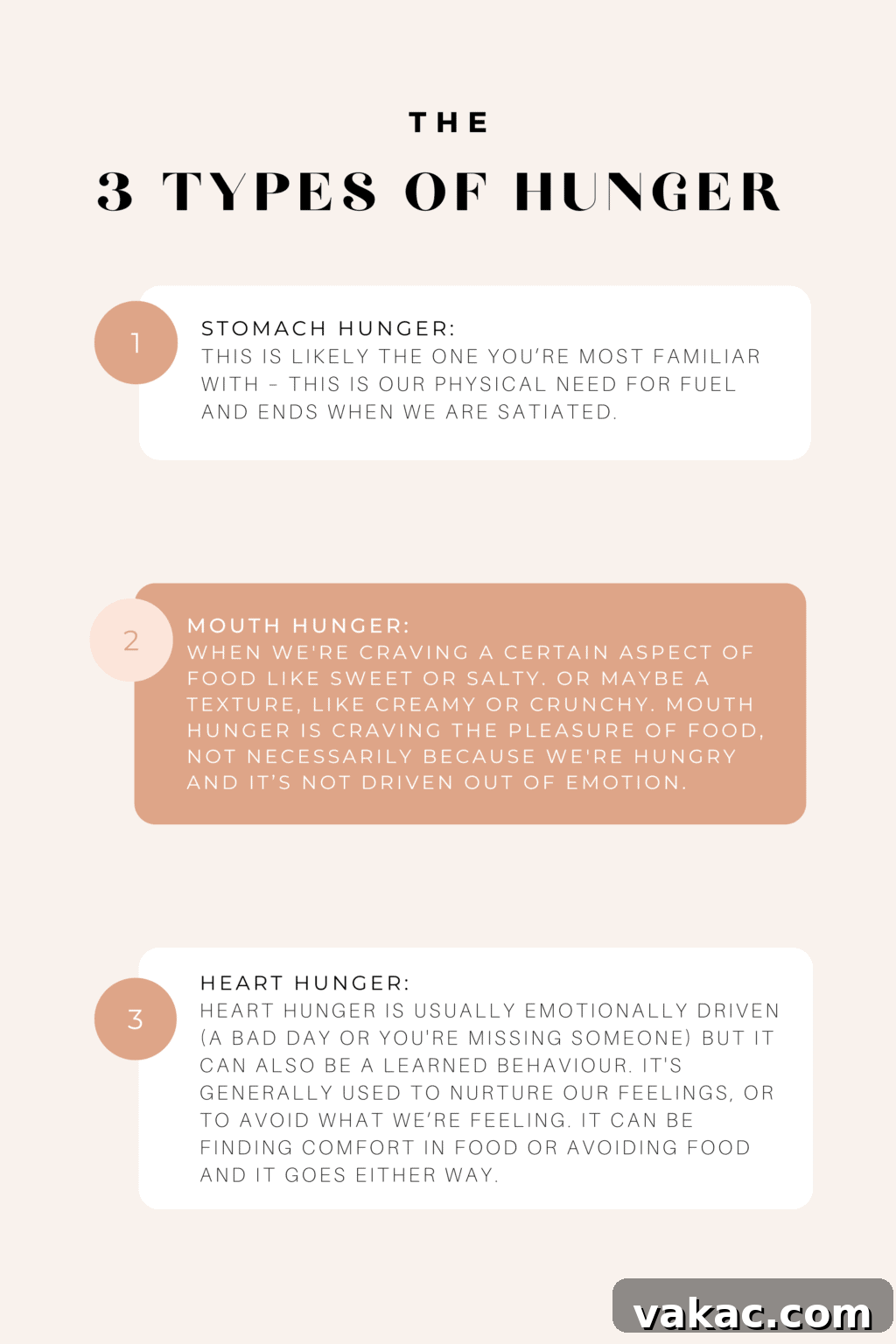
Let’s explore the three main types of hunger and how to discern them:
- Stomach Hunger (Physical Hunger): This is the body’s physiological need for nourishment. It typically develops gradually, manifesting as subtle cues like a growling stomach, mild fatigue, a feeling of emptiness, or difficulty concentrating. Physical hunger strengthens over time if meals are delayed. Importantly, this type of hunger is satisfied by eating a balanced meal, providing sustained energy and satiety. When physical hunger is met, the urge to eat dissipates, leaving you feeling comfortably full.
- Mouth Hunger (Sensory or Craving Hunger): Mouth hunger refers to a desire for specific sensory attributes of food or a particular eating experience, rather than a general need for fuel. This might involve craving the crunch of chips, the sweetness of chocolate, the creamy texture of ice cream, or the nostalgic scent of popcorn at a movie theater. It’s often linked to pleasure, comfort, or a desire for a specific taste or texture. While mouth hunger is legitimate and can be satisfied by consuming the desired food in moderation, it’s distinct from the body’s need for basic sustenance.
- Emotional or Heart Hunger: This type of hunger is driven by emotional states, completely independent of the body’s physical need for food. Emotional hunger often arises abruptly and intensely, feeling urgent and demanding immediate satisfaction. Unlike physical hunger, it’s not satisfied by simply eating; the underlying emotion remains. This hunger often targets specific “comfort foods” and can persist even after consuming a significant amount, leaving a void rather than true satiety. It’s a signal that something deeper emotionally needs attention.
4 Clear Signs You’re Experiencing Emotional Eating
Identifying emotional hunger is the first step toward addressing it. By becoming more attuned to your body’s signals and your eating patterns, you can gain valuable insight. Here are four common scenarios that often indicate you’re engaging in emotional eating:
- Consistently Eating Past Pleasant Fullness: You find yourself continuing to eat long after your body has signaled it’s satisfied. The food provides a short-term sense of relief, comfort, or even joy, but this often leads to physical discomfort, bloating, or lethargy in the long run. If you’re unsure what “pleasant fullness” feels like, utilizing the hunger-fullness scale can be an invaluable tool to help you reconnect with and interpret your body’s nuanced signals. This practice helps distinguish between truly being hungry and eating for other reasons.
- Turning to Food Out of Boredom: Boredom is a frequent trigger for emotional eating. When you lack stimulation or feel unengaged, food can provide a quick, accessible distraction. This isn’t always an issue, but if it becomes a habitual response to a lack of mental or physical activity, it’s a sign. Learn more about how to stop eating when bored here, and also understand that sometimes, a conscious choice to enjoy a snack for pleasure, even when bored, is perfectly acceptable.
- Using Food as a Habitual Reward: You frequently use food as a treat or reward, regardless of your physical hunger levels. This behavior might be deeply ingrained from childhood experiences, where food was used to celebrate achievements, soothe disappointments, or reinforce good behavior. While occasional celebratory eating is fine, a consistent pattern of using food to “reward” yourself can disconnect you from your true physical needs and foster an unhealthy association between food and validation.
- Eating to Numb or Distract from Unpleasant Emotions: Instead of allowing yourself to feel and process difficult emotions like stress, loneliness, anxiety, anger, or sadness, you use food as a shield. Eating becomes a way to create a temporary buffer, numbing these feelings or shifting your focus away from them. This can prevent you from developing healthier, more sustainable emotional coping strategies and truly understanding the messages your emotions are trying to convey.
When reflecting on these scenarios, it can be incredibly empowering to pause and ask yourself a guiding question:
‘What is the most loving and supportive thing I can do for myself at this moment?’
This question encourages self-compassion and mindful decision-making. Sometimes, the most loving act might genuinely be to use food to cope in a specific instance, especially if no other tools are immediately available or if it’s a truly exceptional circumstance. However, more often, it involves accessing other tools in your emotional toolbox (which we’ll explore below). By applying mindfulness and focusing on your *intention* behind eating, you grant yourself the permission and freedom to nurture yourself in a way that truly serves your holistic well-being.
4 Empowering Strategies to Address Emotional Eating
Addressing emotional eating isn’t about demonizing food or striving to eliminate emotional eating entirely. Instead, it’s about cultivating mindfulness and intention to determine what genuinely serves your holistic needs in any given moment. By learning to create a thoughtful space between an emotional trigger and your subsequent action, you can gain control and ultimately learn how to stop feeling guilty after eating for good. So, what effective actions can you take?
1. Cultivate Mindfulness and Self-Awareness
Mindfulness is the practice of paying attention to the present moment without judgment. It’s a powerful tool for understanding your internal landscape and the true nature of your hunger. One excellent way to begin exploring which type of hunger you might be experiencing is through a body scan:
- Physical Scan: Start by gently bringing your awareness from your head down to your toes. Notice any physical sensations. Are you experiencing a rumbling stomach, lightheadedness, a sense of emptiness, tiredness, or difficulty concentrating? These are common indicators of physical hunger.
- Mental/Emotional Scan: Next, shift your attention to your thoughts and feelings. What emotions are present right now? Are you feeling sad, anxious, angry, lonely, bored, or stressed? Did you just have a challenging conversation or receive unexpected news? Identifying these emotional states provides crucial context for your eating urges.
Another valuable tool we often introduce within our “Make Food Feel Good” community is a mindful food journal. This practice goes beyond simply tracking what you eat. It encourages reflection on *why* you eat, *how* you feel before, during, and after eating, and any situational patterns that emerge. By documenting these details, you can uncover unconscious eating decisions and shift from autopilot reactions to conscious, intentional choices. This heightened self-awareness is the bedrock for sustainable, long-term behavior change. Once you truly see your patterns, it becomes impossible to *unsee* them, empowering you to make different choices.
2. Assess and Enhance Your Self-Care Practices
Often, an imbalance in our overall life can significantly impact our emotional resilience. When our self-care is neglected, our ability to cope with daily stressors diminishes, making us more susceptible to relying heavily on immediate, easily accessible coping mechanisms, such as turning to food. This is a critical area to examine. Consider which aspects of your self-care might be lacking and contributing to your reliance on emotional eating. Self-care encompasses various dimensions:
- Physical Nourishment: Are you eating regularly and adequately throughout the day? Are your meals balanced and satisfying? Skipping meals or insufficient nutrition can lead to unstable blood sugar and increased vulnerability to emotional eating.
- Pleasurable Joys: Are you incorporating activities that bring you genuine joy, relaxation, and fulfillment into your routine? This could be hobbies, creative pursuits, or simply quiet time for yourself.
- Social Connection: Do you have sufficient meaningful connections with others? Loneliness and isolation are significant triggers for emotional eating.
- Emotional Well-being: Are you actively processing your emotions, rather than suppressing them? Do you have healthy outlets for stress and emotional expression?
- Rest and Sleep: Are you getting enough restorative sleep? Sleep deprivation can increase hunger hormones and reduce impulse control.
Identify areas where you might be “running on empty” and consciously dedicate time and effort to replenish these vital aspects of your well-being. A robust self-care foundation significantly strengthens your emotional resilience.
3. Cultivate Self-Compassion and Cope with Emotions Kindly
Coping with your emotions with kindness is one of the core 10 Principles of Intuitive Eating. This principle guides you to identify the specific emotion you’re experiencing and then compassionately determine what you genuinely need in that moment to effectively cope with that emotion, rather than immediately reaching for food.
A helpful first step is to ask yourself, ‘What am I feeling right now?’ Sometimes, pinpointing an emotion beyond general terms like “happy,” “sad,” or “mad” can be challenging. In such cases, an emotion word wheel (like the one shown in the original article) can be incredibly useful. It provides a spectrum of more nuanced emotional descriptors, helping you articulate your precise feelings. If you’re still uncertain, using a general descriptor like ‘uncomfortable’ or ‘overwhelmed’ is a perfectly valid starting point.
Start at the center, pick a word, and use the corresponding terms to define your feelings. Your own word wheel will help you interpret your emotions. #MelRobbinsShow #ChangeIsInSight pic.twitter.com/0YBPX9zfcK
— The Mel Robbins Show (@MelRobbinsShow) November 13, 2019
(An emotion word wheel is a visual tool, often circular, that helps you identify and name your feelings by expanding from general emotions at the center to more specific ones on the outer rings. It’s a great resource for deepening emotional literacy.)
Once you’ve identified the emotion, the next crucial question is: ‘What do I *really* need right now to address this feeling?’ For instance, if you’re experiencing deep sadness, you might truly need comfort, a supportive conversation with a friend, or perhaps a good cry. If fear is the predominant emotion, you might need reassurance, a plan to increase your sense of safety, or to engage in a calming activity. Finding non-food ways to meet your emotional needs provides genuine, lasting relief and helps process your emotions effectively.
A powerful technique we guide our clients through is creating a “nurture menu.” This is a personalized list of activities and self-soothing strategies that you can turn to instead of food. Examples might include writing in a gratitude journal, taking a mindful walk in nature, calling a trusted friend or family member, listening to calming music, engaging in a creative hobby, practicing deep breathing exercises, or taking a warm bath. The key is to have a readily available menu of options that genuinely nurture you without involving food.
If you find it challenging to uncover and articulate your emotions, seeking professional support from a registered dietitian specializing in intuitive eating or a trusted mental healthcare professional can provide invaluable guidance and support.
4. Stabilize Blood Sugar with Consistent, Adequate Nutrition
The physiological state of your body significantly impacts your emotional regulation and susceptibility to emotional eating. Unstable blood sugar levels, often resulting from irregular eating patterns or meals lacking balanced nutrients, are directly linked to increased levels of the stress hormone, cortisol. Elevated cortisol can amplify feelings of stress, anxiety, and irritability, making it much harder to resist emotional eating urges.
Conversely, maintaining stable blood sugars throughout the day greatly enhances your emotional regulation. When your blood sugar is steady, your body and mind operate more calmly, improving your capacity for mindful decision-making and making it easier to identify and respond appropriately to different types of hunger. If you’re unsure where to begin with balancing your nutrition, consider these resources:
- Explore these 15+ well-balanced meal ideas to inspire nutritious and satisfying choices.
- Incorporate these 10 healthy eating habits from a registered dietitian into your daily routine for sustained well-being.
Focus on incorporating a balance of macronutrients – complex carbohydrates, lean proteins, healthy fats, and plenty of fiber – at regular intervals throughout the day. This provides a steady supply of energy, keeps you feeling full and satisfied, and minimizes the physiological triggers that can lead to emotional eating.
Ready to Transform Your Relationship with Food?
Unlock a deeper understanding of your eating habits and emotional connections to food. This comprehensive guide will help you uncover patterns, navigate feelings, and make empowered choices on your path to lasting food freedom. Download it now to begin your journey!
Your Journey Towards Food Freedom Begins Now
Taking control of emotional eating is a journey of self-discovery, mindfulness, and compassion. It’s about understanding your body’s signals, honoring your emotions, and developing a robust toolkit of coping strategies that extend beyond food. Remember, progress, not perfection, is the goal. Every small step you take towards greater awareness and kinder self-care is a victory.
We encourage you to reflect on these insights and begin implementing these strategies in your daily life. Be patient and kind to yourself throughout this process.
- Did you know there were three distinct types of hunger? Which type of hunger do you notice most frequently in your own experience?
- Have you ever used an emotion word wheel or a similar tool to help identify your feelings? How did it help you?
Share your thoughts and experiences with us in the comments below – your insights could help someone else on their journey! If you found this post valuable, please share it with a friend or family member who might also benefit from these powerful strategies. Together, we can foster healthier relationships with food and emotions.