
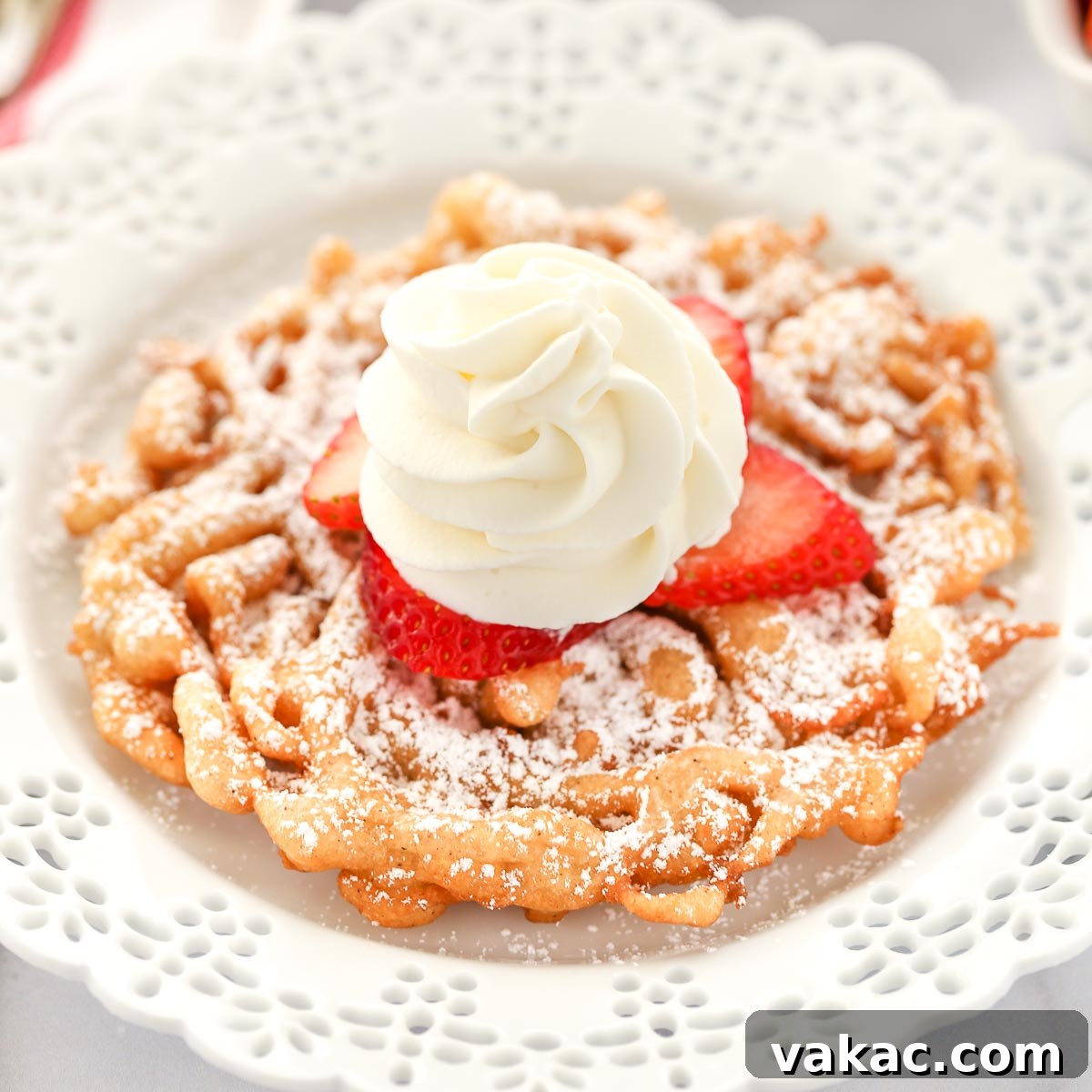
Experience the joy of the carnival right in your kitchen with this incredibly easy homemade funnel cake recipe. Perfectly crisp on the outside and wonderfully tender inside, these funnel cakes taste exactly like the classic fair favorite. Whether you prefer a simple dusting of powdered sugar or an indulgent mountain of your favorite toppings, this treat is guaranteed to bring smiles to everyone!
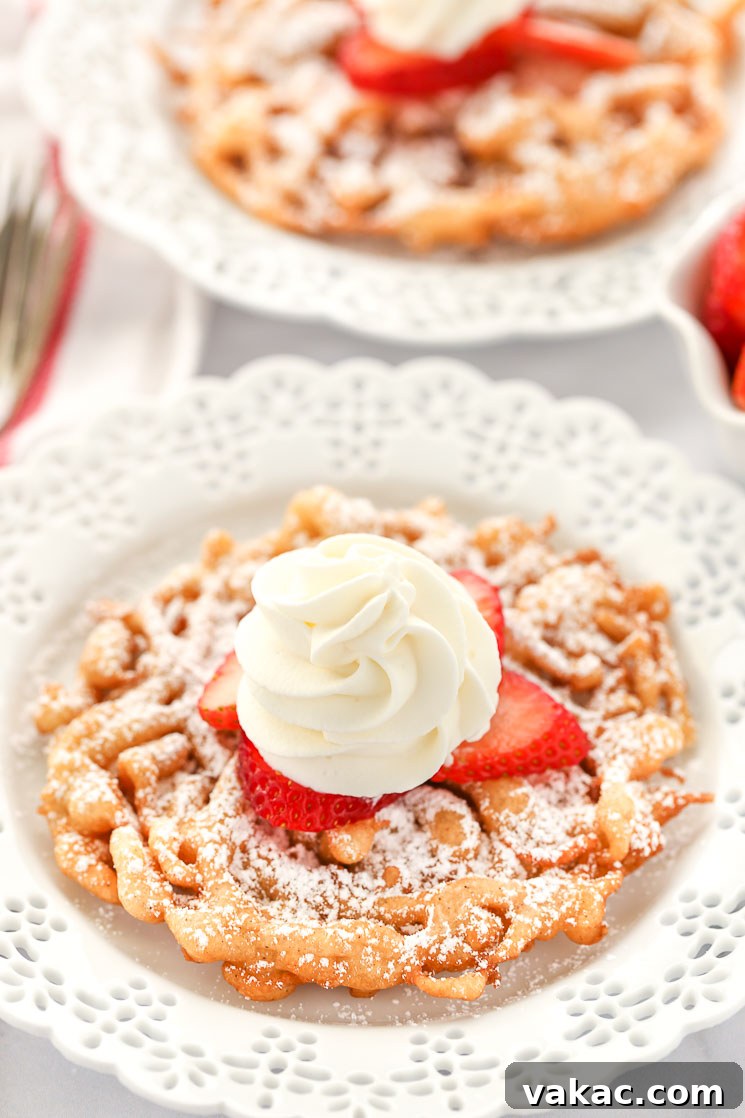
The Ultimate Guide to Homemade Funnel Cakes
Few things evoke the magic of a summer fair quite like the aroma and taste of a fresh funnel cake. That iconic, golden-brown lattice of fried dough, generously dusted with powdered sugar, is a quintessential carnival indulgence. While the annual fair offers its fleeting delight, why wait an entire year to savor this beloved treat? We’ve perfected a homemade funnel cake recipe that captures all the charm and flavor of the carnival classic, making it accessible anytime you crave it. And the best part? They are surprisingly simple to whip up!
What Exactly is a Funnel Cake? A Culinary Delight Explained
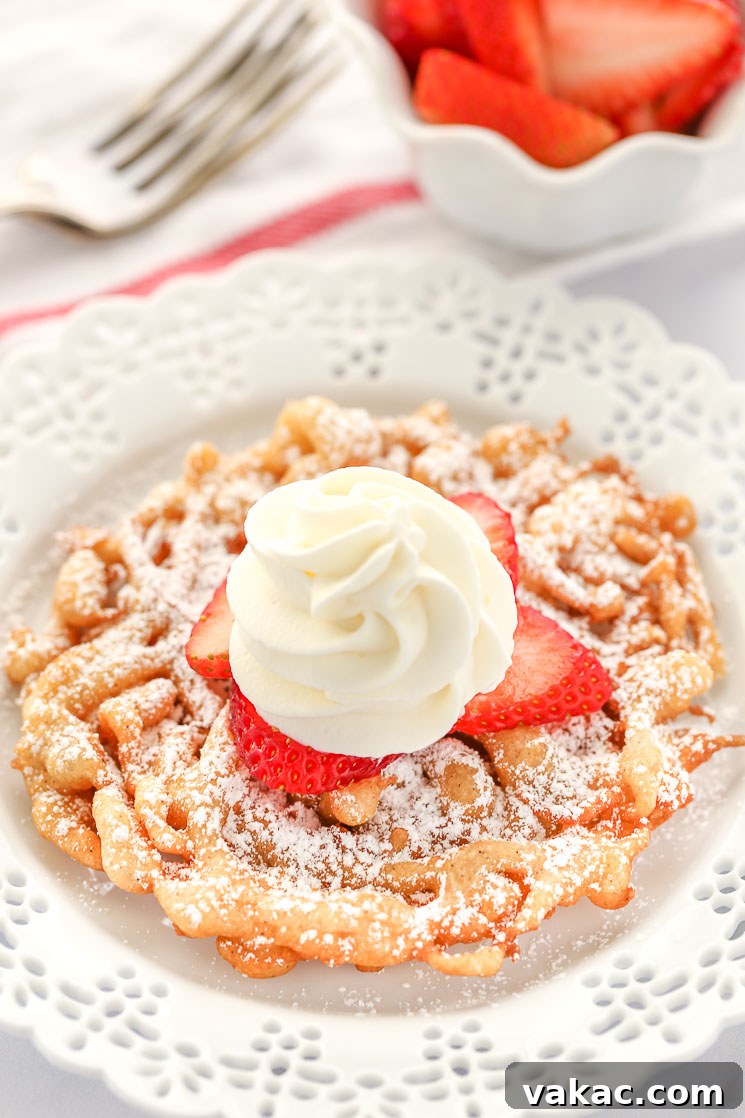
A funnel cake is a distinctive fried dough dessert, often associated with Pennsylvania Dutch cuisine and American carnivals, fairs, and amusement parks. Its name perfectly describes its creation: a relatively thin batter is poured through a funnel (or a similar dispenser) in a swirling, overlapping pattern directly into hot oil. As the batter hits the hot oil, it instantly fries, creating a unique, irregular, and lacy disc with countless crispy edges and a slightly softer interior. Traditionally, these golden delights are served piping hot, adorned with a generous snowfall of powdered sugar, though modern variations boast an array of exciting toppings.
While often compared to donuts, funnel cakes offer a distinct experience. Their batter is typically thinner, resulting in a much crispier texture, especially around the web-like strands. Unlike the uniform shape of a donut, a funnel cake’s charm lies in its free-form, artful appearance, making each one a unique edible masterpiece. This recipe yields a generous batch of 10-12 funnel cakes, perfect for sharing, but can easily be halved if you’re looking to make 5-6 for a smaller gathering.
Why Make Funnel Cakes at Home? The Advantages of DIY Fair Food
Beyond the sheer satisfaction of creating a beloved treat from scratch, making funnel cakes at home offers several compelling advantages:
- Convenience: No need to wait for the fair to come to town or battle long lines. Enjoy this carnival staple whenever the craving strikes.
- Freshness Guaranteed: Homemade funnel cakes are always served hot and fresh, maximizing their crispy texture and delicious flavor, unlike some fair versions that might sit for a while.
- Cost-Effective: Ingredients for funnel cakes are inexpensive pantry staples, making this a budget-friendly dessert option for feeding a crowd.
- Customization Galore: Have specific dietary needs or topping preferences? Making them at home means you have complete control over ingredients and can get creative with an endless variety of toppings.
- Fun for the Family: The process of making funnel cakes is an enjoyable activity, especially for kids (with adult supervision around hot oil), turning dessert-making into a memorable experience.
Crafting Your Perfect Homemade Funnel Cake: A Step-by-Step Guide
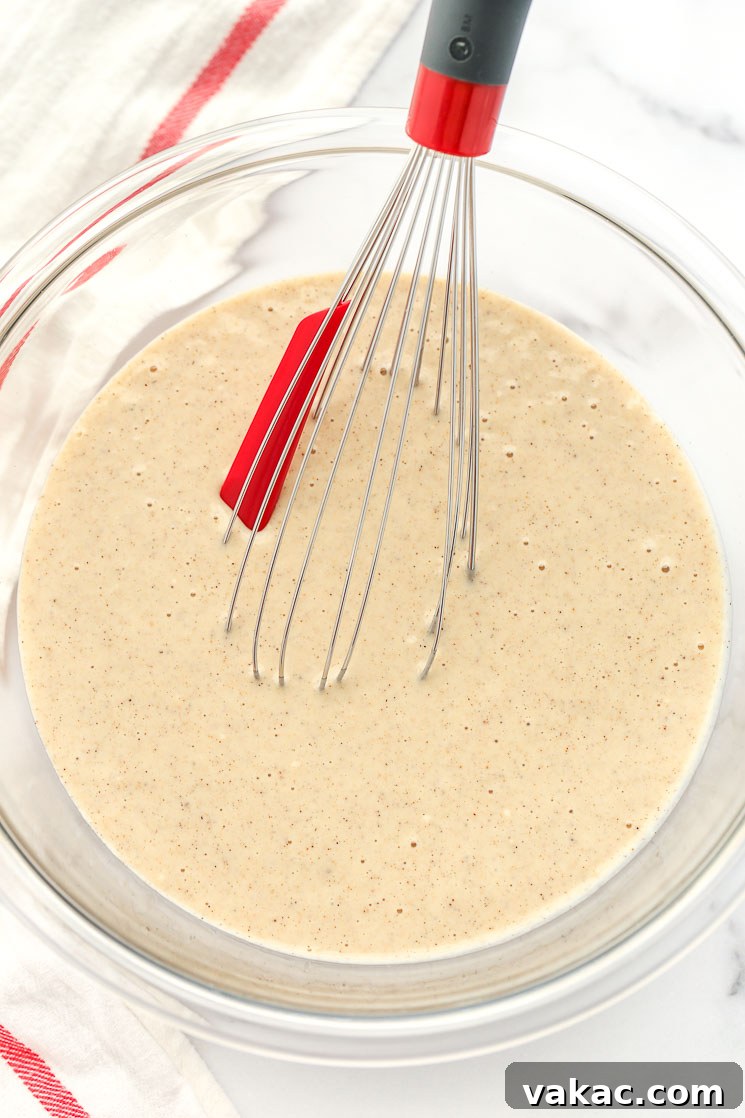
The journey to homemade funnel cake perfection begins with gathering your ingredients and mastering a few key techniques. Let’s break down the process:
1. Prepare Your Frying Station
Start by preparing your frying setup. Select a large, heavy-bottomed skillet or a Dutch oven. It’s crucial to use a pot that is deep enough to safely contain at least 2-3 inches of oil. Fill your chosen vessel halfway with a neutral-flavored oil like canola or vegetable oil. Canola oil is a fantastic choice due to its high smoke point and neutral taste, ensuring your funnel cakes absorb flavor only from the batter itself. Place the pot over medium heat and allow the oil to preheat while you mix your batter. The ideal temperature for frying funnel cakes is 350°F (177°C), so a reliable kitchen thermometer is highly recommended for accuracy. If the oil isn’t hot enough, your funnel cakes can become greasy; if it’s too hot, they might burn on the outside before cooking through.
2. Whisk Together Your Dry Ingredients
In a medium-sized mixing bowl, combine the following dry ingredients:
- All-purpose flour: Precision in flour measurement is paramount for the right batter consistency. Always use the “spoon and level” method: gently spoon the flour into your measuring cup until it’s overflowing, then level it off with the back of a knife or a straight edge. Never scoop directly from the bag, as this can compact the flour and lead to an overly thick batter that won’t pour correctly through a funnel.
- Baking Powder & Salt: These are essential for light and airy funnel cakes. Baking powder acts as a leavening agent, creating those delightful bubbles and helping the cakes puff up beautifully as they fry. Salt, while seemingly small in quantity, balances the sweetness and enhances all the other flavors, preventing a bland taste.
- Cinnamon & Nutmeg: While optional, we strongly encourage including these warming spices. They infuse the funnel cakes with a subtle, aromatic depth that truly elevates them, making them taste remarkably similar to those beloved fair versions. The hint of spice adds an extra layer of complexity to the classic sweet profile.
Give these dry ingredients a good whisk until they are thoroughly combined. This ensures even distribution of the leavening and spices throughout the batter.
3. Combine Your Wet Ingredients
In a separate, larger mixing bowl, whisk together the following wet ingredients:
- Milk: We typically use whole milk for a richer batter, but 2%, 1%, or even skim milk will work perfectly fine without significantly altering the outcome. For those with dairy sensitivities, unsweetened almond milk can also be a viable substitute, though it might subtly change the flavor profile.
- Granulated Sugar: Funnel cakes are often topped with powdered sugar, so the batter itself is only lightly sweetened with a modest 1/4 cup of granulated sugar. This provides a foundational sweetness without being overpowering, allowing the toppings to truly shine.
- Eggs & Vanilla: Two large eggs provide structure and richness to the batter, helping to bind all the ingredients together. Pure vanilla extract is crucial for adding a warm, comforting aroma and a classic sweet flavor that complements the other ingredients beautifully.
Whisk these wet ingredients until they are fully incorporated and smooth.
4. Bring it All Together: The Batter
Once your dry and wet ingredients are prepared separately, it’s time to combine them. Pour the dry mixture into the wet mixture. Whisk them together gently until they are just combined. A few small lumps are perfectly acceptable and even desirable; overmixing can develop the gluten in the flour, leading to tough funnel cakes. The resulting batter should be noticeably thin – this is exactly what you want! A thin batter allows for that signature lacy, crispy texture when poured into the hot oil.
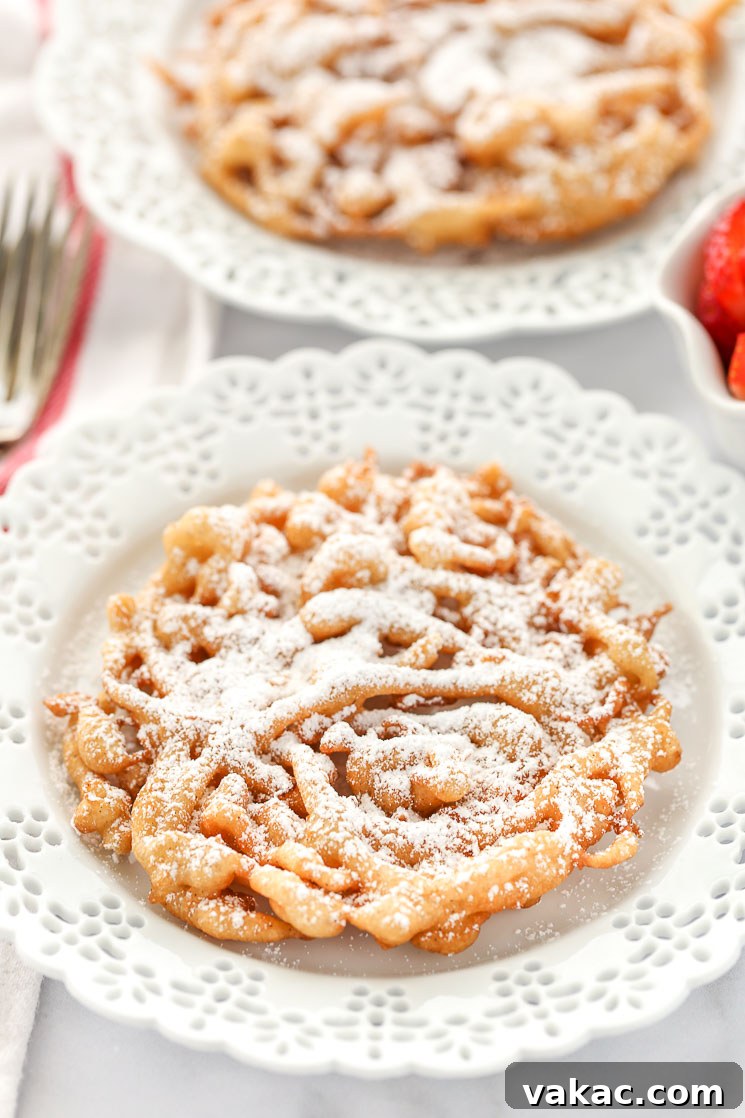
5. Fry Your Funnel Cakes to Golden Perfection
By now, your oil should have reached the optimal frying temperature of 350°F (177°C). If you don’t have a thermometer, a good test is to drop a tiny bit of batter into the oil; if it sizzles vigorously and immediately floats to the top, it’s ready. If it sinks or barely bubbles, the oil isn’t hot enough. If it smokes, it’s too hot. Maintain this temperature throughout the frying process.
Traditionally, funnel cake batter is poured through a funnel with your finger held over the opening to control the flow. However, you have several excellent alternatives: a plastic squeeze bottle (like those used for condiments) offers great control, or simply using a liquid measuring cup with a pour spout works well too. Carefully pour about 1/4 to 1/3 cup of batter into the hot oil in a circular, overlapping motion, creating that characteristic “web-like” design. Don’t worry about perfection; the beauty of funnel cakes lies in their rustic, free-form nature! The slight imperfections are what give them their authentic charm.
Allow the funnel cake to cook undisturbed until it achieves a beautiful light golden brown color on the bottom, which typically takes about 1-2 minutes, depending on your oil temperature. Using tongs or a flat spatula, carefully flip the funnel cake and cook for another 1-2 minutes until both sides are golden and the cake is cooked through. Avoid overcrowding the pot; fry one or two at a time to maintain the oil temperature and ensure even cooking.
6. Drain, Top, and Enjoy!
Once cooked, carefully remove the funnel cake from the oil using tongs or a flat spatula. Transfer it immediately to a plate or baking sheet lined with several layers of paper towels. This crucial step allows any excess oil to drain off, preventing your funnel cakes from becoming greasy and ensuring maximum crispiness. Let them cool slightly, but serve them warm for the best experience.
Now comes the fun part: topping your homemade funnel cakes! The classic choice is a generous sifting of powdered sugar. For an extra special treat, we love adding sliced fresh strawberries and a dollop of homemade whipped cream. The possibilities, however, are endless!
Pro Tips for Flawless Homemade Funnel Cakes
Expert Baking Tips
- Accurate Flour Measurement: Always fluff your flour with a spoon before gently spooning it into the measuring cup and leveling it off with the back of a knife. This prevents overpacking, which can lead to a thick batter and dense funnel cakes.
- Oil Temperature is Key: Invest in a good kitchen thermometer to ensure your oil consistently stays at 350°F (177°C). If the oil is too hot, the cakes will burn quickly on the outside and remain raw inside. If it’s too cool, they will absorb too much oil, resulting in a soggy, greasy texture.
- Safe Frying Practices: Always use a deep, heavy-bottomed pot and never fill it more than halfway with oil. Keep a lid nearby in case of a grease fire. Do not leave hot oil unattended.
- Pouring Technique: While a traditional funnel works wonders, don’t hesitate to use alternatives like a plastic squeeze bottle or a liquid measuring cup with a spout. Practice your circular motion for that classic, lacy look. Remember, imperfections are part of their charm!
- Don’t Overcrowd the Pot: Fry one or two funnel cakes at a time. Overcrowding will cause the oil temperature to drop, leading to greasy funnel cakes.
- Proper Draining: Immediately after frying, transfer funnel cakes to a wire rack set over paper towels. This allows air circulation while absorbing excess oil, ensuring maximum crispness.
- Serve Immediately: Funnel cakes are best enjoyed fresh out of the fryer. While they can be reheated, their peak crispiness is right after cooking.
Unleash Your Creativity: Funnel Cake Topping Ideas
While powdered sugar is the timeless classic, don’t limit your imagination when it comes to topping your homemade funnel cakes. Here are some delectable ideas to inspire you:
- Classic & Simple: A generous dusting of powdered sugar.
- Fruity Freshness: Fresh sliced strawberries, blueberries, raspberries, or a mix of seasonal berries, often paired with whipped cream.
- Sweet & Saucy: Drizzles of chocolate syrup, caramel sauce, strawberry sauce, or even a warm fruit compote.
- Creamy Indulgence: A scoop of vanilla ice cream, a dollop of homemade whipped cream, or a swirl of cream cheese frosting.
- Candy Shop Delights: Sprinkles, mini chocolate chips, crushed candy bars, or gummy bears for a playful twist.
- Nutty Crunch: Chopped pecans, walnuts, or almonds for added texture and flavor.
- Spiced Comfort: A light sprinkle of cinnamon sugar or apple pie spice.
- Savory Twist (for the adventurous!): While less common, some experiment with savory toppings like cheese and chives, or even a fried egg, though this recipe is firmly in the sweet camp.
Frequently Asked Questions About Homemade Funnel Cakes
- Can I make the batter ahead of time? Yes, you can prepare the batter a few hours in advance and store it in the refrigerator. Give it a good whisk before frying, as it might thicken slightly.
- Why are my funnel cakes greasy? This usually happens if the oil temperature is too low. Ensure your oil is consistently at 350°F (177°C) and don’t overcrowd the pot. Proper draining on paper towels immediately after frying is also crucial.
- My funnel cakes aren’t crispy, what went wrong? Again, oil temperature is a common culprit. If the oil isn’t hot enough, the batter will absorb too much and become soggy instead of crisp. Also, make sure the batter isn’t too thick, as a thinner batter yields crispier results.
- Can I bake funnel cakes instead of frying them? While you technically could bake a dough in a similar shape, it would not yield the classic crispy, lacy texture of a traditional fried funnel cake. Frying is essential for that authentic experience.
- What kind of oil is best for frying? Neutral oils with a high smoke point are best. Canola, vegetable, peanut, or grapeseed oil are all excellent choices.
MORE HOMEMADE TREATS YOU’LL LOVE!
- Strawberry Shortcake
- Apple Fritters
- Cream Puffs
- Caramel Popcorn
- S’mores Fudge
Recipe Card: Homemade Funnel Cake
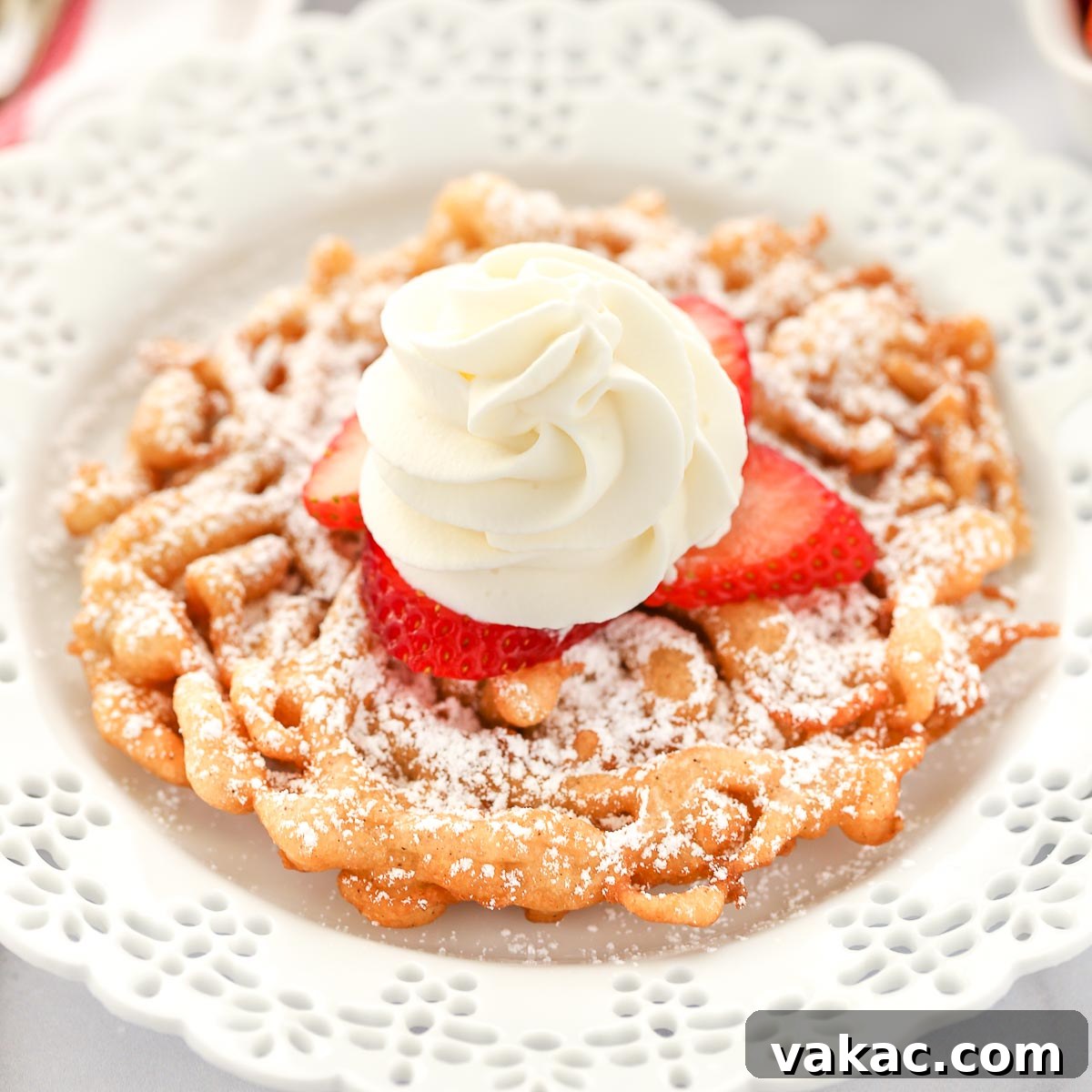
Homemade Funnel Cake Recipe
This easy homemade funnel cake recipe tastes just like the classic fair favorite. Top these with some powdered sugar or your favorite topping for a simple treat that everyone will love!
Prep Time: 15 mins
Cook Time: 5 mins
Total Time: 20 mins
Servings: 12 funnel cakes
Ingredients
- Canola or vegetable oil for frying
- 2 cups (250 grams) all-purpose flour (spooned & leveled)
- 1 and 1/2 teaspoons baking powder
- 1 teaspoon ground cinnamon
- 1/4 teaspoon ground nutmeg
- 1/4 teaspoon salt
- 1 and 1/2 cups (360 ml) milk
- 1/4 cup (50 grams) granulated sugar
- 2 large eggs
- 1 teaspoon pure vanilla extract
Instructions
- Place a large skillet or large pot over medium heat and fill halfway with oil. Allow oil to heat to 350°F (177°C) while you prepare the funnel cake batter.
- In a medium-sized mixing bowl, whisk together the flour, baking powder, cinnamon, nutmeg, and salt. Set aside.
- In a separate large mixing bowl, whisk together the milk, granulated sugar, eggs, and vanilla extract until fully combined. Add the dry ingredients to the wet ingredients and mix until just combined.
- Once the oil has reached 350°F (177°C), carefully pour the funnel cake batter into a funnel (using your finger to close off the end of the funnel), or use a plastic squeeze bottle or liquid measuring cup.
- Carefully pour about 1/4 – 1/3 cup of the batter into the oil in a circular motion, overlapping itself. Allow to cook until lightly golden brown on the bottom (about 1-2 minutes), then carefully flip with tongs or a flat spatula and allow to cook for an additional 1-2 minutes or until cooked through.
- Carefully remove the cooked funnel cakes with tongs or a flat spatula and transfer to a baking sheet or plate lined with paper towels. Allow to cool slightly, then top with powdered sugar or your favorite toppings, and enjoy!
Notes
- I used whole milk in this recipe, but 2%, 1%, skim, or even almond milk will work just fine.
- I typically use about 1/4 cup – 1/3 cup of batter per funnel cake, which will yield about 10-12 funnel cakes. You can easily cut this recipe in half to just make 5-6.
Cuisine: American
Course: Dessert
Author: Danielle Rye
*Please use extreme caution when working with hot oil. Ensure proper ventilation and keep a fire extinguisher or baking soda nearby.