
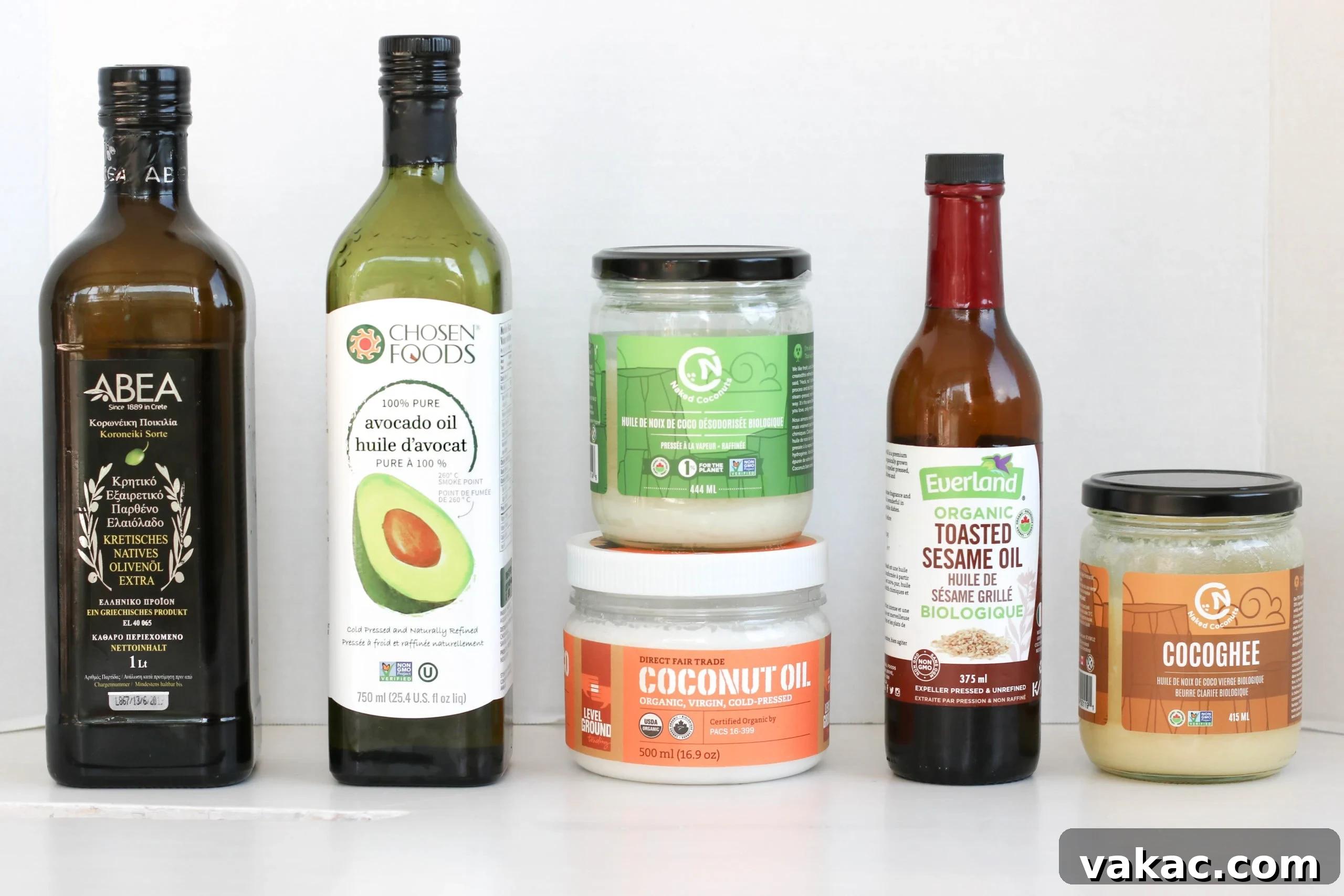
In the bustling world of cooking, oils are undeniably a kitchen staple, used daily in countless culinary creations. However, navigating the vast array of options available can be quite perplexing, leaving many home cooks wondering which oil is truly the best for their health and their dishes.
As a Registered Dietitian, the question of “which cooking oil should I use?” is one I encounter frequently. It’s a valid concern, given the overwhelming number of choices – from exotic options to everyday staples – each promising unique benefits. Understanding the nuances of these oils is key to making informed decisions that support both your health and culinary goals.
When embarking on the journey to select a healthy cooking oil, there are several critical factors that deserve your thoughtful consideration. These elements not only influence the flavor and texture of your food but also its nutritional value and your overall well-being.
The type of oil and its origin: Understanding where an oil comes from – whether it’s a fruit, seed, or nut – provides insight into its fat profile and potential health benefits.
The smoke point: This crucial temperature indicates when an oil begins to burn, smoke, and degrade, losing its nutritional integrity and potentially forming harmful compounds.
Your intended use: Different cooking methods, from high-heat frying to delicate dressings, require oils with distinct properties. Matching the oil to the task is essential for optimal results.
Price: Cost can vary significantly between oil types and brands, influencing accessibility and daily usage.
In this comprehensive guide, I’ll demystify these factors, delving into the health benefits, ideal uses, and even situations when you might want to avoid certain oils. We’ll compare seven popular cooking oils, providing you with the knowledge to confidently choose the best options for your kitchen:
- Olive oil
- Avocado oil
- Grapeseed oil
- Canola oil
- Coconut oil
- Ghee (clarified butter)
- Flaxseed oil
Prioritizing Plant-Based Oils for Health and Wellness
When making choices about dietary fats, opting for plant-derived oils is generally a smart move. These oils are typically richer in beneficial monounsaturated (MUFAs) and polyunsaturated fats (PUFAs), which are renowned for their positive impact on health, including their ability to help reduce inflammation throughout the body. Incorporating healthy dietary fats into your daily routine is not just about flavor; it’s fundamental for several vital bodily functions:
- Essential for Vitamin Absorption: Fats are crucial for the absorption of fat-soluble vitamins A, D, E, and K. Without adequate dietary fat, your body struggles to utilize these vital nutrients, which play roles in vision, bone health, immune function, and blood clotting.
- Enhanced Satiety and Flavor: Fats contribute significantly to the satiety factor of meals, helping us feel full and satisfied for longer periods after eating. They also act as carriers for flavor molecules, enriching the taste and aroma of our food, making healthy eating more enjoyable.
- Inflammation Reduction: Particularly omega-3 fatty acids, a type of PUFA, are powerful anti-inflammatory agents. Found abundantly in sources like fatty fish (salmon, mackerel), walnuts, flax seeds, hemp hearts, and chia seeds, these fats are vital for reducing systemic inflammation and supporting cardiovascular and cognitive health.
- Promotes Blood Sugar Balance: Including healthy fats in your meals can help slow down the digestion and absorption of carbohydrates, leading to a more stable blood sugar response and preventing sharp spikes and crashes.
Understanding the Smoke Point of Cooking Oils: A Culinary Essential
The smoke point is a critical measurement in the world of cooking oils. It represents the specific temperature at which an oil begins to visibly smoke, signaling that it is breaking down. Once an oil reaches its smoke point, it not only loses its beneficial nutritional properties but can also start to produce acrid flavors and potentially generate toxic or carcinogenic compounds. This is why choosing an oil with an appropriate smoke point for your cooking method is paramount for both flavor and health. Below, I’ve listed the smoke points for each oil to help you make informed decisions.
For a visual guide and more insights, click below to watch my detailed video on “Cooking Oils Comparison.”
Methods of Extraction (Processing): Impacting Quality and Nutrition
Before we can enjoy the convenience of bottled cooking oils, the fats must be carefully extracted from their natural sources, typically nuts, seeds, or fruits. The method of extraction plays a significant role in determining the oil’s final taste, nutritional quality, and overall integrity. Understanding these methods can empower you to choose higher-quality oils.
Cold-Pressed
Cold-pressed oils are obtained through a mechanical pressing process without the use of excessive heat. As the name suggests, these oils are extracted at relatively low temperatures, typically below 49°C (120°F), though this can vary slightly by region. This gentle, slower process helps preserve the oil’s delicate nutrients, natural flavor, and aromatic compounds, resulting in a higher-quality product. Cold-pressed oils are often characterized by their robust flavor profiles and vibrant colors. While they tend to be more expensive due to the less efficient extraction and smaller yield, they offer superior nutritional benefits. This method is also environmentally friendly, as it avoids the use of harsh chemical solvents.
Expeller-Pressed
Expeller-pressing also uses a mechanical press to extract oil, but with significantly higher pressure compared to cold-pressing. This increased pressure generates friction, which in turn creates moderate heat. While this method is more efficient than cold-pressing and yields a good quality product, the elevated temperatures can cause some degradation of sensitive nutritional compounds. However, like cold-pressing, expeller-pressing is a chemical-free process, making these oils a better choice than those extracted with solvents. They often have a more neutral flavor than cold-pressed oils, making them versatile for various culinary applications.
Chemical Solvents
This is the most common and cost-effective method for commercial oil production, particularly for many vegetable oils. Instead of mechanical pressing, chemical solvents (most commonly hexane) are used to extract the oil from the raw material. This process is highly efficient and produces a maximum yield, which translates to lower production costs and, subsequently, less expensive oils for consumers. However, this method comes at a cost to nutritional quality. The use of high heat and chemicals can strip the oil of its beneficial nutrients, antioxidants, and natural flavors. While strict regulations are in place to ensure solvent residue levels are minimal, some consumers prefer to avoid oils produced this way. If an oil label does not specify “cold-pressed” or “expeller-pressed,” it is highly probable that it was extracted using chemical solvents.
With this foundational understanding of oil types, smoke points, and extraction methods, let’s dive into my detailed comparison of seven of the best cooking oils available today!
Extra Virgin Olive Oil (EVOO)
Smoke point: 320-375°F (Medium)
Price: $0.26/oz (approximately $4.12 USD /16 oz)
Benefits
- Rich in Monounsaturated Fats (MUFAs): EVOO is celebrated for its high content of oleic acid, a powerful monounsaturated fat that has been extensively studied for its heart-protective properties. Regular consumption has been shown to help lower blood pressure, decrease levels of LDL (the “bad”) cholesterol, and simultaneously raise HDL (the “good”) cholesterol, significantly reducing the risk of heart disease.
- Antioxidant Powerhouse: Beyond its healthy fats, EVOO is packed with potent antioxidants, including polyphenols and phytochemicals. These compounds play a vital role in dilating blood vessels, preventing chronic inflammation, and inhibiting the formation of dangerous blood clots, contributing to overall cardiovascular health.
What it’s best used for:
- Finishing Oil vs. Cooking Oil: It’s important to distinguish between different grades. Unfiltered extra virgin olive oil, with its robust flavor and maximum nutrient content, is best used as a finishing oil – drizzled over salads, pasta, or grilled vegetables without direct heat to preserve its delicate compounds. Filtered EVOO, with a slightly higher smoke point, is more suitable for light cooking.
- Flavorful Dressings and Marinades: Its distinctive fruity and peppery notes make EVOO an unparalleled choice for crafting delicious salad dressings, vibrant vinaigrettes, and tenderizing marinades.
- Choosing the Right Grade: Always opt for “extra virgin” or “virgin” olive oil. These labels indicate minimal processing and maximum nutrient retention. Avoid “light” olive oil, which has been refined and stripped of many of its beneficial compounds and characteristic flavor.
- Refined Olive Oil: While not as nutritionally dense as EVOO, refined olive oil has a higher smoke point and can be used as a better all-purpose oil for sautéing and stir-frying at moderate temperatures. However, understand that it has lost some of its nutritional integrity through further processing.
Avocado Oil (Refined)
Smoke point: 450-500°F (High)
Price: $0.44/oz (approximately $7.49 USD/ 16.9oz)
Benefits:
- Abundant Monounsaturated Fats: Similar to olive oil, avocado oil is predominantly composed of monounsaturated fats, particularly oleic acid. These healthy fats are instrumental in maintaining healthy blood pressure and cholesterol levels, thereby significantly reducing the risk of cardiovascular disease.
- Rich in Vitamin E: Avocado oil is a good source of vitamin E, a powerful antioxidant that protects cells from oxidative damage.
What it’s best used for:
- Versatile Flavor Profile: While unrefined avocado oil can have a distinct earthy or nutty taste, refined avocado oil offers a mild, almost neutral flavor. This makes it incredibly versatile for both raw applications like salad dressings, homemade dips, and marinades, where it won’t overpower other ingredients.
- Ideal for High-Heat Cooking: Its exceptionally high smoke point is avocado oil’s crowning glory. This characteristic makes it the perfect choice for demanding cooking methods such as barbecuing, roasting vegetables, searing meats to perfection, browning ingredients, and vigorous stir-frying, all without breaking down or producing harmful smoke. It’s a reliable option for any cooking that requires sustained high temperatures.
Grapeseed Oil
Smoke point: 420°F (Medium-High)
Price: $0.20/oz (approximately $11.10 USD/ 24 fl OZ)
Benefits
- High in Polyunsaturated Fats (PUFA): Grapeseed oil is particularly rich in linoleic acid, an omega-6 polyunsaturated fatty acid. These fats are essential for the body and contribute to skin health and cell membrane integrity.
- Neutral Flavor: One of its most appealing attributes is its very mild, almost neutral flavor, which makes it an excellent choice when you don’t want the oil to influence the taste of your dish.
- High Smoke Point: With a medium-high smoke point, it’s suitable for various cooking applications without degrading easily.
Downfalls
- Omega-6 Dominance: While omega-6 fatty acids are essential, grapeseed oil has a significantly higher ratio of omega-6 to omega-3 fatty acids. A diet too high in omega-6s relative to omega-3s can potentially promote inflammation and may interfere with the absorption and utilization of beneficial omega-3s. It’s important to consume it in balance with other fats.
What it’s best used for:
- Versatile Multi-Purpose Oil: Due to its extremely mild and clean flavor, grapeseed oil is a fantastic multi-purpose oil that won’t compete with other ingredients. It’s ideal for a wide range of culinary tasks.
- Cooking Applications: Its medium-high smoke point makes it suitable for quick stir-fries, light sautées, and baking. It’s also excellent for making homemade mayonnaise or other emulsified sauces.
- Dressings and Dips: Its neutral taste also makes it a good base for delicate salad dressings and dips where you want the other ingredients’ flavors to shine through.
Coconut Oil
Smoke point: 350°F (Medium) for unrefined/virgin coconut oil – 450°F (High) for refined coconut oil
Price: approx $0.40/Fl Oz (approximately $6.69 USD/ 15 fl oz)
Benefits:
- Antioxidant and Antimicrobial Properties: Coconut oil contains polyphenols, which are compounds known for their potential antioxidant, anti-inflammatory, and anti-bacterial benefits. These properties contribute to overall health and can help combat various pathogens.
- Unique Saturated Fat Composition: While high in saturated fat, the predominant type in coconut oil is medium-chain triglycerides (MCTs). Unlike the longer-chain saturated fats found in animal products, MCTs are metabolized differently by the body. They are absorbed more quickly and can be directly used for energy, potentially offering a unique metabolic advantage compared to other saturated fats.
Downfalls:
- High Saturated Fat Content: Despite the benefits of MCTs, coconut oil is still considerably higher in total saturated fat compared to most other plant-based oils. Therefore, it’s generally recommended to use it in moderation as part of a balanced diet, especially if you are monitoring your saturated fat intake.
What it’s best used for:
- Baking and Moderate Cooking: Its solid consistency at room temperature and medium smoke point (for virgin) make it excellent for light sautéing, sauces, and baking applications. It tends to burn less easily than liquid oils, making it a good choice for gentle heat.
- Dairy-Free Solid Fat Substitute: Coconut oil is an exceptional plant-based alternative to other solid fats like butter or shortening in baking recipes, providing structure and moisture.
- Unrefined vs. Refined:
- Unrefined Coconut Oil (Cold-Pressed): Choose this variety for maximum nutrient retention and its characteristic sweet, nutty, and tropical flavor. It’s perfect for dishes where you want that distinct coconut aroma, such as curries, stir-fries, or tropical desserts.
- Refined Coconut Oil: Opt for refined coconut oil when you need a higher smoke point for more intense heat cooking (up to 450°F) or if you prefer to avoid the pronounced coconut smell and flavor in your dishes.
Ghee (Clarified Butter)
Smoke Point: 450F – 485F (High)
Price: $1.24/oz (approximately $19.81 USD/ 16 oz)
Benefits
- Lactose-Friendly: Ghee is essentially clarified butter, meaning the milk solids and water have been removed during its preparation. This makes it a much better-tolerated fat for individuals with lactose intolerance or dairy sensitivities, allowing them to enjoy a buttery flavor without discomfort.
- Superior Buttery Flavor with High Heat Tolerance: Ghee retains the rich, nutty, and comforting flavor of butter but boasts a significantly higher smoke point. This makes it an excellent choice for high-heat cooking where butter would quickly burn and turn bitter.
- Rich in Fat-Soluble Vitamins: Ghee contains fat-soluble vitamins like A, D, E, and K, contributing to its nutritional profile.
Downfalls
- Higher in Saturated Fat: As an animal-derived fat, ghee contains a higher proportion of saturated fat compared to most plant-based oils. While beneficial in moderation, those monitoring their saturated fat intake should consider this.
- More Refined Product: The clarification process means it’s more processed than whole butter, though it’s a natural process.
What it’s best used for
- High-Heat Cooking: Ghee’s robust smoke point makes it perfect for stir-frying, deep-frying, baking, roasting vegetables, and any cooking method requiring high temperatures where you desire a rich, buttery flavor without burning.
- Baking Substitute: It can be a fantastic substitute for butter, lard, or shortening in baking recipes, lending a rich taste and unique texture to pastries and baked goods.
- Flavor Enhancer: Use ghee when you want to impart a luxurious, rich buttery flavor to your dishes. It’s a delightful topping for popcorn, toast, or a swirl in soups and stews.
Flaxseed Oil
Smoke point: 225°F (Low)
Price: $1.12/oz (approximately $17.99/16 fl. oz)
Benefits
- Exceptional Omega-3 Source: Flaxseed oil is one of the richest plant-based sources of alpha-linolenic acid (ALA), an essential omega-3 fatty acid. ALA is vital for heart health, brain function, and reducing inflammation throughout the body.
- High in Monounsaturated Fats: In addition to its omega-3 content, flaxseed oil also contains beneficial monounsaturated fats, further contributing to its heart-healthy profile.
What it’s best used for:
- No-Heat Applications Only: Due to its extremely low smoke point and delicate nature, flaxseed oil should never be exposed to heat. Heating flaxseed oil will destroy its healthy omega-3 fatty acids and can create harmful compounds.
- Dressings, Marinades, and Dips: It is best utilized in cold preparations such as salad dressings, vibrant marinades (added after cooking), smoothies, or blended into dips like hummus. Its slightly nutty and earthy flavor can add a unique dimension to these dishes.
- Supplementing Omega-3 Intake: Many individuals incorporate flaxseed oil directly into their diet as a supplement to boost their omega-3 intake.
Canola Oil
I’ve included canola oil in this comparison because it’s a common topic of discussion, though as a Registered Dietitian, I generally approach it with some reservations. My primary concerns stem from its often high omega-6 fatty acid content, which, when consumed in excess relative to omega-3s, can potentially contribute to inflammation. Furthermore, the conventional processing method for canola oil typically involves high-heat chemical extraction, which can degrade its nutritional quality.
However, it’s crucial to acknowledge that accessibility and affordability are significant factors in dietary choices. Canola oil is widely available and often one of the most economical options on the market. If it fits your budget and lifestyle, it can absolutely be a part of a balanced diet. If possible, seeking out cold-pressed or expeller-pressed varieties can mitigate some of the concerns regarding processing.
Price: Approx $0.10 USD/Fl oz (approximately $4.99 USD/ 1.42 L)
Smoke point: 400°F (High)
Benefits
- Balanced Fat Profile (initially): Canola oil is relatively high in monounsaturated fat and contains a decent amount of omega-3 (ALA), while being low in saturated fats. This profile can contribute to heart health when processed optimally.
- Long Shelf Life: It has a relatively stable composition that grants it a long shelf life, making it a practical choice for many households.
- Economical: Its widespread availability and low cost make it an accessible option for budget-conscious consumers.
Downfalls
- Processing Methods: Most commercially available canola oil is extracted using chemical solvents and high heat. This intensive processing can strip the oil of delicate nutrients and antioxidants.
- Omega-6 to Omega-3 Ratio: While it contains omega-3s, canola oil often has a higher proportion of omega-6 fatty acids. An imbalanced ratio, especially with excessive omega-6 intake, can potentially contribute to pro-inflammatory processes in the body and may hinder the beneficial effects of omega-3s.
What it’s best used for:
- Culinary Versatility: Thanks to its neutral flavor and high smoke point, canola oil is incredibly versatile. It won’t impart a strong taste to your food, allowing other flavors to dominate.
- High-Heat Cooking: It’s well-suited for various high-heat cooking methods, including baking, stir-frying, sautéing, and roasting vegetables, without reaching its smoke point too quickly.
- Pan and Grill Prep: Canola oil can also be effectively used to grease baking pans, coat grills, or prevent food from sticking.
Navigating Concerns about GMOs in Cooking Oils
For those who actively seek to avoid genetically modified organisms (GMOs) in their diet, it’s important to be aware that certain cooking oils are more commonly derived from genetically modified crops. Specifically, corn oil, soy oil, and canola oil are frequently produced from GMO sources. If avoiding GMOs is a priority for you, be sure to carefully check the labels of these oils. Look for explicit “non-GMO” certifications or opt for organic varieties, as organic certification prohibits the use of GMOs. Making these conscious choices ensures your cooking oils align with your dietary preferences.
So there you have it – a comprehensive breakdown of some of the most common cooking oils. In our household, the everyday staples include extra virgin olive oil for almost anything that won’t be heated above 350°F, where its distinct flavor and health benefits truly shine. For any high-heat cooking needs, such as searing or roasting, refined avocado oil is our go-to, thanks to its impressive smoke point and neutral taste.
Beyond these two workhorses, I occasionally use coconut oil, primarily for its unique flavor in tropical dishes or as a plant-based alternative to butter in specific recipes, leveraging its solid texture. When I’m craving that unmistakable rich, buttery flavor – perhaps for a movie-night popcorn or a savory sauce – I reach for butter or ghee. Other oils make an appearance as the occasion calls for their particular benefits or flavor profiles.
What are the essential cooking oils that you always keep stocked in your kitchen?
I truly hope you found this detailed comparison useful and empowering for your culinary journey! I’ve also gathered some of my favorite recipes using these different oils below, to help you put your newfound knowledge into practice. Let me know in the comments which recipe you’re looking forward to trying first!
Happy Eating!
xo Lindsay
Recipe Roundup: Delicious Dishes Featuring Your Favorite Oils
Coconut Crusted Tofu Bites (Ghee)
Coconut Cream Coffee Popsicles (Coconut Oil)
Baked Almond Crusted Chicken Fingers with Greek Yogurt Honey Mustard Dipping Sauce (Avocado Oil)
One Pan Bacon & Egg Breakfast Hash (Avocado Oil)
One Pan Turmeric Lemon Rice with Kale and Seared Chicken (Olive Oil)
Kale and Hemp Pesto (Flaxseed Oil)